Blog

All Jacksonville Mazda Dealer Tom Bush Mazda Jacksonville Mazda Service Tom Bush Mazda Service Things To Do In Jacksonville Jacksonville Amenities Jacksonville Entertainment Jacksonville Used Cars Tom Bush Family of Dealerships Jacksonville Eateries Jacksonville Restaurants Jacksonville Parks Family Fun in Jacksonville Jacksonville Landmarks Jacksonville Foodies Tom Bush Financing Mazda Trade-In Tom Bush Mazda Collision Center Auto Financing Food Delivery in Jacksonville Jacksonville Museums Road Trips Things To Do Near Jacksonville Car Warranty Jacksonville Collision Shopping in Jacksonville Tom Bush Mazda in Jacksonville, FL Weekend Getaways Holiday Fun
2026 Mazda MX-5 Miata trim levels, including Sport, Club
in Tom Bush Mazda

2026 Mazda MX-5 Miata Trim Levels: Which One Is Right for You?

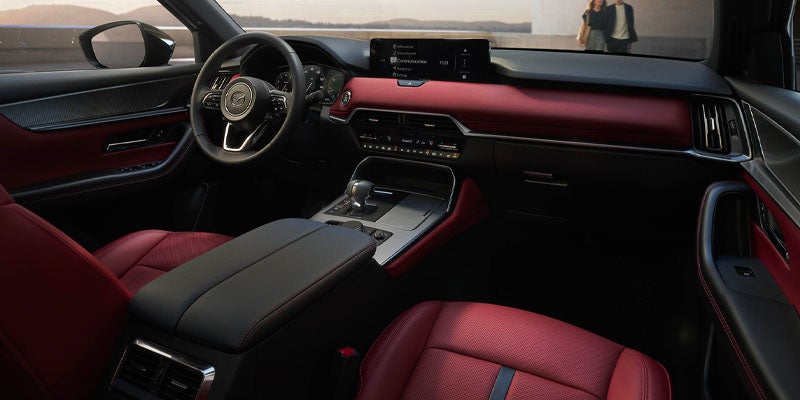
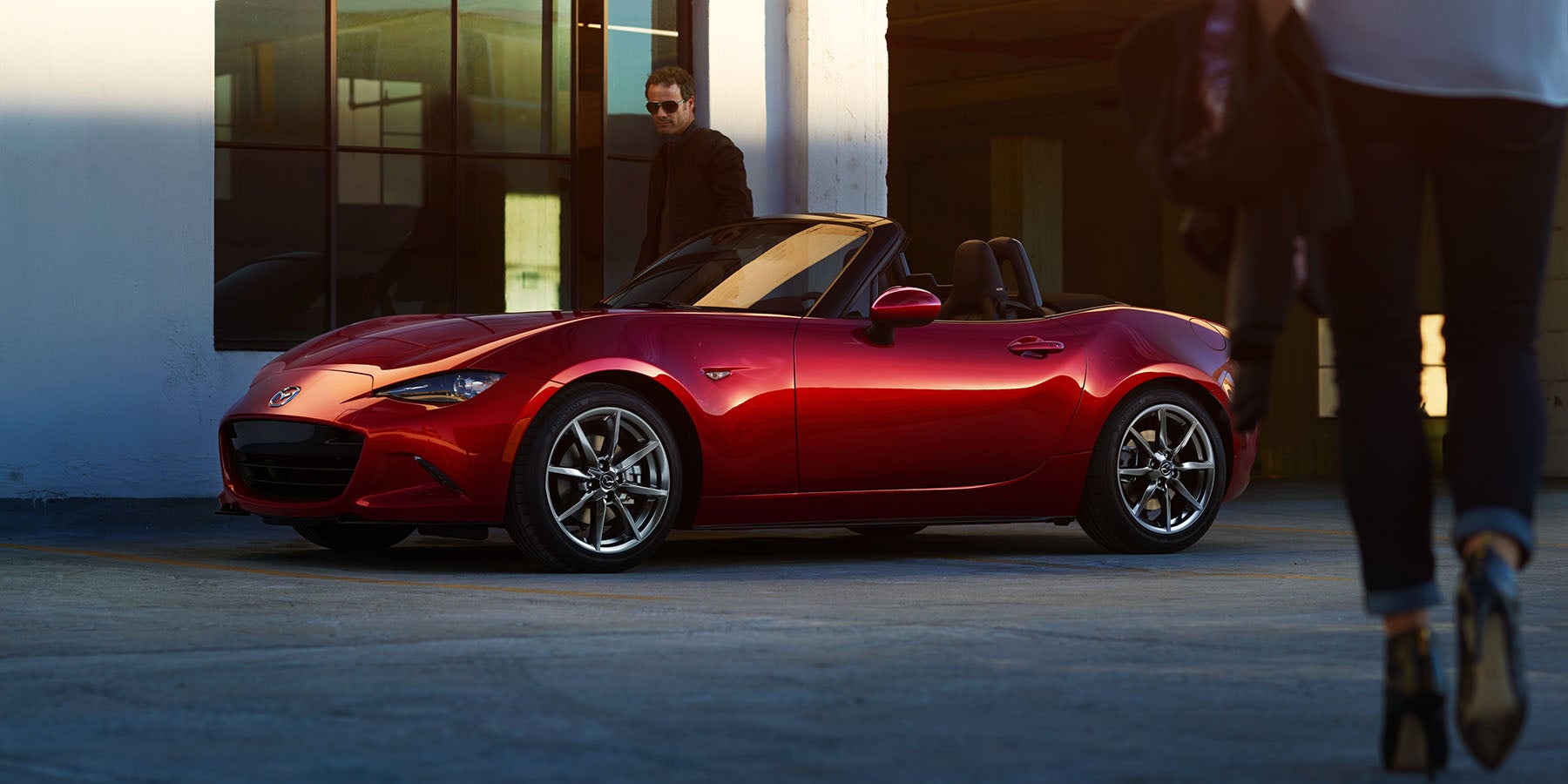
The 2026 Mazda MX-5 Miata is one of the most celebrated sports cars on the road today. It delivers a pure, driver-focused experience that few vehicles can match. If you're looking at the 2026 Mazda MX-5 Miata and trying to understand the trim levels in Jacksonville, this guide will help you understand what separates each version so you can find the one that fits your style and driving habits. The Miata comes in two distinct body styles - the classic soft-top convertible and the retractable fastback MX-5 Miata RF. Both share the same trim structure, so your first decision is really about the roof. The Soft-Top vs. the RF: Two Ways to Open Up Before diving into trim differences, you need to understand Miata's body styles. The standard MX-5 Miata features a traditional folding soft top, while the MX-5 Miata RF uses a power-folding retractable hardtop with a fastback roofline. Both deliver the same 29 MPG combined EPA estimate across manual and automatic transmission models, so efficiency is consistent no matter which direction you go. The RF adds a more coupe-like appearance when closed, making it a great option for drivers who want that sporty profile without sacrificing open-air driving. Sport: The Pure Starting Point The Sport trim is where the Miata experience begins. Available exclusively as a Soft Top with an available six-speed manual transmission, it strips away the extras to focus on pure driving engagement. Every 2026 MX-5 Miata is powered by a naturally aspirated 2.0L Skyactiv-G four-cylinder engine generating 181 hp and 151 lb -ft of torque, sending power directly to the rear wheels. The entry-level Sport comes equipped with 16-in Metallic Black aluminum alloy wheels w ith high-performance tires, dual exhaust outlets, LED headlights and taillights, an 8.8-in center infotainment display with Apple CarPlay® and Android Auto™ integration, and a leather-wrapped steering wheel. Standard i-Activsense ® safety technology—including Blind Spot Monitoring with Rear Cross-Traffic Alert and Smart Brake Support is also included. Club: Performance-Focused Middle Ground The Club trim is offered in both the classic Soft Top and the Retractable Fastback (RF) body styles, the manual-only Club trim adds a sport-tuned suspension featuring Bilstein® dampers, a front shock tower brace for added chassis stiffness, and an asymmetric torque-sensing limited-slip differential to maximize cornering traction. Exterior upgrades include 17-in Metallic Black alloy wheels, a black front air dam, and a rear lip spoiler. Inside, the cabin is equipped with heated seats with contrast stitching, wireless smartphone connectivity, and a premium 9-speaker Bose® audio system with driver and passenger headrest speakers. Grand Touring: Style for the Long Haul Available in both Soft Top and RF configurations, the Grand Touring is the only model in the lineup that offers a choice between a six-speed manual transmission and an available six-speed Sport automatic transmission with paddle shifters. Exterior highlights include 17-in Metallic Black alloy wheels, body-colored heated power side mirrors, and an Adaptive Front-lighting System that turns the LED headlights with steering inputs. The interior upgrades to heated leather-trimmed seats, automatic climate control, rain-sensing windshield wipers, auto-dimming rearview mirror with HomeLink®, and integrated Mazda Navigation. Safety Across Every Trim One area where every 2026 Mazda MX-5 Miata trim levels benefit equally is safety. The Miata has earned a 2026 IIHS Top Safety Pick+ award, joining nearly the entire Mazda lineup in that recognition. In fact, Mazda has more 2026 IIHS Top Safety Pick+ awards than any other brand as of July 2026, and Consumer Reports has named Mazda the Safest New-Car Brand. That's a strong foundation regardless of which trim you choose. Find Your Miata at Tom Bush Mazda If you're drawn to the focused Sport, the performance-minded Club, or the polished Grand Touring, there's a 2026 Mazda MX-5 Miata trim built around how you like to drive. This 2026 Mazda Miata trim comparison should give you a clear starting point for your decision. Stop by Tom Bush Mazda or visit us online at tombushmazda.com to explore current inventory and find the right Miata for Jacksonville 's roads and beyond.

Read More
Mazda resale value factors, including vehicle condition, mileage, and maintenance history

What Helps a Mazda Hold Its Value Over Time?

If you're shopping for a new Mazda in Jacksonville and thinking beyond the first few years of ownership, you're doing the right thing. It's important to understand what factors will affect your Mazda's resale value, because the decisions you make now can impact what your car is worth years down the road. If you're eyeing a CX-50, a Mazda3 Sedan, or something else entirely from the 2026 Mazda lineup, this guide breaks down what matters for long-term value. Safety Ratings Play a Bigger Role Than You Might Think One of the most consistent resale value drivers across all brands is how well a vehicle performs in independent safety evaluations. Mazda stands out here in a concrete way. As of July 2026, Mazda has more IIHS Top Safety Pick+ awards than any other brand, with models including the CX-5, CX-30, CX-50, CX-70, CX-90, and both Mazda3 body styles all earning that top designation. Consumer Reports has also named Mazda the Safest New-Car Brand. U sed-car buyers actively search for vehicles with strong safety track records, and dealers factor those ratings into trade-in offers. Buying a model with a demonstrated safety history gives your vehicle a n edge in the resale market. Powertrain and Efficiency Are Important to Future Buyers The engine under the hood - and how efficient it is - directly influences who will want to buy your vehicle later and what they'll pay for it. Mazda's 2026 lineup includes a wide range of powertrain options, from the 2.5 L four-cylinder found in models like the CX-5 (rated at 26 combined MPG) to the CX-50 Hybrid, which gets 38 combined MPG. On the electrified side, the CX-70 Plug-in Hybrid gets 61 MPGe combined, and the CX-90 Plug-in Hybrid gets 56 MPGe combined. As fuel costs remain a consideration for buyers, vehicles with strong efficiency numbers tend to hold their appeal longer. Choosing a powertrain that's relevant to how people will be driving in five or six years is a smart move for resale. V ehicle Condition Impact on Resale Value Is Real No single factor does more damage to a vehicle's resale value than neglected condition. Vehicle condition impact on resale value shows up in every aspect of the transaction - from the trade-in appraisal to the private sale listing. Regular oil changes, keeping up with manufacturer-recommended service intervals, and addressing minor cosmetic issues before they become bigger problems all help preserve value. The good news for Mazda owners is that the brand's reputation fo r quality supports strong used-car demand. A well-maintained CX-90 with its inline six-cylinder powertrain or a clean Mazda3 Hatchback rated at 29 combined MPG will attract more buyers and stronger offers than one that shows obvious wear or has a spotty service record. Model Selection and Trim Level s are Important Not all models or configurations resell equally. Vehicles with broader buyer appeal - popular body styles, widely desired features, and proven reliability records - tend to command stronger prices on the used market. Mazda's crossover and SUV lineup has been particularly well-received, with models like the CX-5 and CX-50 earning both IIHS Top Safety Pick+ recognition and broad consumer interest. Trim selection also plays a role. Higher trims tend to attract buyers looking for a more complete package, but mid-range trims with in-demand features often see the most active secondary market demand because they balance equipment and affordability. Keep Your Mazda in Shape for the Long Run Understanding Mazda vehicle resale value factors gives you a n advantage as a car owner. From choosing a model with a strong safety record and an efficient powertrain to staying current on maintenance, each decision compounds over time. Drivers in Jacksonville, FL can explore the full 2026 Mazda lineup and get personalized guidance at Tom Bush Mazda, online at tombushmazda.com - where protecting your investment starts from day one.
Mazda brake inspection and maintenance

Mazda Brake Service Schedule: When and Why It's Important

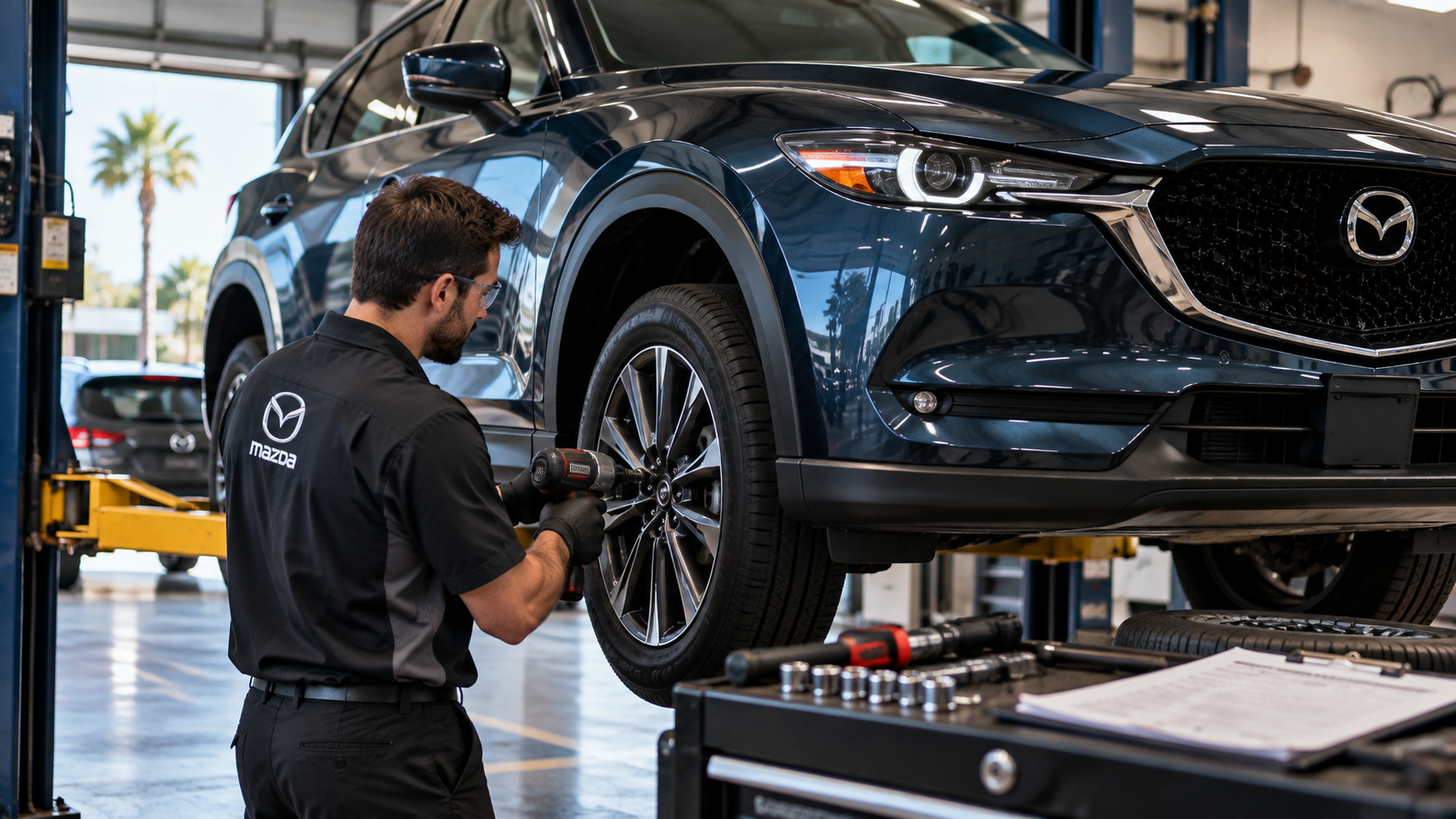
Keeping up with your Mazda brake service schedule is one of the easiest ways to protect yourself and your passengers on the road in Jacksonville, FL. Mazda has earned recognition as Consumer Reports' Safest New-Car Brand, and that commitment to safety doesn't stop at the factory - it extends to how you maintain your vehicle over time. Why Mazda Takes Brake Maintenance Seriously Mazda's entire lineup, from the CX-5 to the Mazda3 Sedan, has earned 2026 IIHS Top Safety Pick+ awards. That level of safety recognition reflects advanced engineering built into every model. But those systems only perform at their best when the underlying hardware - including your brakes - is properly maintained. General Guidelines for Brake Inspections Most automotive technicians recommend having your brakes inspected at least once a year. However, how you drive is just as important as how often you drive. Stop-and-go city traffic, frequent highway merging, and hilly terrain all accelerate wear on brake pads and rotors. Brake pads typically need replacement every 25,000 to 70,000 miles, depending on driving habits and pad material. Rotors generally last longer but should be evaluated every time pads are replaced. If you notice squealing, grinding, a vibrating pedal, or a longer stopping distance, don't wait for your next scheduled visit. When to Get a Brake Inspection City d riving conditions around downtown corridors and busy interchange routes put steady demands on your braking system. Knowing when to get a brake inspection means paying attention to both time and symptoms. A good rule of thumb is to schedule an inspection every 12 months or every 12,000 miles, whichever comes first. If your Mazda features Smart Brake Support - part of Mazda's i-Activsense safety suite - that system relies on your physical brakes to execute emergency stops properly, making maintenance even more critical. Brake Fluid and the Full Service Picture Brake fluid is often overlooked, but it plays a direct role in how effectively your system transfers pedal pressure to stopping force. Mazda recommends replacing brake fluid every two years under normal conditions. Over time, fluid absorbs moisture and loses its effectiveness, which can increase stopping distances. When you come in for a brake inspection, a qualified technician should also check the brake lines, calipers, and wheel cylinders for wear or leaks. Knowing when to get a brake inspection also means making sure the full system - not just the pads - gets a thorough look. Staying on Schedule With Your Mazda Every Mazda comes with an owner's manual that outlines the recommended maintenance intervals for your specific vehicle. The CX-70, for example, uses a 3.3 L turbocharged inline-6 engine with driving dynamics that benefit from a well-functioning brake system. The CX-50 Hybrid, rated at 38 MPG combined, uses regenerative braking alongside traditional friction brakes - a combination that requires specialized inspection knowledge. Sticking to your Mazda brake service schedule is the simplest way to keep your vehicle performing the way it was designed. Visit Tom Bush Mazda for Your Next Brake Service If you're due for an inspection or just want peace of mind, the Tom Bush Mazda Service team is ready to help. Serving drivers throughout Jacksonville, FL, they have the tools and expertise to keep your Mazda's braking system in top shape. Don't wait for a warning sign - stay ahead of it by following your Mazda brake service schedule. Visit us online today at tombushmazda.com to schedule a brake inspection.

Preparing your car for trade-in, including vehicle cleaning, maintenance, and appraisal

How to Prepare Your Car for a Trade-In Appraisal

Trading in your current vehicle is one of the smartest ways to transition into something new, and knowing how to prepare your car for trade-in can make a difference in what appraisers offer you. No matter if you're eyeing the 2026 Mazda CX-50 Hybrid or the three-row 2026 Mazda CX-90, a little preparation before your appraisal appointment goes a long way. Here's what Jacksonville, FL drivers should know before bringing their vehicle in. Gather All Your Documents First One of the best things you can do before your appraisal is pull together your paperwork. Appraisers want to see your vehicle title, current registration, any remaining loan or payoff information, and a valid photo ID. If you have a full service history - oil change records, tire rotations, repairs - bring those along too. A documented maintenance history signals to appraisers that the vehicle was well cared for, which supports a stronger valuation. Missing documents can slow the process or create uncertainty about ownership, so get everything organized ahead of time. Clean the Interior and Exterior Thoroughly Appraisers evaluate your vehicle in person, and a dirty or cluttered car can give the impression of neglect - even if the mechanical condition is solid. Vacuum the seats and floor mats, wipe down the dashboard and door panels, and clear out all personal items. On the outside, give the car a thorough wash and consider a basic detail. Address minor things like a cracked windshield wiper or burned-out cabin light if they're easy fixes. A clean vehicle simply shows better. Handle Minor Repairs In Advance Small issues that are affordable to fix can improve your trade-in appraisal outcome. Think about replacing worn floor mats, restoring headlight lenses if they've yellowed, or addressing a warning light if it's tied to something simple like a loose gas cap. Appraisers factor in the cost of reconditioning a vehicle before they can resell it, so reducing that perceived cost works in your favor. You don't have to invest in major repairs - focus on the low-cost items that visually and functionally make the car look ready to go. Know Your Vehicle's Condition and Features Before you arrive, spend a few minutes objectively assessing your car's condition. Check for dents, scratches, tire tread depth, and any interior wear. Be honest with yourself - appraisers are trained to catch these things, and transparency builds trust. It also helps to know your vehicle's specific trim level and features, since higher trims with added technology or safety content typically carry stronger appraisal values. This is why Mazda's lineup - which has earned more 2026 IIHS Top Safety Pick+ awards than any other brand - tends to hold its value well. Use a Car Trade-In Appraisal Checklist Walking in with a car trade-in appraisal checklist keeps you organized. At minimum, your checklist should include: your title and registration, service records, a spare key, all original accessories like floor mats or cargo covers, and a note of your current mileage. Check that all windows, mirrors, and power accessories function properly. If you have a second key fob, bring it - missing keys can reduce appraised value. Reviewing this checklist before your appointment takes only a few minutes and ensures nothing is forgotten. Visit Tom Bush Mazda for Your Trade-In Appraisal Now that you know how to prepare your car for trade in, you're ready to get started. The 2026 Mazda lineup - from the Mazda CX-50 Hybrid to the plug-in hybrid CX-90 PHEV rated at 56 MPGe combined - gives you plenty of exciting options for your next ride. Drivers throughout Jacksonville, FL can visit Tom Bush Mazda at tombushmazda.com to schedule an appraisal, explore the current lineu p, and find the Mazda that fits their life.

Mazda3 vs Hyundai Elantra Space Technology and Driving

Mazda3 vs Hyundai Elantra: Comparing Style, Handling, and Everyday Comfort

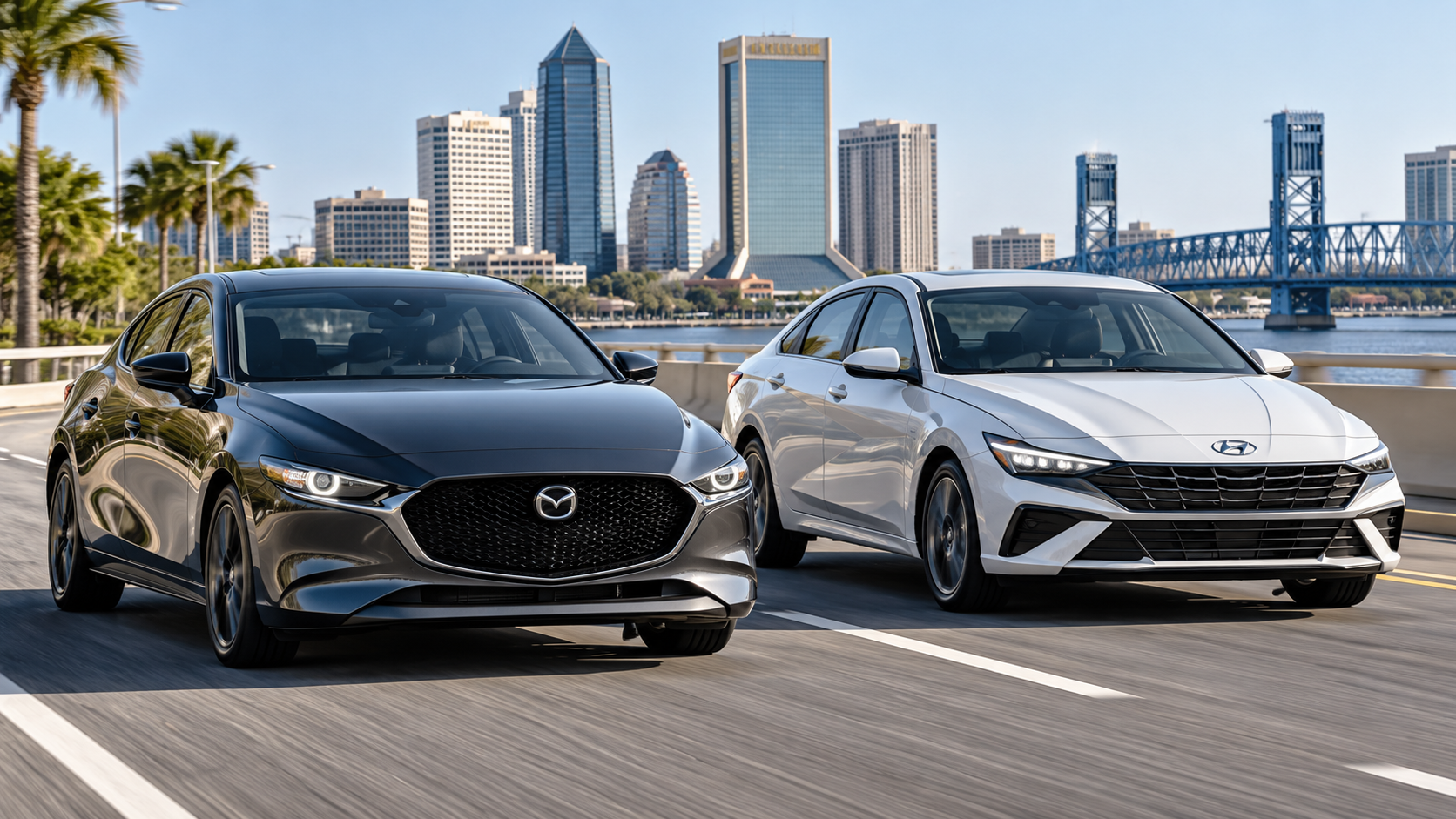
Mazda3 vs Hyundai Elantra comparisons bring several clear differences into focus. Additionally, the 2026 Mazda3 starts with more standard horsepower. By contrast, the Elantra counters with stronger published fuel economy and slightly more sedan cargo room. Moreover, drivetrain choice also separates them. Selected Mazda3 trims offer i-ACTIV AWD, while standard Elantra models use front wheel drive. For this reason, those differences give compact sedan customers several concrete points to compare before a test drive. Mazda3 and Hyundai Elantra Differ Most in Power Efficiency and Drivetrain Choice With that in mind, the strongest comparison starts with the areas that shape daily ownership. Engine output, fuel economy, cargo room, and drivetrain choices create the clearest contrast between these compact sedans. Several details deserve attention near the beginning of the comparison: The Mazda3 2.5 S uses a 2.5 liter four cylinder engine with 186 horsepower. The Elantra standard 2.0 liter engine produces 147 horsepower and 132 pound feet of torque. Selected Mazda3 trims offer i-ACTIV AWD, while the standard Elantra lineup remains front wheel drive. By contrast, the Elantra places more emphasis on fuel economy in its standard configuration. The Mazda3 places more emphasis on engine output and available AWD. Therefore, trim selection matters before either sedan is judged from one specification. Additionally, Tom Bush Mazda customers can review the 2026 Mazda3 Sedan before comparing current trim choices. How Do the Mazda3 and Hyundai Elantra Powertrains Compare? The standard Mazda3 2.5 S makes 186 horsepower from its 2.5 liter four cylinder engine. The standard Elantra engine makes 147 horsepower from a 2.0 liter four cylinder. That creates a noticeable difference on paper before higher output trims are considered. Moreover, Mazda also offers a turbocharged 2.5 liter engine on selected Mazda3 trims. With recommended premium fuel, that engine reaches up to 250 horsepower and 320 pound feet of torque. Turbo Mazda3 Sedan models also come with i-ACTIV AWD. By contrast, Hyundai adds another engine choice through the Elantra N Line. Its 1.6 liter turbocharged engine produces 201 horsepower and 195 pound feet of torque. Therefore, comparing trim to trim gives a clearer comparison than comparing model names alone. Additionally, transmission choices add another difference. Current Mazda3 Sedan models pair their automatic configurations with a six speed automatic transmission. The standard Elantra uses an intelligent variable transmission, while the N Line uses a seven speed dual clutch transmission. For this reason, a test drive should focus on throttle response, steering input, and acceleration. Additionally, notice shift feel at normal road speeds. Those checks show how the specifications translate into the way each sedan responds. Cargo Space and Rear Seat Use Matter Differently The 2026 Elantra lists 14.2 cubic feet of cargo volume. The 2026 Mazda3 Sedan lists 13.2 cubic feet. However, the numerical difference is small enough that trunk shape and loading needs still deserve a physical check. Before deciding from cargo figures alone, compare the spaces in the way you plan to carry people and gear: Place common bags or larger items near the trunk opening to judge loading width and floor shape. Sit in the rear seats after setting the front seats for the people who will drive the car most days. Check whether folding the rear seatbacks creates enough room for longer items you carry during the year. Additionally, the Mazda3 lineup also includes a hatchback. That gives Mazda customers another body style when a sedan trunk does not fit their cargo needs. The 2026 Mazda3 Hatchback offers a different rear cargo layout. Moreover, passenger measurements also deserve context. Legroom, headroom, door opening shape, and seat position all shape how a cabin feels. Therefore, rear seat evaluation should happen with the front seats already adjusted. Fuel Economy and AWD Create Different Priorities The Elantra SE carries EPA estimates of 31 mpg city and 40 mpg highway. Current front wheel drive Mazda3 Sedan listings at Tom Bush Mazda show 27 mpg city and 36 mpg highway. Consequently, those figures point toward different priorities. The Elantra standard powertrain focuses more heavily on fuel efficiency. The Mazda3 gives customers stronger standard horsepower plus an AWD path on selected trims. AWD does not replace careful tire selection or attentive driving. However, it changes how power can be distributed across the driven wheels. That makes drivetrain layout worth checking when comparing trims. In addition, fuel economy should also be reviewed at the exact trim level. Engine choice, drivetrain, wheel size, and transmission can change published estimates. Therefore, compare the window sticker or current model specifications before making a final calculation. Furthermore, Jacksonville customers can browse new Mazda inventory to see which Mazda3 trims are currently listed. What Should You Compare During a Mazda3 Test Drive? With that in mind, a useful Mazda3 test drive should cover more than acceleration. Seat position, visibility, steering response, cabin access, controls, and cargo space all deserve attention before choosing a trim. During the visit, work through the same checks you would make on a normal trip: Adjust the seat and steering wheel first, then check sightlines and control placement from that position. Drive at neighborhood and highway speeds so steering, braking, acceleration, and transmission response can be compared. Check the rear seat and trunk after the road test so passenger and cargo needs stay part of the decision. By contrast, the Mazda3 and Elantra take different approaches to the compact sedan category. The Elantra offers stronger published fuel economy and a slightly larger trunk. The Mazda3 counters with more standard horsepower and available AWD on selected trims. For this reason, compare the exact trims you plan to drive instead of model names alone. Review the features you will rely on, then compare the cars in person. Tom Bush Mazda customers can start with the 2026 Mazda3 Sedan and current new Mazda inventory.

Mazda Maintenance Costs for CX-5 Owners in Jacksonville

Mazda Maintenance Costs for CX-5 Owners in Jacksonville

Mazda maintenance for a CX-5 can include several kinds of service across the life of the vehicle. Some visits center on oil, filters, tires, and routine inspections. Others add wear items or scheduled parts at later mileage points. For Jacksonville owners, the clearest way to plan is to separate recurring service from wear items and later mileage work. That makes future service easier to review without relying on one fixed yearly price. Mazda CX-5 Maintenance Costs Start With the Type of Service A single maintenance number cannot describe every CX-5. Service needs change with mileage, age, inspection results, and the items due at each visit. For that reason, cost planning works better when service is grouped into clear categories. Routine work forms the baseline. Oil and filter service, tire rotation, and recurring inspections appear more frequently than larger scheduled items. Wear parts need a different plan because replacement follows measured condition, while later mileage service can add items that do not appear during earlier visits. Owners can think about maintenance in three layers. First, plan for routine visits. Next, leave room for wear items. Finally, review the maintenance schedule as mileage and age rise. Tom Bush Mazda already provides a dedicated Mazda CX-5 maintenance schedule that owners can use to review mileage and service timing in more detail. Which Mazda CX-5 Maintenance Costs Should You Plan For? Routine Mazda maintenance includes recurring work and inspections that support normal CX-5 care. Mazda uses a vehicle status monitor to track service timing, while the maintenance schedule sets maximum intervals for several items. For routine planning, keep these categories in mind: Oil and filter service returns throughout the life of the CX-5, so it belongs in your regular service budget. Tire rotation and tire checks deserve recurring attention because tread wear can change from one axle position to another. Brake, fluid, suspension, and steering inspections check current condition without meaning every inspected part needs replacement. That last point matters when reading a maintenance schedule. An inspection is not the same as a replacement. A technician may check a part and find that no further work is needed at that visit. The service reminder should also be read with the maintenance schedule. The reminder tells you when service is due, while the schedule shows which items belong at that point in mileage or time. Together, those two sources give you a clearer view of the visit. When routine service is due, you can also check Tom Bush Mazda’s current service and parts specials before booking an appointment. Tires and Brakes Need Their Own Maintenance Budget Tires and brakes wear gradually, so their timing does not fit one fixed replacement date. Driving distance, load, road surface, tire pressure, and measured wear all shape when replacement becomes necessary. For this reason, inspections matter as much as mileage. Owners should watch several signs between routine visits: Tire tread depth, uneven wear, vibration, or repeated pressure loss can signal that the tires need closer review. Brake noise, pedal changes, or inspection findings can show that brake parts need attention before the next routine visit. Wiper blades, the battery, and other wear items may need replacement at different points than scheduled engine service. A maintenance budget should leave some room for wear parts even when no warning sign is present today. You do not need to guess a replacement date. Inspection results give you the information needed to decide when each item deserves attention. Tire rotation can support more even tread wear, but it does not replace tire inspection. The same idea applies to brakes. Scheduled checks give the service team a chance to measure current condition and explain what could be needed next. Jacksonville owners who want a professional inspection can use the Tom Bush Mazda service center to review current tire, brake, and maintenance needs. How Should You Plan for Higher Mileage Service? Higher mileage Mazda maintenance can include items that appear less frequently than oil service or tire rotation. As the CX-5 ages, filters, spark plugs, coolant, and other scheduled items can enter the service plan. These later items deserve their own planning category: Cabin and engine air filters may need inspection or replacement according to the maintenance schedule and current condition. Spark plugs appear at a later scheduled mileage, so that visit may include more work than a routine oil service. Coolant follows a long interval based on time and mileage, which makes it part of long range service planning. Several items can land near the same mileage range, so one visit may include more work than the previous one. That does not mean the CX-5 suddenly needs constant repair. It means the schedule has moved into another phase. Reviewing the schedule before major mileage points gives you time to check current specials and ask the service team for present pricing. That is more useful than relying on an old article with fixed dollar amounts. You can compare upcoming service needs with the CX-5 maintenance schedule and then review current Tom Bush Mazda service offers. Use the Schedule, Specials, and Service History Together The strongest Mazda maintenance plan uses three sources together: the official schedule, your service history, and current dealer information. The schedule tells you what Mazda calls for, while your records show what has already been completed. Current dealer resources show present offers and appointment options. Start by checking the CX-5 maintenance schedule before your next major mileage point. Then compare it with your repair orders or digital service records. If an item has already been completed, confirm whether it needs attention again. Next, review Tom Bush Mazda service specials for current offers. Service pricing can change, so live specials give you a better reference than a fixed figure in an evergreen article. From there, you can use the Tom Bush Mazda service scheduler when you are ready to set an appointment. Mazda maintenance planning becomes clearer when each service visit has context. Routine work, wear items, and later mileage service do not arrive on the same timetable. By separating those maintenance categories, you can prepare for the next visit with fewer surprises. Tom Bush Mazda can review the CX-5 schedule with you and help connect current service needs with available appointment options.

Bad Credit Car Loans in Jacksonville Preparation Guide

Bad Credit Car Loans in Jacksonville Preparation Guide

Bad credit car loans can feel harder to approach when you do not know what to prepare first. In Jacksonville, a better starting point is getting your financial details organized before you begin an application. That means reviewing your credit, understanding your budget, and knowing what information a lender may review. Preparation does not promise a loan result. However, it gives you a clearer view of the numbers and questions that may come next. Start With Your Credit and Current Budget Before you apply, review your credit reports and your current monthly obligations. Additionally, look for incorrect balances, unfamiliar accounts, or outdated information. If something looks wrong, research the issue before moving deeper into the financing process. Additionally, write down your regular monthly expenses. Include housing, insurance, utilities, current loan payments, and other recurring obligations. Moreover, compare those costs with the payment range you could manage each month. Still, the monthly payment should not stand alone. A longer loan term can reduce the payment while increasing the total amount paid. Therefore, start with the full budget instead of choosing a vehicle from payment alone. For bad credit car loans, your credit report and budget also give you useful questions for the finance team. You can ask what information the application needs and what loan terms require closer review. That preparation keeps the discussion focused on numbers you understand. Tom Bush Mazda also has a dedicated bad and low credit assistance page where Jacksonville shoppers can review dealership financing resources before applying. What Should You Prepare Before Applying for a Car Loan? You should prepare identity, income, housing, and current financial information before starting an application. However, exact document requests can vary by lender. The goal is to have accurate records ready if they are requested. A few categories are worth organizing before you begin: Bring current identification and address information so application details are accurate from the start. Gather recent income records in case the lender asks for documentation supporting current earnings. Keep current debt and payment information nearby so you can answer financial questions accurately. If you already know which vehicle you want, keep its basic details handy. However, do not assume the financing terms are final because you selected a vehicle. Therefore, the application review and final contract establish the actual loan terms. It also helps to organize trade information before visiting the dealership. Bring the current loan payoff amount if you still owe money on the vehicle. Additionally, note the vehicle identification number, mileage, and general condition. For bad credit car loans, this preparation gives you cleaner information to work from. It also reduces the chance that an important number gets overlooked during the financing discussion. If you are ready to provide your information, you can also move directly to the Tom Bush Mazda finance application. Plan Your Down Payment and Trade Before Choosing a Vehicle With bad credit car loans, a down payment reduces the amount you need to finance. Cash can serve that purpose, and positive trade equity can also contribute. Therefore, it helps to know what you can put toward the purchase before comparing loan structures. Your trade deserves its own review. Additionally, start by estimating its current value and checking the exact payoff amount. The difference between those numbers tells you whether you have positive or negative equity. Before you discuss a trade, write down three figures: Record the estimated trade value so you have a starting point for the vehicle. Record the exact payoff amount if money is still owed on the current loan. Record your planned cash down payment so you can see the full upfront amount. Positive equity means the trade value exceeds the payoff amount. That value can reduce the remaining purchase amount. By contrast, negative equity means the payoff exceeds the trade value. If negative equity exists, ask how it will be handled in the new transaction. Some deals may include that remaining balance in the new financing amount. As a result, the amount financed can rise even when the replacement vehicle costs less than expected. Moreover, these figures make it easier to compare early estimates with final numbers. They also give you clearer questions for the finance team. Shoppers who want to compare vehicle options before discussing final terms can review current Mazda inventory at Tom Bush Mazda. Understand Co Signers and Prequalification Before Applying With bad credit car loans, a co signer agrees to share legal responsibility for the loan. If the primary borrower does not pay, the co signer can become responsible for repayment. Therefore, both people should understand the obligation before signing anything. A co signer should never be treated as a casual addition to an application. Missed payments can create financial problems for both people. Consequently, discuss repayment plans before submitting a joint application. Prequalification can also appear during early financing research. It can provide preliminary information based on the details supplied during the process. However, preliminary terms are not the same as a final loan contract. Final terms can change after a lender completes its review. For this reason, use prequalification as an early reference point, not a final answer. Compare any later offer with the information you received earlier. When reviewing either stage, focus on the full loan structure. Look at the amount financed, annual percentage rate, loan term, and estimated payment together. That gives you a more complete view than a payment figure alone. For a dealership specific next step, the Tom Bush Mazda finance center can help connect your application with the dealership’s available financing process. What Should You Review Before Signing an Auto Loan? Before signing bad credit car loans, review the amount financed, annual percentage rate, loan term, payment, and total amount paid. These figures show how the loan is structured. Before you sign, confirm each of these items: Confirm the amount financed matches the agreed purchase details and any approved additions. Review the annual percentage rate and loan term together instead of focusing only on the monthly payment. Check trade payoff details carefully if your current vehicle is part of the transaction. Therefore, first confirm the amount financed. Make sure it reflects the agreed vehicle price, down payment, trade details, and any approved additions. If a number looks different, ask for an explanation before signing. Next, review the annual percentage rate and loan term. A lower monthly payment may come from a longer term. Therefore, compare the total cost across the full contract. Also, check that your trade payoff appears correctly if a trade is part of the deal. If negative equity is included, confirm where that balance appears. Knowing that figure matters before you accept the contract. Finally, review every page before you sign. Ask questions about anything that is unclear. A finance agreement should make sense to you before you commit to it. Bad credit car loans become easier to review when your financial information is organized. Tom Bush Mazda in Jacksonville has a credit assistance resource for customers who want to explore financing options. From there, you can continue to the finance application when you are ready to provide your information.

Mazda CX 90 vs Honda Pilot Space Comfort and Driving Feel

Mazda CX 90 vs Honda Pilot Space Comfort and Driving Feel

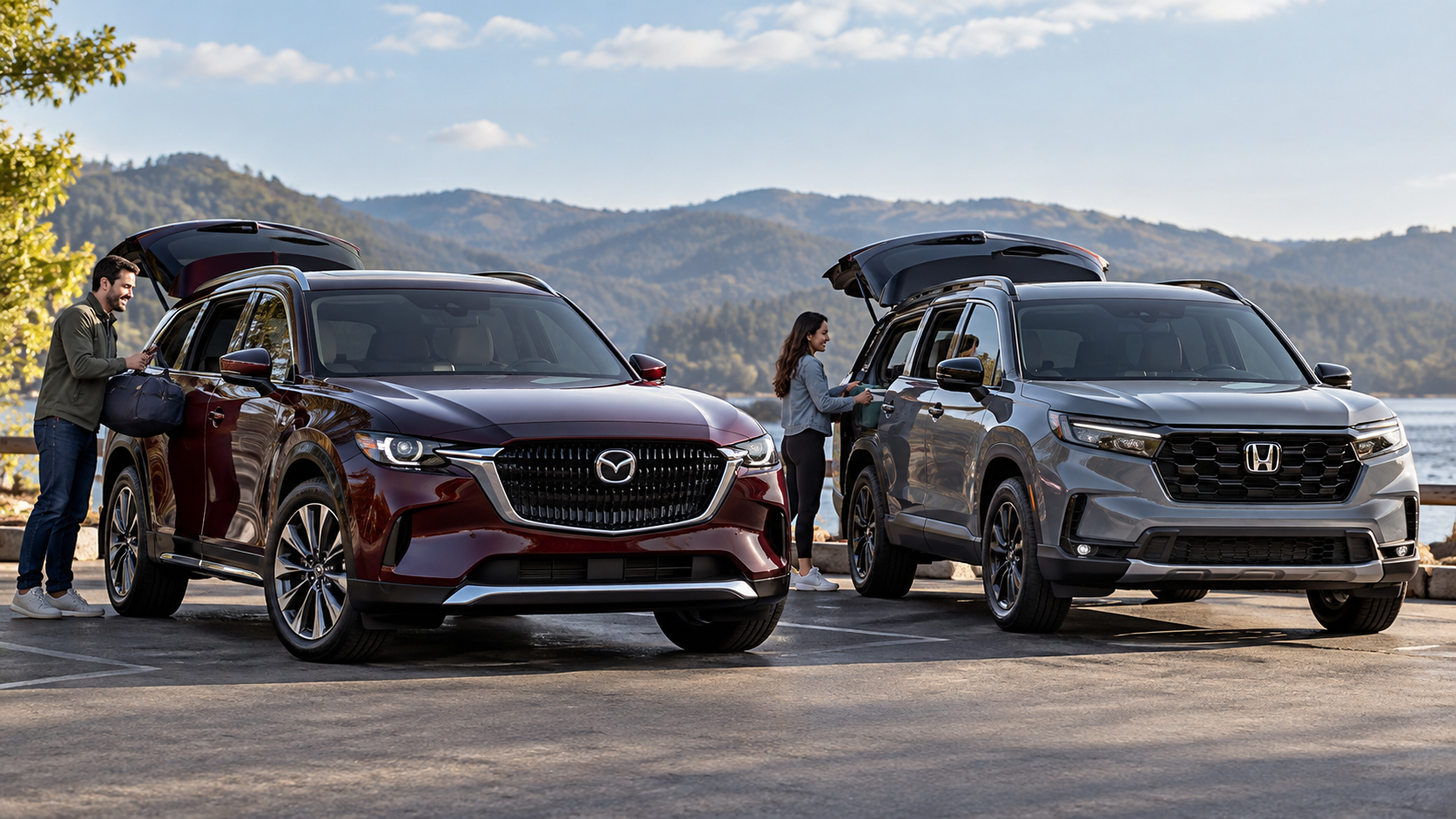
Mazda CX 90 shoppers looking at three-row SUVs usually need more than a seating count. Because families use three rows differently, passenger room, cargo space, and road feel all deserve attention. The Honda Pilot approaches those needs with a roomy cabin and flexible seating. By contrast, the Mazda CX-90 takes a different path with standard all-wheel drive and a turbocharged inline-six. Looking at both layouts side by side makes the differences easier to judge. Mazda CX-90 and Honda Pilot Take Different Approaches to Three-Row Travel Both SUVs offer three rows and seating for up to eight in selected configurations. However, their proportions tell different stories. The CX-90 rides on a 122.8-inch wheelbase. The Pilot uses a 113.8-inch wheelbase. Therefore, a longer wheelbase does not guarantee more cabin room. Seat placement and cabin packaging also shape usable space. Mazda gives the CX-90 a long hood and a drivetrain layout that supports its road-focused character. Honda uses its cabin space differently. The Pilot puts strong emphasis on passenger room and cargo volume. Consequently, those choices become clear when you move past exterior size and inspect each seating row. For a family, the useful question is simple. With that in mind, where will people sit most days? A household using the third row every week may judge these SUVs differently. Another family may fold those seats for cargo. In addition, steering feel and power delivery deserve attention during the same evaluation. Jacksonville shoppers can also review Tom Bush Mazda’s current Mazda inventory to see which CX-90 configurations are currently available. How Different Is the Third Row in the Mazda CX-90 and Honda Pilot? The third rows differ most clearly in measured legroom and shoulder room. The 2026 Pilot lists 32.5 inches of third-row legroom. Published CX-90 specifications list 30.4 inches. Therefore, that gap deserves attention when older children or adults use the rear seats. Moreover, seat count needs context. Both SUVs can seat up to eight, but trim choice changes the second-row layout. Some versions use captain's chairs, while others use a bench. As a result, that choice changes passenger flow, center access, and access to the third row. Beyond that, check more than legroom during a visit. Sit in every row that your household plans to use. Move the second row into a position that gives both rows enough knee room. Afterward, check headroom, shoulder room, foot space, and entry clearance. In addition, families with child seats should test their normal arrangement. A third row may look spacious when the second row is empty. However, the same layout can feel different once child seats, bags, and daily gear are in place. Cargo Space Depends on Who Is Coming Along Therefore, cargo numbers become useful only when they match the seating layout you plan to use. The Pilot provides more cargo volume in published measurements. Honda lists 18.6 cubic feet behind the third row before its maximum measurement method is applied. Published CX-90 specifications list 14.9 cubic feet with all seats in place. Still, the bigger question is how much space remains while passengers stay seated. A family carrying six or seven people cannot use the same cargo figure as someone who folds both rear rows. For this reason, space behind the third row deserves close attention for school trips, airport runs, or weekend travel. When comparing both SUVs, bring a mental list of what usually rides with you: Check whether your stroller, sports bag, or cooler fits with the third row raised. Fold only the seats you would normally fold on a normal trip, then inspect the remaining floor area. Look at the cargo opening, floor height, and seat-folding process, since shape can matter as much as total volume. Additionally, a tape measure can be useful if you carry an item with fixed dimensions. Cubic feet describe total volume. However, they do not tell you whether a wide or tall object will fit through the opening. The Powertrains Explain Much of the Difference From the Driver's Seat By contrast, the CX-90 and Pilot take different mechanical approaches. Mazda uses a turbocharged 3.3-liter inline-six with an eight-speed automatic. The standard CX-90 3.3 Turbo produces up to 280 horsepower and 332 pound-feet of torque. Mazda also includes i-Activ all-wheel drive across the CX-90 lineup. Honda uses a naturally aspirated 3.5-liter V6 with a ten-speed automatic. The 2026 Pilot produces 285 horsepower and 262 pound-feet of torque. Front-wheel drive is offered on selected trims, while Honda's i-VTM4 all-wheel drive is available or standard elsewhere in the lineup. However, horsepower alone does not explain how each SUV responds. Torque output and engine speed matter during acceleration. The Mazda's standard turbo engine reaches its 332 pound-feet at 2,000 rpm. The Pilot reaches 262 pound-feet at 5,000 rpm. As a result, the two engines deliver power differently. Therefore, the road test should focus on what you feel through normal inputs. Accelerate from a stop. Merge onto a faster road. Make a smooth turn at neighborhood speed. Notice steering weight, throttle response, transmission shifts, brake feel, and body motion. Moreover, Mazda's brand philosophy places strong emphasis on connection between the driver and the car. The CX-90 carries that idea into a larger three-row format. By contrast, Honda gives the Pilot a different focus. Cabin room and flexible family seating take a larger role in the package. Jacksonville shoppers who want to compare available configurations can browse Tom Bush Mazda inventory before planning a visit. What Should You Compare During a Three-Row SUV Test Drive? For this reason, a useful test drive checks the parts of the SUV your household will use every week. Start with seating, then cargo, then the drive itself. Consequently, that order keeps the evaluation tied to your daily routine. Before leaving the lot, set the driver's seat where you want it. Then check the second and third rows without moving that front position. Test seat access and cargo space with the cabin arranged for your normal passenger count. Afterward, use familiar driving inputs on the road. Try a stoplight launch, a steady cruise, a lane change, and a low-speed turn. Listen for cabin noise and pay attention to how quickly each drivetrain responds. A strong comparison also includes a few practical checks: Sit in every row your household expects to use on a regular basis. Load the type of gear you normally carry and check the remaining cargo area. Compare steering, throttle response, braking, and ride quality on similar roads. In the end, the Mazda CX-90 and Honda Pilot solve the same three-row task in different ways. The Pilot gives more published space in several cabin and cargo measurements. The CX-90 pairs three-row seating with a turbo inline-six and standard all-wheel drive. Your strongest comparison comes from testing both with the same people, gear, and route you expect to use after purchase. When you are ready to look more closely at the Mazda side of the comparison, you can explore current Mazda vehicles at Tom Bush Mazda.

Best Mazda Models for Families in Jacksonville, FL

When you are shopping for a family vehicle, you want something that checks a lot of boxes - safety, space, comfort, and reliability. Mazda has built a strong reputation for delivering all of those things in one package. If you are researching the best Mazda models for families in Jacksonville, FL, you are in the right place. This guide breaks down what makes several Mazda vehicles worth a closer look for drivers with kids, car seats, and busy schedules. Mazda's Safety Record Is Hard to Ignore One of the first things family shoppers notice about Mazda is the brand's commitment to safety. Mazda was named the Safest New-Car Brand by Consumer Reports magazine, which is a meaningful distinction for parents who put protection at the top of their priority list. The 2026 lineup has also earned more IIHS TOP SAFETY PICK+ awards than any other brand as of July 2026. Models like the CX-5, CX-30, CX-50, CX-70, CX-90, Mazda3 Hatchback, and Mazda3 Sedan all received this recognition. That kind of across-the-board safety performance gives families real confidence, no matter which model they choose. Top Mazda Family Vehicles to Consider When it comes to Mazda family vehicles, the crossover SUV lineup is where most shoppers will want to focus. Here is a look at some standout options. The Mazda CX-5 is a great starting point. It offers a refined interior, a comfortable ride, and a size that works well for everyday family use without feeling too large to park or maneuver. For families who need a bit more room, the Mazda CX-50 and CX-70 offer additional space and capability. The CX-70 is especially worth considering if you regularly haul gear, sports equipment, or a full load of passengers. The Mazda CX-90 is the brand's largest three-row SUV and can seat up to seven or eight passengers depending on configuration. It is a strong fit for larger families or those who frequently travel with extended family members. Electrified Options for the Eco-Minded Family Mazda family vehicles are not just about traditional powertrains anymore. The brand now offers plug-in hybrid options that make a lot of sense for families who want to reduce fuel costs without committing to a fully electric vehicle. The CX-50 Hybrid, CX-70 PHEV, and CX-90 PHEV all give drivers flexible ways to manage their energy use. The CX-70 PHEV and CX-90 PHEV offer strong combined MPGe ratings, which can translate to real savings over time - especially for families with longer daily commutes. These electrified models are a smart fit for Jacksonville, FL drivers who want efficiency on local roads while still having the range and flexibility of a gas engine for longer trips. What to Look for When Choosing a Family Mazda Choosing among the best Mazda models for families in Jacksonville, FL comes down to a few key questions. How many people are you regularly transporting? How much cargo space do you need? Do you want the added efficiency of a hybrid or plug-in hybrid powertrain? Once you have a sense of your priorities, the Mazda lineup offers a clear path to finding the right fit. Every model in the 2026 crossover SUV range delivers a consistent experience - thoughtful design, strong safety scores, and a driving feel that sets Mazda apart. Visit Tom Bush Mazda to Find Your Family's Next Vehicle The best Mazda models for families in Jacksonville, FL are worth experiencing in person. Seeing the interior space, sitting in the seats, and taking a test drive can make the decision much clearer. The team at Tom Bush Mazda is ready to help you explore the full lineup, walk through current offers, and find the right vehicle for your family's lifestyle. Stop by or visit online to get started today.

First Time Car Buyer Guide Jacksonville Finance Prep

A first time car buyer guide for Jacksonville should begin with a budget, documents, insurance details, and clear financing questions. Preparation does not promise approval or a certain offer. However, it gives a lender the records needed to review the application. Start by setting a total vehicle range before choosing a Mazda. Include the price, taxes, registration, insurance, fuel, and future service. Therefore, the monthly payment should not stand alone. A longer loan term can lower the payment while raising the total paid. In addition, a larger upfront amount can reduce the amount financed. These choices should fit your full household budget. Can a First Time Shopper Finance a Mazda With No Credit? No credit and poor credit are not the same. No credit means a lender has little recorded borrowing history to review. Poor credit reflects recorded issues within an existing file. Financing may still be possible with limited history. However, each lender uses its own review process. Income, employment, residence, debt, and available records may all enter that review. A lender may also examine how long you have lived or worked in one place. Therefore, stable records can give the application more context. They do not guarantee approval. First time shoppers should check their credit reports before applying. This step can reveal errors, old addresses, or unfamiliar accounts. In addition, it helps explain what a lender may see. Do not confuse limited history with negative history. This guide focuses on limited or no history. Recorded late payments, collections, or defaults require a separate finance discussion. Documents to Prepare Before Applying A complete file can reduce delays during the finance review. Which documents may be requested? Common records confirm identity, income, residence, employment, and insurance. Prepare these items before visiting: Bring a current government issued photo ID that matches the application name. Bring recent pay statements or other accepted income records requested by the lender. Bring proof of residence, such as a current utility bill or lease document. Bring insurance information or contact details for the provider you plan to use. Bring employer details, including its name, address, phone number, and your start date. Bring trade documents when another vehicle may enter the transaction. A lender may request other records after reviewing the application. Therefore, ask which documents apply before your appointment. Current program rules can also change. Make sure each record uses the same legal name and current address. Inconsistent details can slow the review. Furthermore, keep digital copies available in case another document is requested. Should a First Time Shopper Use a Cosigner? A cosigner joins the credit obligation and accepts legal responsibility for repayment. Should every first time shopper use one? No. The decision should follow a clear discussion about payment duty and credit risk. A lender may review the cosigner’s income, debt, and credit file. However, a cosigner does not remove the primary borrower’s duty. Both people can face credit harm after missed payments. Before asking someone to cosign, discuss the payment date, account access, and response plan for a missed payment. In addition, decide how both people will track the loan. Down payment planning belongs in the same discussion. Money paid upfront lowers the amount financed. A trade may also reduce that amount after value and payoff review. Use these questions before choosing an upfront amount: How much money will remain for insurance, registration, fuel, and early service? Will a larger upfront amount reduce the monthly payment enough for the budget? Does a trade have an existing payoff that must be cleared first? Will the lender or current program require a minimum upfront amount? Do not empty emergency savings only to lower the loan balance. Therefore, keep a reserve for costs that arrive after delivery. Prequalification and Finance Application Steps Prequalification gives an early estimate from the information supplied. It does not equal final approval. A full application requires deeper lender review and the selected Mazda details. Some prequalification tools may use a soft credit inquiry. Others may use a hard inquiry. Therefore, read the disclosure before submitting personal information. After prequalification, compare the estimated range with your vehicle budget. Then, choose a Mazda that fits the planned price range. The exact price, taxes, fees, and trade details will shape the final request. The full application may ask for identity, income, residence, employment, and credit information. In addition, the lender may request more documents before making a decision. Final terms can differ from an early estimate. Therefore, compare the written offer with the amount you planned. Do not rely on a verbal summary alone. What to Confirm Before Choosing a Mazda Before signing, review every number in the final agreement. Which figures matter most? Confirm the vehicle price, upfront amount, trade credit, financed amount, APR, term, payment, fees, and total payments. A lower payment may come from a longer term. Therefore, compare the total paid across the full loan. Also, confirm whether optional products appear in the financed amount. Review these final points: Confirm that the vehicle price matches the agreed figure. Confirm that the trade value and payoff appear correctly. Confirm the APR, loan term, monthly payment, and first payment date. Confirm every fee and optional product before signing. Confirm that the final paperwork matches the Mazda you selected. Keep copies of every signed document. Tom Bush Mazda maintains a first time owner page with current program details. Jacksonville shoppers can review that page before applying. In addition, the finance page and payment calculator can support early planning. A first time car buyer guide should lead to informed questions, not promises. Prepare the records, compare the full loan, and review every term. Then, choose the Mazda and finance path that fit your budget.

Mazda G Vectoring Control Plus Guide for Daily Driving

Mazda G Vectoring Control Plus adjusts engine torque and brief brake input in response to steering movement. What changes during a turn? The feature shifts a small amount of load toward the front tires, then settles the chassis as steering returns. Additionally, these actions happen through small control changes. Therefore, the driver still chooses the path, steering angle, speed, and braking. The feature works quietly in the background and supports a smoother link between steering input and vehicle motion. How Does Mazda G Vectoring Control Plus Work? Mazda G Vectoring Control Plus begins by reading steering movement. The driver turns the wheel, and the feature responds with a brief torque reduction. Therefore, a small amount of load moves toward the front tires. Moreover, that load change presses the front tires more firmly against the road. As a result, the Mazda can respond to the steering request with less need for small wheel corrections. What happens after the Mazda enters the curve? Engine torque returns as the vehicle follows the chosen path. Then, a brief brake input can act near corner exit. Furthermore, the brake input targets the outside front wheel. Consequently, the chassis settles as the steering wheel moves back toward center. The action is small and may not feel like ordinary braking. Still, G Vectoring Control Plus does not turn the wheel for the driver. Instead, it responds to the steering already chosen. The driver still manages speed, spacing, lane position, and braking. What Happens During Turn Entry and Corner Exit? First, turn entry begins when the driver adds steering angle. The feature briefly lowers engine torque. Therefore, vehicle load moves forward and supports front tire response. Next, midway through the curve, torque returns. The Mazda can then follow the selected line without a sudden change in power. In addition, the driver may need fewer small steering corrections. Finally, corner exit begins as the wheel returns toward center. At that point, G Vectoring Control Plus can add slight brake pressure at the outside front wheel. As a result, the chassis settles during the transition back toward straight travel. Why does that sequence matter? A turn includes more than one movement. Entry, steady cornering, and exit each place a different demand on the tires. The feature links those stages through small torque and brake changes. However, tire grip still comes from tire tread, tire pressure, road surface, and speed. No control feature can replace sound tire care or careful steering. What May Drivers Notice During Daily Driving? Given that, G Vectoring Control Plus works through small changes, so the response may feel subtle. What may a driver notice? Steering can feel calmer through a curve, ramp, or lane change. A sweeping highway ramp gives the feature time to work through entry and exit. Therefore, the driver may make fewer small corrections while holding the chosen path. A lane change also includes steering input and steering return. The same sequence can support a smoother move into the next lane. In addition, the chassis may settle more cleanly as the wheel centers. Common driving situations include: A curved highway ramp can show how the Mazda responds during steady steering. A lane change can show how the chassis settles when steering returns toward center. A winding road can reveal whether the driver needs frequent small steering corrections. A turn around a parked vehicle can show the response at lower speed. The feature should not create a strong pedal pulse or sharp braking sensation. Therefore, a warning light, harsh pull, or unusual noise deserves inspection. G Vectoring Control Plus With All Wheel Drive and Other Controls By contrast, G Vectoring Control Plus and i Activ AWD handle separate tasks. The steering feature changes torque and brief brake input. The all wheel drive hardware manages power delivery between the axles. Can both work during the same turn? Yes. Steering data can support several vehicle controls, while each one keeps its own role. Therefore, coordinated action does not make them one feature. Traction control also serves a separate purpose. It responds when tire slip reaches a threshold. By contrast, G Vectoring Control Plus begins with steering movement and small load changes. Electronic stability control can add braking when the Mazda moves away from the intended path. G Vectoring Control Plus works earlier through subtle torque and brake input. However, the driver may never feel a distinct handoff between these controls. Moreover, tire state remains central. Worn tread, poor pressure, or damaged tires reduce available grip. Therefore, vehicle controls cannot restore traction that the tires cannot provide. Current Mazda Models and Test Drive Review Mazda lists G Vectoring Control Plus on several current vehicles, including the Mazda3, CX 30, and CX 5. However, model year and trim details can change. Shoppers should confirm the exact vehicle before relying on a broad lineup statement. What should a shopper test? Start with ordinary steering situations instead of searching for a dramatic response. The feature works through small changes, so smoothness matters more than one obvious action. During a test drive: Follow a curved ramp at a steady and legal speed. Make a safe lane change and notice how the Mazda settles afterward. Drive through several city turns and note the need for steering corrections. Compare steering response across two Mazda models with confirmed feature availability. Ask which trim and model year include the latest feature version. Tom Bush Mazda can connect Jacksonville shoppers with current Mazda3, CX 30, and CX 5 inventory. Each model offers a different size, seating layout, and cabin shape. Therefore, the same feature should be reviewed within the exact Mazda under consideration. Mazda G Vectoring Control Plus supports steering response through small torque and brake changes. Its purpose becomes clearest during curves, lane changes, and steering return. A careful test drive can show how those actions feel within one specific Mazda.

Mazda Certified Pre Owned Program Guide for Shoppers

Mazda Certified Pre Owned vehicles complete Mazda program review, inspection, history, and warranty requirements before certification. An ordinary used Mazda follows a separate dealership sale process. Therefore, official certification adds Mazda program records that shoppers can review before choosing a vehicle. What makes certification different from a familiar used listing? The distinction comes from program rules, completed checks, written coverage, and roadside support. In addition, each shopper should review the exact Mazda, its records, and its warranty documents. What Does Mazda Certified Pre Owned Mean? Mazda Certified Pre Owned status means a used Mazda met current program requirements before sale. A Mazda badge or dealership listing alone does not confirm certification. Therefore, shoppers should look for clear CPO labeling on the exact vehicle. The certification process begins when an eligible Mazda enters program review. Staff examine its history, current state, major components, and road test results. Any required corrections must occur before the Mazda receives official CPO status. Does every used Mazda qualify? No. Some used Mazda vehicles remain outside the program because of age, mileage, history, or inspection findings. Therefore, certified and ordinary used listings may appear beside each other on the same inventory page. Official status gives shoppers a consistent set of program documents to examine. However, certification does not predict every future repair. A test drive, service record review, and careful walkaround still support a sound comparison. How the Mazda CPO Inspection Works Mazda uses a 160 point inspection within its current Certified Pre Owned program. The inspection reviews the vehicle through several mechanical, safety, body, cabin, and driving categories. Therefore, the point count represents many separate checks within one review. What does the inspection examine? It looks at major areas that shape the vehicle’s current state and operation. The road test also gives the inspector a chance to assess steering, braking, shifting, noise, and controls. The review covers broad areas such as: Inspectors examine the engine, drivetrain, fluids, brakes, steering, suspension, tires, and related mechanical parts. They review exterior panels, glass, lights, mirrors, trim, paint, and visible signs of prior damage. They check seats, controls, screens, climate equipment, locks, windows, safety equipment, and cabin materials. A road test checks acceleration, braking, steering response, transmission operation, noises, and warning indicators. The inspection count should not replace questions about the exact Mazda. Instead, ask whether listed corrections were completed and whether supporting records are available. In addition, confirm that the listing identifies the vehicle as Mazda Certified Pre Owned. Vehicle History and Record Review A physical inspection and a vehicle history report answer different questions. The inspection reviews the Mazda as it sits today. By contrast, the history report summarizes recorded events from earlier ownership. Does certification replace a history report? No. Mazda includes a CARFAX vehicle history report with current CPO vehicles. Therefore, shoppers can review recorded title, ownership, accident, mileage, and service entries alongside the inspection. A history report may not contain every event. For this reason, service invoices and dealership records still deserve attention. Consistent mileage entries can also show whether the report follows a logical timeline. Review the report for title issues, reported collisions, prior owners, registration locations, and recorded maintenance. Then compare those entries with the cabin, body, tires, and road test. A mismatch may justify another question before purchase. Furthermore, ask whether routine care appears current for the model and mileage. Certification reflects completed program steps at the sale point. Continued care after purchase still follows the schedule for that exact Mazda. Mazda CPO Warranty and Roadside Support Mazda currently lists a 12 month or 12,000 mile CPO Vehicle Limited Warranty. It also lists a seven year or 100,000 mile CPO Limited Powertrain Warranty. Both time and mileage limits follow written program terms. What does that coverage mean for one vehicle? The answer requires the original in service date, current mileage, CPO sale date, and warranty documents. Therefore, headline numbers should begin the review, not end it. Mazda also states that covered repairs carry no deductible under the current program. However, the warranty does not include every part, event, or repair. Exclusions, maintenance duties, and claim requirements remain within the written terms. Before purchase, review these items: Confirm when each limited warranty starts and how the earlier time or mileage limit applies. Read which components fall within vehicle coverage and which fall within powertrain coverage. Check exclusions, maintenance duties, claim steps, transfer terms, and repair location rules. Confirm how emergency roadside assistance applies during the powertrain warranty term. Roadside support can assist with covered events during its stated term. Still, shoppers should read the program documents for service limits and contact steps. Those records control the exact protection attached to the certified Mazda. How Does Mazda CPO Differ From an Ordinary Used Vehicle? Mazda CPO follows manufacturer program rules, while ordinary used inventory follows the selling dealership’s process. That distinction changes the inspection record, included coverage, roadside support, and certification documents. Is CPO always the stronger choice? No single answer fits every shopper. A certified Mazda may suit someone who prefers manufacturer program coverage and a documented inspection. An ordinary used Mazda may offer another price, mileage, age, or model choice. Therefore, compare both paths through the same core questions. Review the exact price, mileage, history, service records, current state, and included protection. In addition, calculate how long you plan to keep the Mazda. Ordinary used vehicles may still receive dealership checks or separate coverage. However, those items do not become Mazda CPO program features unless the listing carries official certification. Ask for written details before treating any protection as included. A fair comparison should focus on the specific vehicles, not labels alone. Two Mazda vehicles with similar mileage may have different histories, trim levels, service records, and prices. A careful test drive can reveal another layer beyond paperwork. How to Review Mazda CPO Inventory in Jacksonville Tom Bush Mazda shoppers can use the certified inventory page to see current Mazda CPO listings in Jacksonville. Current supply changes as vehicles enter and leave stock. Therefore, the article should link to live results instead of naming a temporary listing. What should you verify before selecting one? Start with official CPO status, mileage, model year, trim, history report, inspection records, and warranty documents. Then compare price and equipment with ordinary used Mazda choices. Use this review during inventory research: Confirm that the exact listing carries Mazda Certified Pre Owned status. Open the vehicle history report and compare its entries with the listing details. Ask for the certification documents and applicable warranty information. Review maintenance records, tire state, brakes, cabin controls, and visible body areas. Drive the Mazda at several speeds and listen for unusual noises or warning alerts. Compare the certified listing with current used inventory before choosing a path. Tom Bush Mazda can provide the commercial next step after the program research is complete. Shoppers can browse certified inventory, compare ordinary used options, and arrange a test drive. Therefore, the final choice can reflect both Mazda CPO program details and the exact vehicle under review.

Mazda SUV Cargo Space Across CX 5 CX 50 and CX 90 Models

Mazda SUV cargo space changes with each model’s row count, seat position, cargo shape, and passenger layout. The CX 5 suits daily errands and compact family loads. The CX 50 adds a wide floor for luggage and outdoor gear. The CX 90 adds three rows with several seating arrangements. How should a shopper compare them? Start with passenger count, then list the items that travel most frequently. Next, check which seats must stay upright. Therefore, the largest published number may not match the way your household packs. Mazda CX 5 Cargo for Daily Household Trips The 2026 Mazda CX 5 provides up to 59.3 cubic feet with the rear seatbacks folded. Mazda also enlarged the liftgate opening and lowered the cargo floor. Therefore, loading a stroller, grocery bags, or household boxes may require less lifting. Can the CX 5 hold a stroller and groceries together? A compact folded stroller may leave room beside it for several bags. However, stroller width, wheel size, and handle shape can change the remaining floor area. Additionally, the rear seatback can open more floor length when needed. One section may fold for a narrow box or long package. Therefore, another rear seating position can remain ready for a passenger. A useful daily packing test should include familiar items: Place the folded stroller near the liftgate and check the room beside it. Load grocery bags without stacking them above the rear seatback. Test a medium storage bin and note whether the liftgate closes freely. Fold one rear seat section and check access from the cargo opening. The CX 5 fits shoppers who need five seats during most trips. Still, personal gear should guide the final choice. A cargo test can reveal more than one measurement alone. How Many Suitcases Fit in a Mazda CX 50? The Mazda CX 50 provides 31.4 cubic feet with the rear seatback upright. It provides 56.3 cubic feet after that seatback folds. Therefore, five travelers can keep every seat available while packing within the smaller figure. How many suitcases fit in a Mazda CX 50? No fixed count applies because bag sizes vary. Still, several carry on bags may fit behind the rear seat. Larger checked bags may need stacking or a folded seat section. Moreover, the wide cargo opening can make broad items easier to place. In addition, the flat floor gives travel gear a clear loading area. Soft duffel bags can fill spaces that rigid suitcases leave open. A travel packing check should cover the items that matter most: Bring the largest suitcase and place it flat, then upright. Add one carry on bag and note the remaining side space. Check whether a cooler or sports bag fits beside the luggage. Fold one rear seat section when skis, boards, or long gear must travel. The CX 50 suits shoppers who value five seats and a wide cargo floor. However, exact packing results still depend on each item’s shape. What Fits Behind the Mazda CX 90 Third Row? The Mazda CX 90 provides 14.9 or 15.9 cubic feet behind the raised third row. The figure changes with the third row seating layout. Therefore, shoppers should verify the exact configuration before comparing numbers. What fits behind the Mazda CX 90 third row? Smaller bags, grocery sacks, and compact travel pieces may fit there. Larger luggage sets may need one third row section folded. Additionally, the third row seatbacks split evenly on several configurations. Therefore, one section can fold while another rear seat remains available. This arrangement can support one rear passenger plus added bag room. Passenger count changes every packing decision. A six person trip may leave more room than an eight person trip. In addition, captain’s chairs and bench seating can change access through the cabin. Shoppers should also check the liftgate opening and floor depth. A bag may fit by volume but remain awkward to place. Therefore, personal luggage offers the clearest test. Mazda CX 90 Cargo With Rear Rows Folded Folding the CX 90 third row raises cargo volume to 40.0 or 40.1 cubic feet. The first two rows remain available at that point. Therefore, the three row SUV can carry several passengers and a larger luggage load. With both rear rows folded, cargo volume reaches 74.2 or 75.2 cubic feet. That layout creates the largest floor in this comparison. However, only the front seats remain ready for passengers. How should a family compare these figures? Match each number with the seats that remain. The largest figure supports furniture boxes, home supplies, or bulky gear. The middle figure supports travel with the third row stored. Moreover, the CX 90 gives shoppers several seat arrangements. A partial fold can create space for long items while preserving another seat. Therefore, the exact trim and seating layout deserve close review. A family trip should begin with the passenger list. Next, place the largest bags behind the raised third row. Then, fold one section and compare the new floor area. This sequence shows the tradeoff clearly. Choosing a Mazda SUV Through a Cargo Test Which Mazda SUV suits your household? The answer starts with the items that shape your weekly and seasonal trips. A stroller may matter every day. A large suitcase may matter several times each year. Bring those items during a visit to Tom Bush Mazda in Jacksonville. Therefore, you can test the exact CX 5, CX 50, or CX 90 under consideration. Inventory pages can also narrow the visit to the correct model. Use a simple cargo test before making a decision: Keep every needed passenger seat upright before loading gear. Place the largest rigid item first because it offers the least packing freedom. Add softer bags around it and check rear window visibility. Test one partial seat fold when longer items need extra floor length. Close the liftgate gently and confirm that nothing presses against the glass. The CX 5 supports daily household packing within a compact two row layout. The CX 50 adds a wide floor for travel and outdoor equipment. The CX 90 adds three rows and several ways to divide seats from cargo. Therefore, the right choice comes from one clear comparison. Match the people, the gear, and the seat position before reviewing the final measurement.

Contact Us

Fill out this form below and we'll contact you shortly
*Required Fields