Blog / Holiday Fun

4 Fun Winter Activities You Can Drive to Near Jacksonville, FL

4 Fun Winter Activities

The wonderful year-round weather of Jacksonville, FL means it doesn't get too cold in winter. But you can still enjoy some festive Christmas cheer and excellent winter activities in and around town. Here are four of your best options.

4 Fun Winter Activities You Can Drive to Near Jacksonville, FL

Dazzling Nights at the Botanical Gardens

On November 27th, head to Jacksonville Arboretum & Botanical Gardens for an incredible light-filled treat for all the family. Stroll along a meandering route that takes you through the lovely gardens decorated with all kinds of fantastic displays.

There's a vast canopy of Moroccan lanterns to pass under, a tunnel of giant, twinkling stars, a forest of lasers, and even an 8,000-square-foot maze of lights to get lost in. There's also a giant sparkling Christmas tree and the air is filled with Christmas music to get you into the holiday mood. You'll find the Botanical Gardens at 1445 Millcoe Rd, Jacksonville.

A Southern Christmas Tree Farm

At this extensive Christmas tree farm, you can stroll along rows of Christmas trees, choose your own tree, and even cut it down yourself. It's a unique and memorable way to bring your children closer to nature during the festive season.

After finding the perfect tree, meet the animals at the on-site petting zoo, and then enjoy the deer train and hay rides. Finish up your day by warming up beside a roaring fire, sipping hot chocolate, and eating tasty fire-roasted s'mores. You can find this charming tree farm just to the north of Jacksonville, at  274000 Murrhee Road, Hilliard. Enjoy the short drive there in your cozy 2022 Mazda 3 Select Fwd with its finely controlled heating system.

Old Town Trolley Night of Lights Tour

For one of the most spectacular winter light displays in all of Florida, visit the Old Town Trolley Night of Lights Tour in St. Augustine, a short drive to the south of town. In this lovely historical town, which happens to be America's oldest city, you'll enjoy a breathtaking award-winning light show that's been rated one of the top ten light shows in the entire world by National Geographic Magazine.

You can walk freely around town, taking it all in. Or, if you'd prefer a guided evening tour through a wonderland of three million sparkling lights, book a row of seats on their trolley tour. You can catch the trolley at the Visitor Information Center, 10 West Castillo Drive.

Ice Skating at Community First Igloo

This spacious outdoor ice skating rink offers tons of fun for beginners and experienced skaters alike. It's available all year round, but everyone knows winter is the best time for showing off your skills on the ice. You'll find the rink at 3605 Philips Highway, Jacksonville.

In amidst your winter fun, pay a visit to Tom Bush Mazda. We've been serving the drivers of Jacksonville and the surrounding area since 1974.
Posted in:

Related Posts

Mazda G Vectoring Control Plus Guide for Daily Driving

Mazda G Vectoring Control Plus adjusts engine torque and brief brake input in response to steering movement. What changes during a turn? The feature shifts a small amount of load toward the front tires, then settles the chassis as steering returns. Additionally, these actions happen through small control changes. Therefore, the driver still chooses the path, steering angle, speed, and braking. The feature works quietly in the background and supports a smoother link between steering input and vehicle motion. How Does Mazda G Vectoring Control Plus Work? Mazda G Vectoring Control Plus begins by reading steering movement. The driver turns the wheel, and the feature responds with a brief torque reduction. Therefore, a small amount of load moves toward the front tires. Moreover, that load change presses the front tires more firmly against the road. As a result, the Mazda can respond to the steering request with less need for small wheel corrections. What happens after the Mazda enters the curve? Engine torque returns as the vehicle follows the chosen path. Then, a brief brake input can act near corner exit. more Furthermore, the brake input targets the outside front wheel. Consequently, the chassis settles as the steering wheel moves back toward center. The action is small and may not feel like ordinary braking. Still, G Vectoring Control Plus does not turn the wheel for the driver. Instead, it responds to the steering already chosen. The driver still manages speed, spacing, lane position, and braking. What Happens During Turn Entry and Corner Exit? First, turn entry begins when the driver adds steering angle. The feature briefly lowers engine torque. Therefore, vehicle load moves forward and supports front tire response. Next, midway through the curve, torque returns. The Mazda can then follow the selected line without a sudden change in power. In addition, the driver may need fewer small steering corrections. Finally, corner exit begins as the wheel returns toward center. At that point, G Vectoring Control Plus can add slight brake pressure at the outside front wheel. As a result, the chassis settles during the transition back toward straight travel. Why does that sequence matter? A turn includes more than one movement. Entry, steady cornering, and exit each place a different demand on the tires. The feature links those stages through small torque and brake changes. However, tire grip still comes from tire tread, tire pressure, road surface, and speed. No control feature can replace sound tire care or careful steering. What May Drivers Notice During Daily Driving? Given that, G Vectoring Control Plus works through small changes, so the response may feel subtle. What may a driver notice? Steering can feel calmer through a curve, ramp, or lane change. A sweeping highway ramp gives the feature time to work through entry and exit. Therefore, the driver may make fewer small corrections while holding the chosen path. A lane change also includes steering input and steering return. The same sequence can support a smoother move into the next lane. In addition, the chassis may settle more cleanly as the wheel centers. Common driving situations include: A curved highway ramp can show how the Mazda responds during steady steering. A lane change can show how the chassis settles when steering returns toward center. A winding road can reveal whether the driver needs frequent small steering corrections. A turn around a parked vehicle can show the response at lower speed. The feature should not create a strong pedal pulse or sharp braking sensation. Therefore, a warning light, harsh pull, or unusual noise deserves inspection. G Vectoring Control Plus With All Wheel Drive and Other Controls By contrast, G Vectoring Control Plus and i Activ AWD handle separate tasks. The steering feature changes torque and brief brake input. The all wheel drive hardware manages power delivery between the axles. Can both work during the same turn? Yes. Steering data can support several vehicle controls, while each one keeps its own role. Therefore, coordinated action does not make them one feature. Traction control also serves a separate purpose. It responds when tire slip reaches a threshold. By contrast, G Vectoring Control Plus begins with steering movement and small load changes. Electronic stability control can add braking when the Mazda moves away from the intended path. G Vectoring Control Plus works earlier through subtle torque and brake input. However, the driver may never feel a distinct handoff between these controls. Moreover, tire state remains central. Worn tread, poor pressure, or damaged tires reduce available grip. Therefore, vehicle controls cannot restore traction that the tires cannot provide. Current Mazda Models and Test Drive Review Mazda lists G Vectoring Control Plus on several current vehicles, including the Mazda3, CX 30, and CX 5. However, model year and trim details can change. Shoppers should confirm the exact vehicle before relying on a broad lineup statement. What should a shopper test? Start with ordinary steering situations instead of searching for a dramatic response. The feature works through small changes, so smoothness matters more than one obvious action. During a test drive: Follow a curved ramp at a steady and legal speed. Make a safe lane change and notice how the Mazda settles afterward. Drive through several city turns and note the need for steering corrections. Compare steering response across two Mazda models with confirmed feature availability. Ask which trim and model year include the latest feature version. Tom Bush Mazda can connect Jacksonville shoppers with current Mazda3, CX 30, and CX 5 inventory. Each model offers a different size, seating layout, and cabin shape. Therefore, the same feature should be reviewed within the exact Mazda under consideration. Mazda G Vectoring Control Plus supports steering response through small torque and brake changes. Its purpose becomes clearest during curves, lane changes, and steering return. A careful test drive can show how those actions feel within one specific Mazda.

wheel aligment

Preventing Uneven Tire Wear With Proper Wheel Alignment

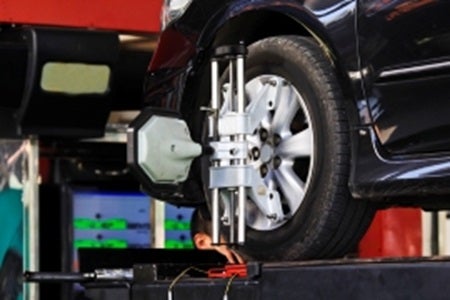
After driving your new Mazda off the lot, we're certain the first thing on your mind is maintenance. While many common maintenance measures do their part in ensuring the longevity of your vehicle, wheel alignment ensures your safety, and the safety of others on the road. If your wheels aren't properly aligned, you risk early and uneven wear of the tread of your tires. Positive or negative camber, or the angle of your wheels when viewed from the front, can cause more wear on the outer and inner edges of the tire when compared to the center tread. The heel and toe alignment, or the tilt when viewed from above, can cause uneven wear of the individual tread blocks, appearing like saw teeth across the tire. Aside from being an eyesore for your new Mazda, that tread is there to provide traction on the road. Without it, driving becomes even more dangerous, leading to drifting or loss of control in wet or slick conditions. To ensure the safety of yourself and other drivers, keeping up to date with alignment check-ups is of the utmost importance. more You may also experience your steering being unresponsive, or sometimes going in an unintended direction. Maybe you feel your vehicle pulling to the left or right, and generally requires more steering input to stay in the lane. This is mainly caused by toe or heel alignment. When taking a turn, one wheel has to follow a wider or tighter arc than another, causing steering to feel unwieldy and uncontrollable. Adequate steering is tantamount to your well-being when driving your new Mazda, allowing you to avoid other vehicles or obstacles in an emergency situation. In addition to uneven tire wear and issues with your steering, a misaligned vehicle can cause a domino effect and lead to more problems. For example, tire pressure can drop due to the uneven wear caused by misalignment, which will inevitably lead to a traumatic tire blowout at high speeds. This drop in pressure also worsens your fuel consumption; your car needs to do more work for the same result. A misaligned vehicle can also lead to issues with wheel balance, which is distinct from the alignment of your wheels. If your wheels are off balance, this can lead to shaking or vibrating of your vehicle and loss of control. To avoid an accident, getting your vehicle's tires aligned is the first thing any car owner should do. This is why scheduled maintenance checkups should never be ignored or delayed. Visit Tom Bush Mazda to Prevent Unexpected Issues Proper alignment can ensure the longevity of your vehicle, but more importantly, it can ensure your own safety and well-being. Understanding alignment issues and their symptoms can save you hundreds of dollars in subsequent repairs. To learn more, visit Tom Bush Mazda in Jacksonville, FL.

2026 Mazda3 Sedan

7 Highlights of the 2026 Mazda3 Sedan

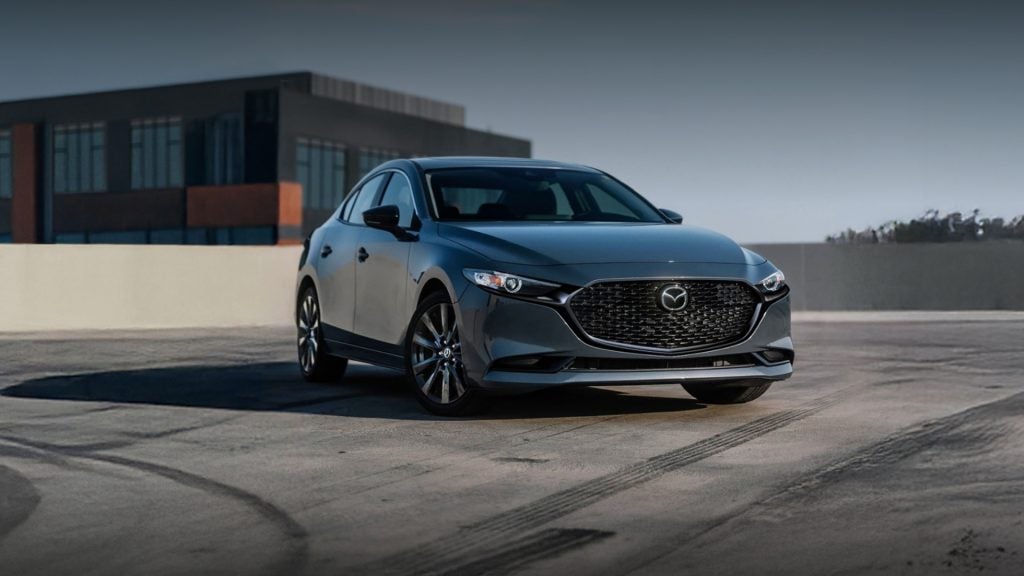
The ever-popular Mazda3 sedan is a stylish, reliable car that embodies Mazda's 'fun to drive' philosophy with responsive engine output, supple handling, and driver-focused suspension tuning. It's also tech-laden with numerous smart safety features. Here are some qualities to love about the 2026 Mazda3 sedan. Power and Efficiency Combined The Mazda3 sedan's 2.5L SKYACTIV engine with dual overhead camshafts generates a great deal of power with remarkable efficiency. It's MPG ratings for city, highway, and combined are 27, 36, and 30, respectively, while horsepower is 186 and torque is also an impressive 186 lb-ft. This blend of efficiency and power is helped by an advanced SKYACTIV-DRIVE 6-speed automatic transmission. Playful Handling Dynamics You enjoy nimble maneuverability and stable cornering in this well-balanced sedan. The Mazda3's top-notch handling is largely thanks to an independent MacPherson strut suspension, plus Electronic BrakeForce Distribution, Smart Brake Support, and Brake Assist. You also get standard all-season tires for firm traction in all weather conditions. Mazda Connected Services The Mazda3 comes with Mazda Connected Services, which allows you to interact with your car through your smartphone. You can remotely start or stop the engine, lock or unlock the doors, and check on various aspects of vehicle status, all from afar. more Easy Smartphone Integration When driving, it's also easy to connect your smartphone to your Mazda3's infotainment system via Apple CarPlay or Android Auto. You can then make hands-free calls, send messages, and access other phone apps directly through your infotainment display. In the top two Mazda3 trims, this smartphone integration is wireless. Another connectivity option is to use the Mazda3's built-in Bluetooth 11 to stream services directly from your smartphone. This feature is standard in all trims. 8-Speaker Sound System When you enter the Mazda3 using the remote keyless entry system, you're settling into a spacious, comfortable, well-designed cabin. Whatever audio you choose to enjoy is delivered with excellent quality via an 8-speaker Mazda Harmonic Acoustics audio system. Cruise Control With Stop-and-Go Driving on the highway is safer and less stressful with standard cruise control. When activated using steering-wheel mounted control switches, cruise control uses radar sensors to judge distances from vehicles ahead and automatically maintains a safe distance. The stop-and-go function means your car can automatically slow to a halt in traffic and then start up again. There are many more advanced safety and driver-assist features as standard in the Mazda3 sedan. Power Side Mirrors The Mazda3's elegant body-colored side-view mirrors with integrated turn signals are powered for easy adjustments and rear visibility. In the higher trims, these mirrors are heated. The exterior mirrors of the top three trims have a memory function and can tilt in reverse as well. If you think the Mazda3 sedan is for you, drop by to learn more. Come to Tom Bush Mazda in Jacksonville, FL, where our courteous staff can help you find the ideal vehicle at a price that works for you.