Blog / Tom Bush Mazda

6 Reasons to Test Drive the 2026 Mazda CX-50

2026 Mazda CX-50

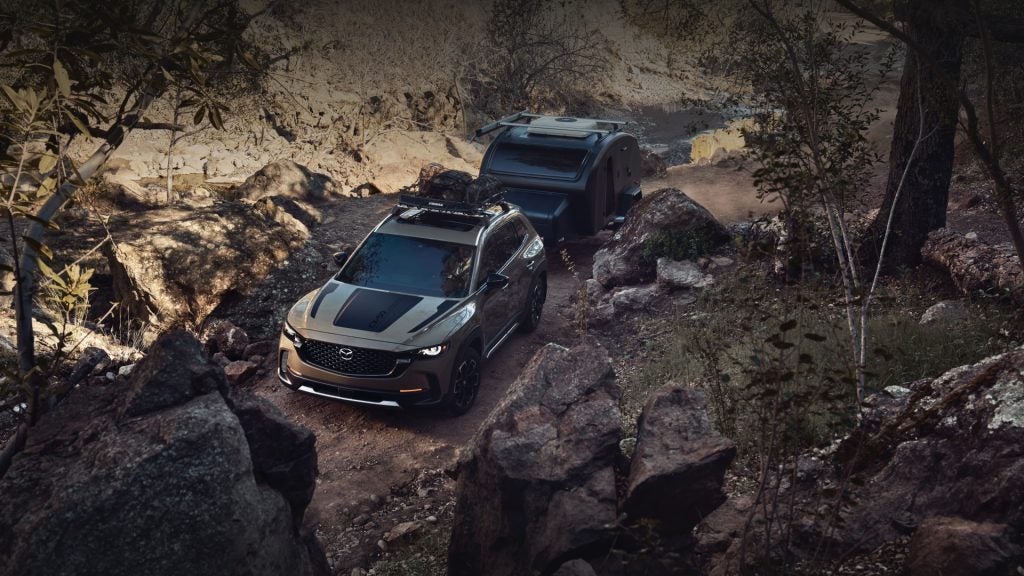
Powerful and ready for adventures, the 2026 Mazda CX-50 is a great daily driver for active families. You can expect head-turning styling, premium comfort, and a range of advanced technologies you'll love.

Refined Exterior Design

The 2026 CX-50 is a handsome crossover with a rugged yet refined exterior design. Sporty 17-inch wheels with a Black Metallic finish and all-season tires provide outstanding traction on dry, wet, and loose surfaces. Satin Chrome aluminum roof rails and dual exhaust outlets with a bright finish catch the eye in traffic, while the standard LED headlights offer bright illumination. A spectrum of classic and bold colors allows you to express your personality.

SKYACTIV-G Performance

Under the hood, you can choose between a standard SKYACTIV-G 2.5L 4-cylinder engine with 187 horsepower and 185 lb-ft of torque or an available twin-scroll turbo engine that pumps out up to 256 horsepower and 320 lb-ft of torque. The base engine delivers smooth performance, fuel economy ratings of 26 MPG combined, and a towing capacity of 2,000 lbs. With the turbocharged powertrain, you can tow up to 3,500 lbs.

Empowering I-ACTIV AWD

All CX-50 models come standard with an advanced i-ACTIV all-wheel drivetrain designed to keep you glued to the road in all driving situations. Mazda's Mi-Drive Sport and Off-Road drive modes and a six-speed automatic transmission with a manual shift mode allow you to adjust performance for various terrains and driving conditions, while the four-wheel independent suspension allows you to enjoy smooth rides on and off the road.

Premium Interior Features

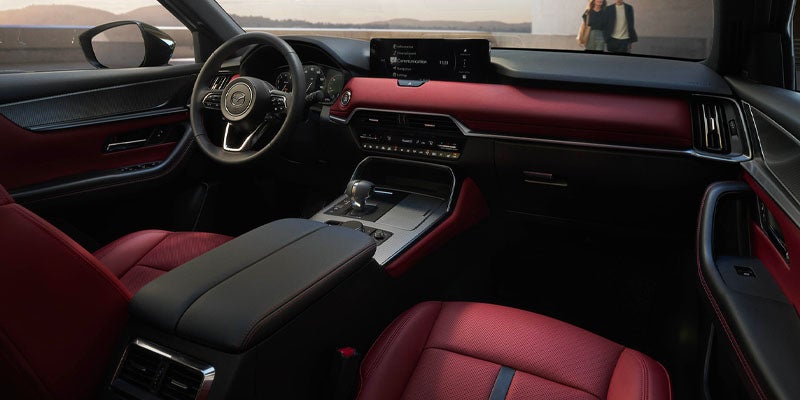
The stylish cabin has a leather-wrapped steering wheel and half-leatherette seating surfaces. A six-way adjustable driver's seat provides custom comfort, while the rear seat has a convenient center armrest with a tray and covered storage bin. In-cabin storage also includes a spacious glovebox, a covered center-console compartment, and an overhead console with room for sunglasses.

Impressive Utility

A deep and wide cargo area with a volume of 31.4 cubic feet can fit luggage for the whole family or outdoor gear and coolers positioned lengthwise. The rear bench has a convenient 60/40 split-folding design, so you can adjust the passenger and cargo areas as needed, up to a cargo capacity of 56.3 cubic feet with both seatbacks folded.

Advanced Tech Features 

Entertainment and connectivity come from a 10.25-inch MAZDA CONNECT infotainment system with HD Radio technology, wireless smartphone integration, and Alexa built-in. A standard wireless phone charger and USB ports in both rows allow all passengers to keep their devices charged, while steering-wheel-mounted audio, phone, and cruise controls reduce distractions while driving.

The 2026 CX-50 is a spirited and practical crossover with top-tier performance and premium comfort. To try it on the road, stop by Tom Bush Mazda for a test drive.

Posted in:

Related Posts

a 2025 Mazda CX-70

5 Perks of the 2025 Mazda CX-70

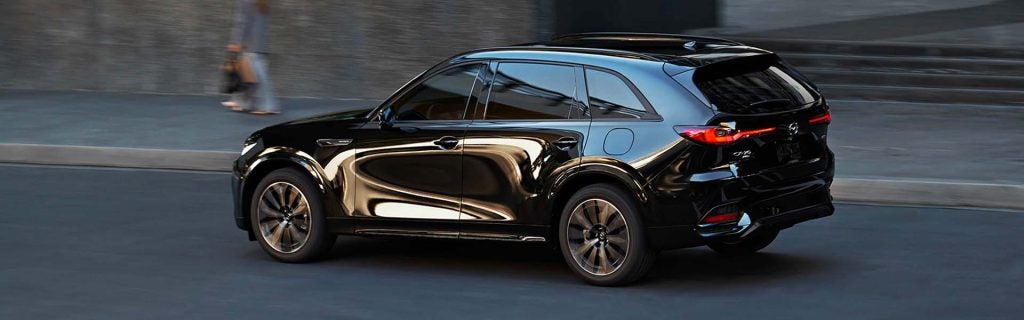
The 2025 Mazda CX-70 is a sleek and powerful SUV that offers multiple perks for drivers and passengers. Here are the top features that make the CX-70 an ideal choice for your next car and how you can take one for a test drive near you. 5 Awesome Highlights of the 2025 Mazda CX-70 1. Intercooled Turbo Engine The Mazda CX-70 comes standard with an intercooled turbo gas/electric I-6 engine that gives you a maximum horsepower of 280 and up to 332 lb-ft. of torque. There's also an eight-speed SKYACTIV-Drive automatic transmission with overdrive, and altogether this setup offers a combined fuel efficiency of 25 MPG. more 2. Functional Exterior Features Drivers love the capable exterior features on the Mazda CX-70, including: Heated side mirrors with turn signal indicator Rain-detecting variable intermittent windshield wipers Fully galvanized steel panels Deep tinted glass Power liftgate rear cargo door Proximity key and push-button start 3. Effective Towing Hauling cargo is a breeze with the CX-70's maximum 3,500 lbs. of towing capacity. Plus, automatic full-time all-wheel drive and coil spring suspension let you take on rough terrains without giving up the comfort of a smooth ride. 3. Plush Interior Comfort inside the Mazda CX-70 is second-to-none with plush, top-of-the-line features like: Dual-zone front automatic air conditioning Rear HVAC vents with separate controls Seating with leather trim and leatherette backing Heated front bucket seats Leather and metal-look gear shifter Leather steering wheel Cargo area concealed storage 4. Modern Technology When you want your car to give you access to the latest technology, the CX-70 delivers with two LCD screens in the front and smart device integration for compatible phones. You also get two 12V DC power outlets and smart device remote engine start, so you can turn your car on and get it heated or cooled before you even open the driver's side door. 5. Brilliant Safety Features Safety features on the Mazda CX-70 are ample and include: Dynamic stability control/electronic stability control Roll stability control ABS and driveline traction control Blind spot monitoring Rear cross-traffic alert Lane keep assist with road departure prevention Lane departure warning There's also front collision mitigation, driver alert monitoring, and a backup camera that lets you see everything behind you when moving your vehicle in reverse. Plus, tire-specific low tire pressure warnings will let you know if any of your tires are underfilled before you start driving to help prevent tire blowouts and other roadside tire emergencies. We're excited to help you find a new car. Contact us at Tom Bush Mazda in Jacksonville, FL today to explore our vehicle specials or to schedule a time to take the Mazda CX-70 for a test drive. You can also visit our dealership at 9876 Atlantic Blvd.

Getting to Know the 2025 Mazda3 Trim Levels: Driver-Focused Daily Ride

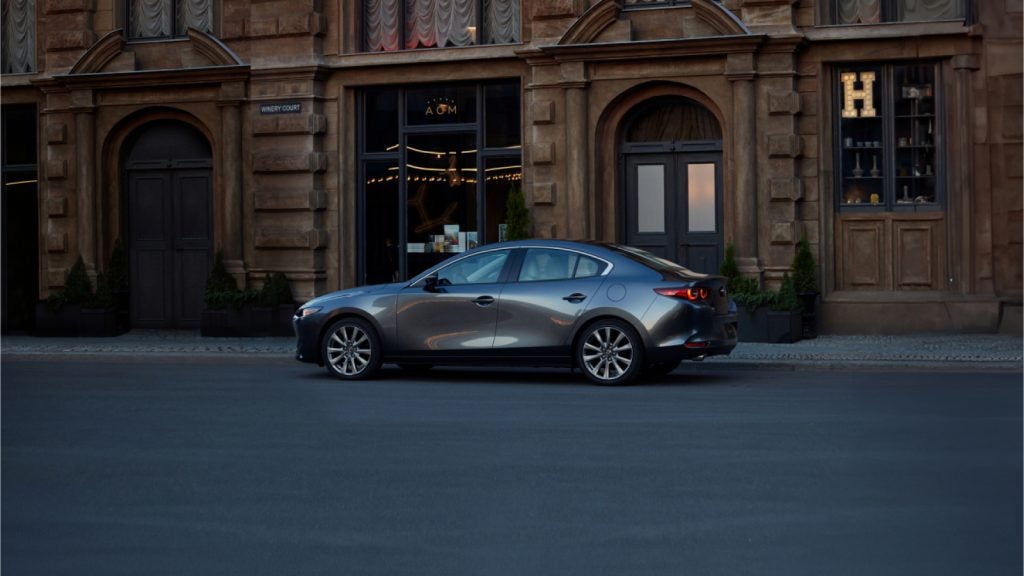
The 2025 Mazda3 delivers comfort, space, and advanced technology in a stylish, compact package. With trims ranging from the value-packed 2.5 S to the powerful 2.5 Turbo models, there's a Mazda3 to match your driving needs. 2025 Mazda3 Trim Levels: Driver-Focused Daily Ride 2.5 S The base 2.5 S is driven by a 2.5L four-cylinder engine paired with a six-speed automatic and front-wheel drive. It makes 191 horsepower and 186 lb-ft of torque and is rated for 31 mpg combined, with 27 mpg in the city and 37 mpg on the highway. It is equipped with driver-assist features like adaptive cruise control with stop-and-go, lane-keeping assist, blind spot monitoring, and rear cross-traffic alert. more The 2.5 S has a cloth interior with seating for five and 13.2 cubic feet of cargo space, which increases when the rear seats are folded down. An 8.8-inch infotainment display comes standard, along with a six-speaker audio system. With Apple CarPlay and Android Auto, you can stream content, get directions, and make calls directly from the display. 2.5 S Select Sport The 2.5 S Select Sport brings more comfort to the lineup with leatherette-trimmed seats, a leather steering wheel, dual-zone automatic climate control, and a rear center armrest with cupholders. You'll also find useful exterior features like rain-sensing wipers and heated side mirrors. 2.5 S Preferred Heated seats and an 8-way power driver's seat with lumbar support come standard on the 2.5 S Preferred and up. With the driver's memory system, you can save your seat position for added convenience. This model also adds a power moonroof that opens at the touch of a button. 2.5 S Carbon Edition The 2.5 S Carbon Edition looks stylish inside with red leather seats. It also upgrades to an eight-speaker stereo and offers wireless capability for Apple CarPlay and Android Auto, making it easier to connect your smartphone. With standard all-wheel drive, this Mazda3 offers better performance and stability when the road is wet or slippery. 2.5 Carbon Turbo The 2.5 Carbon Turbo replaces the standard engine with a turbocharged 2.5L four-cylinder that serves up 250 horsepower and 320 lb-ft of torque. Power flows through a six-speed transmission, and all-wheel drive is standard. With 23 mpg in the city, 32 mpg on the highway, and 27 mpg combined, this powertrain will give you decent savings on fuel. The highlight of the cabin is an upgraded 10.25-inch center unit with wireless Apple CarPlay and Android Auto. 2.5 Turbo Premium Plus Building on the 2.5 Carbon Turbo, the 2.5 Turbo Premium Plus adds paddle shifters to make drives more engaging. It upgrades to perforated leather-trimmed seats, a heated steering wheel, and a Bose Premium audio system with 12 speakers. You'll also get a heads-up display, plus infotainment extras like SiriusXM satellite radio and built-in navigation. Visit Tom Bush Mazda in Jacksonville, FL, to explore the Mazda3 lineup and find your perfect fit.

Mazda G Vectoring Control Plus Guide for Daily Driving

Mazda G Vectoring Control Plus adjusts engine torque and brief brake input in response to steering movement. What changes during a turn? The feature shifts a small amount of load toward the front tires, then settles the chassis as steering returns. Additionally, these actions happen through small control changes. Therefore, the driver still chooses the path, steering angle, speed, and braking. The feature works quietly in the background and supports a smoother link between steering input and vehicle motion. How Does Mazda G Vectoring Control Plus Work? Mazda G Vectoring Control Plus begins by reading steering movement. The driver turns the wheel, and the feature responds with a brief torque reduction. Therefore, a small amount of load moves toward the front tires. Moreover, that load change presses the front tires more firmly against the road. As a result, the Mazda can respond to the steering request with less need for small wheel corrections. What happens after the Mazda enters the curve? Engine torque returns as the vehicle follows the chosen path. Then, a brief brake input can act near corner exit. more Furthermore, the brake input targets the outside front wheel. Consequently, the chassis settles as the steering wheel moves back toward center. The action is small and may not feel like ordinary braking. Still, G Vectoring Control Plus does not turn the wheel for the driver. Instead, it responds to the steering already chosen. The driver still manages speed, spacing, lane position, and braking. What Happens During Turn Entry and Corner Exit? First, turn entry begins when the driver adds steering angle. The feature briefly lowers engine torque. Therefore, vehicle load moves forward and supports front tire response. Next, midway through the curve, torque returns. The Mazda can then follow the selected line without a sudden change in power. In addition, the driver may need fewer small steering corrections. Finally, corner exit begins as the wheel returns toward center. At that point, G Vectoring Control Plus can add slight brake pressure at the outside front wheel. As a result, the chassis settles during the transition back toward straight travel. Why does that sequence matter? A turn includes more than one movement. Entry, steady cornering, and exit each place a different demand on the tires. The feature links those stages through small torque and brake changes. However, tire grip still comes from tire tread, tire pressure, road surface, and speed. No control feature can replace sound tire care or careful steering. What May Drivers Notice During Daily Driving? Given that, G Vectoring Control Plus works through small changes, so the response may feel subtle. What may a driver notice? Steering can feel calmer through a curve, ramp, or lane change. A sweeping highway ramp gives the feature time to work through entry and exit. Therefore, the driver may make fewer small corrections while holding the chosen path. A lane change also includes steering input and steering return. The same sequence can support a smoother move into the next lane. In addition, the chassis may settle more cleanly as the wheel centers. Common driving situations include: A curved highway ramp can show how the Mazda responds during steady steering. A lane change can show how the chassis settles when steering returns toward center. A winding road can reveal whether the driver needs frequent small steering corrections. A turn around a parked vehicle can show the response at lower speed. The feature should not create a strong pedal pulse or sharp braking sensation. Therefore, a warning light, harsh pull, or unusual noise deserves inspection. G Vectoring Control Plus With All Wheel Drive and Other Controls By contrast, G Vectoring Control Plus and i Activ AWD handle separate tasks. The steering feature changes torque and brief brake input. The all wheel drive hardware manages power delivery between the axles. Can both work during the same turn? Yes. Steering data can support several vehicle controls, while each one keeps its own role. Therefore, coordinated action does not make them one feature. Traction control also serves a separate purpose. It responds when tire slip reaches a threshold. By contrast, G Vectoring Control Plus begins with steering movement and small load changes. Electronic stability control can add braking when the Mazda moves away from the intended path. G Vectoring Control Plus works earlier through subtle torque and brake input. However, the driver may never feel a distinct handoff between these controls. Moreover, tire state remains central. Worn tread, poor pressure, or damaged tires reduce available grip. Therefore, vehicle controls cannot restore traction that the tires cannot provide. Current Mazda Models and Test Drive Review Mazda lists G Vectoring Control Plus on several current vehicles, including the Mazda3, CX 30, and CX 5. However, model year and trim details can change. Shoppers should confirm the exact vehicle before relying on a broad lineup statement. What should a shopper test? Start with ordinary steering situations instead of searching for a dramatic response. The feature works through small changes, so smoothness matters more than one obvious action. During a test drive: Follow a curved ramp at a steady and legal speed. Make a safe lane change and notice how the Mazda settles afterward. Drive through several city turns and note the need for steering corrections. Compare steering response across two Mazda models with confirmed feature availability. Ask which trim and model year include the latest feature version. Tom Bush Mazda can connect Jacksonville shoppers with current Mazda3, CX 30, and CX 5 inventory. Each model offers a different size, seating layout, and cabin shape. Therefore, the same feature should be reviewed within the exact Mazda under consideration. Mazda G Vectoring Control Plus supports steering response through small torque and brake changes. Its purpose becomes clearest during curves, lane changes, and steering return. A careful test drive can show how those actions feel within one specific Mazda.