Blog / Jacksonville Collision

How to Find a Quality Collision Repair for Your Mazda

Car accidents are, unfortunately, always a possibility when you're driving. One minute your car is in perfect condition and the next it's been damaged. Whether the damage is great or small, you want to have it repaired. As your Mazda dealer, we understand how much your car means to you. We want to make sure that your car undergoes a high-quality collision repair and is returned to you ASAP

Get a Quality Collision Repair at Your Mazda Dealer

Delivery and Inspection

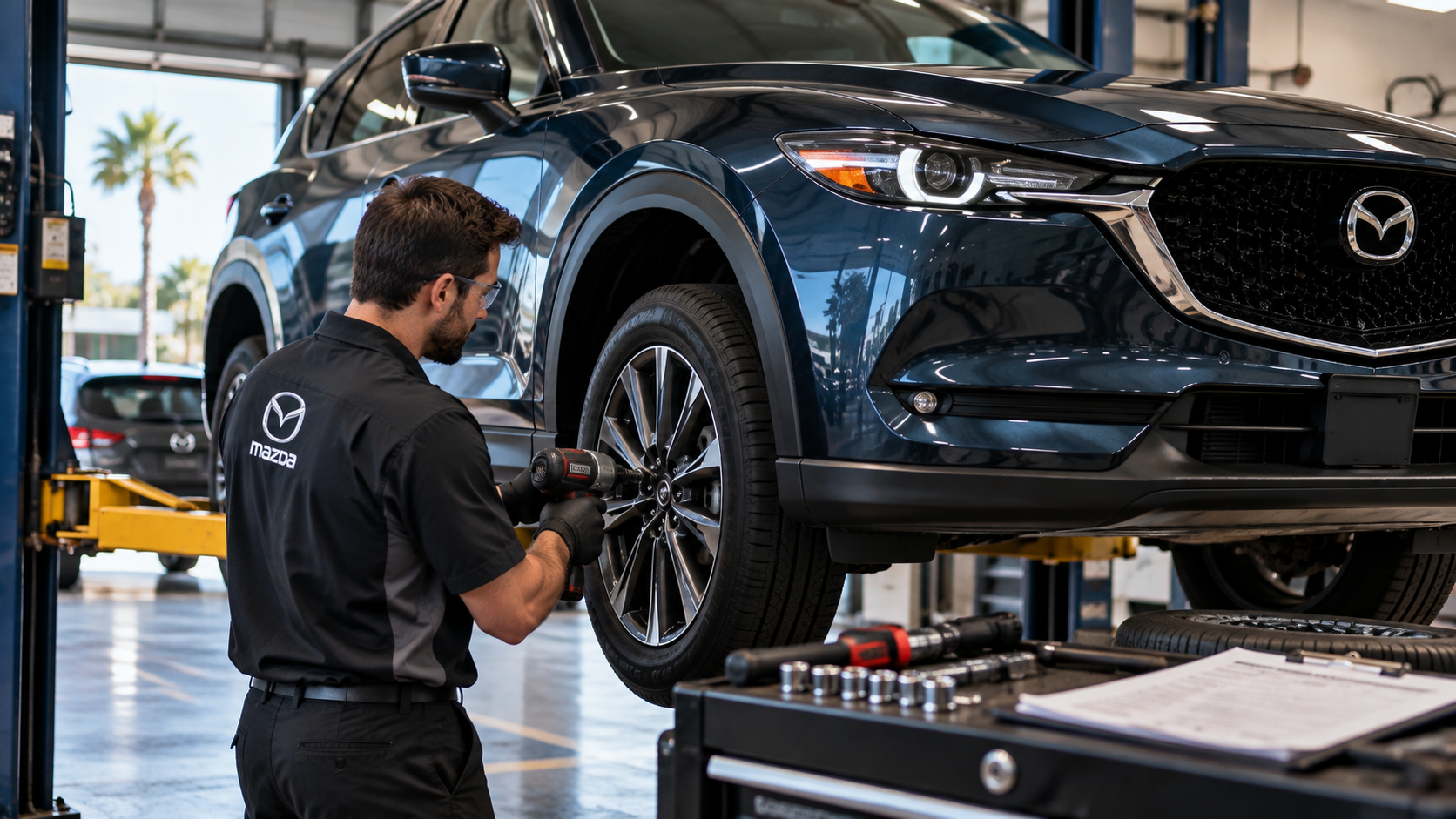
The first step in repairing the damage to your car is the delivery of your car to one of our repair centers. Our repair technicians will be assigned to visually examine your vehicle to ascertain the extent of the damage. We'll examine your car inside and out, and then we'll prepare a report outlining the damages. We'll check your car in, and we can also offer you a ride home. Complimentary pick up and drop off is part of our service.

Disassembly

Our repair technicians will remove all of the damaged parts. This allows us to get a complete picture of the damage, and to accurately assess what needs to be repaired. We'll also connect your car's computer to our diagnostic equipment so we can scan it for any additional damage. Once this stage is complete, our technicians will have an accurate picture of the damage. We'll send our report with the repair quotation to you. If the work is being arranged by your insurance company, we'll send the information to them too. On confirmation of the order to proceed from either your insurance company or yourself, we will move on to the next section.

Repair

Our technicians will begin the process of repairing your car. We have the latest technology available to complete paintless damage repair (PDR), windshield replacement, and any other work that's required. PDR is a specialized repair technique that allows you to repair dented or damaged metal without a refinish. Its cost-effective, and our preferred technique if the damage allows for it. We have a vast store of replacement parts, and we will only use original Mazda parts. These replacements are identical to the original parts on your car, which ensures they will fit perfectly. If color matching is required, we can match any original Mazda paint color. Our technicians can also fix paint with brush touching of small scratches and chips.

Quality Control

Once the repairs have been completed, your car goes to quality control for assessment. All of our repairs are conducted to the high standard expected by Mazda. Our specialists will check to make sure that the repair has all been completed and that the work followed the policies and procedures set out by Mazda.

Return

When quality control has finished, we'll call you so you can view the completed repair. Once you are satisfied and confirm the work is correct, you'll be able to drive off in a perfectly restored car. If you need accident repair, call our service department at Tom Bush Mazda.
Posted in:

Related Posts

What to do if your Mazda

What to Do If Your Mazda Gets Scratched or Dented

If your beloved Mazda has been scratched or dented, don't despair. Car scratches and dents are common while driving, but this doesn't mean you should ignore them. If left unfixed, car dents and scratches can ruin your Mazda's visual appeal and lower its value. Your trusted Mazda dealer can fix the damage and restore your car to its former glory. Why You Should Worry About Car Dents and Scratches Ignoring dents and scratches on your Mazda can lead to serious problems down the line. Deep dents caused by the impact of debris and minor accidents can compromise the structural integrity of the car, making it less safe in a collision. Fixing these dents on time preserves the car's structural integrity and safety. Deep scratches expose the underlying metal body to the elements. Over time, exposure to moisture can cause rust and corrosion on the Mazda's body. You will be forced to incur more money to restore the car's body. What's more, unattended dents can significantly lower your vehicle's resale value. more When to Visit a Mazda Dealer for Repairs Visit your local dealer immediately if your Mazda gets scratched or dented. We will take the following steps to restore the car to its original state: Assess the Extent of Damage We will inspect the damage to determine how severe it is. This will help us choose the best repair technique to restore the car. Minor dents can be fixed using simple tools like a dent puller or car dent plunger. However, if the car has deep dents and scratches, it will require a fresh paint job. Make Arrangements With Your Insurance If the damage to the body is covered by your car insurance, you can charge the repair costs to your policy. After assessing the damage, we will help you file a claim with your insurance. Fix the Damage Using Professional Techniques Our experts use professional techniques to fix the dents and scratches on your Mazda. For dents that haven't ruined the paint, we may use paintless dent repair, which is a fast and cost-effective restoration method. If the paint has been severely damaged, we will smooth out the affected areas and apply a fresh coat of paint. If you have been in a minor collision, we will check your car's body first to make sure it is structurally sound before painting it. Why You Should Avoid DIY Fixes for Car Scratches Fixing your car using a store-bought kit may seem affordable, but we advise against it. If your car has deep scratches, DIY kits won't help much. You might also end up causing further damage to the paint job, which will cost you a lot of money to fix. Trust the experts to conduct high-quality and durable repairs on your vehicle. Deep dents and scratches can ruin your car's paint and cost you a lot of money in repairs. Get the damage fixed immediately to preserve your Mazda's appearance. Visit us at Tom Bush Mazda for professional repairs.

First Time Car Buyer Guide Jacksonville Finance Prep

A first time car buyer guide for Jacksonville should begin with a budget, documents, insurance details, and clear financing questions. Preparation does not promise approval or a certain offer. However, it gives a lender the records needed to review the application. Start by setting a total vehicle range before choosing a Mazda. Include the price, taxes, registration, insurance, fuel, and future service. Therefore, the monthly payment should not stand alone. A longer loan term can lower the payment while raising the total paid. In addition, a larger upfront amount can reduce the amount financed. These choices should fit your full household budget. Can a First Time Shopper Finance a Mazda With No Credit? No credit and poor credit are not the same. No credit means a lender has little recorded borrowing history to review. Poor credit reflects recorded issues within an existing file. Financing may still be possible with limited history. However, each lender uses its own review process. Income, employment, residence, debt, and available records may all enter that review. A lender may also examine how long you have lived or worked in one place. Therefore, stable records can give the application more context. They do not guarantee approval. more First time shoppers should check their credit reports before applying. This step can reveal errors, old addresses, or unfamiliar accounts. In addition, it helps explain what a lender may see. Do not confuse limited history with negative history. This guide focuses on limited or no history. Recorded late payments, collections, or defaults require a separate finance discussion. Documents to Prepare Before Applying A complete file can reduce delays during the finance review. Which documents may be requested? Common records confirm identity, income, residence, employment, and insurance. Prepare these items before visiting: Bring a current government issued photo ID that matches the application name. Bring recent pay statements or other accepted income records requested by the lender. Bring proof of residence, such as a current utility bill or lease document. Bring insurance information or contact details for the provider you plan to use. Bring employer details, including its name, address, phone number, and your start date. Bring trade documents when another vehicle may enter the transaction. A lender may request other records after reviewing the application. Therefore, ask which documents apply before your appointment. Current program rules can also change. Make sure each record uses the same legal name and current address. Inconsistent details can slow the review. Furthermore, keep digital copies available in case another document is requested. Should a First Time Shopper Use a Cosigner? A cosigner joins the credit obligation and accepts legal responsibility for repayment. Should every first time shopper use one? No. The decision should follow a clear discussion about payment duty and credit risk. A lender may review the cosigner’s income, debt, and credit file. However, a cosigner does not remove the primary borrower’s duty. Both people can face credit harm after missed payments. Before asking someone to cosign, discuss the payment date, account access, and response plan for a missed payment. In addition, decide how both people will track the loan. Down payment planning belongs in the same discussion. Money paid upfront lowers the amount financed. A trade may also reduce that amount after value and payoff review. Use these questions before choosing an upfront amount: How much money will remain for insurance, registration, fuel, and early service? Will a larger upfront amount reduce the monthly payment enough for the budget? Does a trade have an existing payoff that must be cleared first? Will the lender or current program require a minimum upfront amount? Do not empty emergency savings only to lower the loan balance. Therefore, keep a reserve for costs that arrive after delivery. Prequalification and Finance Application Steps Prequalification gives an early estimate from the information supplied. It does not equal final approval. A full application requires deeper lender review and the selected Mazda details. Some prequalification tools may use a soft credit inquiry. Others may use a hard inquiry. Therefore, read the disclosure before submitting personal information. After prequalification, compare the estimated range with your vehicle budget. Then, choose a Mazda that fits the planned price range. The exact price, taxes, fees, and trade details will shape the final request. The full application may ask for identity, income, residence, employment, and credit information. In addition, the lender may request more documents before making a decision. Final terms can differ from an early estimate. Therefore, compare the written offer with the amount you planned. Do not rely on a verbal summary alone. What to Confirm Before Choosing a Mazda Before signing, review every number in the final agreement. Which figures matter most? Confirm the vehicle price, upfront amount, trade credit, financed amount, APR, term, payment, fees, and total payments. A lower payment may come from a longer term. Therefore, compare the total paid across the full loan. Also, confirm whether optional products appear in the financed amount. Review these final points: Confirm that the vehicle price matches the agreed figure. Confirm that the trade value and payoff appear correctly. Confirm the APR, loan term, monthly payment, and first payment date. Confirm every fee and optional product before signing. Confirm that the final paperwork matches the Mazda you selected. Keep copies of every signed document. Tom Bush Mazda maintains a first time owner page with current program details. Jacksonville shoppers can review that page before applying. In addition, the finance page and payment calculator can support early planning. A first time car buyer guide should lead to informed questions, not promises. Prepare the records, compare the full loan, and review every term. Then, choose the Mazda and finance path that fit your budget.

Mazda G Vectoring Control Plus Guide for Daily Driving

Mazda G Vectoring Control Plus adjusts engine torque and brief brake input in response to steering movement. What changes during a turn? The feature shifts a small amount of load toward the front tires, then settles the chassis as steering returns. Additionally, these actions happen through small control changes. Therefore, the driver still chooses the path, steering angle, speed, and braking. The feature works quietly in the background and supports a smoother link between steering input and vehicle motion. How Does Mazda G Vectoring Control Plus Work? Mazda G Vectoring Control Plus begins by reading steering movement. The driver turns the wheel, and the feature responds with a brief torque reduction. Therefore, a small amount of load moves toward the front tires. Moreover, that load change presses the front tires more firmly against the road. As a result, the Mazda can respond to the steering request with less need for small wheel corrections. What happens after the Mazda enters the curve? Engine torque returns as the vehicle follows the chosen path. Then, a brief brake input can act near corner exit. more Furthermore, the brake input targets the outside front wheel. Consequently, the chassis settles as the steering wheel moves back toward center. The action is small and may not feel like ordinary braking. Still, G Vectoring Control Plus does not turn the wheel for the driver. Instead, it responds to the steering already chosen. The driver still manages speed, spacing, lane position, and braking. What Happens During Turn Entry and Corner Exit? First, turn entry begins when the driver adds steering angle. The feature briefly lowers engine torque. Therefore, vehicle load moves forward and supports front tire response. Next, midway through the curve, torque returns. The Mazda can then follow the selected line without a sudden change in power. In addition, the driver may need fewer small steering corrections. Finally, corner exit begins as the wheel returns toward center. At that point, G Vectoring Control Plus can add slight brake pressure at the outside front wheel. As a result, the chassis settles during the transition back toward straight travel. Why does that sequence matter? A turn includes more than one movement. Entry, steady cornering, and exit each place a different demand on the tires. The feature links those stages through small torque and brake changes. However, tire grip still comes from tire tread, tire pressure, road surface, and speed. No control feature can replace sound tire care or careful steering. What May Drivers Notice During Daily Driving? Given that, G Vectoring Control Plus works through small changes, so the response may feel subtle. What may a driver notice? Steering can feel calmer through a curve, ramp, or lane change. A sweeping highway ramp gives the feature time to work through entry and exit. Therefore, the driver may make fewer small corrections while holding the chosen path. A lane change also includes steering input and steering return. The same sequence can support a smoother move into the next lane. In addition, the chassis may settle more cleanly as the wheel centers. Common driving situations include: A curved highway ramp can show how the Mazda responds during steady steering. A lane change can show how the chassis settles when steering returns toward center. A winding road can reveal whether the driver needs frequent small steering corrections. A turn around a parked vehicle can show the response at lower speed. The feature should not create a strong pedal pulse or sharp braking sensation. Therefore, a warning light, harsh pull, or unusual noise deserves inspection. G Vectoring Control Plus With All Wheel Drive and Other Controls By contrast, G Vectoring Control Plus and i Activ AWD handle separate tasks. The steering feature changes torque and brief brake input. The all wheel drive hardware manages power delivery between the axles. Can both work during the same turn? Yes. Steering data can support several vehicle controls, while each one keeps its own role. Therefore, coordinated action does not make them one feature. Traction control also serves a separate purpose. It responds when tire slip reaches a threshold. By contrast, G Vectoring Control Plus begins with steering movement and small load changes. Electronic stability control can add braking when the Mazda moves away from the intended path. G Vectoring Control Plus works earlier through subtle torque and brake input. However, the driver may never feel a distinct handoff between these controls. Moreover, tire state remains central. Worn tread, poor pressure, or damaged tires reduce available grip. Therefore, vehicle controls cannot restore traction that the tires cannot provide. Current Mazda Models and Test Drive Review Mazda lists G Vectoring Control Plus on several current vehicles, including the Mazda3, CX 30, and CX 5. However, model year and trim details can change. Shoppers should confirm the exact vehicle before relying on a broad lineup statement. What should a shopper test? Start with ordinary steering situations instead of searching for a dramatic response. The feature works through small changes, so smoothness matters more than one obvious action. During a test drive: Follow a curved ramp at a steady and legal speed. Make a safe lane change and notice how the Mazda settles afterward. Drive through several city turns and note the need for steering corrections. Compare steering response across two Mazda models with confirmed feature availability. Ask which trim and model year include the latest feature version. Tom Bush Mazda can connect Jacksonville shoppers with current Mazda3, CX 30, and CX 5 inventory. Each model offers a different size, seating layout, and cabin shape. Therefore, the same feature should be reviewed within the exact Mazda under consideration. Mazda G Vectoring Control Plus supports steering response through small torque and brake changes. Its purpose becomes clearest during curves, lane changes, and steering return. A careful test drive can show how those actions feel within one specific Mazda.