Mazda CX-90 and Honda Pilot Take Different Approaches to Three-Row Travel
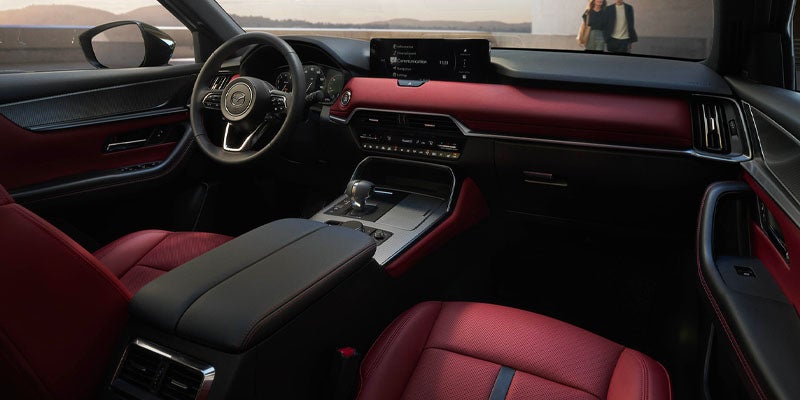
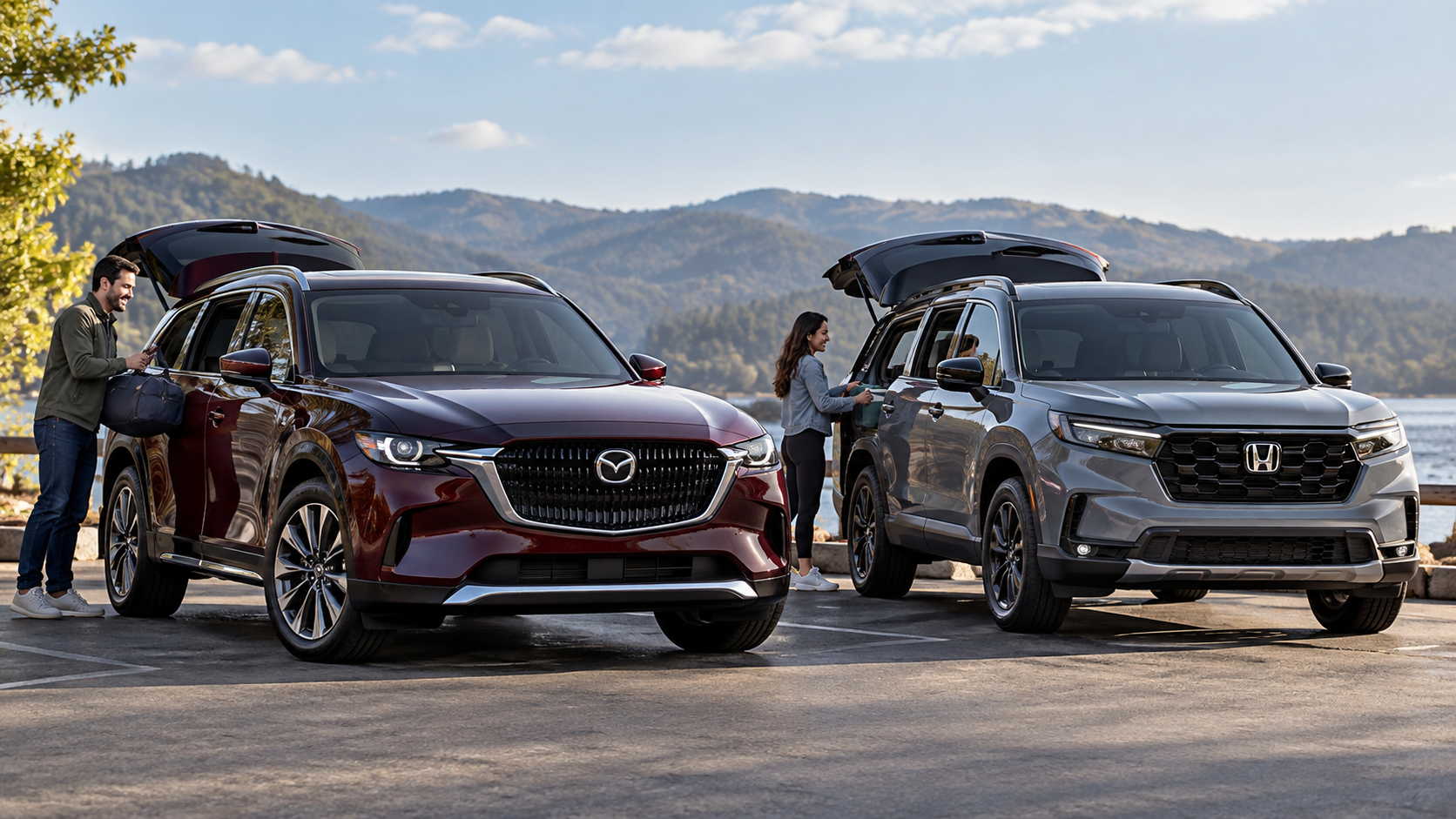
Both SUVs offer three rows and seating for up to eight in selected configurations. However, their proportions tell different stories. The CX-90 rides on a 122.8-inch wheelbase. The Pilot uses a 113.8-inch wheelbase. Therefore, a longer wheelbase does not guarantee more cabin room. Seat placement and cabin packaging also shape usable space.Mazda gives the CX-90 a long hood and a drivetrain layout that supports its road-focused character. Honda uses its cabin space differently. The Pilot puts strong emphasis on passenger room and cargo volume. Consequently, those choices become clear when you move past exterior size and inspect each seating row.
For a family, the useful question is simple. With that in mind, where will people sit most days? A household using the third row every week may judge these SUVs differently. Another family may fold those seats for cargo. In addition, steering feel and power delivery deserve attention during the same evaluation.
Jacksonville shoppers can also review Tom Bush Mazda’s current Mazda inventory to see which CX-90 configurations are currently available.
How Different Is the Third Row in the Mazda CX-90 and Honda Pilot?
The third rows differ most clearly in measured legroom and shoulder room. The 2026 Pilot lists 32.5 inches of third-row legroom. Published CX-90 specifications list 30.4 inches. Therefore, that gap deserves attention when older children or adults use the rear seats.Moreover, seat count needs context. Both SUVs can seat up to eight, but trim choice changes the second-row layout. Some versions use captain's chairs, while others use a bench. As a result, that choice changes passenger flow, center access, and access to the third row.
Beyond that, check more than legroom during a visit. Sit in every row that your household plans to use. Move the second row into a position that gives both rows enough knee room. Afterward, check headroom, shoulder room, foot space, and entry clearance.
In addition, families with child seats should test their normal arrangement. A third row may look spacious when the second row is empty. However, the same layout can feel different once child seats, bags, and daily gear are in place.
Cargo Space Depends on Who Is Coming Along
Therefore, cargo numbers become useful only when they match the seating layout you plan to use. The Pilot provides more cargo volume in published measurements. Honda lists 18.6 cubic feet behind the third row before its maximum measurement method is applied. Published CX-90 specifications list 14.9 cubic feet with all seats in place.Still, the bigger question is how much space remains while passengers stay seated. A family carrying six or seven people cannot use the same cargo figure as someone who folds both rear rows. For this reason, space behind the third row deserves close attention for school trips, airport runs, or weekend travel.
When comparing both SUVs, bring a mental list of what usually rides with you:
- Check whether your stroller, sports bag, or cooler fits with the third row raised.
- Fold only the seats you would normally fold on a normal trip, then inspect the remaining floor area.
- Look at the cargo opening, floor height, and seat-folding process, since shape can matter as much as total volume.
The Powertrains Explain Much of the Difference From the Driver's Seat
By contrast, the CX-90 and Pilot take different mechanical approaches. Mazda uses a turbocharged 3.3-liter inline-six with an eight-speed automatic. The standard CX-90 3.3 Turbo produces up to 280 horsepower and 332 pound-feet of torque. Mazda also includes i-Activ all-wheel drive across the CX-90 lineup.Honda uses a naturally aspirated 3.5-liter V6 with a ten-speed automatic. The 2026 Pilot produces 285 horsepower and 262 pound-feet of torque. Front-wheel drive is offered on selected trims, while Honda's i-VTM4 all-wheel drive is available or standard elsewhere in the lineup.
However, horsepower alone does not explain how each SUV responds. Torque output and engine speed matter during acceleration. The Mazda's standard turbo engine reaches its 332 pound-feet at 2,000 rpm. The Pilot reaches 262 pound-feet at 5,000 rpm. As a result, the two engines deliver power differently.
Therefore, the road test should focus on what you feel through normal inputs. Accelerate from a stop. Merge onto a faster road. Make a smooth turn at neighborhood speed. Notice steering weight, throttle response, transmission shifts, brake feel, and body motion.
Moreover, Mazda's brand philosophy places strong emphasis on connection between the driver and the car. The CX-90 carries that idea into a larger three-row format. By contrast, Honda gives the Pilot a different focus. Cabin room and flexible family seating take a larger role in the package.
Jacksonville shoppers who want to compare available configurations can browse Tom Bush Mazda inventory before planning a visit.
What Should You Compare During a Three-Row SUV Test Drive?
For this reason, a useful test drive checks the parts of the SUV your household will use every week. Start with seating, then cargo, then the drive itself. Consequently, that order keeps the evaluation tied to your daily routine.Before leaving the lot, set the driver's seat where you want it. Then check the second and third rows without moving that front position. Test seat access and cargo space with the cabin arranged for your normal passenger count.
Afterward, use familiar driving inputs on the road. Try a stoplight launch, a steady cruise, a lane change, and a low-speed turn. Listen for cabin noise and pay attention to how quickly each drivetrain responds.
A strong comparison also includes a few practical checks:
- Sit in every row your household expects to use on a regular basis.
- Load the type of gear you normally carry and check the remaining cargo area.
- Compare steering, throttle response, braking, and ride quality on similar roads.
In the end, the Mazda CX-90 and Honda Pilot solve the same three-row task in different ways. The Pilot gives more published space in several cabin and cargo measurements. The CX-90 pairs three-row seating with a turbo inline-six and standard all-wheel drive. Your strongest comparison comes from testing both with the same people, gear, and route you expect to use after purchase.
When you are ready to look more closely at the Mazda side of the comparison, you can explore current Mazda vehicles at Tom Bush Mazda.