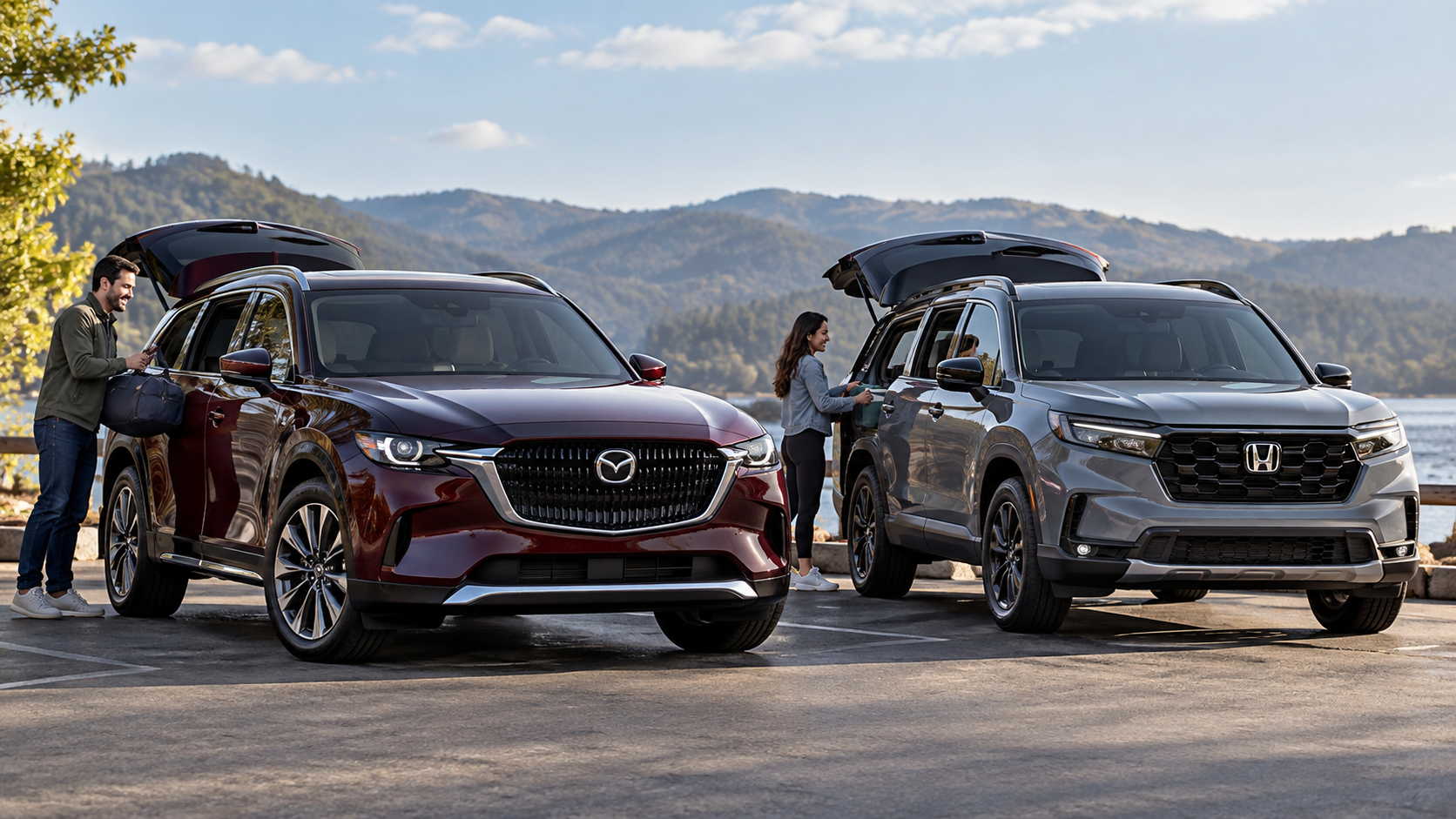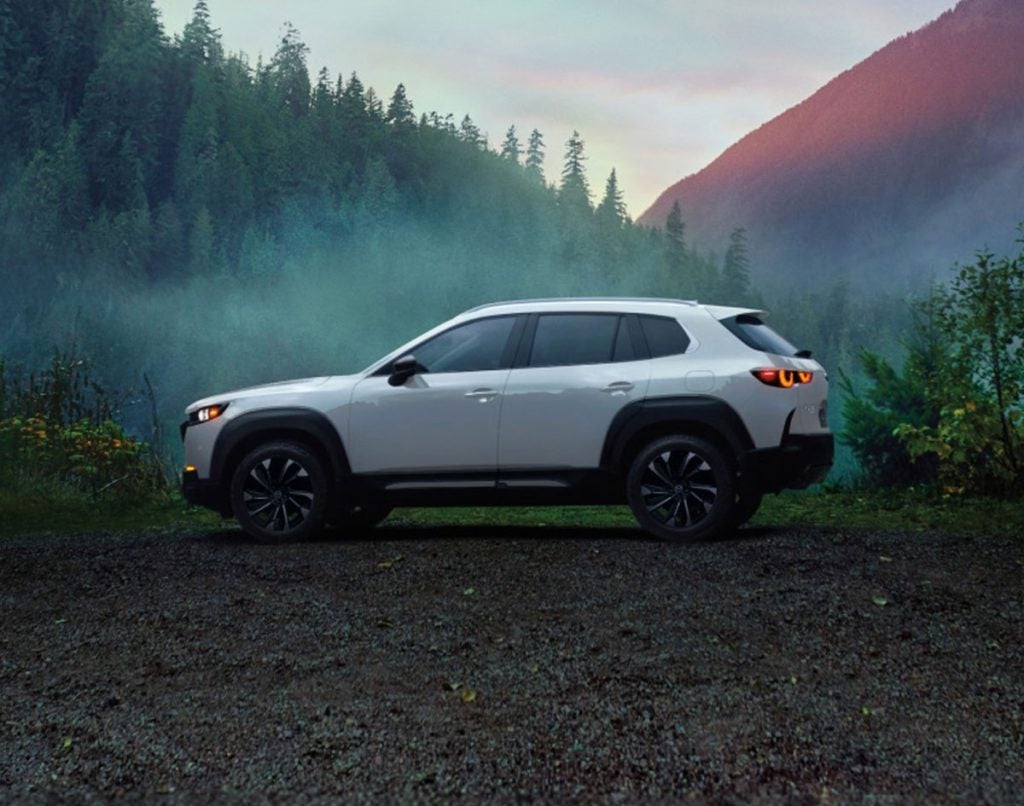
Mazda SUV cargo space changes with each model’s row count, seat position, cargo shape, and passenger layout. The CX 5 suits daily errands and compact family loads. The CX 50 adds a wide floor for luggage and outdoor gear. The CX 90 adds three rows with several seating arrangements.
How should a shopper compare them? Start with passenger count, then list the items that travel most frequently. Next, check which seats must stay upright. Therefore, the largest published number may not match the way your household packs.
Mazda CX 5 Cargo for Daily Household Trips
The 2026 Mazda CX 5 provides up to 59.3 cubic feet with the rear seatbacks folded. Mazda also enlarged the liftgate opening and lowered the cargo floor. Therefore, loading a stroller, grocery bags, or household boxes may require less lifting.
Can the CX 5 hold a stroller and groceries together? A compact folded stroller may leave room beside it for several bags. However, stroller width, wheel size, and handle shape can change the remaining floor area.
Additionally, the rear seatback can open more floor length when needed. One section may fold for a narrow box or long package. Therefore, another rear seating position can remain ready for a passenger.
A useful daily packing test should include familiar items:
- Place the folded stroller near the liftgate and check the room beside it.
- Load grocery bags without stacking them above the rear seatback.
- Test a medium storage bin and note whether the liftgate closes freely.
- Fold one rear seat section and check access from the cargo opening.
The CX 5 fits shoppers who need five seats during most trips. Still, personal gear should guide the final choice. A cargo test can reveal more than one measurement alone.
How Many Suitcases Fit in a Mazda CX 50?
The Mazda CX 50 provides 31.4 cubic feet with the rear seatback upright. It provides 56.3 cubic feet after that seatback folds. Therefore, five travelers can keep every seat available while packing within the smaller figure.
How many suitcases fit in a Mazda CX 50? No fixed count applies because bag sizes vary. Still, several carry on bags may fit behind the rear seat. Larger checked bags may need stacking or a folded seat section.
Moreover, the wide cargo opening can make broad items easier to place. In addition, the flat floor gives travel gear a clear loading area. Soft duffel bags can fill spaces that rigid suitcases leave open.
A travel packing check should cover the items that matter most:
- Bring the largest suitcase and place it flat, then upright.
- Add one carry on bag and note the remaining side space.
- Check whether a cooler or sports bag fits beside the luggage.
- Fold one rear seat section when skis, boards, or long gear must travel.
The CX 50 suits shoppers who value five seats and a wide cargo floor. However, exact packing results still depend on each item’s shape.
What Fits Behind the Mazda CX 90 Third Row?
The Mazda CX 90 provides 14.9 or 15.9 cubic feet behind the raised third row. The figure changes with the third row seating layout. Therefore, shoppers should verify the exact configuration before comparing numbers.
What fits behind the Mazda CX 90 third row? Smaller bags, grocery sacks, and compact travel pieces may fit there. Larger luggage sets may need one third row section folded.
Additionally, the third row seatbacks split evenly on several configurations. Therefore, one section can fold while another rear seat remains available. This arrangement can support one rear passenger plus added bag room.
Passenger count changes every packing decision. A six person trip may leave more room than an eight person trip. In addition, captain’s chairs and bench seating can change access through the cabin.
Shoppers should also check the liftgate opening and floor depth. A bag may fit by volume but remain awkward to place. Therefore, personal luggage offers the clearest test.
Mazda CX 90 Cargo With Rear Rows Folded
Folding the CX 90 third row raises cargo volume to 40.0 or 40.1 cubic feet. The first two rows remain available at that point. Therefore, the three row SUV can carry several passengers and a larger luggage load.
With both rear rows folded, cargo volume reaches 74.2 or 75.2 cubic feet. That layout creates the largest floor in this comparison. However, only the front seats remain ready for passengers.
How should a family compare these figures? Match each number with the seats that remain. The largest figure supports furniture boxes, home supplies, or bulky gear. The middle figure supports travel with the third row stored.
Moreover, the CX 90 gives shoppers several seat arrangements. A partial fold can create space for long items while preserving another seat. Therefore, the exact trim and seating layout deserve close review.
A family trip should begin with the passenger list. Next, place the largest bags behind the raised third row. Then, fold one section and compare the new floor area. This sequence shows the tradeoff clearly.
Choosing a Mazda SUV Through a Cargo Test
Which Mazda SUV suits your household? The answer starts with the items that shape your weekly and seasonal trips. A stroller may matter every day. A large suitcase may matter several times each year.
Bring those items during a visit to Tom Bush Mazda in Jacksonville. Therefore, you can test the exact CX 5, CX 50, or CX 90 under consideration. Inventory pages can also narrow the visit to the correct model.
Use a simple cargo test before making a decision:
- Keep every needed passenger seat upright before loading gear.
- Place the largest rigid item first because it offers the least packing freedom.
- Add softer bags around it and check rear window visibility.
- Test one partial seat fold when longer items need extra floor length.
- Close the liftgate gently and confirm that nothing presses against the glass.
The CX 5 supports daily household packing within a compact two row layout. The CX 50 adds a wide floor for travel and outdoor equipment. The CX 90 adds three rows and several ways to divide seats from cargo.
Therefore, the right choice comes from one clear comparison. Match the people, the gear, and the seat position before reviewing the final measurement.