

The Mazda features that define the cabin experience are not a list of specifications. They are the result of a deliberate design philosophy that starts with the driver and removes everything that does not serve them. Most shoppers notice the feeling immediately on a test drive and struggle to describe it afterward. The cabin reads as calm rather than sparse, composed rather than complicated. This piece explains the design thinking behind that sensation, how the seat and controls reinforce it, and what the rear seat and connectivity features contribute to the full picture.
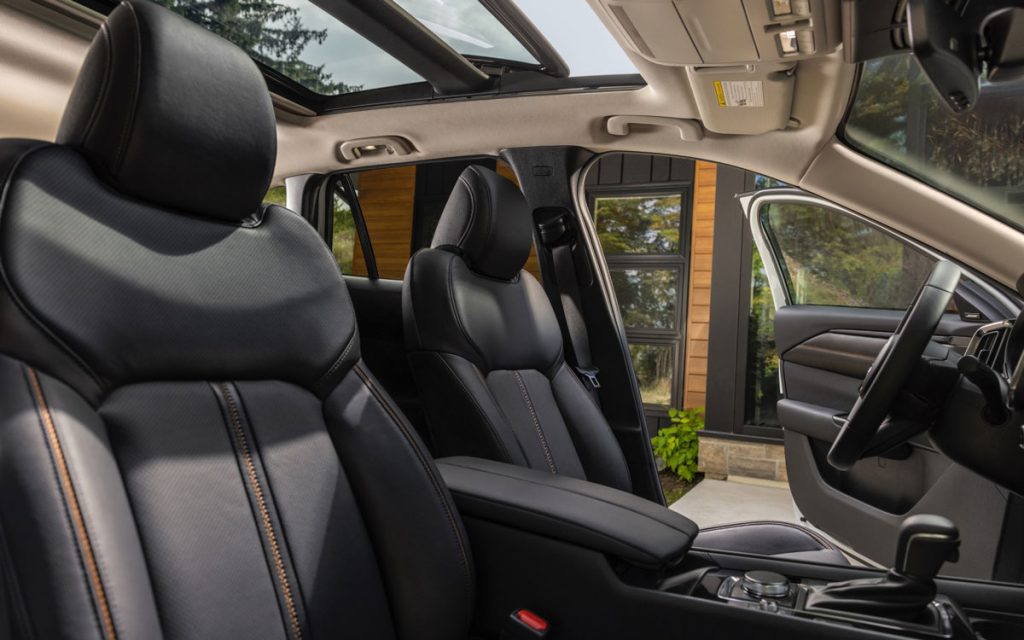
The Design Philosophy Behind the Calm
A question that surfaces after most Mazda test drives is worth answering directly: what creates the sense of calm in this cabin? The answer begins with two Japanese concepts that guide every interior decision Mazda makes.
Kodo, which translates to Soul of Motion, is the design language that governs how Mazda shapes every surface, line, and panel inside and outside its vehicles. Kodo draws from the study of living things in motion, capturing tension and energy through form. Inside the cabin, that philosophy produces surfaces that feel purposeful rather than decorative. Nothing sits on a panel unless it contributes to the driver’s relationship with the space.
Ma is the complementary concept. It refers to the meaningful use of empty space, a principle borrowed from Japanese art and architecture. Where most automakers fill available surfaces with screens, controls, and visual elements, Mazda treats open space as a design asset. The areas of the cabin that contain nothing are not oversights. They produce breathing room, reduce visual noise, and allow the eye to settle rather than scan.
Together, Kodo and Ma explain why a Mazda cabin produces calm without producing emptiness. The restraint is intentional. Every decision about what to include carries equal weight as every decision about what to leave out. Shoppers who sit in the cabin and feel something without being able to name it are responding to a design system, not a coincidence.
Why the Driver Seat Feels Different
Mazda’s human-centric engineering philosophy extends past aesthetics and into the physical relationship between driver and seat. The driver seat in the CX-5 positions the pelvis first. That starting point matters because the pelvis determines everything above it.
When the pelvis sits at the correct angle, the spine maintains its natural S-curve without effort. The lower back does not press against the seatback. The shoulders stay level. The head rests in a neutral position that reduces the effort required to stabilize it against vehicle movement. Over a 30-minute commute, that difference in muscular effort accumulates. Over a year of daily driving, it becomes the reason some drivers arrive less tired than others.
Mazda engineers study how the body responds to braking, cornering, and acceleration inputs. The seat design accounts for those forces by supporting the points where the body naturally braces during vehicle movement. The thigh support length, the lateral bolster position, and the seatback angle all reflect that research. Furthermore, the steering wheel position and instrument cluster height work together with the seat to keep the driver’s gaze close to the road during instrument checks. That coordination reduces the frequency and duration of glances away from the forward view, which compounds the fatigue reduction the seat delivers on its own.
How the Controls Stay Out of Your Way
A concern shoppers sometimes carry into a Mazda test drive is straightforward: will the rotary dial feel outdated compared to a touchscreen? The honest answer requires understanding what the dial was designed to prevent.
Mazda retained physical commander control architecture while most competitors moved toward touchscreen-primary interaction. That decision was not a technology gap. It reflected a specific conclusion about how touchscreen interaction affects driver attention during vehicle movement. Reaching toward a screen, locating a target, pressing it, and confirming the result requires the driver to shift visual attention from the road to the display for the duration of each action. Physical controls eliminate that sequence. A driver who knows where the rotary dial sits can adjust audio volume, change a navigation input, or switch climate zones without moving their eyes from the road.
Here is what to evaluate when comparing the Mazda control model to touchscreen-first alternatives:
- During a test drive, attempt to adjust the audio volume without looking at the center console. In a Mazda, the rotary dial completes that action through muscle memory after a short familiarization period. In a touchscreen-primary cabin, the same action typically requires a visual search and a tap.
- Note how many steps a climate temperature change requires on each system. The Mazda physical climate controls complete that action in one turn or press. Many touchscreen systems require two to three interactions to reach the same result.
- Consider how often you adjust audio, navigation, or climate settings during a typical commute. Each of those adjustments represents a moment where interaction model determines how much attention the cabin pulls from the road.
The commander dial in the CX-5 sits at the natural resting position of the driver’s right hand near the center console. That placement requires no reaching and no postural adjustment to operate. The calm the cabin produces visually is reinforced by the ease the controls produce physically.
What the Rear Seat and Cargo Space Support
Shoppers evaluating the CX-5 for household use often focus on two spaces: the rear seat and the cargo floor. Both reward closer evaluation than the specification sheet provides.
The rear seat in the CX-5 carries 39.6 inches of legroom, which places it among the more generous measurements in its class. Two adults sit comfortably for commute-length trips. The rear seatback reclines slightly, which improves comfort during longer drives without reducing the cargo floor behind it. Dedicated rear seat ventilation and a fold-down center armrest with a storage compartment make the space functional for regular passengers rather than occasional ones.
Here is what the cargo structure supports in daily household use:
- The 29.1 cubic feet of cargo space behind the rear seat accommodates a week of grocery shopping for two, a set of luggage for a weekend trip, or regular large-format cargo like sporting equipment and stroller frames with the rear seat occupied.
- The 40/20/40 split-fold rear seat allows one section to fold while the other remains occupied, which extends cargo capacity for longer items without eliminating rear passenger seating entirely.
- The flat load floor that results from folding the rear seat sections removes the step-up that many competing crossovers produce, making loading and unloading heavier items more straightforward in daily use.
The cargo floor height sits low relative to the bumper, which reduces the lifting distance for heavier loads. That detail reflects the same human-centered thinking that shaped the driver seat. Small ergonomic decisions accumulate into a vehicle that is less tiring to use across a full week.
How Apple CarPlay Fits Without Taking Over
Connectivity sits at an interesting intersection in the Mazda cabin. The CX-5 supports wireless Apple CarPlay and Android Auto, which means the driver’s phone integrates without a cable. However, the interaction model that controls those systems is worth understanding before a first drive.
CarPlay in the CX-5 displays on the central screen above the console. Navigation, audio, and messaging functions all appear there. The driver controls them through the commander dial rather than by reaching toward the screen and tapping. That interaction model keeps the touchscreen in its proper role as a display surface rather than a primary control interface. The screen shows information. The hand controls it from a fixed, ergonomically positioned dial.
That distinction aligns directly with the Ma philosophy. A screen that sits above the console and receives input from a fixed hand position does not pull the driver’s gaze or posture toward it during use. It stays within the visual field without dominating it. The result is connectivity that serves the driver rather than redirecting them. Music, directions, and calls integrate into the drive without producing the reaching, tapping, and re-orienting that touchscreen-primary systems ask for.
The cabin the CX-5 delivers is not the product of a single feature or a single decision. It reflects a consistent application of the same philosophy across every element a driver touches, sees, and reaches for. Kodo shapes the surfaces. Ma shapes the space between them. Human-centric engineering shapes the seat, the controls, and the way the phone integrates into the drive. That consistency is what shoppers feel when they sit inside and notice that everything seems to belong exactly where it is.
Connect with us


