

Mazda G Vectoring Control Plus adjusts engine torque and brief brake input in response to steering movement. What changes during a turn? The feature shifts a small amount of load toward the front tires, then settles the chassis as steering returns.
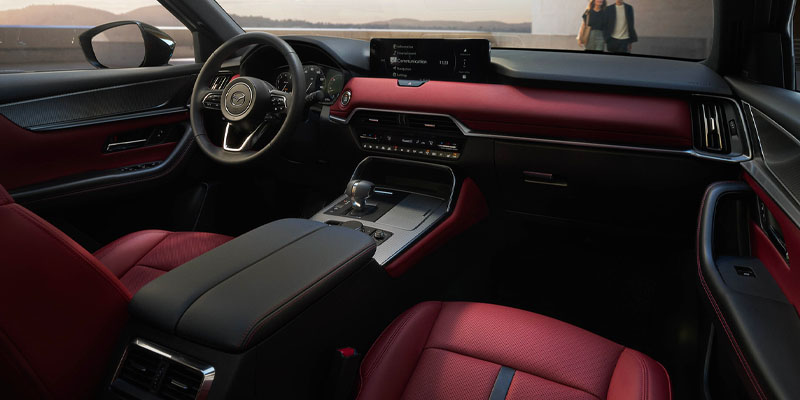
Additionally, these actions happen through small control changes. Therefore, the driver still chooses the path, steering angle, speed, and braking. The feature works quietly in the background and supports a smoother link between steering input and vehicle motion.
How Does Mazda G Vectoring Control Plus Work?
Mazda G Vectoring Control Plus begins by reading steering movement. The driver turns the wheel, and the feature responds with a brief torque reduction. Therefore, a small amount of load moves toward the front tires.
Moreover, that load change presses the front tires more firmly against the road. As a result, the Mazda can respond to the steering request with less need for small wheel corrections.
What happens after the Mazda enters the curve? Engine torque returns as the vehicle follows the chosen path. Then, a brief brake input can act near corner exit.
Read the rest of this entry »Mazda Certified Pre Owned Program Guide for Shoppers
Mazda Certified Pre Owned vehicles complete Mazda program review, inspection, history, and warranty requirements before certification. An ordinary used Mazda follows a separate dealership sale process. Therefore, official certification adds Mazda program records that shoppers can review before choosing a vehicle.

What makes certification different from a familiar used listing? The distinction comes from program rules, completed checks, written coverage, and roadside support. In addition, each shopper should review the exact Mazda, its records, and its warranty documents.
What Does Mazda Certified Pre Owned Mean?
Mazda Certified Pre Owned status means a used Mazda met current program requirements before sale. A Mazda badge or dealership listing alone does not confirm certification. Therefore, shoppers should look for clear CPO labeling on the exact vehicle.
The certification process begins when an eligible Mazda enters program review. Staff examine its history, current state, major components, and road test results. Any required corrections must occur before the Mazda receives official CPO status.
Read the rest of this entry »Mazda SUV cargo space changes with each model’s row count, seat position, cargo shape, and passenger layout. The CX 5 suits daily errands and compact family loads. The CX 50 adds a wide floor for luggage and outdoor gear. The CX 90 adds three rows with several seating arrangements.

How should a shopper compare them? Start with passenger count, then list the items that travel most frequently. Next, check which seats must stay upright. Therefore, the largest published number may not match the way your household packs.
Mazda CX 5 Cargo for Daily Household Trips
The 2026 Mazda CX 5 provides up to 59.3 cubic feet with the rear seatbacks folded. Mazda also enlarged the liftgate opening and lowered the cargo floor. Therefore, loading a stroller, grocery bags, or household boxes may require less lifting.
Can the CX 5 hold a stroller and groceries together? A compact folded stroller may leave room beside it for several bags. However, stroller width, wheel size, and handle shape can change the remaining floor area.
Additionally, the rear seatback can open more floor length when needed. One section may fold for a narrow box or long package. Therefore, another rear seating position can remain ready for a passenger.
A useful daily packing test should include familiar items:
Read the rest of this entry »The Mazda features that define the cabin experience are not a list of specifications. They are the result of a deliberate design philosophy that starts with the driver and removes everything that does not serve them. Most shoppers notice the feeling immediately on a test drive and struggle to describe it afterward. The cabin reads as calm rather than sparse, composed rather than complicated. This piece explains the design thinking behind that sensation, how the seat and controls reinforce it, and what the rear seat and connectivity features contribute to the full picture.

The Design Philosophy Behind the Calm
A question that surfaces after most Mazda test drives is worth answering directly: what creates the sense of calm in this cabin? The answer begins with two Japanese concepts that guide every interior decision Mazda makes.
Kodo, which translates to Soul of Motion, is the design language that governs how Mazda shapes every surface, line, and panel inside and outside its vehicles. Kodo draws from the study of living things in motion, capturing tension and energy through form. Inside the cabin, that philosophy produces surfaces that feel purposeful rather than decorative. Nothing sits on a panel unless it contributes to the driver’s relationship with the space.
Read the rest of this entry »Visiting a Mazda dealer in Florida should feel like a clear, calm conversation. Most shoppers arrive with some level of apprehension. They have heard stories, read warnings, and built mental defenses before walking through the door. A buying process built around honesty removes the need for those defenses entirely. This piece defines what that process looks like at each stage, so shoppers know what to expect and what the right experience feels like from start to finish.

What Budget Respect Looks Like
A shopper who states a monthly budget or a total purchase limit shares the most important piece of information in the conversation. What the salesperson does with that number is the first and clearest signal of how the rest of the visit will go.
Budget respect means the conversation stays anchored to the figure the shopper provided. The salesperson builds options around that number rather than above it. Trim levels, packages, and financing structures all get presented within the stated range first. If something above budget comes up, it arrives as a transparent choice rather than a quiet assumption.
Read the rest of this entry »When drivers compare Mazda against larger, heavier crossovers, the conversation usually starts with size and ends with feel. Many shoppers arrive at a Mazda expecting to compromise on space and leave surprised by something harder to name. The compact proportions, the way the steering responds, the calm that settles over the cabin on a long commute. This piece explains what produces those qualities, why they matter in daily driving, and who tends to find that a Mazda fits better than a larger alternative.

What Makes a Mazda Feel Different to Drive
A question that follows most Mazda test drives is the same one: why does this feel so much more connected than everything else I drove? The answer is not power. It is not suspension stiffness. It sits in how Mazda engineers the relationship between steering input and vehicle response.
Mazda’s G-Vectoring Control Plus system adjusts engine torque in response to steering input. When a driver turns the wheel, the system briefly reduces torque to shift weight toward the front wheels. That weight shift increases front grip and sharpens the vehicle’s response to the driver’s direction. When the driver straightens the wheel, the system applies a small amount of braking to the outer rear wheel to stabilize the vehicle and settle the body. The whole sequence happens in fractions of a second and requires no driver awareness.
Read the rest of this entry »The Mazda CX-90 plug-in hybrid draws genuine attention for one clear reason. It can cover most daily driving on electricity while running like a conventional SUV when the battery runs low. However, fit depends on how you drive, where you charge, and how your days are structured. This guide explains how the powertrain works, what the electric range means for real commutes, and how to evaluate whether the plug-in format suits your life.

How the Plug-In Hybrid Powertrain Works
Shoppers often carry one question into this research: how does the system decide when to use electricity versus gas? The answer lives in how Mazda built the two energy sources to function together.
The CX-90 PHEV pairs a 2.5-liter four-cylinder engine with an electric motor and a 17.8-kilowatt-hour battery. Total system output reaches 323 horsepower. Standard all-wheel drive comes on every trim. The electric motor handles low-demand situations, including city driving, light acceleration, and low-speed movement. When power demand climbs above what the motor can meet alone, the gas engine steps in to assist.
The system reads throttle input, vehicle speed, battery state, and outside temperature. It selects the appropriate power source at each moment without requiring driver input. Some gas engine engagement can occur during battery-charged driving, especially during hard acceleration or cold weather. Electric mode does not mean the engine stays off entirely. It means the battery carries the primary load whenever conditions allow.
Read the rest of this entry »Mazda tire and brake questions usually begin long before a service appointment because drivers notice small changes in steering feel, braking response, warning lights, or tire wear patterns during everyday driving. A slight vibration during braking, uneven tread wear, or a dashboard light appearing during startup can create uncertainty about whether the issue needs immediate attention or simple monitoring.

Most drivers are not trying to diagnose the vehicle themselves. They are trying to understand whether what they are noticing fits normal wear or whether it signals something developing beneath the surface. Brake inspections, tire rotations, and electrical warning evaluations all exist to identify wear patterns early before they create larger repair concerns or more stressful ownership situations.
How Tire Rotations and Brake Inspections Work Together
How often should brakes be checked? Brake inspections are usually performed during routine tire service because tire removal creates direct access to braking components that would otherwise remain partially hidden behind the wheels.
Technicians inspect brake pad thickness, rotor surface wear, heat spotting, uneven contact patterns, and brake hardware condition during these evaluations. Tire rotation appointments create a natural inspection interval because the vehicle is already lifted and the wheels are removed from the vehicle.
Tire rotations matter because tires rarely wear evenly on their own. Front tires usually experience heavier steering and braking loads while rear tires carry different weight distribution patterns depending on the drivetrain layout and suspension design. Rotating the tires helps equalize tread wear across the vehicle.
During a Mazda tire rotation inspection, technicians may also evaluate:
Read the rest of this entry »Mazda safety features are designed to support awareness during the small driving moments that happen every day, from parking lots to highway traffic and crowded intersections. Mazda approaches driver assistance differently than many brands because the focus stays centered on helping the driver remain connected to the road instead of overwhelming the cabin with constant intervention or distraction.
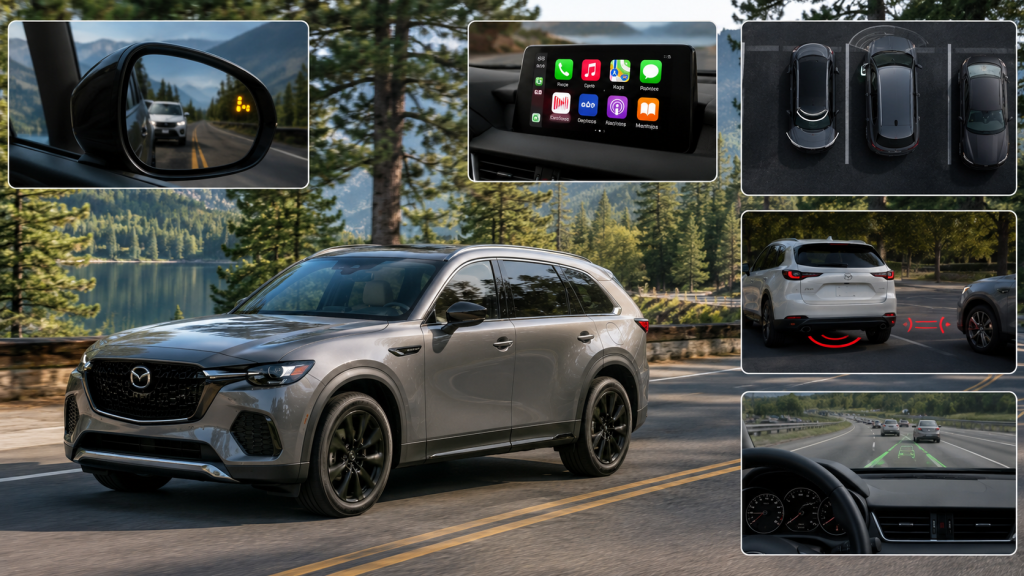
That philosophy shapes how Mazda structures visibility, warning timing, steering feedback, rear monitoring, and infotainment interaction across vehicles like the Mazda CX 5 and Mazda CX 90. The goal is not to replace the driver. The goal is to make awareness feel more natural and easier to maintain throughout daily driving.
How Mazda Safety Features Support Driver Awareness
How do Mazda safety features work during everyday driving? Driver assistance features use cameras, radar sensors, steering input tracking, and vehicle positioning data to monitor surrounding traffic and reinforce driver awareness during changing road situations.
Mazda structures these features to work quietly in the background until attention or visibility support becomes necessary. Instead of constant interruption, many alerts are calibrated to feel measured and intentional.
Lane departure warning systems monitor road markings through forward facing cameras positioned near the windshield. When the vehicle begins moving outside detected lane boundaries without signaling, the system alerts the driver through visual or audible feedback. The feature is designed to reinforce awareness during fatigue, distraction, or long highway stretches where steering drift may happen gradually.
Adaptive cruise control functions differently than traditional cruise control because radar monitoring tracks the distance between vehicles ahead. Speed adjustments happen automatically when traffic slows or speeds up. This creates smoother highway movement during heavier traffic patterns and reduces the need for repeated acceleration and braking adjustments.
Mazda driver assistance interaction usually feels calmer because:
Read the rest of this entry »Mazda service updates shape how owners understand repairs, timelines, inspections, and the overall repair process from drop off through pickup. Vehicle service rarely creates frustration from repairs alone. Uncertainty usually grows when owners do not know what the technician found, whether the timeline changed, or why the estimate no longer matches the original expectation.

That communication gap becomes more noticeable during AC diagnostics, scratch repair inspections, tire replacement visits, and larger mechanical repairs where additional findings may appear after technicians begin deeper inspection work. Clear communication creates structure around the repair process so owners understand what is happening, why it is happening, and what comes next.
Why Repair Timelines Change After Diagnostics
Why did the repair estimate change after inspection? Diagnostic inspections are the process technicians use to identify root causes, confirm part failures, and verify whether surrounding components were damaged as well.
An initial estimate is frequently based on visible symptoms or customer concerns before the technician begins deeper evaluation. Once the inspection starts, additional information may reshape the repair scope. A Mazda CX 5 arriving for AC service may initially appear to need refrigerant replacement, though pressure testing could later reveal a leaking hose, damaged condenser, or compressor concern requiring additional labor and parts.
The same pattern appears during scratch repair evaluations. Surface scratches may look minor externally while deeper paint penetration, panel distortion, or hidden trim damage changes the repair approach after disassembly and inspection.
Repair timelines can change because technicians may need to:
Read the rest of this entry »Connect with us


