

Mazda CX-70 vs CX-90: Which SUV Fits You Better
Mazda CX-70 vs CX-90 comparisons usually start with size, though passenger layout, cargo flow, and how each SUV fits daily life shape the larger decision. Both SUVs share Mazda’s calm interior design philosophy, responsive driving feel, and upscale cabin presentation, though they approach space and family movement differently. One focuses on open two row flexibility while the other prioritizes larger passenger capacity and expanded seating adaptability.
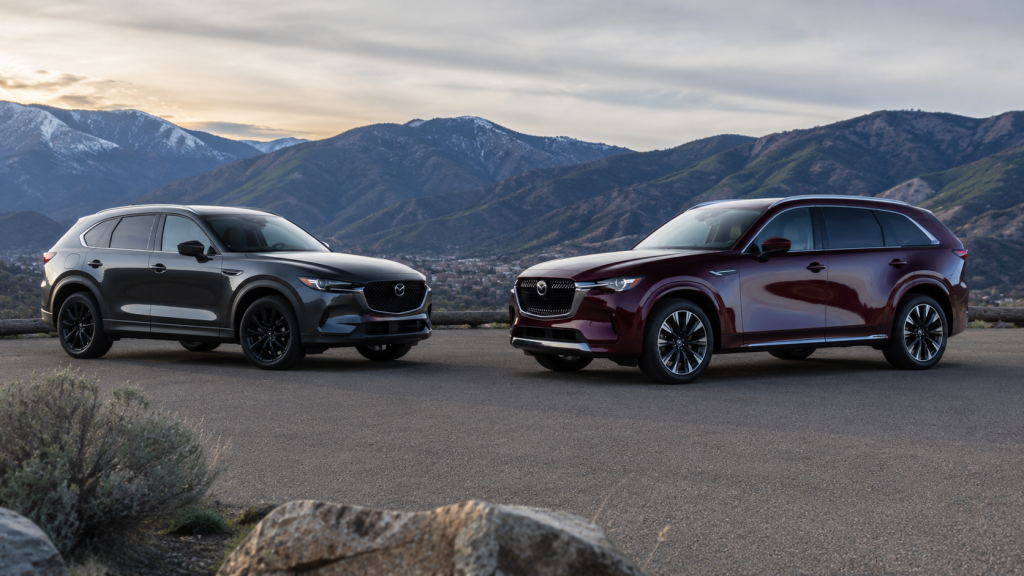
For shoppers comparing these SUVs, the question is usually less about which one is “better” and more about which one naturally fits how the vehicle will be used each week. Passenger count, cargo habits, parking routines, travel patterns, and household structure all shape the decision differently.
CX-70 vs CX-90 Seating and Passenger Layout
Do you really need a third row? A third row changes how passengers move through the SUV, how cargo space is distributed, and how flexible the interior feels during family travel.
The Mazda CX-90 uses a three row layout built around larger households and expanded passenger flexibility. Families carrying children, relatives, teammates, or additional passengers throughout the week may appreciate the extra seating capacity even if the third row is not occupied every day.
The Mazda CX-70 removes the third row entirely and uses the cabin space differently. Without the rear seating section, the interior creates a more open cargo and passenger environment behind the second row. Rear passengers gain additional breathing room while the cargo area feels more continuous and accessible.
Passenger layout influences:
Read the rest of this entry »Many drivers wonder how often a Mazda actually needs to be serviced, especially in the first few years of ownership when everything still feels new. Routine maintenance is designed to support how the vehicle performs over time by preserving the condition of its core systems rather than correcting failure after it happens.

In a vehicle like the Mazda CX 5, every major system is built to operate within a specific range of temperature, friction, and pressure. These conditions are carefully engineered to create the smooth, responsive feel Mazda is known for. Maintenance keeps those conditions stable, allowing the vehicle to continue delivering that same sense of balance long after the initial drive.
Without regular service, systems do not suddenly fail. They begin to shift gradually. Fluids lose their ability to regulate heat and friction. Materials wear unevenly. Small inefficiencies build on each other until the vehicle begins to feel different, even if nothing has technically broken.
Read the rest of this entry »Choosing an SUV for a growing family is not just about finding the biggest option available. It is about understanding how space, seating, and daily routines come together over time. Mazda’s SUV lineup is designed with different types of families in mind, from compact flexibility to full three row capability. The real decision comes from how each vehicle supports your everyday movement, from school drop offs to weekend travel, and how those needs evolve as your family grows.

How Mazda SUV Size Actually Translates To Daily Family Use
The Mazda CX 90 is the largest SUV in the Mazda lineup, offering three rows of seating and the most overall interior volume.
Size in an SUV is not just about exterior dimensions. It is determined by how the vehicle’s wheelbase, cabin layout, and seating structure are designed to support passengers and cargo together.
In smaller models like the Mazda CX 5, the focus is on efficiency and balance. The vehicle is easier to maneuver in tight spaces while still offering enough room for a small family. The Mazda CX 50 expands on this slightly with a wider stance and more flexible cargo area, making it better suited for active lifestyles that require more gear.
The CX 90 introduces a different structure entirely. Its longer wheelbase allows for a third row, but that added space changes how the interior is used.
Read the rest of this entry »Every Mazda is designed around the idea that driving should feel natural, not interrupted. That philosophy extends beyond steering and performance into how drivers interact with technology. Systems like Mazda Connect, Apple CarPlay, and Android Auto are not just added features. They are structured to simplify how information, communication, and navigation come together while you are driving. For many shoppers, the real question is not whether these features exist, but whether they actually make daily driving easier or more complicated.
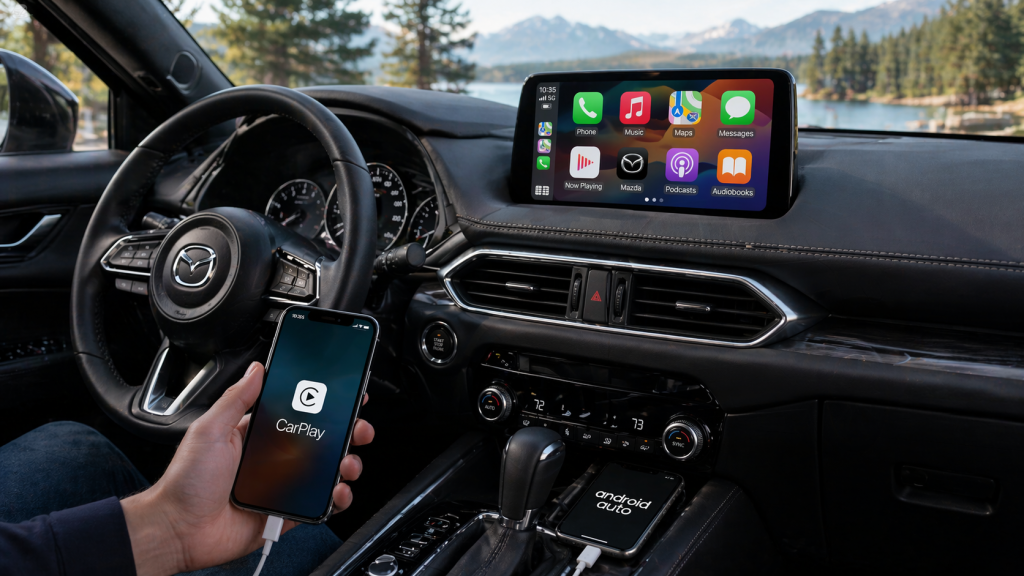
How Mazda Connect Organizes Your Driving Experience
What is Mazda Connect system
Mazda Connect is the central interface that organizes vehicle information, media, navigation, and communication into a single, controlled system designed to reduce distraction.
In a vehicle like the Mazda CX 5, Mazda Connect acts as the foundation that everything else builds on. Instead of treating each feature as a separate system, it groups them into a unified interface that can be accessed consistently while driving.
This system works by simplifying how information is displayed and controlled. Rather than requiring multiple inputs or shifting between different screens, Mazda Connect keeps interactions structured and predictable.
Read the rest of this entry »Every Mazda begins with a clear intention to make driving feel natural, connected, and dependable. That same philosophy carries into ownership through warranty coverage, but understanding what that protection actually means requires more than a quick glance at mileage limits or years. Shoppers are often trying to answer a deeper question about what is truly protected, what is not, and how that changes over time. The answer comes from how Mazda structures its warranty around different vehicle systems and how those systems behave as they are driven, maintained, and experienced in real life.
Understanding What Mazda’s Factory Warranty Actually Covers
What does Mazda’s factory warranty actually cover
Mazda’s factory warranty covers defects in materials or workmanship, which means it protects against issues caused by how the vehicle was built rather than how it is used over time.
In a vehicle like the Mazda CX 5, this comprehensive coverage applies across a wide range of systems during the early ownership period. It includes electrical systems, infotainment components, interior controls, and mechanical parts that are expected to function correctly under normal driving conditions.
This type of coverage works by separating unexpected failure from expected use. If a component fails because it was not manufactured or assembled correctly, the warranty applies. If a component changes because it is being used as designed, it does not.
That distinction matters because modern vehicles are made up of layered systems that behave differently as they age.
Read the rest of this entry »Compact sedans remain one of the most practical vehicle choices for drivers who want efficiency, manageable size, and everyday usability. When shoppers compare the Mazda3 and Hyundai Elantra, the decision usually comes down to more than specifications alone. Buyers often want to know which sedan feels better to drive every day, which interior feels more refined during long commutes, and which design creates a stronger connection between driver and vehicle.
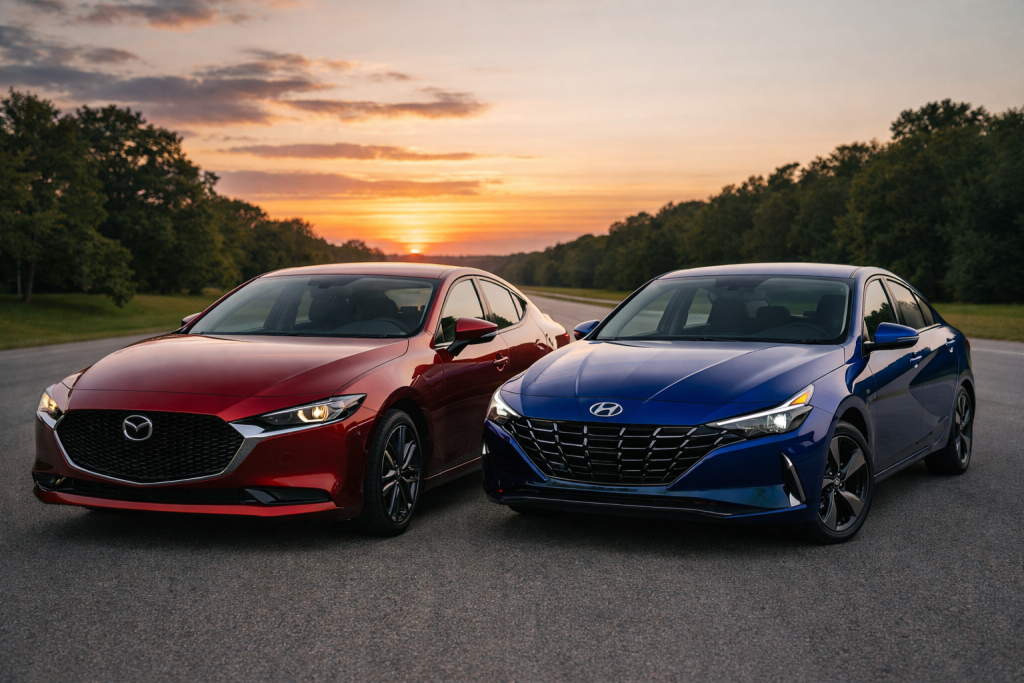
Both the Mazda3 and Hyundai Elantra compete in the same compact sedan category, but their engineering priorities differ. The Hyundai Elantra emphasizes technology features, fuel economy, and bold styling. The Mazda3 focuses more heavily on driving dynamics, craftsmanship, and a human-centered interior design philosophy.
Understanding how these two sedans approach handling, interior layout, and everyday comfort helps explain why many drivers find the Mazda3 to be the more engaging daily driver.
How the Mazda3 and Hyundai Elantra Approach Everyday Driving Differently
Many shoppers comparing compact sedans ask which vehicle is better suited for everyday driving. The answer often depends on how each manufacturer prioritizes the relationship between driver, vehicle response, and comfort.
The Mazda3 is engineered with a focus on driver engagement. Mazda engineers design the vehicle’s steering response, suspension tuning, and cabin layout to create a natural connection between driver input and vehicle movement. This approach is part of Mazda’s broader design philosophy that aims to make the vehicle feel like an extension of the driver.
Read the rest of this entry »Daily driving places constant demands on a vehicle. Navigating traffic, monitoring surrounding vehicles, managing navigation directions, and adjusting vehicle settings all require the driver’s attention. For many drivers, the difference between a stressful commute and a smooth one often comes down to how intelligently a vehicle’s technology supports the person behind the wheel.
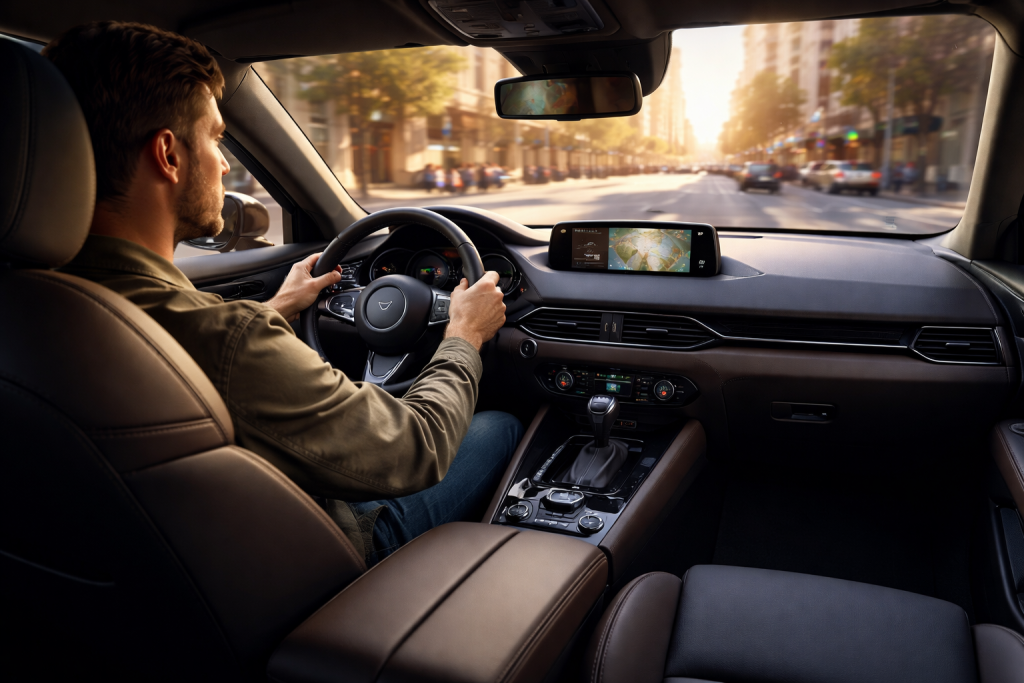
Mazda approaches technology with a different philosophy than many automakers. Instead of overwhelming drivers with complex interfaces or excessive features, Mazda designs vehicle technology to feel intuitive and supportive. Systems are built to assist the driver quietly in the background while maintaining a natural connection between driver and vehicle.
Several Mazda technologies illustrate how thoughtful engineering can make everyday driving easier, safer, and more comfortable.
Mazda i-Activsense Safety Technology in Everyday Driving
Many shoppers researching Mazda vehicles ask what Mazda i-Activsense technology actually does during real world driving.
Mazda i-Activsense is a suite of driver assistance technologies that use radar sensors and forward facing cameras to monitor surrounding traffic conditions and support safer driving decisions.
These systems constantly analyze information from the road ahead, nearby vehicles, and lane markings. When the system detects potential hazards, it alerts the driver or assists with braking and steering adjustments.
In vehicles such as the Mazda CX-5 and Mazda CX-30, i-Activsense safety systems may include technologies such as:
Read the rest of this entry »Compact SUVs are designed to handle the routines of daily life. Commuting to work, navigating city streets, merging onto highways, and managing weekend errands all place different demands on a vehicle. When shoppers compare the Mazda CX-5 and Nissan Rogue, they often want to know which SUV delivers the better everyday driving experience rather than simply comparing specifications on paper.
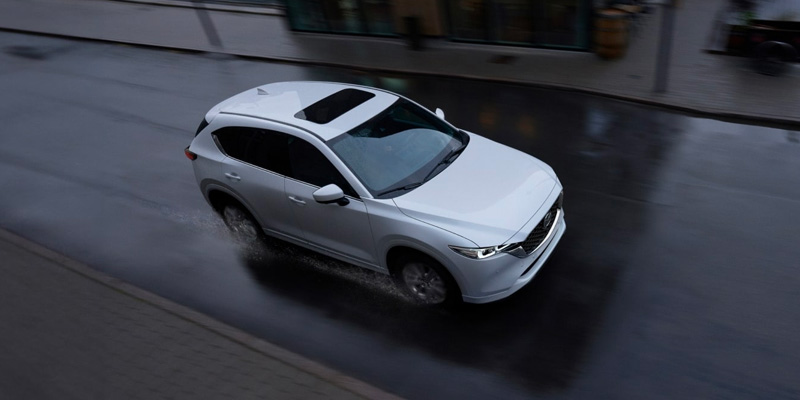
Both vehicles compete in the same compact SUV category, yet their engineering priorities differ. The Mazda CX-5 emphasizes responsive driving dynamics and driver focused design, while the Nissan Rogue focuses more heavily on smooth comfort and fuel efficiency. Understanding how their engines, transmissions, chassis tuning, and interior design differ helps explain why many drivers find the CX-5 more engaging during everyday driving.
Engine Design and Everyday Performance
Many shoppers comparing compact SUVs ask whether the Mazda CX-5 or Nissan Rogue delivers stronger performance during everyday driving.
The Mazda CX-5 Skyactiv-G engine is engineered to balance responsiveness with efficiency. Skyactiv engine design uses higher compression ratios to extract more energy from each combustion cycle, allowing the CX-5 to produce strong torque without relying entirely on aggressive turbocharging.
Read the rest of this entry »Mazda vehicles have built a reputation for delivering a driving experience that feels unusually connected and responsive. Many drivers notice this immediately during a test drive, whether in the Mazda CX-5, Mazda3, or Mazda CX-30. The steering feels natural, acceleration responds smoothly to throttle input, and the vehicle seems to move in harmony with the driver.
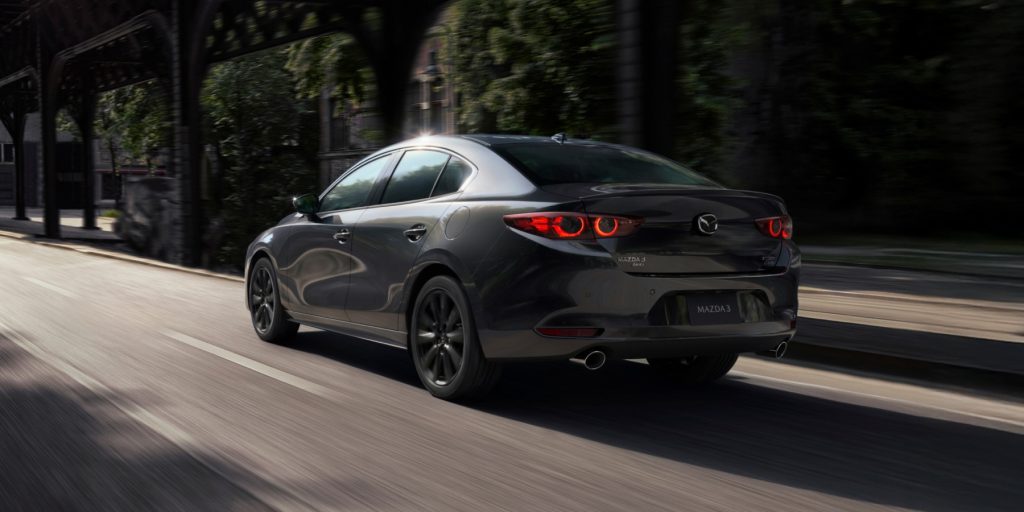
Much of that sensation comes from Mazda’s Skyactiv engineering philosophy. Rather than focusing on a single component such as the engine, Mazda redesigned several core vehicle systems together. The result is a coordinated approach to engine efficiency, vehicle weight, and transmission tuning that improves both responsiveness and everyday fuel efficiency.
Understanding how Skyactiv technology works helps explain why Mazda vehicles often feel different to drive compared with many other compact SUVs and sedans.
What Skyactiv Technology Actually Means
Many shoppers researching Mazda vehicles ask what Skyactiv technology actually is and why it changes how the vehicle drives.
Skyactiv technology is Mazda’s engineering strategy for improving efficiency and responsiveness by redesigning the engine, transmission, chassis, and vehicle structure together rather than optimizing each component separately.
Read the rest of this entry »The Mazda CX-90 and Kia Telluride often appear on the same shopping list because they serve the same basic need: a three-row SUV that can move families comfortably. Where they diverge is how they go about doing that. One prioritizes driver engagement and mechanical refinement. The other focuses on space, softness, and broad family usability. Understanding that difference is the key to choosing the right vehicle.

This comparison is not about which SUV is bigger on paper. It is about how each one feels to live with every day, especially once the novelty wears off and real driving takes over.
Platform and Powertrain Philosophy
Mazda built the CX-90 on a new rear-drive-based platform designed to improve balance, steering feel, and ride control. The available turbocharged inline-six engine, paired with mild hybrid technology, delivers smooth power with a strong sense of linear acceleration. Torque arrives early and predictably, which matters in daily driving more than peak horsepower numbers.
The Kia Telluride uses a traditional front-drive-based architecture with a naturally aspirated V6. Its power delivery is tuned for smoothness and ease rather than response. Acceleration is consistent, but the engine works harder under load, especially when merging or climbing grades.
Key powertrain differences drivers notice:
- CX-90 delivers smoother, more controlled acceleration
- Inline-six feels refined at highway speeds
- Telluride V6 favors steady, predictable output
- Mazda’s mild hybrid system improves low-speed responsiveness
Connect with us


