

Daily driving places constant demands on a vehicle. Navigating traffic, monitoring surrounding vehicles, managing navigation directions, and adjusting vehicle settings all require the driver’s attention. For many drivers, the difference between a stressful commute and a smooth one often comes down to how intelligently a vehicle’s technology supports the person behind the wheel.
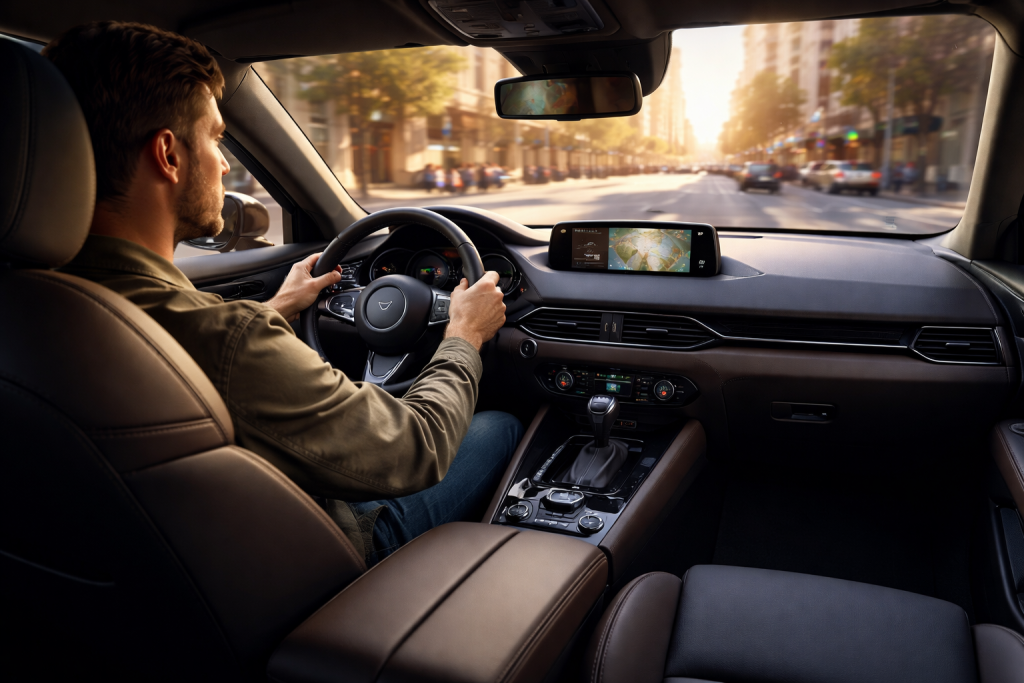
Mazda approaches technology with a different philosophy than many automakers. Instead of overwhelming drivers with complex interfaces or excessive features, Mazda designs vehicle technology to feel intuitive and supportive. Systems are built to assist the driver quietly in the background while maintaining a natural connection between driver and vehicle.
Several Mazda technologies illustrate how thoughtful engineering can make everyday driving easier, safer, and more comfortable.
Mazda i-Activsense Safety Technology in Everyday Driving
Many shoppers researching Mazda vehicles ask what Mazda i-Activsense technology actually does during real world driving.
Mazda i-Activsense is a suite of driver assistance technologies that use radar sensors and forward facing cameras to monitor surrounding traffic conditions and support safer driving decisions.
These systems constantly analyze information from the road ahead, nearby vehicles, and lane markings. When the system detects potential hazards, it alerts the driver or assists with braking and steering adjustments.
In vehicles such as the Mazda CX-5 and Mazda CX-30, i-Activsense safety systems may include technologies such as:
• adaptive cruise control that maintains a safe following distance from traffic ahead
• lane keeping assistance that helps the vehicle stay centered within lane markings
• blind spot monitoring that alerts drivers when vehicles approach from behind
• automatic emergency braking that helps reduce the risk of front end collisions
Because these systems operate continuously while driving, they help reduce the mental workload of monitoring surrounding traffic. Drivers remain fully in control of the vehicle, but the technology adds an additional layer of awareness that can improve reaction time in complex traffic situations.
How Mazda’s Head Up Display Helps Drivers Stay Focused
Drivers frequently look away from the road to check speed, navigation directions, or safety alerts on the dashboard. Even brief glances downward can reduce awareness of surrounding traffic.
The Mazda Active Driving Display, often referred to as a head up display, helps reduce this distraction by projecting important information directly onto the windshield within the driver’s natural line of sight.
Instead of shifting focus between the road and the instrument cluster, the driver can see information such as:
• current vehicle speed
• navigation guidance
• safety alerts from driver assistance systems
• speed limit recognition information
Because the information appears near the driver’s forward view, the system allows drivers to remain visually focused on the road ahead while still receiving essential information.
In vehicles like the Mazda3 and Mazda CX-5, this technology improves situational awareness without adding complexity to the driving experience.
Why Mazda Interiors Are Designed Around the Driver
Mazda engineers often refer to their interior design philosophy as human centric engineering. This approach begins with studying how the human body naturally moves and responds while driving.
The goal is to design the cabin so that drivers can operate vehicle controls comfortably without unnecessary movement or distraction.
Several design elements contribute to this driver focused approach in vehicles such as the Mazda CX-5 and Mazda CX-30.
The steering wheel, pedals, and seat alignment are positioned to support a natural driving posture that reduces fatigue during longer trips. Dashboard controls are angled toward the driver so frequently used functions remain within easy reach.
This layout allows drivers to interact with the vehicle without searching for controls or shifting attention away from the road. Over time, the layout becomes intuitive because the controls align with natural hand movements.
For commuters who spend significant time behind the wheel, this thoughtful design can make daily driving feel less tiring and more comfortable.
Mazda Connect Technology and Intuitive Controls
Infotainment systems in modern vehicles often rely heavily on touchscreen interfaces. While touchscreens provide flexibility, they can also require drivers to look away from the road to interact with menus.
Mazda Connect takes a different approach. Instead of encouraging drivers to rely primarily on touchscreen inputs, the system uses a multifunction control dial located near the center console.
The control dial allows drivers to navigate menus, adjust audio settings, and select navigation options through simple rotational and directional movements. Because the dial is positioned near the driver’s hand, many functions can be controlled through muscle memory rather than direct visual attention.
In vehicles like the Mazda CX-5 and Mazda CX-30, the Mazda Connect interface integrates smartphone connectivity, navigation, and media controls into a simplified interface designed for quick access.
This design philosophy reduces the amount of visual distraction required to interact with technology while driving.
Smart Convenience Features That Simplify Daily Driving
Beyond safety and infotainment technology, Mazda vehicles include several convenience features that make everyday routines easier.
Many of these systems operate quietly in the background but contribute to smoother daily driving experiences.
Examples of convenience technologies available in models such as the Mazda CX-5, Mazda CX-30, and Mazda3 include:
• keyless entry systems that allow drivers to unlock doors without removing the key from a pocket or bag
• push button engine start for faster vehicle access
• power liftgates that simplify loading cargo when hands are full
• automatic climate control systems that maintain comfortable cabin temperatures
While each feature may seem small individually, together they streamline common tasks such as entering the vehicle, adjusting cabin settings, and loading groceries or luggage.
These improvements reduce friction during everyday use and make the vehicle feel easier to live with over time.
Technology Designed to Support the Driver
Mazda’s technology philosophy focuses on supporting the driver rather than overwhelming them with complexity. Safety systems quietly monitor the road, interior layouts prioritize comfort and intuitive control placement, and infotainment systems are designed to minimize distraction.
By designing technology around human behavior and everyday driving needs, Mazda creates vehicles that feel natural to operate during daily routines.
Whether driving a Mazda CX-5, Mazda CX-30, or Mazda3, these technologies work together to simplify everyday driving while maintaining the sense of connection that Mazda vehicles are known for.
Connect with us


