

Compact sedans remain one of the most practical vehicle choices for drivers who want efficiency, manageable size, and everyday usability. When shoppers compare the Mazda3 and Hyundai Elantra, the decision usually comes down to more than specifications alone. Buyers often want to know which sedan feels better to drive every day, which interior feels more refined during long commutes, and which design creates a stronger connection between driver and vehicle.
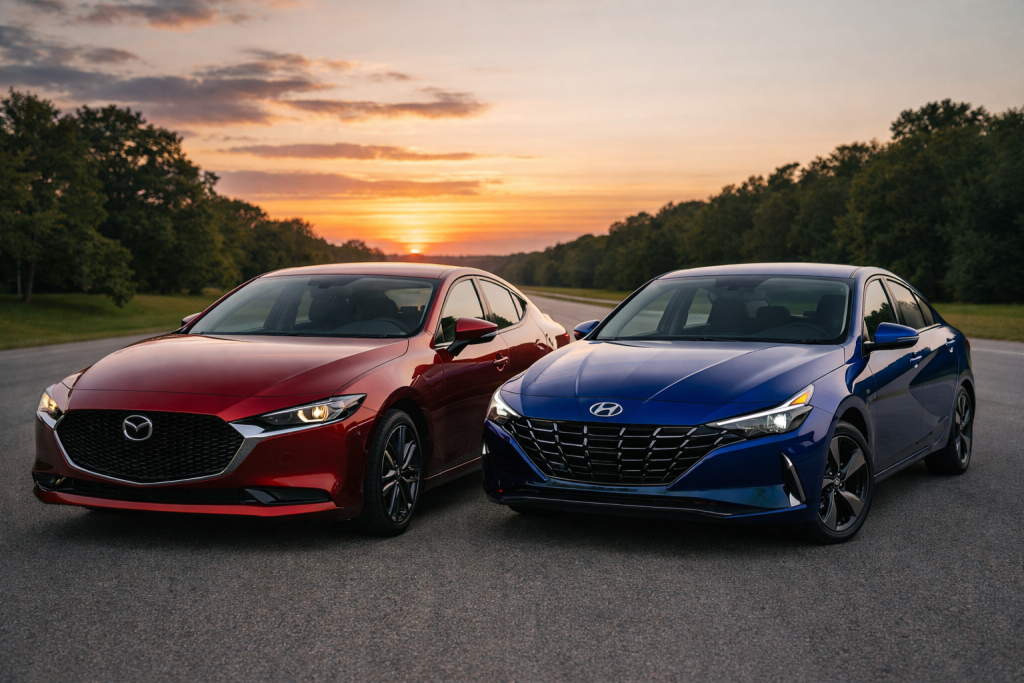
Both the Mazda3 and Hyundai Elantra compete in the same compact sedan category, but their engineering priorities differ. The Hyundai Elantra emphasizes technology features, fuel economy, and bold styling. The Mazda3 focuses more heavily on driving dynamics, craftsmanship, and a human-centered interior design philosophy.
Understanding how these two sedans approach handling, interior layout, and everyday comfort helps explain why many drivers find the Mazda3 to be the more engaging daily driver.
How the Mazda3 and Hyundai Elantra Approach Everyday Driving Differently
Many shoppers comparing compact sedans ask which vehicle is better suited for everyday driving. The answer often depends on how each manufacturer prioritizes the relationship between driver, vehicle response, and comfort.
The Mazda3 is engineered with a focus on driver engagement. Mazda engineers design the vehicle’s steering response, suspension tuning, and cabin layout to create a natural connection between driver input and vehicle movement. This approach is part of Mazda’s broader design philosophy that aims to make the vehicle feel like an extension of the driver.
The Hyundai Elantra approaches daily driving from a different perspective. Hyundai focuses heavily on efficiency, interior technology, and convenience features. The Elantra often provides strong fuel economy and a technology-forward cabin that appeals to drivers who prioritize connectivity and value.
While both sedans perform well in everyday driving situations, the Mazda3 places greater emphasis on the driving experience itself, particularly when it comes to steering precision and road feel.
Steering, Chassis Tuning, and Everyday Handling Confidence
Many drivers researching the Mazda3 and Hyundai Elantra want to know which sedan feels more confident on the road during daily driving.
The Mazda3 chassis is tuned to provide balanced handling and predictable steering response. Mazda engineers focus on maintaining consistent feedback through the steering wheel so that the driver can feel how the vehicle is interacting with the road surface. This feedback helps drivers maintain better control when navigating curves, making lane changes, or adjusting direction during city driving.
Several elements contribute to the Mazda3 handling characteristics.
• a rigid body structure that reduces chassis flex
• suspension tuning designed for balanced cornering stability
• steering calibration that emphasizes consistent feedback
Together, these design choices help the Mazda3 remain composed when navigating winding roads or adjusting direction in traffic.
The Hyundai Elantra prioritizes ride comfort and efficiency. Its suspension is tuned to absorb road imperfections effectively, which helps maintain a smooth ride during highway driving and longer commutes. However, this comfort-focused tuning typically results in lighter steering feedback and less emphasis on sporty handling.
For drivers who value confidence and precision during everyday driving, the Mazda3 chassis tuning often provides a more engaging experience.
Interior Design, Seating Position, and Driver Focus
Interior design plays an important role in how comfortable a vehicle feels during daily commuting. The Mazda3 interior reflects Mazda’s focus on driver-centered design and craftsmanship.
Mazda engineers design the cabin around the driver’s natural posture and field of vision. The seating position, steering wheel alignment, and dashboard layout are carefully arranged so that the driver can operate the vehicle comfortably without excessive movement.
Controls are positioned within easy reach and the dashboard layout avoids unnecessary visual clutter. This approach helps reduce distraction and allows drivers to focus on the road ahead while interacting with vehicle systems.
Material quality also contributes to the Mazda3 interior experience. Soft-touch surfaces, thoughtful trim accents, and clean design lines create a refined atmosphere that often feels more premium than many compact sedan competitors.
The Hyundai Elantra interior offers a different approach. Hyundai emphasizes screen technology and modern styling elements throughout the cabin. Large displays and digital interfaces create a futuristic appearance that many buyers find appealing.
Both cabins provide comfort and usability, but the Mazda3 interior focuses more heavily on driver ergonomics and subtle craftsmanship. This approach often makes the Mazda3 feel more refined during everyday driving.
Power Delivery and Daily Commuting Response
Acceleration behavior can also influence how a vehicle feels during daily driving. While horsepower figures often receive attention during comparisons, real-world drivability depends heavily on how the engine delivers torque and how the transmission manages power.
The Mazda3 engine is tuned to deliver smooth and predictable acceleration. Torque builds gradually and consistently, allowing the vehicle to respond naturally when the driver presses the accelerator. This behavior is especially noticeable during common situations such as merging onto highways or accelerating through city traffic.
Mazda engineers calibrate the transmission to maintain a balanced relationship between engine speed and vehicle acceleration. As a result, the Mazda3 responds quickly to throttle input without sudden surges or hesitation.
The Hyundai Elantra focuses more heavily on fuel efficiency and value-oriented performance. Its powertrain is designed to provide strong efficiency ratings and comfortable cruising behavior during highway travel.
While the Elantra performs well during steady driving conditions, the Mazda3 often feels more responsive when drivers request acceleration or quick speed adjustments.
Which Compact Sedan Feels Better to Live With Every Day
When comparing compact sedans, buyers often consider a combination of comfort, efficiency, design, and driving enjoyment. Both the Mazda3 and Hyundai Elantra provide strong value within the segment, but they deliver different experiences behind the wheel.
The Hyundai Elantra offers impressive fuel efficiency, modern technology features, and a comfortable ride that works well for long highway commutes. Its design prioritizes practicality and digital connectivity.
The Mazda3 focuses on the quality of the driving experience itself. Steering precision, suspension balance, and driver-centered interior design all contribute to a sedan that feels composed and refined during everyday driving.
For drivers who want a compact sedan that combines efficiency with engaging handling and thoughtful craftsmanship, the Mazda3 often stands out as the more rewarding vehicle to drive and live with throughout daily routines.
Connect with us


