

Mazda vehicles have built a reputation for delivering a driving experience that feels unusually connected and responsive. Many drivers notice this immediately during a test drive, whether in the Mazda CX-5, Mazda3, or Mazda CX-30. The steering feels natural, acceleration responds smoothly to throttle input, and the vehicle seems to move in harmony with the driver.
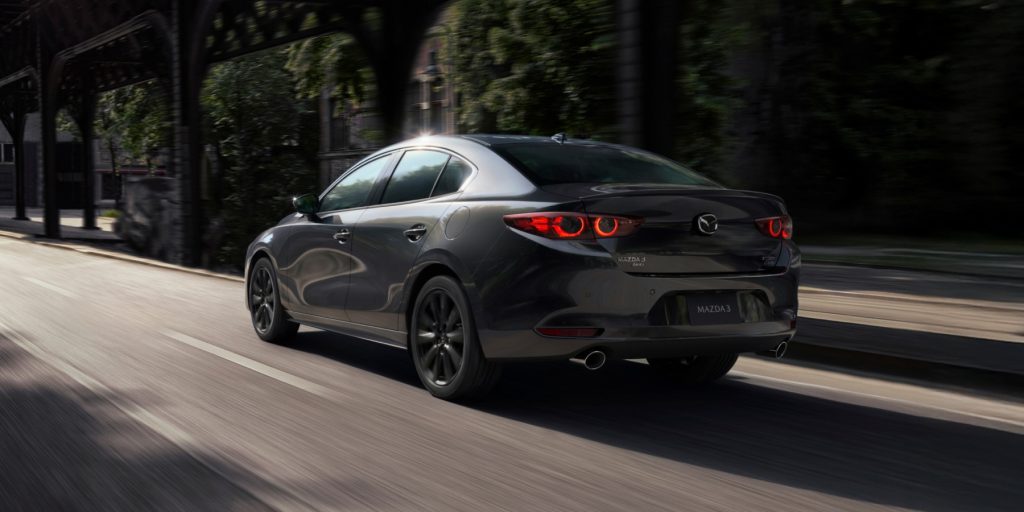
Much of that sensation comes from Mazda’s Skyactiv engineering philosophy. Rather than focusing on a single component such as the engine, Mazda redesigned several core vehicle systems together. The result is a coordinated approach to engine efficiency, vehicle weight, and transmission tuning that improves both responsiveness and everyday fuel efficiency.
Understanding how Skyactiv technology works helps explain why Mazda vehicles often feel different to drive compared with many other compact SUVs and sedans.
What Skyactiv Technology Actually Means
Many shoppers researching Mazda vehicles ask what Skyactiv technology actually is and why it changes how the vehicle drives.
Skyactiv technology is Mazda’s engineering strategy for improving efficiency and responsiveness by redesigning the engine, transmission, chassis, and vehicle structure together rather than optimizing each component separately.
The Mazda Skyactiv-G engine, used in vehicles such as the Mazda CX-5 and Mazda3, focuses on extracting more usable energy from every combustion cycle. Mazda engineers paired that engine design with a lightweight vehicle structure and carefully tuned transmissions so that the entire vehicle responds smoothly to driver inputs.
This integrated approach supports Mazda’s driving philosophy known as Jinba Ittai, which refers to the idea of unity between the driver and the vehicle. Instead of focusing only on horsepower or acceleration numbers, Mazda engineers concentrate on how naturally the car reacts to steering, throttle, and braking.
How High Compression Engines Improve Power and Efficiency
A key part of Skyactiv technology is the unusually high compression ratio used in Mazda gasoline engines.
The compression ratio of an engine describes how much the air and fuel mixture is compressed inside the combustion chamber before ignition occurs. Higher compression allows the engine to extract more energy from the fuel during combustion.
The Mazda Skyactiv-G engine uses one of the highest compression ratios found in mass-produced gasoline engines. By compressing the fuel mixture more efficiently before ignition, the engine can generate stronger combustion and improved energy output.
This design offers several practical advantages for drivers.
• More efficient use of fuel during combustion
• Stronger torque output at lower engine speeds
• Improved fuel economy during everyday driving
Because the Mazda Skyactiv-G engine converts more of the fuel’s energy into usable power, the engine can deliver responsive acceleration without relying solely on large displacement or aggressive turbocharging.
For drivers of the Mazda CX-5 or Mazda CX-30, this means the engine responds quickly when merging onto highways or accelerating through city traffic while still maintaining balanced fuel efficiency during daily commuting.
Why Mazda Engines Feel More Responsive in Everyday Driving
Many drivers searching for information about Mazda performance want to understand why Mazda vehicles often feel more responsive than competitors in the same category.
Responsiveness comes from several engineering choices working together within Skyactiv powertrains.
First, the Mazda Skyactiv-G engine delivers strong torque at lower engine speeds. Torque is the rotational force that helps move the vehicle forward. When torque is available earlier in the engine’s power band, the vehicle can accelerate smoothly without needing to rev the engine aggressively.
Second, Mazda carefully calibrates the transmission to maintain consistent power delivery. The Skyactiv automatic transmission adjusts gear changes to keep the engine operating within its most efficient and responsive range.
Finally, Mazda engineers tune throttle response to provide predictable acceleration. When the driver presses the accelerator pedal, the engine and transmission respond quickly but smoothly, allowing the vehicle to accelerate without hesitation.
Together, these systems help Mazda vehicles feel more intuitive to drive, especially during everyday situations such as:
• merging onto highways
• navigating stop-and-go traffic
• accelerating out of corners
• maintaining steady highway speeds
Drivers often describe this balance as feeling more connected to the vehicle because the engine and transmission respond naturally to driver inputs.
How Vehicle Architecture Supports Driving Precision
Skyactiv technology extends beyond the engine. Mazda also redesigned the vehicle body structure and chassis to support improved handling and stability.
Vehicle weight and rigidity play a major role in how a car responds to steering and acceleration. A lighter, more rigid structure allows engineers to control how the vehicle moves during braking, cornering, and acceleration.
Mazda’s Skyactiv body architecture uses high-strength steel and carefully engineered reinforcement points to increase structural rigidity while reducing overall weight. This allows suspension components to operate more precisely because the vehicle structure flexes less during movement.
The suspension and steering systems in vehicles such as the Mazda3 and Mazda CX-5 are then tuned to complement this structure. The result is steering feedback that feels predictable and balanced, helping the driver maintain better control during both city and highway driving.
This combination of lightweight engineering and structural rigidity contributes to the smooth and confident driving feel many Mazda owners notice.
How Skyactiv Technology Improves Real World Fuel Efficiency
Efficiency is another major benefit of Skyactiv engineering. While many automakers focus on hybrid systems or turbocharging to improve fuel economy, Mazda engineers focused heavily on improving the combustion process itself.
Several elements contribute to the fuel efficiency seen in vehicles equipped with Skyactiv engines.
• Higher compression combustion extracts more energy from each fuel cycle
• Lightweight vehicle structures reduce the amount of energy required to move the vehicle
• Transmission calibration keeps the engine operating within its most efficient range
• Aerodynamic design reduces resistance at highway speeds
Because these improvements work together, vehicles such as the Mazda CX-5 and Mazda CX-30 can deliver strong fuel economy while maintaining responsive acceleration and smooth power delivery.
For drivers who spend time commuting, traveling on highways, or running daily errands, these efficiency improvements translate into fewer fuel stops and lower long-term fuel costs without sacrificing driving enjoyment.
Why Skyactiv Technology Shapes the Mazda Driving Experience
Mazda’s Skyactiv engineering philosophy demonstrates that performance and efficiency do not have to be opposing goals. By redesigning the engine, transmission, chassis, and body structure as a unified system, Mazda engineers created vehicles that balance responsiveness, fuel efficiency, and driving comfort.
For many drivers, this approach is why Mazda vehicles feel engaging during everyday driving. The engine responds smoothly to throttle input, the transmission maintains balanced power delivery, and the chassis provides stable and predictable handling.
Whether behind the wheel of a Mazda CX-5, Mazda3, or Mazda CX-30, Skyactiv technology works quietly in the background to create a driving experience that feels natural and connected.
Connect with us


