

Mazda3 Sedan vs Hatchback
Compare Mazda3 Sedan and Hatchback Inventory
Talk Through Your Mazda3 Options
Schedule a Side by Side Mazda3 Test Drive
| Sales | ||
| Day | Open | Closed |
| Monday | 9:00AM | 8:00PM |
| Tuesday | 9:00AM | 8:00PM |
| Wednesday | 9:00AM | 8:00PM |
| Thursday | 9:00AM | 8:00PM |
| Friday | 9:00AM | 8:00PM |
| Saturday | 8:00AM | 7:00PM |
| Sunday | Closed | Closed |
Mazda3 Sedan or Hatchback for the Way Your Day Moves
Choosing a Mazda3 Sedan or Hatchback starts with a simple question: what do you ask the rear half of your car to do during an ordinary week? Both belong to the same Mazda3 family, yet the shape behind the rear seats changes how you load cargo, park, see through the back of the car, and arrange certain trips.
The Sedan gives you a separate trunk beneath a longer rear profile. The Hatchback replaces that trunk lid with a liftgate and taller cargo opening. That sounds like a basic design distinction until you picture the objects that move through your week. Grocery bags, work equipment, luggage, a stroller, sports gear, a large boxed purchase, or a tall item can each make one opening feel more natural than the other.
The choice should also account for more than cargo. The shorter rear shape of the Hatchback can change how you judge a parking space. The Sedan creates a different view through the rear glass. Trim and transmission choices do not line up identically across every version. Even fuel economy carries small differences between certain configurations.
Both cars preserve the Mazda3 focus on connection between driver and vehicle. The decision is about which form supports your rhythm with fewer compromises.
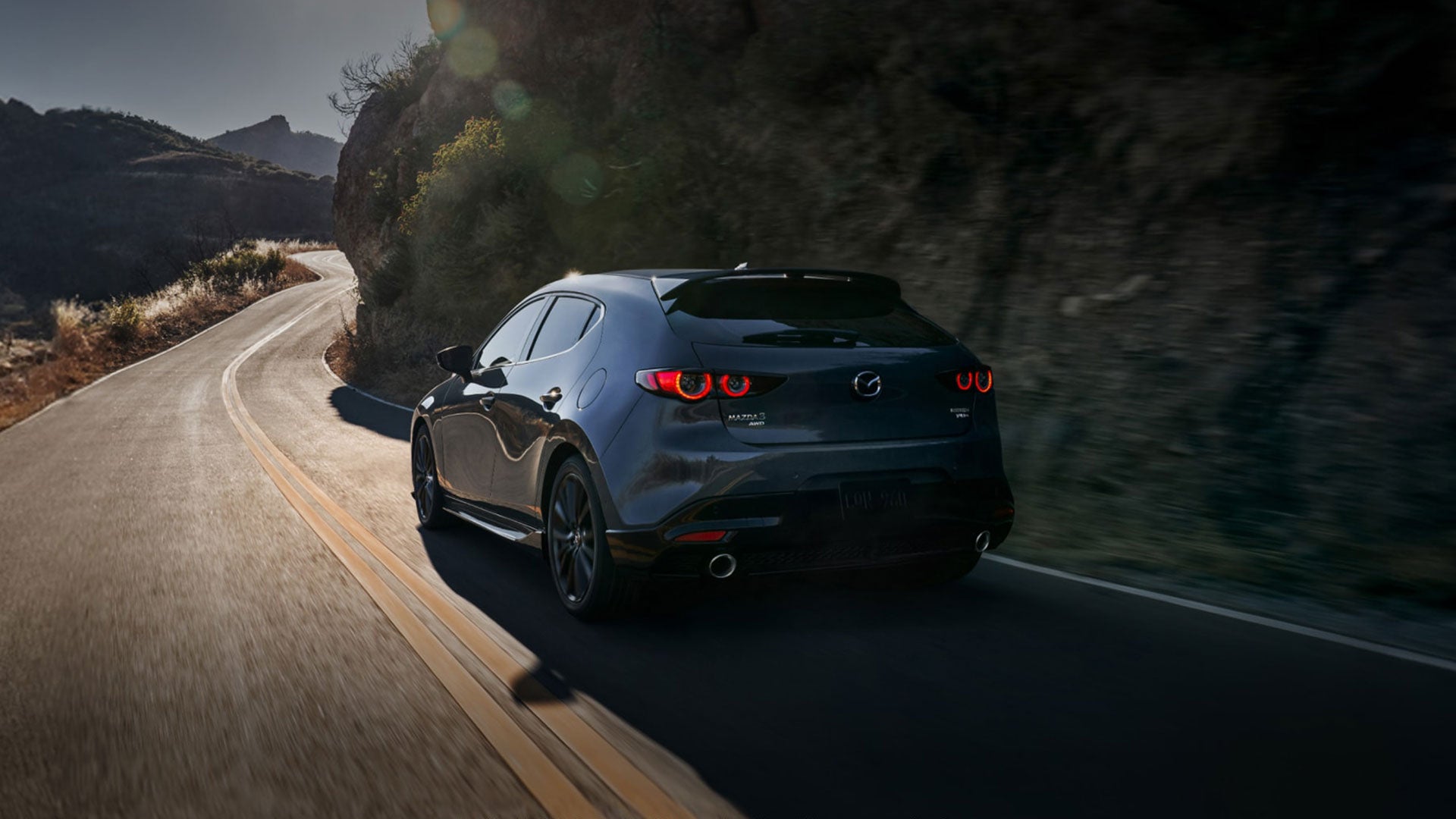
Start With the Door You Will Open Most
The rear opening is the clearest place to begin because it changes a repeated action. The Mazda3 Sedan uses a conventional trunk. You lift the lid, lower items through the opening, and store them in a compartment separated from the passenger area. The Mazda3 Hatchback uses a liftgate that raises with the rear glass, opening a taller path into the cargo area.
Neither structure is automatically stronger. Each answers a different pattern.
A separate trunk can suit drivers who carry compact items such as shopping bags, a briefcase, laptop bag, small luggage, gym gear, or emergency supplies. The cargo stays in its own compartment. That separation may appeal to someone who keeps work materials in the car or prefers a defined boundary between passengers and stored items.
The Hatchback earns attention when cargo is tall, bulky, rigid, or awkwardly shaped. A broad liftgate opening gives you another angle for placing items inside. Folded chairs, larger boxes, some stroller shapes, sporting items, or home purchases may move through that opening with less negotiation.
The tradeoff becomes clear when you stop asking which car has more room and ask which rear door suits the objects you carry. A larger volume figure can still fail an item that cannot pass cleanly through an opening. A smaller compartment can serve a routine perfectly when the cargo is compact and easy to stack.
Before choosing, make a list of the five largest items you carried during the past three months. That list is more useful than an imagined future full of gear you may never transport.
Cargo Volume Matters, but Shape Tells the Rest of the Story
Published comparison data places the Mazda3 Sedan at about 13.2 cubic feet of trunk volume and the Mazda3 Hatchback at about 20.1 cubic feet behind the rear seats. The Hatchback carries the larger figure, yet the decision deserves a closer look at floor shape, opening height, object rigidity, and how frequently the rear seats need to remain available for passengers.
Consider a stroller. A compact folding stroller may fit a Sedan trunk without trouble and leave the rear seat untouched. A taller stroller frame may enter the Hatchback more easily through the liftgate. The same distinction can appear with coolers, musical equipment, sports bags, boxed appliances, pet supplies, or luggage.
Now consider groceries. A large liftgate is not automatically necessary for several bags. A Sedan trunk can contain compact loads neatly and keep them separated from the cabin. For a household that rarely carries bulky objects, moving to the Hatchback solely for a larger published number may solve a problem that rarely appears.
The rear seats introduce another layer. Folding them can extend the loading path for longer objects, but doing so removes passenger positions. A driver who frequently carries two rear passengers cannot treat folded seat space as permanently available. A driver who travels alone most of the week may view that same feature very differently.
Use three cargo tests before making a choice:
- Measure the largest item that must fit without folding a rear seat.
- Check whether the item is tall, wide, long, or rigid.
- Decide how frequently rear passenger seats must stay ready.
That process turns cargo research into a clear answer. The Hatchback may win through opening height and volume. The Sedan may already cover every item in your routine while giving you the separate trunk layout you prefer.
Think About Parking Before You Focus on Overall Space
The Sedan and Hatchback also place their exterior length differently. The Sedan carries a longer rear profile, while the Hatchback ends sooner behind the rear wheels. That distinction can change how each car reads from the driver seat when backing into a space or judging the remaining room behind the vehicle.
A shorter body can appeal to someone who uses compact parking spaces, crowded retail lots, urban streets, or a tight garage. Yet the number alone should not settle the question. Drivers build spatial awareness through sightlines, mirrors, camera views, and familiarity. A longer car that is easy for you to place may feel more natural than a shorter car whose rear shape is harder for you to read.
Test both in the same type of space. Back in. Pull forward. Try a space with vehicles on both sides. Check how quickly you understand the corners of each body.
For Jacksonville driving, that test can matter across busy shopping areas, downtown parking, crowded restaurant lots, and trips toward the Beaches. The stronger choice is the shape you can place calmly without needing extra corrections each time.
Check Rear Sightlines From Your Own Seating Position
Exterior design changes what you see from inside the car. This is one area where a side by side comparison deserves more attention than a photo gallery.
Set the driver seat correctly in each body style before judging visibility. Adjust the mirrors. Look through the rear glass. Perform a shoulder check in both directions. Notice how the rear pillars frame traffic beside and behind you. Then back out of a parking space and watch how quickly moving vehicles enter your field of view.
The Hatchback’s sculpted rear shape creates a distinct visual identity, but some drivers may notice the rear pillar area more than others. Seating height, torso position, mirror setup, and personal vision all shape that impression. The Sedan gives you a different rear glass and trunk profile, which changes the visual reference points when backing.
Driver assistance technology can support awareness, but it should not replace the basic question of whether you feel comfortable reading the space around the car. Cameras and alerts provide information. Your own sightlines remain part of every lane change, merge, parking move, and shoulder check.
Use a four step visibility check:
- Adjust the seat before touching the mirrors.
- Set side mirrors for the widest useful view.
- Perform a natural shoulder check without leaning far forward.
- Back from a space with cross traffic nearby.
The stronger body style is the one that feels readable from your normal posture.
Let Your Passenger Routine Shape the Choice
Both Mazda3 forms seat five, so the badge alone does not answer passenger fit. Think about who uses the rear seat and how frequently they ride there.
A driver who carries adults several times each week should place the front seat in the real driving position before anyone tests the rear. That prevents an unrealistic comparison created by sliding the front seat farther forward than it would ever sit on the road. Check knee clearance, head position, foot space, and the ease of entering and leaving.
A household with a child seat has another set of questions. Bring the seat or verify its measurements. Check the front seat position after installation. Look at the door opening and the hand movement required for buckling. Then consider what goes in the cargo area at the same time, such as a stroller, diaper bag, groceries, or travel items.
For occasional rear passengers, cargo access may carry more weight. For frequent carpools or shared trips, rear seating deserves equal standing with trunk or liftgate size.
The body style choice becomes clearer when you picture the people who ride with you now, not an abstract maximum seating count.
Match the Body Style to the Configuration You Want
Sedan versus Hatchback cannot be separated from trim and transmission research. The 2026 Mazda3 line offers several configurations, but the two bodies do not mirror each other at every point.
The Sedan uses a six speed automatic across its current 2026 range. The wider Mazda3 line also includes an available six speed manual, so a shopper who wants to select gears with a clutch pedal needs to verify the eligible Hatchback configuration instead of assuming the gearbox can be ordered with either body.
That single preference can settle the decision for some drivers.
Trim research creates similar checkpoints. Start by identifying the cabin equipment, drivetrain, engine, seating material, audio setup, and driver assistance features you care about. Then confirm that combination within the body style you prefer. Do not fall in love with a shape first and assume every configuration can be attached to it later.
A useful order is:
- Choose trunk or liftgate access.
- Decide whether a manual gearbox is central to the purchase.
- Identify the engine response you want.
- Review FWD and available AWD choices.
- Compare the exact trim equipment.
- Check current local vehicles.
This prevents a common dead end: spending hours comparing body styles only to discover that one required configuration narrows the field immediately.
Put Fuel Economy in the Right Place in the Decision
Fuel economy deserves attention, though the gap between comparable base front wheel drive configurations is small. For 2026, Mazda publishes estimates of 27 city, 36 highway, and 30 combined MPG for the Mazda3 Sedan 2.5 S FWD. The Mazda3 Hatchback 2.5 S FWD is listed at 27 city, 35 highway, and 30 combined MPG.
That one mile per gallon highway difference may matter to someone covering substantial highway distance. Another driver may place far more weight on cargo access or exterior shape. Turbo and drivetrain choices introduce their own figures, so compare the exact configurations instead of applying one MPG number to the entire Sedan or Hatchback range.
Estimate your annual miles and split them between city and highway travel. Then look at the exact EPA figures for the trims on your list. This keeps fuel use proportional to the rest of the decision.
Choose the Shape You Still Want to Look Back At
A car is also a designed object you see every day. The Sedan and Hatchback express the Mazda3 identity differently, and that difference deserves a place in the choice.
The Sedan stretches its lines into a longer rear profile. The separate trunk gives the body a familiar three box shape with Mazda’s restrained surface treatment. The Hatchback turns inward sooner at the rear, creating a denser, more sculpted form around the liftgate and rear pillars.
Neither needs a lifestyle label. You do not have to choose the Hatchback because you are adventurous or the Sedan because you are conservative. Those shortcuts flatten a personal design choice.
Walk around both cars slowly. View them from the front quarter, side, rear quarter, and directly behind. Notice which proportions feel resolved to you. Then sit inside and look outward. A shape that draws you from the parking lot should still work from the driver seat.
Mazda places emotion and human connection near the center of its design voice. That makes visual preference a legitimate part of the decision, provided the chosen form still supports the tasks you ask of it.
Picture a Full Jacksonville Week, Not One Ideal Drive
A Jacksonville week can move across very different settings. A commute may include Atlantic Boulevard, I 295, or a bridge crossing. An evening trip may end in a packed retail lot. A weekend can bring luggage for a coastal stay, beach gear, a grocery run, or a drive beyond Duval County.
The Sedan may suit a driver whose cargo stays compact and who prefers a separate trunk with a longer body profile. The Hatchback may suit someone who loads taller objects or values a shorter overall shape.
Do not build the choice around a single rare trip. A once yearly large purchase should not outweigh hundreds of commutes unless that cargo need is hard to solve another way. At the same time, a recurring stroller, work equipment case, music gear, or sports item deserves serious weight because it appears week after week.
Your normal seven days should lead the decision.
Make the Final Choice With the Same Test in Both Cars
The clearest answer comes from testing the Mazda3 Sedan and Hatchback back to back. Use the same seat setup, same parking task, same road type, and same cargo question for both. Changing the test between vehicles makes the result harder to trust.
Start at the rear. Open the trunk and liftgate. Picture the largest item you carry. Check the floor height and opening shape. Fold a rear seat only if that is something you would be willing to do during regular trips.
Move to the driver seat. Set your posture correctly. Adjust the mirrors. Check the view through the rear glass and over each shoulder. Pair your phone. Reach for the controls you use most. Then place a regular passenger in the rear with your seat still in its true position.
Drive both on a route that includes low speed turns, a merge, uneven pavement, and a parking stop. The shared Mazda3 foundation may make parts of the drive feel familiar, while body shape and exact configuration create their own distinctions.
Use the final decision test:
- Choose the Sedan when a separate trunk suits your cargo, you prefer its longer profile, and its configuration meets your priorities.
- Choose the Hatchback when the liftgate opening solves recurring loading needs, the shorter body suits your parking routine, or a Hatchback specific configuration settles the choice.
- Keep comparing when the answer is based only on a cargo number or exterior photo.
At Tom Bush Mazda in Jacksonville, seeing both body styles together gives you the clearest way to judge the details that online research cannot settle. Open both rear compartments. Sit in both driver seats. Check both rear views. Load the items that matter. The right Mazda3 should make your repeated routines feel natural before the first month of ownership begins.
What type of car is a Mazda3?
The Mazda3 is a compact car offered in Sedan and Hatchback forms. The Sedan uses four doors with a separate trunk, while the Hatchback adds a rear liftgate that opens with the back glass. Both share the Mazda3 name, but the rear body structure changes cargo access, exterior length, and certain configuration choices.
What compact cars have the most comfortable interiors compared to the Mazda Mazda3?
Cross shoppers may consider compact cars such as the Honda Civic, Toyota Corolla, Acura Integra, or Volkswagen Jetta, but comfort should be tested instead of ranked from a feature sheet. Compare seat contour, driving posture, rear passenger room, ride feel, control reach, and cabin noise on the roads you travel. A seat that suits one driver may place another person’s hips, shoulders, or legs poorly.
Why does Mazda still offer a manual transmission in the Mazda3?
A manual gearbox gives the driver direct control over gear selection and clutch engagement, preserving a form of involvement that has become less common in new compact cars. For 2026, shoppers should verify the exact Hatchback trim that offers the manual because the Sedan range uses a six speed automatic.
How well does the 2026 Mazda Mazda3 hold its value?
Future resale outcomes are shaped by mileage, age, service records, accident history, local demand, trim, drivetrain, body style, and vehicle state. Compare projected resale figures for the exact Sedan and Hatchback configurations on your list. A broad Mazda3 estimate may hide differences between trims and local used car demand.
(Note: Information is general and does not mention specific pricing. For details about financing and car buying, please reach out to our dealership.)