Blog / Jacksonville Mazda Service

Blog

All Jacksonville Mazda Service Jacksonville Mazda Dealer Tom Bush Mazda Tom Bush Mazda Service Things To Do In Jacksonville Jacksonville Amenities Jacksonville Entertainment Jacksonville Used Cars Tom Bush Family of Dealerships Jacksonville Eateries Jacksonville Restaurants Jacksonville Parks Family Fun in Jacksonville Jacksonville Landmarks Jacksonville Foodies Tom Bush Financing Mazda Trade-In Tom Bush Mazda Collision Center Food Delivery in Jacksonville Auto Financing Jacksonville Museums Road Trips Things To Do Near Jacksonville Car Warranty Jacksonville Collision Shopping in Jacksonville Weekend Getaways Holiday Fun

How Clear Service Updates Help Mazda Owners Feel More Confident

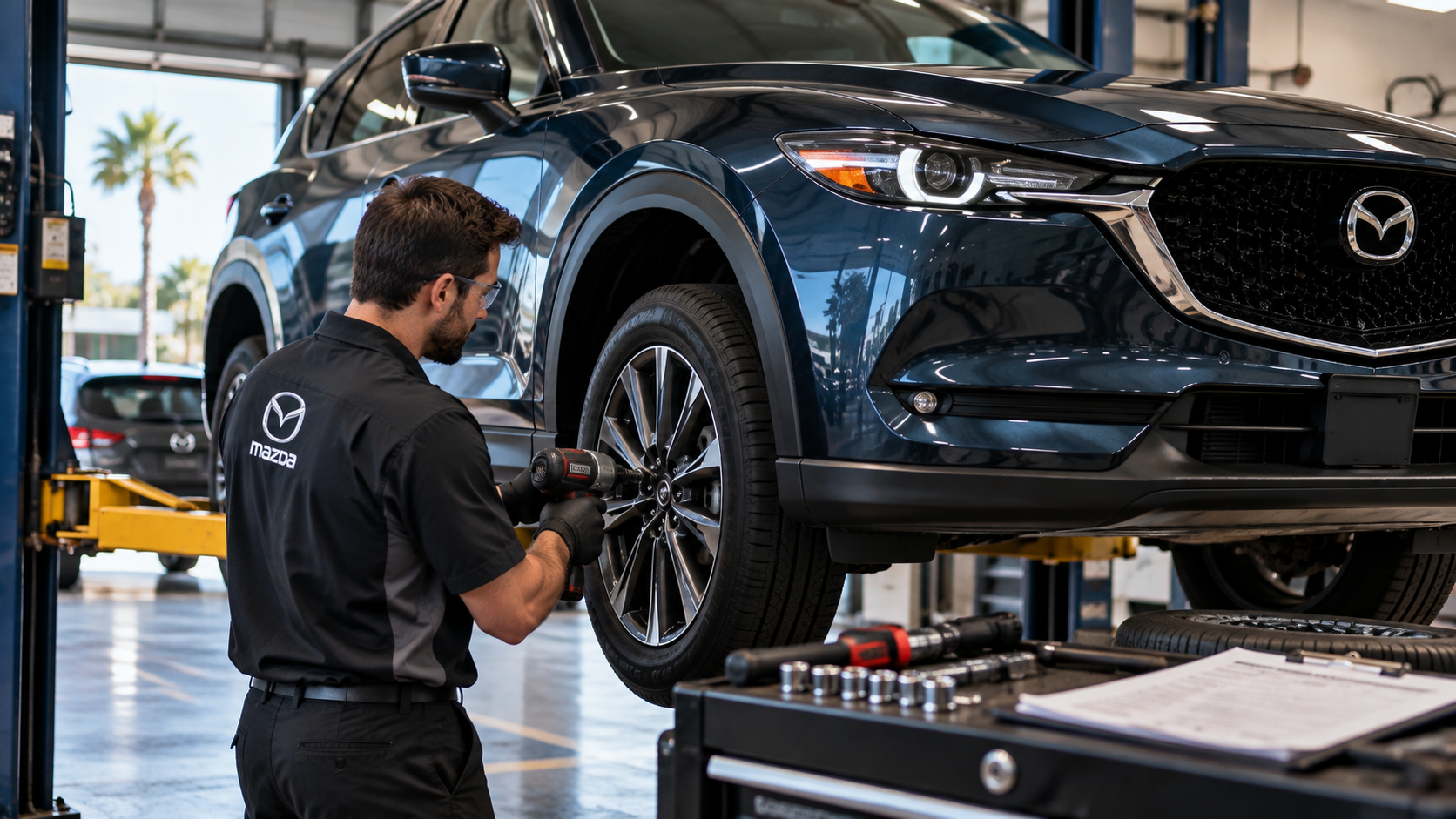
Mazda service updates shape how owners understand repairs, timelines, inspections, and the overall repair process from drop off through pickup. Vehicle service rarely creates frustration from repairs alone. Uncertainty usually grows when owners do not know what the technician found, whether the timeline changed, or why the estimate no longer matches the original expectation. That communication gap becomes more noticeable during AC diagnostics, scratch repair inspections, tire replacement visits, and larger mechanical repairs where additional findings may appear after technicians begin deeper inspection work. Clear communication creates structure around the repair process so owners understand what is happening, why it is happening, and what comes next. Why Repair Timelines Change After Diagnostics Why did the repair estimate change after inspection? Diagnostic inspections are the process technicians use to identify root causes, confirm part failures, and verify whether surrounding components were damaged as well. An initial estimate is frequently based on visible symptoms or customer concerns before the technician begins deeper evaluation. Once the inspection starts, additional information may reshape the repair scope. A Mazda CX 5 arriving for AC service may initially appear to need refrigerant replacement, though pressure testing could later reveal a leaking hose, damaged condenser, or compressor concern requiring additional labor and parts. The same pattern appears during scratch repair evaluations. Surface scratches may look minor externally while deeper paint penetration, panel distortion, or hidden trim damage changes the repair approach after disassembly and inspection. Repair timelines can change because technicians may need to: more complete additional diagnostic testing verify secondary damage order replacement components wait for paint matching procedures confirm calibration requirements after repairs perform final inspection testing before release Communication matters most during these transitions. Owners usually respond more positively when they understand why the timeline shifted and what the technician discovered during inspection. Mazda dealerships that provide clear diagnostic explanations create a calmer ownership process because the repair no longer feels unpredictable or disconnected from the actual work being performed. How Service Advisors and Technicians Coordinate Updates What should a service update include? Effective repair communication explains the current repair stage, technician findings, timeline expectations, and whether approvals are needed before work continues. Service advisors act as the communication bridge between technicians and owners. Technicians focus on diagnosis, repair procedures, testing, and verification while advisors translate those findings into understandable updates. During a Mazda tire rotation appointment, the visit may begin as routine maintenance but later expand if uneven tread wear, brake wear patterns, alignment concerns, or suspension irregularities appear during inspection. Without explanation, owners may feel pressured by additional recommendations. With clear communication, the inspection process feels transparent and easier to understand. Helpful service updates usually include: what inspection stage the vehicle is currently in whether diagnostics are complete whether additional approvals are required parts availability timing revised completion estimates whether final testing has started Communication pauses do not always mean repair progress has stopped. Technicians may still be diagnosing electrical concerns, pressure testing AC components, waiting for authorization approval, or confirming parts delivery timelines before another update becomes available. Mazda ownership tends to feel more stable when communication stays structured throughout the visit. Even short updates create reassurance because owners understand where the repair currently stands. Mazda AC, Tire, and Scratch Repair Communication Expectations Different repair categories create different communication expectations because inspection depth and repair sequencing vary substantially across service types. Mazda AC repair visits usually involve several inspection stages before the technician confirms the root issue. Refrigerant pressure readings, leak tracing dye, compressor operation, condenser airflow, electrical signal checks, and cabin temperature verification may all occur before repairs are finalized. A simple cooling complaint may require several testing phases before the repair path becomes fully clear. Tire rotation visits appear simpler externally, though they still involve inspection opportunities that influence future maintenance planning. Technicians may identify irregular wear patterns, tire aging, brake concerns, or alignment symptoms while rotating the tires. Those findings shape future recommendations and maintenance timing discussions. Scratch repair communication becomes important because cosmetic damage can evolve into a multi step process involving: paint preparation sanding and panel correction primer work paint matching curing procedures finish inspection under varying light conditions Owners usually feel more comfortable during these repairs when updates explain what stage has been completed and what remains before pickup. Mazda dealerships supporting communication well tend to reduce repair anxiety because the ownership process feels collaborative instead of uncertain. The focus shifts from waiting without answers to understanding how the repair is progressing. How Repairs Are Verified Before Vehicle Pickup How do technicians confirm the repair was fixed properly? Repair verification is the process used to confirm the original concern has been resolved before the vehicle returns to the owner. Final verification procedures vary depending on the repair type. AC repairs may require cabin temperature testing, pressure confirmation, compressor cycling review, and leak verification. Brake related inspections may include road testing, pedal feel confirmation, noise evaluation, and brake response checks. Modern Mazda models add another layer of verification because cameras, sensors, and driver assistance features may require recalibration after certain repairs or body work. A technician may need to confirm camera positioning, radar operation, or warning light status before the vehicle is considered ready for pickup. Repair verification can include: road testing warning light review calibration confirmation temperature and pressure testing fluid level verification technician re inspection procedures Owners rarely see these processes directly, which is why communication during the final stage matters as much as the original estimate discussion. Pickup confidence grows when owners understand the repair was tested, reviewed, and verified before release. Mazda’s driver focused engineering philosophy places strong emphasis on connected driving feel and predictable operation. Verification procedures support that same ownership consistency by ensuring repairs restore the vehicle properly before it returns to the road. Why Clear Communication Changes the Ownership Relationship Clear communication changes how owners view the entire repair process. Without updates, repairs can feel disconnected, confusing, and difficult to trust. With structured explanations, owners understand how inspections progress, why timelines shift, and how technicians confirm repairs before pickup. Mazda owners frequently choose the brand because of its thoughtful design philosophy, calm driving feel, and human centered engineering approach. That same ownership mindset extends into service expectations as well. Drivers want transparency, steady communication, and repair discussions that feel respectful and understandable instead of rushed or overly technical. Strong service communication builds trust gradually through clarity, consistency, and realistic expectations. Owners feel more prepared when they understand what technicians are inspecting, what the repair process involves, and what verification steps happen before the keys are handed back. That communication structure creates a more confident ownership relationship long after the appointment itself has ended.

How Routine Maintenance Supports Mazda Performance Over Time

Many drivers wonder how often a Mazda actually needs to be serviced, especially in the first few years of ownership when everything still feels new. Routine maintenance is designed to support how the vehicle performs over time by preserving the condition of its core systems rather than correcting failure after it happens. In a vehicle like the Mazda CX 5, every major system is built to operate within a specific range of temperature, friction, and pressure. These conditions are carefully engineered to create the smooth, responsive feel Mazda is known for. Maintenance keeps those conditions stable, allowing the vehicle to continue delivering that same sense of balance long after the initial drive. Without regular service, systems do not suddenly fail. They begin to shift gradually. Fluids lose their ability to regulate heat and friction. Materials wear unevenly. Small inefficiencies build on each other until the vehicle begins to feel different, even if nothing has technically broken. more Engine systems rely on clean lubrication to reduce internal friction and heat buildup Tire systems depend on even contact with the road surface to maintain stability Brake systems require consistent material thickness for predictable stopping response Climate systems rely on sealed pressure and balanced airflow to maintain comfort Routine maintenance keeps each of these systems operating within their designed limits. For a driver, that means the vehicle continues to feel smooth, predictable, and connected rather than slowly drifting away from its original character. How Oil Changes Protect Engine Systems And Why Timing Matters A common question for new owners is how often a Mazda needs an oil change, but the more important question is what that oil is actually doing inside the engine. Engine oil protects internal components by creating a thin lubricating layer that reduces friction, carries heat away, and prevents metal to metal contact. In models like the Mazda CX 50, the engine is constantly in motion. Pistons move rapidly within cylinders, valves open and close with precision timing, and bearings support rotating components under pressure. Oil flows continuously through these parts, acting as both a lubricant and a cooling medium. Over time, oil begins to break down. Heat alters its viscosity, making it less effective at maintaining a protective layer. At the same time, contaminants such as microscopic metal particles and combustion byproducts accumulate within the oil. This is why timing matters. Oil degradation happens gradually, not instantly. Fresh oil maintains proper viscosity, allowing it to coat and protect moving components Degraded oil loses its ability to separate surfaces, increasing internal friction Contaminated oil circulates particles that can accelerate wear inside the engine Replacing oil at the correct interval ensures the engine continues to operate within its intended design. For drivers, this is one of the most important maintenance steps because it directly affects long term durability and the way the vehicle feels during acceleration and everyday driving. Why Tire Rotation Impacts Safety And Long Term Wear Drivers often ask how frequently tires should be rotated on a Mazda, especially as mileage begins to build and wear becomes more noticeable. Tire rotation redistributes wear across all four tires to ensure even contact with the road and consistent performance. In vehicles like the Mazda CX 30, tires do not wear evenly on their own. The front tires typically handle steering input and a greater portion of braking force, which causes them to wear faster than the rear tires. Over time, this imbalance can affect how the vehicle grips the road. Rotation works by systematically repositioning each tire so that wear is distributed more evenly across all four positions. This helps maintain a balanced contact patch between the tires and the road surface. Even wear maintains consistent traction across all four tires Balanced tread depth supports stable braking and cornering Proper rotation reduces irregular wear patterns that can create noise or vibration This process does more than extend tire life. It preserves the way the vehicle responds to steering and braking inputs. For a driver, that means the Mazda continues to feel stable and predictable, even as miles accumulate. How Brake Inspections Prevent Performance Loss It is also common to question how often brakes should be checked, particularly as a vehicle moves beyond its first year of use. Brake inspections evaluate the condition of brake pads, rotors, and related components to ensure consistent stopping performance. In a vehicle like the Mazda CX 90, braking relies on controlled friction. When the brake pedal is applied, pads press against rotating rotors to slow the vehicle. Each application removes a small amount of material from the brake pads. Over time, this gradual wear reduces pad thickness and can begin to affect how evenly the braking system operates. If left unchecked, this wear can extend to the rotors themselves, increasing the complexity and cost of repairs. Worn brake pads reduce stopping efficiency and increase stopping distance Uneven wear can introduce vibration or pulsing during braking Delayed inspection can lead to rotor damage, requiring more extensive service Regular brake inspections identify these changes early. For drivers, this ensures that stopping remains smooth, controlled, and consistent in everyday conditions, from city traffic to highway speeds. What To Expect From AC Service And Climate System Maintenance Climate control is often overlooked until it stops performing as expected, but it plays an important role in overall driving comfort. Many drivers wonder when AC service should be done, especially if the system still appears to be working. AC service maintains the vehicle’s climate system by ensuring proper refrigerant levels, airflow, and internal pressure balance. In Mazda interiors, the climate system is designed to maintain a consistent cabin environment without placing unnecessary strain on the engine. It relies on a closed loop system where refrigerant circulates through components such as the compressor, condenser, and evaporator. Over time, small changes begin to affect performance. Refrigerant levels can decrease, filters may become restricted, and airflow can weaken. These changes do not always happen suddenly, which is why they can go unnoticed at first. Reduced refrigerant lowers the system’s ability to absorb and transfer heat Restricted airflow limits how effectively cooled air reaches the cabin System imbalance can increase strain on internal components Regular inspection helps maintain consistent cooling performance and prevents more significant issues from developing. For drivers, this means the cabin continues to feel comfortable and controlled, whether during daily commutes or longer drives in changing weather conditions.

What Makes Mazda Engines Feel So Responsive? Understanding Skyactiv Technology

Mazda vehicles have built a reputation for delivering a driving experience that feels unusually connected and responsive. Many drivers notice this immediately during a test drive, whether in the Mazda CX-5, Mazda3, or Mazda CX-30. The steering feels natural, acceleration responds smoothly to throttle input, and the vehicle seems to move in harmony with the driver. Much of that sensation comes from Mazda’s Skyactiv engineering philosophy. Rather than focusing on a single component such as the engine, Mazda redesigned several core vehicle systems together. The result is a coordinated approach to engine efficiency, vehicle weight, and transmission tuning that improves both responsiveness and everyday fuel efficiency. Understanding how Skyactiv technology works helps explain why Mazda vehicles often feel different to drive compared with many other compact SUVs and sedans. What Skyactiv Technology Actually Means Many shoppers researching Mazda vehicles ask what Skyactiv technology actually is and why it changes how the vehicle drives. Skyactiv technology is Mazda’s engineering strategy for improving efficiency and responsiveness by redesigning the engine, transmission, chassis, and vehicle structure together rather than optimizing each component separately. more The Mazda Skyactiv-G engine, used in vehicles such as the Mazda CX-5 and Mazda3, focuses on extracting more usable energy from every combustion cycle. Mazda engineers paired that engine design with a lightweight vehicle structure and carefully tuned transmissions so that the entire vehicle responds smoothly to driver inputs. This integrated approach supports Mazda’s driving philosophy known as Jinba Ittai, which refers to the idea of unity between the driver and the vehicle. Instead of focusing only on horsepower or acceleration numbers, Mazda engineers concentrate on how naturally the car reacts to steering, throttle, and braking. How High Compression Engines Improve Power and Efficiency A key part of Skyactiv technology is the unusually high compression ratio used in Mazda gasoline engines. The compression ratio of an engine describes how much the air and fuel mixture is compressed inside the combustion chamber before ignition occurs. Higher compression allows the engine to extract more energy from the fuel during combustion. The Mazda Skyactiv-G engine uses one of the highest compression ratios found in mass-produced gasoline engines. By compressing the fuel mixture more efficiently before ignition, the engine can generate stronger combustion and improved energy output. This design offers several practical advantages for drivers. • More efficient use of fuel during combustion • Stronger torque output at lower engine speeds • Improved fuel economy during everyday driving Because the Mazda Skyactiv-G engine converts more of the fuel’s energy into usable power, the engine can deliver responsive acceleration without relying solely on large displacement or aggressive turbocharging. For drivers of the Mazda CX-5 or Mazda CX-30, this means the engine responds quickly when merging onto highways or accelerating through city traffic while still maintaining balanced fuel efficiency during daily commuting. Why Mazda Engines Feel More Responsive in Everyday Driving Many drivers searching for information about Mazda performance want to understand why Mazda vehicles often feel more responsive than competitors in the same category. Responsiveness comes from several engineering choices working together within Skyactiv powertrains. First, the Mazda Skyactiv-G engine delivers strong torque at lower engine speeds. Torque is the rotational force that helps move the vehicle forward. When torque is available earlier in the engine’s power band, the vehicle can accelerate smoothly without needing to rev the engine aggressively. Second, Mazda carefully calibrates the transmission to maintain consistent power delivery. The Skyactiv automatic transmission adjusts gear changes to keep the engine operating within its most efficient and responsive range. Finally, Mazda engineers tune throttle response to provide predictable acceleration. When the driver presses the accelerator pedal, the engine and transmission respond quickly but smoothly, allowing the vehicle to accelerate without hesitation. Together, these systems help Mazda vehicles feel more intuitive to drive, especially during everyday situations such as: • merging onto highways • navigating stop-and-go traffic • accelerating out of corners • maintaining steady highway speeds Drivers often describe this balance as feeling more connected to the vehicle because the engine and transmission respond naturally to driver inputs. How Vehicle Architecture Supports Driving Precision Skyactiv technology extends beyond the engine. Mazda also redesigned the vehicle body structure and chassis to support improved handling and stability. Vehicle weight and rigidity play a major role in how a car responds to steering and acceleration. A lighter, more rigid structure allows engineers to control how the vehicle moves during braking, cornering, and acceleration. Mazda’s Skyactiv body architecture uses high-strength steel and carefully engineered reinforcement points to increase structural rigidity while reducing overall weight. This allows suspension components to operate more precisely because the vehicle structure flexes less during movement. The suspension and steering systems in vehicles such as the Mazda3 and Mazda CX-5 are then tuned to complement this structure. The result is steering feedback that feels predictable and balanced, helping the driver maintain better control during both city and highway driving. This combination of lightweight engineering and structural rigidity contributes to the smooth and confident driving feel many Mazda owners notice. How Skyactiv Technology Improves Real World Fuel Efficiency Efficiency is another major benefit of Skyactiv engineering. While many automakers focus on hybrid systems or turbocharging to improve fuel economy, Mazda engineers focused heavily on improving the combustion process itself. Several elements contribute to the fuel efficiency seen in vehicles equipped with Skyactiv engines. • Higher compression combustion extracts more energy from each fuel cycle • Lightweight vehicle structures reduce the amount of energy required to move the vehicle • Transmission calibration keeps the engine operating within its most efficient range • Aerodynamic design reduces resistance at highway speeds Because these improvements work together, vehicles such as the Mazda CX-5 and Mazda CX-30 can deliver strong fuel economy while maintaining responsive acceleration and smooth power delivery. For drivers who spend time commuting, traveling on highways, or running daily errands, these efficiency improvements translate into fewer fuel stops and lower long-term fuel costs without sacrificing driving enjoyment. Why Skyactiv Technology Shapes the Mazda Driving Experience Mazda’s Skyactiv engineering philosophy demonstrates that performance and efficiency do not have to be opposing goals. By redesigning the engine, transmission, chassis, and body structure as a unified system, Mazda engineers created vehicles that balance responsiveness, fuel efficiency, and driving comfort. For many drivers, this approach is why Mazda vehicles feel engaging during everyday driving. The engine responds smoothly to throttle input, the transmission maintains balanced power delivery, and the chassis provides stable and predictable handling. Whether behind the wheel of a Mazda CX-5, Mazda3, or Mazda CX-30, Skyactiv technology works quietly in the background to create a driving experience that feels natural and connected.

wheel aligment

Preventing Uneven Tire Wear With Proper Wheel Alignment

After driving your new Mazda off the lot, we're certain the first thing on your mind is maintenance. While many common maintenance measures do their part in ensuring the longevity of your vehicle, wheel alignment ensures your safety, and the safety of others on the road. If your wheels aren't properly aligned, you risk early and uneven wear of the tread of your tires. Positive or negative camber, or the angle of your wheels when viewed from the front, can cause more wear on the outer and inner edges of the tire when compared to the center tread. The heel and toe alignment, or the tilt when viewed from above, can cause uneven wear of the individual tread blocks, appearing like saw teeth across the tire. Aside from being an eyesore for your new Mazda, that tread is there to provide traction on the road. Without it, driving becomes even more dangerous, leading to drifting or loss of control in wet or slick conditions. To ensure the safety of yourself and other drivers, keeping up to date with alignment check-ups is of the utmost importance. more You may also experience your steering being unresponsive, or sometimes going in an unintended direction. Maybe you feel your vehicle pulling to the left or right, and generally requires more steering input to stay in the lane. This is mainly caused by toe or heel alignment. When taking a turn, one wheel has to follow a wider or tighter arc than another, causing steering to feel unwieldy and uncontrollable. Adequate steering is tantamount to your well-being when driving your new Mazda, allowing you to avoid other vehicles or obstacles in an emergency situation. In addition to uneven tire wear and issues with your steering, a misaligned vehicle can cause a domino effect and lead to more problems. For example, tire pressure can drop due to the uneven wear caused by misalignment, which will inevitably lead to a traumatic tire blowout at high speeds. This drop in pressure also worsens your fuel consumption; your car needs to do more work for the same result. A misaligned vehicle can also lead to issues with wheel balance, which is distinct from the alignment of your wheels. If your wheels are off balance, this can lead to shaking or vibrating of your vehicle and loss of control. To avoid an accident, getting your vehicle's tires aligned is the first thing any car owner should do. This is why scheduled maintenance checkups should never be ignored or delayed. Visit Tom Bush Mazda to Prevent Unexpected Issues Proper alignment can ensure the longevity of your vehicle, but more importantly, it can ensure your own safety and well-being. Understanding alignment issues and their symptoms can save you hundreds of dollars in subsequent repairs. To learn more, visit Tom Bush Mazda in Jacksonville, FL.

Engine Diagnostics at Tom Bush Mazda

8 Tips for Keeping Your New Mazda in Great Shape

If you've recently bought a new Mazda, you'll preserve its wonderful driving dynamics with the maintenance guidelines outlined here. Schedule these services at Tom Bush Mazda in Jacksonville for quality work by expert technicians. 1. Protect the Engine With Oil Changes Most modern Mazdas have highly efficient SKYACTIV engines, which require fresh motor oil to stay at their best. You'll minimize friction and wear by changing the oil two or more times a year. During each oil change, we can also replace the oil filter if it's almost full. 2. Optimize Airflow With Filter Replacements Your engine also needs an unimpeded inflow of fresh oxygen. While keeping out contaminants, the air filter can eventually become gummed up with all the dust and debris it catches. You'll need to install a new air filter every year or so. 3. Keep Things Cool With Coolant Flushes While you drive, the cooling system controls heat in the engine and also, to a degree, in the transmission. You'll need to book yearly cooling system inspections and keep a close eye on the coolant via its reservoir. Most drivers need to have their coolant flushed every two or three years. 4. Keep Your Brakes Sharp With Inspections Your brake pads and rotors will need periodical replacements, and your brake fluid must be flushed every two years or so. Schedule a brake inspection twice a year; the technician can replace worn parts as and when required. more 5. Preserve Vital Parts With Fluid Checks Many essential parts of your Mazda rely on a specific protective fluid to function. Check and top up the transmission fluid, differential fluid, power steering fluid, and windshield wiper fluid regularly. Flush each one in accordance with the guidelines in your owner's manual. 6. Stay Stable With Suspension Tune-Ups Your Mazda handles smoothly thanks to the suspension. A yearly suspension tune-up should keep the shocks, struts, ball joints, bushings, springs, control arms, and other components firmly supporting your car. 7. Keep Voltage Flowing With Battery Tests Few things in a modern vehicle will work for long without a reliable battery. Have your Mazda's battery and whole electrical system tested and checked for faults once a year. 8. See Clearly With Headlight Replacements Without bright headlights, after-dark driving becomes dangerous, so check the condition of your headlights monthly. Also, circle your Mazda to clean and examine every exterior light for dirt, cracks, worn-out bulbs, and other issues. Schedule Regular Maintenance at Your Mazda Dealership Our technicians understand Mazda's joy-of-driving design philosophy. With a sensible maintenance schedule, we can keep your new Mazda responsive, agile, and fun to drive for many years to come. Come to Tom Bush Mazda in Jacksonville, FL, for all the preventative service your car needs. We provide top-notch service and customer care.

A Certified Mazda Technician performing Mazda maintenance

Maintaining Your Mazda: Service Intervals and Tips

The Mazda maintenance schedule in your vehicle handbook provides a complete list of all the services that will help keep your Mazda in great shape. As time passes, parts will wear out due to age or damage, and regular servicing ensures that these parts are replaced before this happens. As your Mazda dealer, we want to give a few examples of the types of Mazda services we provide. more Examples of Mazda Maintenance Schedule Services at Your Mazda Dealer Oil and Filter Replacement Your engine depends on the continued flow of healthy, high-grade oil to work effectively. The oil lubricates countless engine components, protecting them against friction damage by covering them in a friction-resistant coating. In addition, oil contains additives designed to increase engine longevity by protecting against rust and breaking down harmful engine blockages. Oil accumulates dirt and other minute debris on its travels through the engine. Much of the absorbed debris is collected by the oil filter, but eventually, the oil will become slower and thicker, providing less lubrication. If the oil isn't replaced, engine components will suffer increased wear and tear. An oil change is usually performed every 3,000 miles when we drain and replace the old oil and install a new oil filter. Air Filter Replacement Your engine requires vast quantities of air for efficient combustion, as fuel can't burn without it. Air entering the engine must also be clean, as impurities like dirt or other particles can damage sensitive engine components. The engine air filter is positioned between the radiator grille and the engine and traps any airborne particles, so only clean air reaches the engine. As time passes, the air filter will fill with dirt and become blocked. If this happens, airflow into the engine drops dramatically, affecting engine performance and potentially damaging engine components. Most fuel in the fuel-air mixture won't burn, causing fuel economy to drop, and your engine can misfire. The air filter is usually replaced at 12,000 miles, and a clean air filter prevents these problems. Spark Plug Replacement A spark plug is connected to each engine cylinder and provides the ignition source for the fuel-air mixture. Inside the engine cylinder, the fuel-air mixture is compressed to increase its potency and then ignited by the spark plug. The mixture burns in a regularly spaced and precisely timed series of explosions that produce the energy that moves your Mazda. Spark plugs slowly wear out due to old age and can become damaged by worn ignition coils, oil leaks onto the plugs, or other issues. Worn plugs produce rough idling, starting problems, and misfiring. We replace your spark plugs between 30,000 and 100,000 miles, depending on your Mazda model and the type of plugs it uses. Book your next maintenance today. Contact our service department at Tom Bush Mazda in Jacksonville, FL.

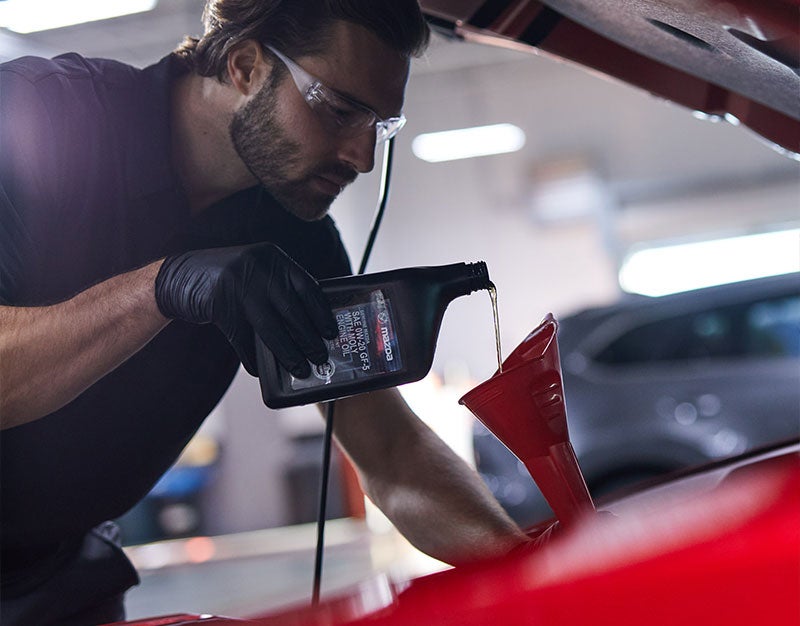
A Mazda Certified Technician performing an oil change

Mazda Oil Change 101: Why It's Vital for Your Vehicle's Health

Changing the oil in your engine is one of your top maintenance tasks as a car owner, but have you ever wondered why? An oil change at your Mazda dealer can go a long way to preserving the performance of your engine and maximizing fuel efficiency. Learn all there is to know about motor oil service, such as when to schedule and the best type of engine oil for your powertrain. more Mazda Oil Change 101: Why It's Vital for Your Vehicle's Health The motor oil in your engine is primarily used to lubricate the internal engine parts to reduce friction that can cause wear and tear damage. Modern motor oil is also formulated to protect your engine from overheating, which can also save your engine from premature damage. Frequently changing your motor oil can also improve your Mazda's fuel efficiency. This is because old motor oil or oil that is contaminated can prevent adequate lubrication of the engine's moving parts, which can clog up your engine oil filter and prevent your motor from performing efficiently. It's also worth noting that low motor oil can have a negative impact on your vehicle's overall performance. What Type of Engine Oil Should You Use? Your Mazda owner's manual will list the recommended engine oil for your powertrain. If you drive a high-performance Mazda, your powertrain may perform best with synthetic motor oil that is specifically formulated to enhance engine performance. Many modern Mazdas also use semi-synthetic motor oil. When Should You Book Oil Service at Your Mazda Dealer? As a general rule of thumb, modern vehicles only need new motor oil every six months or so. Regardless of how much you drive your vehicle, the engine oil in your vehicle will degrade after six months. For most drivers, this means changing the motor oil every 7,500 miles or so. However, you may need oil service more frequently if you drive in very hot weather, on sandy beaches, or you put a lot of miles on your vehicle. It's also a good idea to book an oil service if you are preparing for a long trip. Changing your motor oil before a road trip will ensure your engine is prepared for long-range driving. This is also a good time to schedule other vital vehicle maintenance services for your trip, such as a tire rotation. In fact, many drivers book a routine oil service with a tire rotation to save time. If you don't routinely change your motor oil, your engine won't meet your performance standards and may even experience problems like overheating or engine damage. It's best to follow your Mazda's recommended service guideline to maximize vehicle health and performance. Book your next oil service at Tom Bush Mazda in Jacksonville, FL.

The Importance of Genuine Mazda Parts for Your Vehicle's Longevity

As a car owner, you will need to purchase replacement parts for various vehicle components. Whether you're replacing wear-and-tear parts like spark plugs or a major part like your vehicle's battery, it's always best to purchase OEM parts at your Mazda dealer to prolong the life of your vehicle. The Importance of Genuine Mazda Parts for Your Vehicle's Longevity The number one reason why genuine Mazda parts protect the lifespan of your vehicle is that these parts are crafted for your specific make and model. When parts fit your vehicle perfectly, your Mazda can operate at a higher performance level for much longer. Additionally, genuine parts will not damage other parts of your vehicle, whereas poorly fitting aftermarket parts may cause damage over time. Genuine replacement parts made by your vehicle's original manufacturer have the same quality as the original or factory parts your vehicle came with. High-quality parts made with high-quality materials tend to last much longer than generic aftermarket parts, which means your genuine parts will maintain your vehicle's repair work for a significant amount of time. more Should You Have Parts Installed at Your Mazda Dealer? Even if you order genuine parts online, you should always have parts installed at your local dealership. Not only does Mazda professional installation ensure all parts are properly installed for optimal vehicle function, but installing parts at your dealership can also protect the warranty on your vehicle and on the replacement part. Do Mazda OEM Parts Have a Warranty? Genuine Mazda replacement parts have a one-year warranty or a 12,000-mile warranty, depending on which comes first. This warranty will cover the cost of replacing the genuine part if it fails due to a manufacturer defect, which means you won't have to pay for the same part twice if something goes wrong. You can learn more about the warranty on your genuine Mazda replacement part when you speak with your dealership. Additionally, if your Mazda is new and still under warranty, it's best to use genuine Mazda replacement parts for all repair work. This is because using generic aftermarket parts while your vehicle is still under warranty can void your warranty, which means you could be paying out of pocket for other repairs in the future. Using a genuine Mazda replacement part ensures you can take full advantage of your vehicle warranty. Where Can You Buy Genuine Mazda Parts? When you need to order genuine parts, you can shop for parts online at your dealership's website or Mazda's official store. This option is best if you know the exact part you need for your vehicle repair. If you aren't sure about which part to order, you can trust your local dealership to order the precise part needed for vehicle repairs. Genuine Mazda parts last much longer and ensure your vehicle operates at peak performance for years to come. Get in touch with Tom Bush Mazda in Jacksonville, FL to book service or order genuine Mazda parts today.

Understanding Mazda's Warranty: Comprehensive Coverage Explained

Your new Mazda's warranty protects against any unforeseen issue with the labor or materials used to manufacture your vehicle. If any warranty-related issue is discovered, it will be rectified by Mazda-trained technicians using only Mazda-approved replacement parts at no cost. As your Mazda dealer, we want to tell you more about the coverage you can expect under the 2024 Mazda warranty. From Your Mazda Dealer: Your Mazda Warranty's Comprehensive Coverage New-Vehicle Limited Warranty This is the main warranty and applies to most systems and components. Some systems and components are not covered, as they're protected by the other warranties listed below. This warranty covers your original 12V car battery for the full warranty duration. Coverage applies for the first three years or 36,000 miles, whichever comes first. more Some types of damage that could occur during the warranty period are not covered. Examples of damage not covered include damage caused by lack of proper maintenance, damage caused by unauthorized replacement parts, and accidental damage. The excluded situations are further detailed in your warranty handbook. Some components have reduced warranty coverage. Adjustment Coverage Adjustments are minor repairs that don't require replacement parts. They include wheel balancing and wheel alignment. Any adjustments will be performed at no cost for the first year or 12,000 miles. AC Refrigerant Charge If your AC requires a refrigerant charge, this is provided free for the first year and unlimited mileage. Refrigerant recharges after this are free if performed as part of an AC warranty repair. Powertrain Limited Warranty The powertrain includes your engine, transmission, transaxle, and FWD or RWD systems. If you have a PHEV or Mild Hybrid, their motors and high-voltage parts are protected by this warranty. All components covered by this warranty are listed in your handbook. Warranty protection applies for five years or 60,000 miles. Certain types of damage are not covered by warranty and are detailed in your warranty handbook. If a powertrain warranty issue prevents you from driving, your Mazda will be towed to the closest dealer at no cost. Safety Restraint System Warranty The seatbelts, seatbelt systems, airbags, and airbag deployment systems are covered for five years or 60,000 miles. Anti-Perforation Limited Warranty Corrosion rapidly forms on most untreated metals when exposed to water and air. Perforation is corrosion that forms a hole through a metal section from one side to the other. All metal body panels and sections are protected against corrosion and perforation due to specialized coatings applied during manufacture. If perforation forms despite this protection, the affected metal will be replaced free during the first five years and unlimited mileage. If you'd like to know more about coverage, contact us today at Tom Bush Mazda in Jacksonville, FL.

Need New Headlights? Visit Your Mazda Dealership

Over 40 percent of fatal collisions occur at night, even with far fewer cars on the road. The key factor here is visibility. Without bright headlights after dark, any driver's chances of having an accident dramatically rise. If you're experiencing the following issues with your headlights, keep yourself and your passengers safe by installing new headlights at your local Mazda dealership. Need New Headlights? Visit Your Mazda Dealership Today Dimming Light Most headlight bulbs fade in the last few weeks or months of their lifespan. This gradual fading might not be obvious at once. If you find yourself struggling to see the road ahead and suspect your headlights are weakening, ask a trusted technician to examine the bulbs. Headlight bulbs rarely fail at precisely the same time, so it's likely that a dimming bulb will cause the light to fade on just one side of your car. If both your headlights appear to be weakening, you might have an underlying problem with the battery or other elements of the electrical system. more Discolored Light If the light ahead of your car seems discolored, hazy, or cloudy, then one or more of your headlight lenses could be dirty or damaged. To examine the quality of the light, you can set your car facing a closed garage door and shine your headlights on it. Headlight lenses can sometimes become coated with dirt or grime, which you might be able to clean away. Your lenses can also become more seriously damaged by UV rays in sunlight, which oxidize the acrylic, causing dark patches and microcracks. In this case, the lenses will usually need to be replaced. Flickering Light Some types of headlight bulbs flicker as they age. If your headlights are flickering, one of your bulbs is probably about to fail. Flickering could also be caused by a fault in the wiring or bulb harness. If you use halogen bulbs, the flickering could result from a broken or burned-out filament; HID or LED bulbs are typically less likely to flicker. High-Beam Failure Hard-working high-beam bulbs can sometimes fail before the low beams. This would leave you with a significantly reduced ability to see the road ahead, so it's important to immediately replace malfunctioning high beams. Blowing Fuse Problems with the bulb, harness, or wiring could cause the headlight fuse to blow. This fuse will also blow if a sudden electrical surge threatens to damage the bulbs. If your headlight fuse repeatedly blows, ask a technician to figure out the cause. Visit Tom Bush Mazda in Jacksonville, FL, today to have your headlights tested, repaired, or replaced. Since 1974, we've been offering drivers in and around our local community a terrific range of vehicles alongside top-notch maintenance services and customer care.

Maximizing Your Mazda's Performance: Essential Maintenance Tips

As your Mazda dealer, we have trained technicians and state-of-the-art facilities to provide the maintenance your vehicle requires to stay in great shape. Regular maintenance prevents many future repairs by fixing minor issues before they can develop into more serious problems. We'd like to tell you more about a few examples of the types of Mazda maintenance we provide. Examples of Mazda Maintenance Available at Your Mazda Dealer Cabin Air Filter Replacement The cabin air filter removes dust, pollen, and dirt to ensure that only clean air blows into your cabin. It also filters the cold air from the AC and removes any minute particles left behind after the cooling process. As time passes, this filter will become clogged with dirt, and pollen and other allergy-causing substances will circulate in the air. more Dirt can hide bacteria or mold spores, and air blowing through a dirty filter means you can breathe in the organisms and become ill. In addition, the cabin will have a musty, earthy smell due to floating dust. Our technicians can quickly replace a clogged filter, and you'll be breathing clean air again in no time. Wiper Blade Replacement Most drivers don't really think about their wiper blades, at least until rain arrives. The blades are made from high-quality rubber, the most efficient substance to efficiently clean your windshield without causing any damage. Even high-quality rubber degrades due to heat, rain, and UV rays and the blades will become less flexible. The lack of flexibility can cause the blades to crack or break, and damaged blades leave streaks or smears behind when they clean. Damaged blades can also potentially scratch the windshield, and a scratch can rapidly turn into a crack that needs repair. Wiper blades are inexpensive, and we can speedily install a new set to ensure unobstructed visibility in even the heaviest rain. Tire Replacement Your tire tread slowly wears down due to surface friction, and a low tread reduces driving safety. Worn tires increase stopping distance when you hit the brakes and reduce handling when driving or cornering. In rainy conditions, the severely worn tread can even cause your Mazda to skid, which can easily lead to an accident. Damaged tires are also more likely to develop leaks or blowouts. We offer several services to extend tire life, including tire balancing, wheel alignment, and tire rotation. Eventually, the time will come when your tires need replacement. We stock a complete range of tires from all major manufacturers in the correct size for your model. Our technicians will replace your tires and correctly balance them while you wait so you can drive safely again. When you need maintenance, contact the Mazda-trained experts at Tom Bush Mazda in Jacksonville, FL.

Air Filter

3 Services Offered by Your Mazda Dealer

A Mazda service is performed by Mazda-trained technicians using only Mazda-approved parts. Regular servicing allows minor issues to be fixed before they can turn into problems, while also increasing your Mazda's performance and extending its lifespan. As your Mazda dealer, we want to give you a few examples of the types of service we provide. 3 Examples of Mazda Service Offered by Your Mazda Dealer Cabin Air Filter Replacement The cabin air filter traps dust, pollen, microbes, and other airborne contaminants before they enter your cabin. This ensures the air is as clean as possible. As time passes, the filter will become clogged with dirt, reducing airflow in the cabin and lowering air quality. Unlike the engine air filter that filters air before it's used in combustion, the cabin filter isn't easy to access. While you can't check the filter condition, you'll usually smell a musty slightly stale smell inside the cabin. On average, this filter needs replacement every 15,000 to 30,000 miles, depending on your model. Our technicians can quickly replace a dirty filter, and you'll feel an immediate increase in air quality. more Tire Rotations Your tires wear as you drive due to surface friction. Minute pieces of the rubber will fleck off, and the tread gradually wears down. This wear and tear is normal, but it can be unnecessarily increased if your tires aren't regularly rotated. Each tire position generates a specific wear pattern, and continual wear on the same sections reduces traction and makes a puncture or blowout more likely. A tire rotation reduces this damage. Our technicians shift each tire to a new position and rebalance them if necessary. Your drive system determines the exact positions the tires move to. FWD, RWD, 4WD, and AWD systems have different weight distributions, and weight is a factor that increases tire damage. Regular rotations spread wear damage more evenly and prolong tire life. Battery Testing No driver wants to hear the sad click-clink of a dead battery, and fortunately, this is an easily avoidable situation. The average battery life is three to five years, although this can be reduced if the battery operates for lengthy periods in extremely hot or cold conditions. We advise testing your battery when it's three years old, as this gives a clear indication of its remaining life. Our technicians will hook your battery to our computerized battery tester. This machine subjects your battery to various load tests and gauges its performance. If your battery is still in good condition, we advise retesting in about a year. If your battery is failing, we'll install a new Mazda battery, and you can drive with peace of mind, knowing your car will start perfectly every time. Book your maintenance today by contacting our service department at Tom Bush Mazda in Jacksonville, FL.

Contact Us

Fill out this form below and we'll contact you shortly
*Required Fields