

Mazda safety features are designed to support awareness during the small driving moments that happen every day, from parking lots to highway traffic and crowded intersections. Mazda approaches driver assistance differently than many brands because the focus stays centered on helping the driver remain connected to the road instead of overwhelming the cabin with constant intervention or distraction.
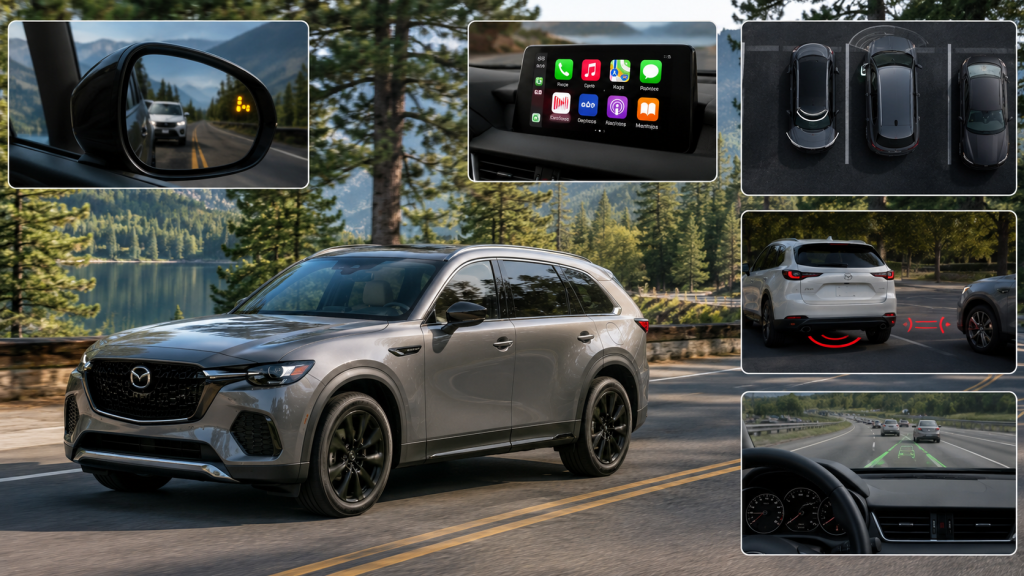
That philosophy shapes how Mazda structures visibility, warning timing, steering feedback, rear monitoring, and infotainment interaction across vehicles like the Mazda CX 5 and Mazda CX 90. The goal is not to replace the driver. The goal is to make awareness feel more natural and easier to maintain throughout daily driving.
How Mazda Safety Features Support Driver Awareness
How do Mazda safety features work during everyday driving? Driver assistance features use cameras, radar sensors, steering input tracking, and vehicle positioning data to monitor surrounding traffic and reinforce driver awareness during changing road situations.
Mazda structures these features to work quietly in the background until attention or visibility support becomes necessary. Instead of constant interruption, many alerts are calibrated to feel measured and intentional.
Lane departure warning systems monitor road markings through forward facing cameras positioned near the windshield. When the vehicle begins moving outside detected lane boundaries without signaling, the system alerts the driver through visual or audible feedback. The feature is designed to reinforce awareness during fatigue, distraction, or long highway stretches where steering drift may happen gradually.
Adaptive cruise control functions differently than traditional cruise control because radar monitoring tracks the distance between vehicles ahead. Speed adjustments happen automatically when traffic slows or speeds up. This creates smoother highway movement during heavier traffic patterns and reduces the need for repeated acceleration and braking adjustments.
Mazda driver assistance interaction usually feels calmer because:
- alert timing is more measured
- steering corrections stay subtle
- visual warnings remain clean and simple
- cabin notifications avoid excessive interruption
- driver control remains prioritized
That balance matters because overly aggressive alerts can create frustration or distraction instead of support. Mazda’s approach centers on helping the driver stay engaged with the road naturally.
Blind Spot Monitoring and Rear Cross Traffic Alerts
What does blind spot monitoring actually watch for? Blind spot monitoring uses radar sensors mounted near the rear corners of the vehicle to detect approaching traffic traveling alongside or slightly behind the driver.
When another vehicle enters a monitored zone that may not be fully visible through mirrors alone, warning indicators illuminate near the side mirrors. If the driver signals while another vehicle occupies that space, additional alerts may activate to reinforce awareness before lane movement occurs.
Rear cross traffic alert expands this same monitoring concept during reversing situations. When backing out of parking spaces or crowded lots, rear radar sensors scan for approaching vehicles crossing behind the Mazda CX 5 or Mazda CX 90.
This becomes useful in situations where:
- larger vehicles block side visibility
- crowded parking lots limit sightlines
- pedestrians and traffic move unpredictably
- reversing angles restrict visibility
- nighttime parking reduces visual clarity
Rear traffic monitoring does not only look directly behind the vehicle. Radar sensors monitor movement approaching from both sides during reversing movement. That wider monitoring zone helps identify cross traffic before it fully enters the driver’s direct line of sight.
Mazda structures these alerts to support awareness without overwhelming the driver with unnecessary notifications. The system activates when movement patterns suggest attention reinforcement is needed rather than issuing constant warnings throughout normal traffic flow.
Mazda CX 5 and CX 90 Visibility During Parking and Traffic
Which Mazda SUVs feel easiest to monitor while driving? Visibility comes from much more than windshield size alone. Driver seating position, mirror placement, window design, hood height, and pillar structure all influence how naturally a driver understands surrounding space.
The Mazda CX 5 uses a seating position that creates strong forward visibility while maintaining a connected driving posture. Drivers can judge vehicle placement more naturally because the hood shape, side mirrors, and window positioning remain visually organized from the driver’s seat.
The Mazda CX 90 introduces a larger body structure, though Mazda still prioritizes visibility and driver orientation carefully throughout the cabin layout. Larger SUVs can sometimes feel disconnected from surrounding traffic because of body size alone. Mazda counters that by focusing heavily on sightlines and driver positioning.
Parking visibility support works through:
- mirror positioning
- camera integration
- steering visibility
- window shape design
- driver seating geometry
- sensor monitoring around the vehicle
Visibility matters because parking confidence influences how comfortable an SUV feels during ownership. Drivers navigating garages, tighter parking lots, school pickup areas, or crowded shopping centers benefit from clearer awareness around the vehicle perimeter.
Mazda’s design philosophy keeps the driver visually connected to the road and surrounding space instead of isolating them behind excessive bulk or obstructed sightlines.
Apple CarPlay and Reduced Driving Distraction
Does Apple CarPlay reduce distraction during driving? Smartphone integration reduces distraction by simplifying how navigation, communication, and media functions are accessed while driving.
Without integrated systems, drivers frequently shift attention toward handheld devices for navigation updates, text notifications, music changes, or incoming calls. Apple CarPlay moves those interactions into the vehicle’s infotainment display using larger icons, simplified menus, voice controls, and steering wheel integration.
This changes how drivers interact with information during commuting and travel.
Apple CarPlay supports awareness by:
- reducing handheld phone interaction
- simplifying navigation access
- centralizing communication controls
- supporting voice command interaction
- keeping visual information larger and easier to recognize
Mazda structures infotainment interaction with a cleaner visual approach than many heavily layered screen layouts. Simpler menu organization and reduced visual clutter help drivers process information faster without extended screen attention.
This relationship between technology and awareness matters because distraction frequently builds from multiple small interruptions instead of one major event. Navigation adjustments, incoming messages, playlist changes, and phone handling all divide driver focus throughout a trip.
Mazda’s technology philosophy supports a more connected and calmer driving rhythm by reducing unnecessary complexity during those interactions.
Why Mazda Safety Features Feel Supportive Instead of Intrusive
Why do Mazda safety features feel calmer than some driver assistance systems? Mazda approaches safety through human centered design, meaning the driver remains the central focus of every interaction. The technology exists to support awareness, reinforce attention, and simplify visibility without overpowering the person behind the wheel.
Some driver assistance systems from other brands rely heavily on aggressive steering intervention, constant audible warnings, or overwhelming notification patterns. That approach can make technology feel stressful instead of supportive during normal commuting.
Mazda structures alerts, visibility, steering response, and cabin interaction more carefully so the vehicle still feels natural to drive. The systems step in when awareness support becomes necessary, though they avoid creating a disconnected driving relationship where technology dominates every interaction.
That balance shapes why many drivers describe Mazda vehicles as feeling calmer and easier to trust during everyday driving situations. Features like blind spot monitoring, rear traffic alerts, adaptive cruise control, and Apple CarPlay work together quietly in the background to reinforce awareness during the moments drivers manage constantly throughout the week.
The result is a driving environment that feels more connected, more understandable, and more supportive without becoming distracting or overwhelming.
Connect with us


