

The Mazda CX-90 plug-in hybrid draws genuine attention for one clear reason. It can cover most daily driving on electricity while running like a conventional SUV when the battery runs low. However, fit depends on how you drive, where you charge, and how your days are structured. This guide explains how the powertrain works, what the electric range means for real commutes, and how to evaluate whether the plug-in format suits your life.
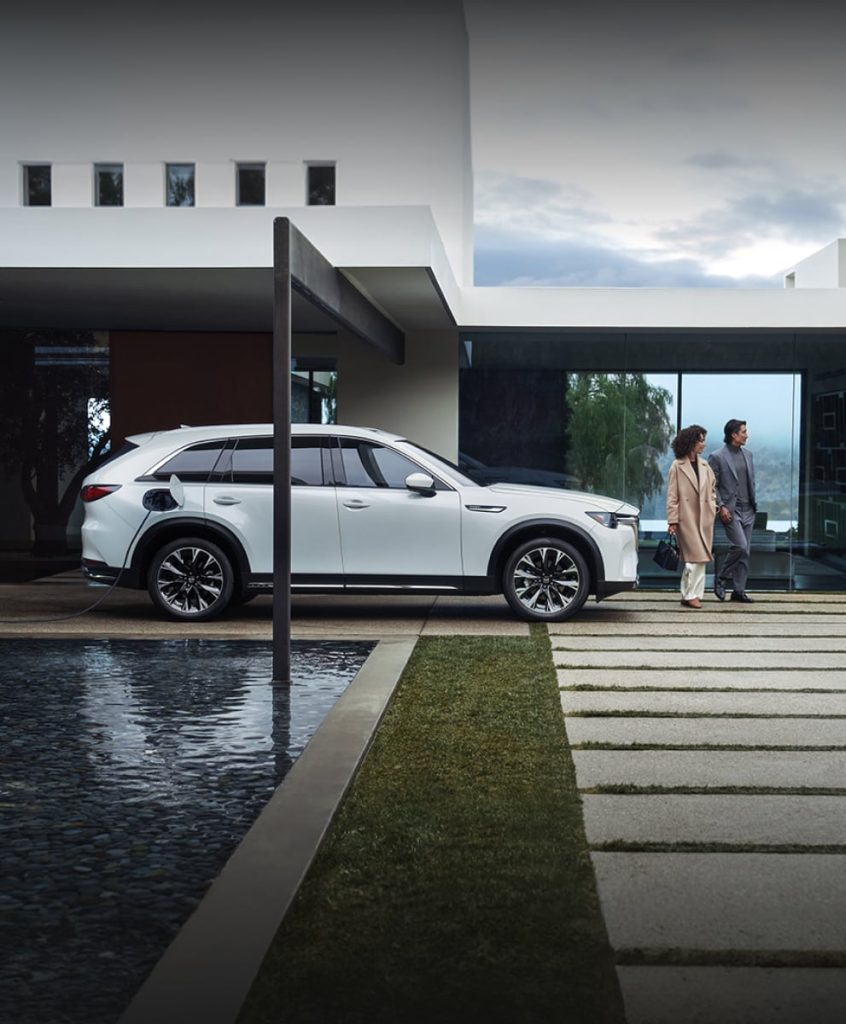
How the Plug-In Hybrid Powertrain Works
Shoppers often carry one question into this research: how does the system decide when to use electricity versus gas? The answer lives in how Mazda built the two energy sources to function together.
The CX-90 PHEV pairs a 2.5-liter four-cylinder engine with an electric motor and a 17.8-kilowatt-hour battery. Total system output reaches 323 horsepower. Standard all-wheel drive comes on every trim. The electric motor handles low-demand situations, including city driving, light acceleration, and low-speed movement. When power demand climbs above what the motor can meet alone, the gas engine steps in to assist.
The system reads throttle input, vehicle speed, battery state, and outside temperature. It selects the appropriate power source at each moment without requiring driver input. Some gas engine engagement can occur during battery-charged driving, especially during hard acceleration or cold weather. Electric mode does not mean the engine stays off entirely. It means the battery carries the primary load whenever conditions allow.
The CX-70 PHEV shares the same powertrain layout. The same 2.5-liter engine and electric motor combination produces 323 horsepower in both models. The difference between the two sits in size and seating structure, not in drivetrain philosophy. Both operate through the same battery-first logic, with gas support available when the situation calls for it.
Does the EV Range Match Your Commute?
The EPA rates the CX-90 plug-in hybrid at 26 miles of electric-only range. For many shoppers, that number raises a direct question: is 26 miles enough for daily life?
The average American drives fewer than 40 miles per day. For commuters who fall within that range, the electrified SUV can cover most daily driving on battery power alone. A 20-mile round-trip commute fits within the electric window each day. A 35-mile round trip comes close and may require only a brief gas assist on the return.
Commute structure matters beyond daily averages. A driver making several short trips through the day draws on the battery more efficiently than someone making one long highway run. Highway speeds pull more energy from the battery and reduce the functional range below the EPA figure. City and suburban driving tends to preserve range better because of lower sustained speeds and more coasting opportunities.
Here is what to evaluate before committing to the plug-in format:
- Track your actual daily mileage for one full week, including errands alongside the work commute. If your daily total stays at or under 30 miles most days, the electric range will cover a strong share of your driving.
- Note how much of your driving happens on surface streets versus highways. More city-style driving produces more efficient battery use across the week.
- Confirm whether your charging situation supports a full overnight recharge after each day. Without consistent charging, the PHEV functions as a less fuel-efficient version of a standard hybrid rather than an electrified one.
What Charging Actually Looks Like
A 240-volt Level 2 connection charges the CX-90 PHEV in just over two and a half hours. A driver who arrives home in the evening and plugs in will leave the next morning with a full battery. For households with a Level 2 home charger, the routine becomes nearly invisible and requires almost no active management.
A standard 120-volt household outlet also works. However, a full charge from empty takes approximately 12 hours on that connection. That timeline still works for overnight charging if the driver plugs in immediately upon returning home. Someone arriving at 6 p.m. and connecting to a standard outlet can reasonably expect a full charge by morning.
Public Charging and the Fast-Charge Question
The CX-90 PHEV does not support DC fast-charging stations. This sets it apart from battery-electric vehicles and some competing plug-in models. Public charging for this vehicle stays limited to Level 2 AC stations, which workplaces, parking structures, and retail locations commonly provide. Drivers who charge at work in addition to at home effectively double their daily electric window.
Shoppers without dedicated home charging access should think through the routine carefully. Relying entirely on workplace or public Level 2 charging introduces more variables into the daily rhythm. The plug-in hybrid format rewards consistent charging above all else. Without that routine, the fuel savings narrow considerably and the PHEV advantage shrinks toward a standard hybrid.
CX-70 or CX-90: Which Format Fits Your Household?
Both the CX-70 and CX-90 carry the same plug-in hybrid powertrain. The choice between them is not a powertrain question. It comes down to how many seats your household needs and how you use the interior space.
The CX-90 is a three-row SUV with seating for seven or eight passengers. Families who need a third row on a regular basis will find it built for that purpose, whether for children, extended family, or regular carpooling. The third row sits lower and suits smaller passengers most comfortably. Adults can use it for shorter trips, though the space is not built for extended use. The PHEV version maintains the same cargo volume as the gas-only CX-90 behind the third row.
The CX-70 offers a five-seat, two-row structure. Without the third row, it trades passenger capacity for a more generous second-row experience and a larger cargo floor. For couples, smaller families, or households that rarely seat more than four people, the two-row layout provides more usable daily space per seat. Furthermore, the CX-70 PHEV starts at a lower price point while delivering the same 323-horsepower system output.
The decision framework is straightforward. If your household regularly seats five or more and a third row matters even occasionally, the three-row structure suits your needs. If daily use runs two to four occupants and cargo access matters more, the CX-70 fits that pattern more directly.
When the Price Difference Makes Sense
The PHEV trim carries a higher purchase price than the standard Mazda hybrid. That gap only closes if the driver charges consistently and daily mileage falls within the electric window.
The CX-90 PHEV earns an EPA rating of 56 MPGe combined in electric mode and 25 mpg combined once the battery depletes. A driver who charges nightly and commutes within the 26-mile electric range will run primarily on electricity through most of the work week. At current fuel prices, that pattern can produce meaningful weekly savings over a gas-only vehicle. A driver who charges irregularly or commutes well beyond the electric range will see far less return at the fuel pump.
Federal tax credit eligibility adds another layer to the purchase math. The CX-90 PHEV has qualified for federal plug-in vehicle credits in prior model years, which can reduce the effective purchase price by a notable amount. Shoppers should confirm current eligibility with a tax professional, as program thresholds and vehicle qualification rules have shifted in recent years.
The plug-in hybrid format rewards a specific driver profile. Short to moderate commutes, consistent home charging access, and regular daily use are the conditions that unlock the full value of this powertrain. For drivers whose routine fits that profile, the Mazda CX-90 PHEV delivers a composed, capable, and genuinely efficient way to move through the week. For those whose driving leans toward long highway stretches or irregular charging patterns, the standard hybrid or inline-six configuration may offer a more predictable return on the investment.
Connect with us


