

When drivers compare Mazda against larger, heavier crossovers, the conversation usually starts with size and ends with feel. Many shoppers arrive at a Mazda expecting to compromise on space and leave surprised by something harder to name. The compact proportions, the way the steering responds, the calm that settles over the cabin on a long commute. This piece explains what produces those qualities, why they matter in daily driving, and who tends to find that a Mazda fits better than a larger alternative.
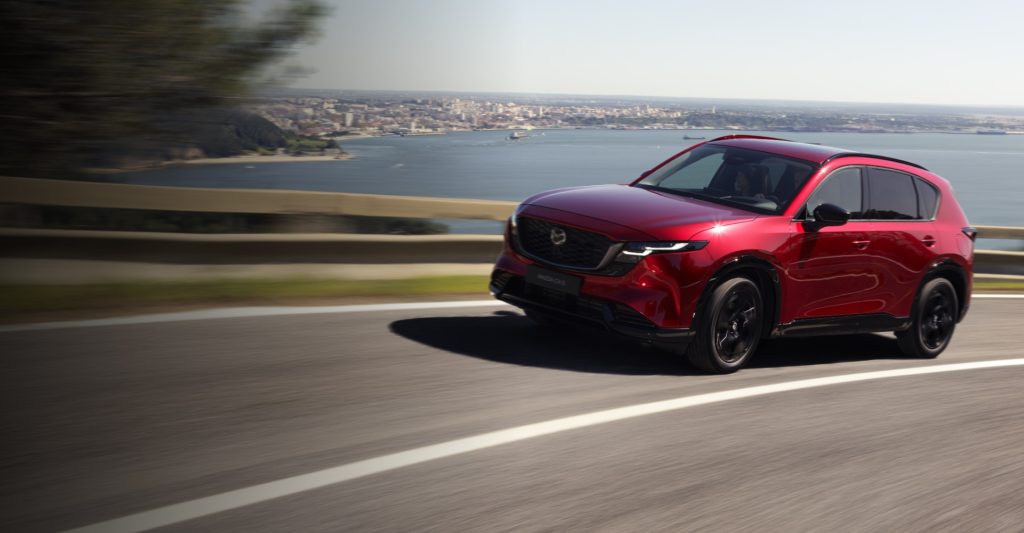
What Makes a Mazda Feel Different to Drive
A question that follows most Mazda test drives is the same one: why does this feel so much more connected than everything else I drove? The answer is not power. It is not suspension stiffness. It sits in how Mazda engineers the relationship between steering input and vehicle response.
Mazda’s G-Vectoring Control Plus system adjusts engine torque in response to steering input. When a driver turns the wheel, the system briefly reduces torque to shift weight toward the front wheels. That weight shift increases front grip and sharpens the vehicle’s response to the driver’s direction. When the driver straightens the wheel, the system applies a small amount of braking to the outer rear wheel to stabilize the vehicle and settle the body. The whole sequence happens in fractions of a second and requires no driver awareness.
The result is a vehicle that follows the driver’s intent rather than requiring the driver to manage the vehicle. Most crossovers at this price point ask the driver to correct and compensate. A Mazda simply goes where it is steered. That distinction is what most shoppers feel on a test drive without being able to articulate it.
Mazda calls this philosophy Jinba Ittai, a Japanese phrase describing the oneness between horse and rider. The engineering goal is not sport performance. It is a natural, intuitive connection between driver and road that makes every commute feel less like a task and more like a straightforward, composed experience.
Does a Smaller SUV Actually Handle Better?
The instinct that a larger SUV offers more confidence is understandable. However, compact dimensions produce a measurably different driving experience, and the physics behind that difference are worth understanding.
A shorter wheelbase means less distance between the front and rear axles. That shorter distance reduces the time it takes for the front wheels to initiate a direction change and the rear wheels to follow. The vehicle responds to steering inputs more quickly, which the driver experiences as sharpness and precision. A longer wheelbase spreads that response across more distance and more time, which produces a more relaxed but less immediate feeling behind the wheel.
A lower center of gravity reduces body roll through corners. The CX-30 and CX-50 both sit lower than many of their direct rivals, which means less lateral weight transfer when cornering. Less body roll produces a more settled, planted sensation through turns and reduces the sense of vehicle movement that heavier, taller crossovers create. Furthermore, less weight overall means the brakes, suspension, and steering all respond to lighter inputs with greater immediacy.
Here is what to evaluate when comparing a compact Mazda to a larger crossover alternative:
- Sit in the driver’s seat and note the dashboard height relative to your sightlines. A lower instrument cluster reduces the visual field the driver must manage and produces a stronger sense of control.
- On a test drive, note the gap between when you turn the wheel and when the vehicle responds. That gap narrows considerably in shorter, lower crossovers built around driver response.
- Notice the body movement through a gentle lane change. Less roll indicates a lower center of gravity and a more settled suspension calibration, both of which reduce fatigue on long daily commutes.
Why the Interior Feels Calm Rather Than Busy
Mazda cabin design starts from a different premise than most competitors. Where many automakers add screens, controls, and visual complexity to signal feature richness, Mazda removes anything that does not serve the driver directly. The result is a cabin that reads as calm rather than sparse.
The instrument cluster sits low, which keeps the driver’s eyes closer to the road during instrument checks. Physical controls for climate and audio functions stay within reach without requiring the driver to navigate a touchscreen menu. The center console routes naturally toward the driver rather than sitting symmetrically between both seats. Each of these choices reduces the amount of attention the cabin asks for during daily use.
The CX-30 and CX-50 both carry soft-touch surfaces at primary contact points, genuine stitching on upper panels, and a restrained color palette that avoids visual noise. The cabin does not announce its materials aggressively. Instead, quality reveals itself through touch and repeated use. That is a different strategy than most competitors at this price point, and it produces a different daily experience.
The Role of Physical Controls
Touchscreen-first cabin design places common functions behind multiple layers of interaction. Adjusting the temperature on a cold morning requires a visual search, a tap, and often a second tap to confirm. Physical controls complete the same action without the driver looking away from the road. Mazda maintained rotary and physical control architecture in the CX-30 and CX-50 precisely because the interaction model is faster, safer, and less cognitively demanding during daily driving. That decision is a design philosophy, not a technology limitation.
The Driver Who Tends to Choose Mazda
Not every driver arrives at Mazda through a comparison spreadsheet. Many come through a test drive that felt unexpectedly different. However, a consistent profile emerges among drivers who choose Mazda compact SUVs over larger alternatives.
Commuters who spend 30 to 60 minutes behind the wheel each day tend to feel the difference most clearly. A vehicle that asks less of the driver, responds cleanly, and settles the body on broken pavement reduces fatigue in a way that accumulates over a week and a year. The CX-30 serves solo commuters and couples particularly well. Its compact footprint fits urban parking easily, its cabin seats four adults comfortably, and its turbo-equipped trim delivers confident acceleration without demanding a sport-oriented mindset.
Smaller families and couples who do not need three rows tend to find the CX-50 fits their daily structure precisely. The cargo floor is generous, the second row carries two adults with room to spare, and the exterior proportions stay manageable in tight urban environments. Beyond that, drivers who previously owned entry-level luxury vehicles and found them financially straining often discover that a well-equipped CX-50 satisfies the same quality instinct at a significantly lower cost of ownership.
The common thread is a driver who prioritizes how the vehicle feels to operate over how much it can carry. Size is a secondary concern. Connection is the primary one.
How Mazda Compares to Lexus on Value
The Mazda versus Lexus question surfaces frequently in cross-shop research. Shoppers want an honest answer rather than a promotional one, so here is what the comparison actually looks like at the experience level.
A well-equipped CX-50 Premium Plus trim brings soft-touch surfaces, genuine leather seating, a Bose audio system, and a genuinely quiet cabin to the driving experience. A Lexus UX brings a stronger brand reputation, a higher perceived status, and a more established luxury service network. The material quality gap between the two has narrowed substantially in recent years. Side by side, the CX-50’s cabin holds its composure against the Lexus UX at contact points where quality is most apparent.
However, the Lexus retains real advantages in noise isolation, suspension refinement on rough surfaces, and the accumulated confidence that comes with a luxury nameplate and a stronger dealer service reputation. Those advantages are real and worth acknowledging. They also carry a price premium of several thousand dollars over a comparably equipped Mazda.
The honest framing is this: a Mazda compact SUV delivers the feel-first driving experience and the calm cabin quality that many luxury shoppers are actually looking for. For drivers whose priority is how the vehicle moves and how the cabin makes them feel each morning, the price difference represents cost without equivalent return. For drivers who want brand recognition, established luxury service, or the refinement advantages that Lexus specifically delivers, that premium is justified. Knowing which category you fall into makes the comparison straightforward.
Connect with us


