Blog

All Jacksonville Mazda Dealer Tom Bush Mazda Jacksonville Mazda Service Tom Bush Mazda Service Things To Do In Jacksonville Jacksonville Amenities Jacksonville Entertainment Jacksonville Used Cars Tom Bush Family of Dealerships Jacksonville Eateries Jacksonville Restaurants Jacksonville Parks Family Fun in Jacksonville Jacksonville Landmarks Jacksonville Foodies Tom Bush Financing Mazda Trade-In Tom Bush Mazda Collision Center Auto Financing Food Delivery in Jacksonville Jacksonville Museums Road Trips Things To Do Near Jacksonville Car Warranty Jacksonville Collision Shopping in Jacksonville Tom Bush Mazda in Jacksonville, FL Weekend Getaways Holiday Fun

What Mazda’s Factory Warranty Covers And Where Extra Protection May Matter

Every Mazda begins with a clear intention to make driving feel natural, connected, and dependable. That same philosophy carries into ownership through warranty coverage, but understanding what that protection actually means requires more than a quick glance at mileage limits or years. Shoppers are often trying to answer a deeper question about what is truly protected, what is not, and how that changes over time. The answer comes from how Mazda structures its warranty around different vehicle systems and how those systems behave as they are driven, maintained, and experienced in real life. Understanding What Mazda’s Factory Warranty Actually Covers What does Mazda’s factory warranty actually cover Mazda’s factory warranty covers defects in materials or workmanship, which means it protects against issues caused by how the vehicle was built rather than how it is used over time. In a vehicle like the Mazda CX 5, this comprehensive coverage applies across a wide range of systems during the early ownership period. It includes electrical systems, infotainment components, interior controls, and mechanical parts that are expected to function correctly under normal driving conditions. This type of coverage works by separating unexpected failure from expected use. If a component fails because it was not manufactured or assembled correctly, the warranty applies. If a component changes because it is being used as designed, it does not. That distinction matters because modern vehicles are made up of layered systems that behave differently as they age. Electrical systems rely on sensors, modules, and wiring that should perform consistently early in ownership Mechanical systems operate under controlled tolerances that should not break down without cause Interior systems are designed for durability but still fall under defect based protection For a shopper, this means the factory warranty is strongest when the vehicle is new and every system is expected to perform without signs of wear. How Powertrain Coverage Works And Why It Lasts Longer Powertrain coverage refers to the engine, transmission, and drivetrain systems that physically move the vehicle. In models like the Mazda CX 50, these systems are engineered for long term durability and operate under different stress conditions than interior or electronic components. Because of this, powertrain coverage extends beyond the comprehensive portion of the warranty. This longer coverage exists because powertrain systems are built with heavier materials and are designed to handle repeated stress over time. The engine block, transmission housing, and drivetrain components are expected to maintain structural integrity long after other systems begin to show signs of aging. The way these systems fail is also different from other parts of the vehicle. Powertrain failures are less common during early ownership When failures occur, they are typically more complex and expensive These issues tend to appear later as mileage increases and components experience long term stress Mazda extends powertrain protection to reflect this risk pattern. It ensures that the most critical systems remain covered during the period when failure becomes more likely. For a driver, this means the vehicle continues to be supported where the financial impact would be the highest. What Is Not Covered And Why Those Gaps Exist What is not covered under Mazda warranty Mazda’s warranty does not cover wear items or routine maintenance because these components are designed to change as part of normal driving. In a vehicle like the Mazda3, parts such as brake pads, tires, filters, and fluids are expected to degrade over time. This is not considered a defect. It is a predictable outcome of friction, heat, and repeated use. The reason these items are excluded comes down to how materials behave under real world conditions. Brake pads wear down because they create friction to stop the vehicle. Tires lose tread as they maintain grip with the road. Fluids break down as they absorb heat and contaminants. These systems are not built to remain unchanged. They are built to be maintained. Understanding this difference helps clarify why some repairs fall outside warranty coverage. Warranty applies to failures caused by defects in materials or assembly Maintenance applies to components that naturally wear with use Ownership includes responsibility for keeping these systems operating properly For shoppers, this distinction removes confusion and sets realistic expectations for long term ownership costs. When Does A Mazda Extended Warranty Start To Make Sense Is a Mazda extended warranty worth it A Mazda extended warranty becomes relevant when the factory coverage period no longer aligns with how long you plan to keep the vehicle. In models like the Mazda CX 90, this decision often comes down to how long you expect to own the vehicle and how much exposure you have to potential repair costs after the initial coverage ends. As vehicles age, the type of risk changes. Early ownership focuses on manufacturing reliability, while later ownership introduces the possibility of component fatigue, electronic system issues, and higher cost repairs. This is especially important as modern vehicles rely more heavily on integrated technology. Infotainment systems combine software and hardware that can be costly to repair Driver assistance features depend on sensors and calibration Electrical systems become more complex as features increase Extended coverage is designed to bridge the gap between when factory protection ends and when these risks begin to increase. For some drivers, especially those planning to keep their Mazda beyond the initial warranty period, this added layer of protection can reduce uncertainty around future repair costs. How To Evaluate Whether Extra Protection Fits Your Ownership Plan Choosing whether to add extended protection is less about the vehicle itself and more about how you plan to use it over time. In the Mazda SUV lineup, from the Mazda CX 5 to the Mazda CX 90, ownership patterns can vary widely. Some drivers replace their vehicle within a few years, while others keep it well beyond the initial warranty period. The decision comes down to aligning coverage with behavior. If you plan to keep the vehicle for a shorter period, factory coverage may fully match your ownership timeline If you plan to drive higher mileage each year, systems will experience wear sooner If you prefer predictable costs, extended protection can reduce unexpected repair expenses This evaluation is not about adding coverage by default. It is about understanding when your ownership timeline extends beyond the protection Mazda initially provides. When that happens, additional coverage becomes less of an extra and more of a continuation of the same confidence you had at the beginning.
How Mazda Makes Daily Driving Easier: Smart Features You May Not Know About

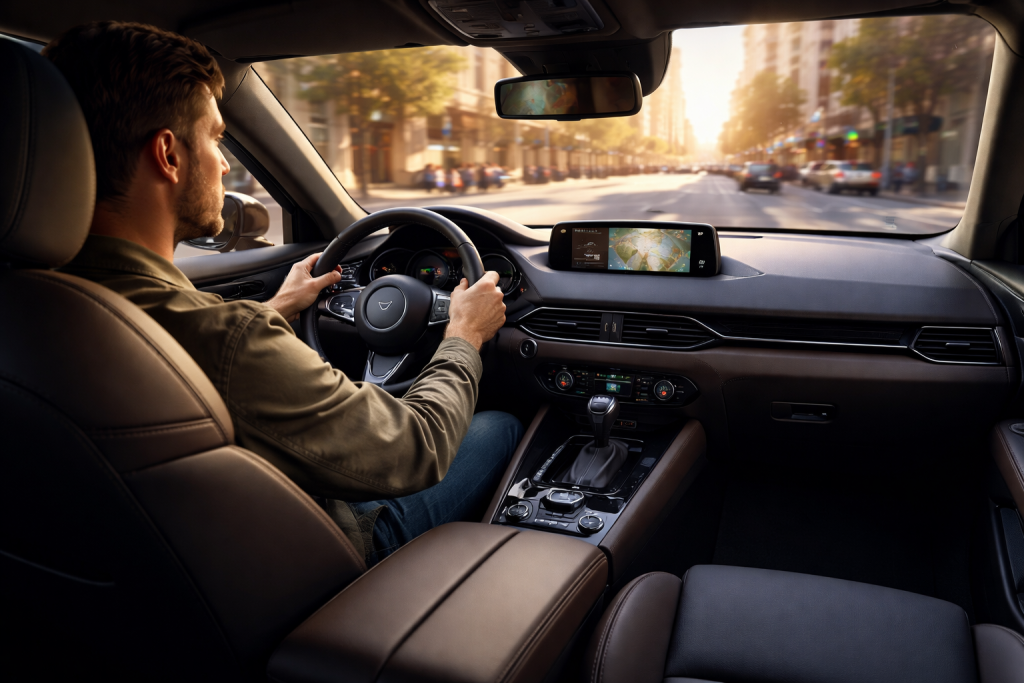
Daily driving places constant demands on a vehicle. Navigating traffic, monitoring surrounding vehicles, managing navigation directions, and adjusting vehicle settings all require the driver’s attention. For many drivers, the difference between a stressful commute and a smooth one often comes down to how intelligently a vehicle’s technology supports the person behind the wheel. Mazda approaches technology with a different philosophy than many automakers. Instead of overwhelming drivers with complex interfaces or excessive features, Mazda designs vehicle technology to feel intuitive and supportive. Systems are built to assist the driver quietly in the background while maintaining a natural connection between driver and vehicle. Several Mazda technologies illustrate how thoughtful engineering can make everyday driving easier, safer, and more comfortable. Mazda i-Activsense Safety Technology in Everyday Driving Many shoppers researching Mazda vehicles ask what Mazda i-Activsense technology actually does during real world driving. Mazda i-Activsense is a suite of driver assistance technologies that use radar sensors and forward facing cameras to monitor surrounding traffic conditions and support safer driving decisions. These systems constantly analyze information from the road ahead, nearby vehicles, and lane markings. When the system detects potential hazards, it alerts the driver or assists with braking and steering adjustments. In vehicles such as the Mazda CX-5 and Mazda CX-30, i-Activsense safety systems may include technologies such as: • adaptive cruise control that maintains a safe following distance from traffic ahead • lane keeping assistance that helps the vehicle stay centered within lane markings • blind spot monitoring that alerts drivers when vehicles approach from behind • automatic emergency braking that helps reduce the risk of front end collisions Because these systems operate continuously while driving, they help reduce the mental workload of monitoring surrounding traffic. Drivers remain fully in control of the vehicle, but the technology adds an additional layer of awareness that can improve reaction time in complex traffic situations. How Mazda’s Head Up Display Helps Drivers Stay Focused Drivers frequently look away from the road to check speed, navigation directions, or safety alerts on the dashboard. Even brief glances downward can reduce awareness of surrounding traffic. The Mazda Active Driving Display, often referred to as a head up display, helps reduce this distraction by projecting important information directly onto the windshield within the driver’s natural line of sight. Instead of shifting focus between the road and the instrument cluster, the driver can see information such as: • current vehicle speed • navigation guidance • safety alerts from driver assistance systems • speed limit recognition information Because the information appears near the driver’s forward view, the system allows drivers to remain visually focused on the road ahead while still receiving essential information. In vehicles like the Mazda3 and Mazda CX-5, this technology improves situational awareness without adding complexity to the driving experience. Why Mazda Interiors Are Designed Around the Driver Mazda engineers often refer to their interior design philosophy as human centric engineering. This approach begins with studying how the human body naturally moves and responds while driving. The goal is to design the cabin so that drivers can operate vehicle controls comfortably without unnecessary movement or distraction. Several design elements contribute to this driver focused approach in vehicles such as the Mazda CX-5 and Mazda CX-30. The steering wheel, pedals, and seat alignment are positioned to support a natural driving posture that reduces fatigue during longer trips. Dashboard controls are angled toward the driver so frequently used functions remain within easy reach. This layout allows drivers to interact with the vehicle without searching for controls or shifting attention away from the road. Over time, the layout becomes intuitive because the controls align with natural hand movements. For commuters who spend significant time behind the wheel, this thoughtful design can make daily driving feel less tiring and more comfortable. Mazda Connect Technology and Intuitive Controls Infotainment systems in modern vehicles often rely heavily on touchscreen interfaces. While touchscreens provide flexibility, they can also require drivers to look away from the road to interact with menus. Mazda Connect takes a different approach. Instead of encouraging drivers to rely primarily on touchscreen inputs, the system uses a multifunction control dial located near the center console. The control dial allows drivers to navigate menus, adjust audio settings, and select navigation options through simple rotational and directional movements. Because the dial is positioned near the driver’s hand, many functions can be controlled through muscle memory rather than direct visual attention. In vehicles like the Mazda CX-5 and Mazda CX-30, the Mazda Connect interface integrates smartphone connectivity, navigation, and media controls into a simplified interface designed for quick access. This design philosophy reduces the amount of visual distraction required to interact with technology while driving. Smart Convenience Features That Simplify Daily Driving Beyond safety and infotainment technology, Mazda vehicles include several convenience features that make everyday routines easier. Many of these systems operate quietly in the background but contribute to smoother daily driving experiences. Examples of convenience technologies available in models such as the Mazda CX-5, Mazda CX-30, and Mazda3 include: • keyless entry systems that allow drivers to unlock doors without removing the key from a pocket or bag • push button engine start for faster vehicle access • power liftgates that simplify loading cargo when hands are full • automatic climate control systems that maintain comfortable cabin temperatures While each feature may seem small individually, together they streamline common tasks such as entering the vehicle, adjusting cabin settings, and loading groceries or luggage. These improvements reduce friction during everyday use and make the vehicle feel easier to live with over time. Technology Designed to Support the Driver Mazda’s technology philosophy focuses on supporting the driver rather than overwhelming them with complexity. Safety systems quietly monitor the road, interior layouts prioritize comfort and intuitive control placement, and infotainment systems are designed to minimize distraction. By designing technology around human behavior and everyday driving needs, Mazda creates vehicles that feel natural to operate during daily routines. Whether driving a Mazda CX-5, Mazda CX-30, or Mazda3, these technologies work together to simplify everyday driving while maintaining the sense of connection that Mazda vehicles are known for.

Mazda CX-5 vs Nissan Rogue: Which SUV Offers the Better Everyday Drive?

Compact SUVs are designed to handle the routines of daily life. Commuting to work, navigating city streets, merging onto highways, and managing weekend errands all place different demands on a vehicle. When shoppers compare the Mazda CX-5 and Nissan Rogue, they often want to know which SUV delivers the better everyday driving experience rather than simply comparing specifications on paper. Both vehicles compete in the same compact SUV category, yet their engineering priorities differ. The Mazda CX-5 emphasizes responsive driving dynamics and driver focused design, while the Nissan Rogue focuses more heavily on smooth comfort and fuel efficiency. Understanding how their engines, transmissions, chassis tuning, and interior design differ helps explain why many drivers find the CX-5 more engaging during everyday driving. Engine Design and Everyday Performance Many shoppers comparing compact SUVs ask whether the Mazda CX-5 or Nissan Rogue delivers stronger performance during everyday driving. The Mazda CX-5 Skyactiv-G engine is engineered to balance responsiveness with efficiency. Skyactiv engine design uses higher compression ratios to extract more energy from each combustion cycle, allowing the CX-5 to produce strong torque without relying entirely on aggressive turbocharging. Torque plays a critical role in everyday acceleration. It determines how quickly the vehicle responds when the driver presses the accelerator, such as when merging onto a highway or accelerating from a stoplight. The Mazda CX-5 engine delivers smooth torque throughout the lower portion of the power band, which allows the SUV to accelerate naturally without requiring high engine speeds. This makes the CX-5 feel responsive during common driving situations like passing slower traffic or climbing hills. The Nissan Rogue uses a turbocharged variable compression engine designed primarily to maximize fuel efficiency. While the Rogue’s engine performs well during steady cruising, the power delivery can feel less immediate compared with the CX-5 during sudden acceleration because the engine and transmission prioritize efficiency over direct throttle response. For drivers who want acceleration that feels predictable and smooth during daily driving, the Mazda CX-5 Skyactiv engine provides a more responsive character. How Transmission Design Changes Driving Feel Another major difference between the Mazda CX-5 and Nissan Rogue comes from how each vehicle delivers engine power to the wheels. The Mazda CX-5 uses a traditional six speed automatic transmission. An automatic transmission uses physical gear ratios that shift in steps as the vehicle accelerates. These gear changes help the engine stay within an efficient power range while also giving drivers a more connected sense of acceleration. The Nissan Rogue uses a continuously variable transmission, often referred to as a CVT. A CVT does not shift between fixed gears. Instead, it adjusts engine speed continuously to maintain the most efficient operating range. Each design has advantages, but they create different driving characteristics. The Mazda CX-5 automatic transmission produces defined gear changes that allow the engine to build power in a predictable way. Drivers often describe this as feeling more natural during acceleration because the engine speed rises in proportion to vehicle speed. A CVT transmission like the one in the Nissan Rogue prioritizes efficiency and smoothness, but it can sometimes allow engine speed to rise independently from vehicle acceleration. This behavior may feel less engaging for drivers who prefer a more traditional acceleration response. For everyday commuting, the Mazda CX-5 transmission often feels more intuitive because the power delivery matches driver input more closely. Steering Precision and Handling Balance Compact SUVs are expected to be comfortable, but the way a vehicle handles corners and responds to steering inputs can significantly influence how confident the driver feels behind the wheel. The Mazda CX-5 chassis is engineered with a focus on balance and driver feedback. Mazda engineers tune the suspension and steering systems to create a connection between the driver and the vehicle that feels predictable during both low speed maneuvering and highway driving. Several design factors contribute to the CX-5 handling characteristics. • Rigid body structure that reduces chassis flex • Suspension tuning designed for balanced cornering • Steering calibration that provides consistent feedback These elements help the Mazda CX-5 remain stable when navigating curves or making quick lane changes. The Nissan Rogue is tuned more heavily for ride comfort. Its suspension absorbs road imperfections effectively, which can make long highway drives feel smooth. However, this softer tuning typically results in less steering feedback during spirited driving or tight cornering. Drivers who value confident handling and responsive steering often prefer the Mazda CX-5 because its chassis tuning prioritizes driver engagement while still maintaining everyday comfort. Interior Design and Driver Focus Interior design plays an important role in how comfortable and intuitive a vehicle feels during daily use. The Mazda CX-5 interior reflects Mazda’s focus on craftsmanship and driver centered ergonomics. Mazda places major vehicle controls within natural reach of the driver and aligns the dashboard layout to support visibility and ease of use. Materials used throughout the CX-5 cabin emphasize a refined, premium atmosphere that often surprises drivers who expect compact SUVs to feel more utilitarian. The Nissan Rogue interior offers generous passenger space and practical storage solutions, which are valuable for families or long trips. Its design prioritizes openness and convenience. While both interiors are comfortable, the Mazda CX-5 interior stands out for its attention to detail and driver focused layout. This design philosophy allows the driver to access controls quickly while maintaining attention on the road, which contributes to a more confident driving experience. Fuel Efficiency and Daily Commuting Practicality Fuel efficiency is an important consideration for many compact SUV buyers, especially for drivers who commute regularly or spend significant time on the highway. The Nissan Rogue’s turbocharged variable compression engine and CVT transmission are optimized to deliver strong fuel economy numbers. This combination allows the Rogue to perform efficiently during steady highway driving and longer commutes. The Mazda CX-5 Skyactiv engine approaches efficiency differently. Instead of relying heavily on transmission optimization, Mazda improves fuel economy through combustion efficiency and lightweight vehicle engineering. The Mazda CX-5 achieves balanced fuel efficiency by combining: • high compression Skyactiv engine design • lightweight chassis architecture • aerodynamic vehicle shaping These engineering choices allow the CX-5 to maintain competitive fuel economy while still delivering responsive acceleration and engaging driving dynamics. For drivers who want both efficiency and an enjoyable driving experience, the Mazda CX-5 offers a balanced approach that avoids sacrificing responsiveness for fuel economy alone. Why the Mazda CX-5 Often Feels More Engaging to Drive When comparing compact SUVs, specifications such as horsepower and fuel economy provide useful information. However, the everyday driving experience often depends more on how the vehicle’s engineering systems work together. The Mazda CX-5 emphasizes a coordinated balance between engine performance, transmission behavior, chassis tuning, and interior ergonomics. This integration allows the vehicle to respond naturally to driver inputs while maintaining comfort and efficiency during daily commuting. While the Nissan Rogue delivers a comfortable and efficient ride, the Mazda CX-5 often stands out for drivers who want a compact SUV that feels responsive, refined, and enjoyable to drive throughout everyday routines.

What Makes Mazda Engines Feel So Responsive? Understanding Skyactiv Technology

Mazda vehicles have built a reputation for delivering a driving experience that feels unusually connected and responsive. Many drivers notice this immediately during a test drive, whether in the Mazda CX-5, Mazda3, or Mazda CX-30. The steering feels natural, acceleration responds smoothly to throttle input, and the vehicle seems to move in harmony with the driver. Much of that sensation comes from Mazda’s Skyactiv engineering philosophy. Rather than focusing on a single component such as the engine, Mazda redesigned several core vehicle systems together. The result is a coordinated approach to engine efficiency, vehicle weight, and transmission tuning that improves both responsiveness and everyday fuel efficiency. Understanding how Skyactiv technology works helps explain why Mazda vehicles often feel different to drive compared with many other compact SUVs and sedans. What Skyactiv Technology Actually Means Many shoppers researching Mazda vehicles ask what Skyactiv technology actually is and why it changes how the vehicle drives. Skyactiv technology is Mazda’s engineering strategy for improving efficiency and responsiveness by redesigning the engine, transmission, chassis, and vehicle structure together rather than optimizing each component separately. The Mazda Skyactiv-G engine, used in vehicles such as the Mazda CX-5 and Mazda3, focuses on extracting more usable energy from every combustion cycle. Mazda engineers paired that engine design with a lightweight vehicle structure and carefully tuned transmissions so that the entire vehicle responds smoothly to driver inputs. This integrated approach supports Mazda’s driving philosophy known as Jinba Ittai, which refers to the idea of unity between the driver and the vehicle. Instead of focusing only on horsepower or acceleration numbers, Mazda engineers concentrate on how naturally the car reacts to steering, throttle, and braking. How High Compression Engines Improve Power and Efficiency A key part of Skyactiv technology is the unusually high compression ratio used in Mazda gasoline engines. The compression ratio of an engine describes how much the air and fuel mixture is compressed inside the combustion chamber before ignition occurs. Higher compression allows the engine to extract more energy from the fuel during combustion. The Mazda Skyactiv-G engine uses one of the highest compression ratios found in mass-produced gasoline engines. By compressing the fuel mixture more efficiently before ignition, the engine can generate stronger combustion and improved energy output. This design offers several practical advantages for drivers. • More efficient use of fuel during combustion • Stronger torque output at lower engine speeds • Improved fuel economy during everyday driving Because the Mazda Skyactiv-G engine converts more of the fuel’s energy into usable power, the engine can deliver responsive acceleration without relying solely on large displacement or aggressive turbocharging. For drivers of the Mazda CX-5 or Mazda CX-30, this means the engine responds quickly when merging onto highways or accelerating through city traffic while still maintaining balanced fuel efficiency during daily commuting. Why Mazda Engines Feel More Responsive in Everyday Driving Many drivers searching for information about Mazda performance want to understand why Mazda vehicles often feel more responsive than competitors in the same category. Responsiveness comes from several engineering choices working together within Skyactiv powertrains. First, the Mazda Skyactiv-G engine delivers strong torque at lower engine speeds. Torque is the rotational force that helps move the vehicle forward. When torque is available earlier in the engine’s power band, the vehicle can accelerate smoothly without needing to rev the engine aggressively. Second, Mazda carefully calibrates the transmission to maintain consistent power delivery. The Skyactiv automatic transmission adjusts gear changes to keep the engine operating within its most efficient and responsive range. Finally, Mazda engineers tune throttle response to provide predictable acceleration. When the driver presses the accelerator pedal, the engine and transmission respond quickly but smoothly, allowing the vehicle to accelerate without hesitation. Together, these systems help Mazda vehicles feel more intuitive to drive, especially during everyday situations such as: • merging onto highways • navigating stop-and-go traffic • accelerating out of corners • maintaining steady highway speeds Drivers often describe this balance as feeling more connected to the vehicle because the engine and transmission respond naturally to driver inputs. How Vehicle Architecture Supports Driving Precision Skyactiv technology extends beyond the engine. Mazda also redesigned the vehicle body structure and chassis to support improved handling and stability. Vehicle weight and rigidity play a major role in how a car responds to steering and acceleration. A lighter, more rigid structure allows engineers to control how the vehicle moves during braking, cornering, and acceleration. Mazda’s Skyactiv body architecture uses high-strength steel and carefully engineered reinforcement points to increase structural rigidity while reducing overall weight. This allows suspension components to operate more precisely because the vehicle structure flexes less during movement. The suspension and steering systems in vehicles such as the Mazda3 and Mazda CX-5 are then tuned to complement this structure. The result is steering feedback that feels predictable and balanced, helping the driver maintain better control during both city and highway driving. This combination of lightweight engineering and structural rigidity contributes to the smooth and confident driving feel many Mazda owners notice. How Skyactiv Technology Improves Real World Fuel Efficiency Efficiency is another major benefit of Skyactiv engineering. While many automakers focus on hybrid systems or turbocharging to improve fuel economy, Mazda engineers focused heavily on improving the combustion process itself. Several elements contribute to the fuel efficiency seen in vehicles equipped with Skyactiv engines. • Higher compression combustion extracts more energy from each fuel cycle • Lightweight vehicle structures reduce the amount of energy required to move the vehicle • Transmission calibration keeps the engine operating within its most efficient range • Aerodynamic design reduces resistance at highway speeds Because these improvements work together, vehicles such as the Mazda CX-5 and Mazda CX-30 can deliver strong fuel economy while maintaining responsive acceleration and smooth power delivery. For drivers who spend time commuting, traveling on highways, or running daily errands, these efficiency improvements translate into fewer fuel stops and lower long-term fuel costs without sacrificing driving enjoyment. Why Skyactiv Technology Shapes the Mazda Driving Experience Mazda’s Skyactiv engineering philosophy demonstrates that performance and efficiency do not have to be opposing goals. By redesigning the engine, transmission, chassis, and body structure as a unified system, Mazda engineers created vehicles that balance responsiveness, fuel efficiency, and driving comfort. For many drivers, this approach is why Mazda vehicles feel engaging during everyday driving. The engine responds smoothly to throttle input, the transmission maintains balanced power delivery, and the chassis provides stable and predictable handling. Whether behind the wheel of a Mazda CX-5, Mazda3, or Mazda CX-30, Skyactiv technology works quietly in the background to create a driving experience that feels natural and connected.

Mazda CX-90 vs Kia Telluride: Comparing Space, Comfort, and Driving Feel

The Mazda CX-90 and Kia Telluride often appear on the same shopping list because they serve the same basic need: a three-row SUV that can move families comfortably. Where they diverge is how they go about doing that. One prioritizes driver engagement and mechanical refinement. The other focuses on space, softness, and broad family usability. Understanding that difference is the key to choosing the right vehicle. This comparison is not about which SUV is bigger on paper. It is about how each one feels to live with every day, especially once the novelty wears off and real driving takes over. Platform and Powertrain Philosophy Mazda built the CX-90 on a new rear-drive-based platform designed to improve balance, steering feel, and ride control. The available turbocharged inline-six engine, paired with mild hybrid technology, delivers smooth power with a strong sense of linear acceleration. Torque arrives early and predictably, which matters in daily driving more than peak horsepower numbers. The Kia Telluride uses a traditional front-drive-based architecture with a naturally aspirated V6. Its power delivery is tuned for smoothness and ease rather than response. Acceleration is consistent, but the engine works harder under load, especially when merging or climbing grades. Key powertrain differences drivers notice: CX-90 delivers smoother, more controlled acceleration Inline-six feels refined at highway speeds Telluride V6 favors steady, predictable output Mazda’s mild hybrid system improves low-speed responsiveness Driving Feel and Handling Confidence Driving feel is where these two SUVs separate most clearly. The CX-90 is tuned to feel composed and connected, even at moderate speeds. Steering has weight and feedback, allowing drivers to place the vehicle confidently through corners and lane changes. Body control remains stable without sacrificing ride comfort. The Telluride prioritizes isolation. Steering is light, suspension tuning is soft, and road feedback is filtered out. This creates a relaxed driving experience, but it also reduces engagement and precision, especially on winding roads or during quick maneuvers. Driving dynamics comparison: CX-90 emphasizes balance and control Steering inputs feel deliberate and natural Telluride emphasizes comfort over precision Handling feels softer and less connected Ride Comfort and Long-Distance Use Both SUVs are comfortable on long drives, but they achieve comfort differently. Mazda focuses on stability and posture. Seats are shaped to support the body naturally, reducing fatigue over time. Suspension tuning absorbs road imperfections without excessive motion. The Telluride leans into plushness. Seats are wide and soft, and the suspension prioritizes absorbing bumps. While comfortable, this tuning can allow more body movement, which some drivers notice during extended highway travel. Interior Design and Cabin Execution Interior design reflects each brand’s priorities. The CX-90 cabin is minimalist and driver-focused. Controls are placed intentionally, materials are cohesive, and visual clutter is reduced. The result is a calm environment that feels upscale without relying on flashy design elements. The Telluride offers a more feature-forward interior. It emphasizes space, visible technology, and convenience for passengers. Materials are durable and well assembled, but the layout prioritizes accessibility over refinement. Interior differences that matter daily: CX-90 interior feels calmer and more intentional Mazda emphasizes driver ergonomics Telluride offers broader passenger-focused design Kia prioritizes visible features and storage Second-Row and Third-Row Practicality The Telluride holds an advantage in outright space. Its second row is wide and accommodating, and third-row access is easy. Families who regularly carry adults in all three rows will appreciate this emphasis. The CX-90 still provides usable third-row seating, but Mazda prioritizes posture and access rather than sheer width. The seating position feels more supportive, even if absolute space is slightly less generous. Noise, Refinement, and Daily Driving Mazda invests heavily in noise reduction and vibration control. At highway speeds, the CX-90 feels quiet and composed, reinforcing its refined driving character. Engine and road noise are muted without feeling disconnected. The Telluride remains quiet as well, but wind and road noise are more noticeable under certain conditions. The difference is subtle, but noticeable during long trips. Safety and Driver Assistance Philosophy Both vehicles offer comprehensive driver assistance features. Mazda calibrates its systems to support the driver rather than override them. Alerts and interventions feel subtle and predictable, reinforcing confidence. Kia’s systems tend to be more assertive, which some drivers appreciate and others find intrusive. Both approaches are effective, but Mazda’s tuning aligns with drivers who prefer to stay actively engaged. Ownership Experience and Long-Term Satisfaction Over time, satisfaction often comes down to how enjoyable the vehicle is to drive once daily routines settle in. The Telluride excels as a family hauler that prioritizes space and ease. The CX-90 excels as a three-row SUV that still feels rewarding to drive. Drivers who value refinement, steering feel, and balance tend to appreciate the CX-90 more as mileage accumulates. Final Verdict: Which Is the Better Choice? The Kia Telluride remains a strong option for families who prioritize maximum space and a relaxed driving experience. It delivers comfort, practicality, and familiarity. For drivers who want more than transportation, the Mazda CX-90 stands out as the top choice. Its rear-drive-based platform, refined inline-six powertrain, controlled handling, and intentional interior design create a three-row SUV that feels composed, confident, and engaging every time you drive it. For shoppers seeking space without giving up driving enjoyment, the CX-90 delivers the more complete and satisfying ownership experience.

How Mazda Prioritizes Safety: Understanding i-Activsense Driver Assistance Features

Mazda approaches safety with the same philosophy it applies to design and driving feel. Rather than trying to replace the driver, Mazda builds systems that support awareness, reduce fatigue, and step in only when necessary. This approach is embodied in i-Activsense, Mazda’s suite of advanced driver assistance technologies designed around human behavior, not automation. i-Activsense is best understood as layered safety. Each system plays a specific role, escalating from awareness to assistance to intervention depending on the situation. The goal is not to take control away from the driver, but to help the driver stay informed, focused, and confident in real-world driving conditions. Active Safety Versus Passive Safety Mazda safety is built on two complementary foundations. Passive safety focuses on protecting occupants when a collision occurs. This includes the vehicle’s body structure, airbags, seatbelt systems, and energy-absorbing materials. Active safety focuses on helping drivers avoid collisions in the first place. i-Activsense lives in this category, using sensors, cameras, and radar to monitor conditions and support driver decision-making before an accident happens. Mazda places particular emphasis on active safety because preventing an incident is always preferable to mitigating one. How i-Activsense Works at a System Level i-Activsense systems rely on a combination of forward-sensing cameras, radar units, and vehicle control modules. These components continuously analyze vehicle speed, steering input, surrounding traffic, lane markings, and relative distance to objects. What separates Mazda’s approach is calibration. Systems are tuned to feel natural and predictable, avoiding abrupt corrections that can startle drivers or create new hazards. Alerts are designed to inform first, assist second, and intervene only when the risk becomes imminent. Mazda Smart Brake Support Mazda Smart Brake Support is the foundation of i-Activsense. It monitors the road ahead using cameras and radar to detect vehicles, pedestrians, and potential obstacles. The system operates in stages: Visual and audible alerts warn the driver of a possible collision Brake assist increases braking force if the driver reacts but does not brake firmly enough Automatic braking engages only if the system determines a collision is likely and the driver does not respond This escalation allows the driver to remain in control while providing a safety net in critical moments. Blind Spot Monitoring and Rear Cross Traffic Alert Blind Spot Monitoring tracks vehicles approaching from adjacent lanes using rear-mounted radar sensors. When a vehicle enters a monitored zone, the system provides a visual alert in the side mirror. Rear Cross Traffic Alert extends this concept when reversing out of parking spaces. It scans left and right for approaching traffic and issues warnings to help prevent low-speed collisions in crowded areas. These systems focus on situational awareness rather than intervention, supporting driver judgment in environments where visibility is naturally limited. Lane Departure Warning and Lane Keep Assist Mazda differentiates between warning and assistance. Lane Departure Warning alerts the driver if the vehicle begins to drift without a turn signal. Lane Keep Assist adds gentle steering input to help guide the vehicle back toward the center of the lane. Importantly, Mazda avoids aggressive steering correction. The system is designed to support attentive driving, not override it. Drivers still feel fully engaged with the vehicle, which reinforces trust rather than dependence. Mazda Radar Cruise Control Mazda Radar Cruise Control maintains a set speed while adjusting following distance based on traffic conditions. Using radar and camera input, the system can slow the vehicle as traffic slows and resume speed when conditions clear. Unlike some systems that prioritize automation feel, Mazda tunes adaptive cruise control to maintain smooth, predictable behavior. Acceleration and braking inputs are gradual, reducing fatigue during long highway drives while keeping the driver mentally engaged. Driver Attention and Awareness Philosophy A defining characteristic of i-Activsense is Mazda’s emphasis on keeping drivers mentally present. Systems are designed to complement natural driving behavior rather than encourage disengagement. Mazda avoids positioning these technologies as autonomous driving features. Instead, they are framed as tools that enhance awareness and provide backup support when attention lapses momentarily. This philosophy aligns with Mazda’s broader human-centered design approach, where safety, control, and driving enjoyment coexist rather than compete. Understanding System Limitations Mazda is transparent about the limits of driver assistance technology. i-Activsense systems depend on clear lane markings, visible road conditions, and properly functioning sensors. Weather, road debris, and unusual traffic patterns can affect performance. Drivers remain responsible for monitoring surroundings and maintaining control of the vehicle at all times. Understanding these limitations is essential for using the systems effectively and safely. Why Mazda’s Safety Approach Builds Confidence Rather than overwhelming drivers with intrusive alerts or overly aggressive corrections, Mazda’s safety systems feel subtle and intuitive. This builds trust over time, encouraging drivers to stay engaged rather than rely on automation. The result is a safety experience that feels integrated into the act of driving. Alerts arrive when they matter. Assistance feels supportive rather than corrective. Intervention occurs only when risk becomes immediate. The Bigger Picture of Mazda Safety i-Activsense is not about removing the driver from the equation. It is about reinforcing good driving habits, reducing cognitive load, and providing intelligent support in complex situations. For drivers who value awareness, control, and confidence behind the wheel, Mazda’s approach to safety feels intentional and respectful. It reflects a belief that the safest driver is an informed, engaged one, supported by technology that knows when to help and when to stay out of the way.

Mazda3 vs Honda Civic: Which Compact Car Delivers a More Engaging Drive?

When shoppers compare the Mazda3 and Honda Civic, they are rarely choosing between bad options. Both are proven compact sedans with strong reputations. The real question is not which one works, but which one feels right to drive every day. That difference comes down to engineering philosophy, not surface-level specs. Mazda and Honda approach the compact sedan segment from two distinct perspectives. Honda emphasizes broad usability and efficiency. Mazda prioritizes driving engagement, refinement, and connection between the driver and the vehicle. Understanding how those priorities show up on the road is what separates these two cars. Driving Philosophy Shapes the Experience Mazda designs the Mazda3 around Jinba Ittai, the idea of harmony between car and driver. This philosophy influences steering calibration, seating position, pedal alignment, and suspension tuning. The goal is not aggressive performance, but predictability and control. Honda tunes the Civic with an emphasis on versatility. Steering is light, suspension tuning favors comfort, and inputs are designed to feel easy rather than communicative. This works well for drivers who want a relaxed, appliance-like experience, but it creates a noticeable contrast when driving the two back-to-back. Key philosophical differences: Mazda3 prioritizes driver feedback and balance Civic prioritizes ease of use and efficiency Mazda emphasizes feel through the controls Honda emphasizes accessibility for a wide audience Steering and Handling Feel Steering feel is one of the most immediate differences between the Mazda3 and Civic. Mazda tunes the steering to provide resistance and feedback that mirrors vehicle motion. This makes the car feel planted through corners and predictable during lane changes. The Civic’s steering is lighter and more isolated. While this can feel effortless around town, it communicates less information back to the driver, especially at highway speeds or on winding roads. Handling differences drivers notice: Mazda3 offers more steering weight and feedback Mazda3 feels more composed through curves Civic prioritizes easy maneuverability Civic isolates the driver from road texture Suspension Tuning and Ride Balance Mazda uses a suspension setup that balances ride comfort with body control. The Mazda3 stays flat during cornering and absorbs road imperfections without feeling floaty. This tuning contributes to a confident driving rhythm, especially on longer drives. The Civic’s suspension is tuned to be forgiving, which benefits rough roads and daily commuting. However, it allows more body movement during spirited driving, reducing the sense of control that enthusiasts tend to value. Power Delivery and Transmission Behavior Both vehicles offer efficient four-cylinder engines, but throttle response and transmission tuning differ. Mazda calibrates the throttle to respond smoothly and progressively, making acceleration predictable rather than abrupt. Mazda’s automatic transmission favors direct gear engagement, which enhances the feeling of connection between driver input and vehicle response. The Civic’s CVT prioritizes efficiency and smoothness, but can feel detached during acceleration. Performance feel comparison: Mazda3 delivers linear throttle response Mazda3 transmission reinforces driver control Civic prioritizes smooth efficiency Civic feels less mechanically connected Interior Design and Driver Positioning Interior execution is another area where the Mazda3 stands apart. Mazda designs the cabin around the driver’s natural posture, with aligned pedals, steering wheel placement, and eye-level instrumentation. The result is less fatigue and quicker response during long drives. Mazda also favors minimalist layouts with reduced visual clutter. Controls are intuitive, screens are positioned to minimize eye movement, and materials feel cohesive rather than decorative. Interior differences that matter: Mazda3 emphasizes driver-focused ergonomics Mazda3 interior feels calmer and more intentional Civic offers more cabin space Civic focuses on practicality over refinement Noise, Comfort, and Daily Use Mazda invests heavily in sound insulation and vibration control. The Mazda3 feels quieter at highway speeds, which enhances the sense of refinement and reduces fatigue. This contributes to the perception that the Mazda3 sits closer to premium brands without using luxury language or pricing. The Civic remains comfortable and functional, but road and wind noise are more noticeable, especially at higher speeds. All-Wheel Drive Advantage One significant differentiator is availability of all-wheel drive in the Mazda3, which the Civic does not offer. This adds traction confidence in wet or slippery conditions and enhances stability during aggressive driving. For drivers in varied climates, this feature alone can shift the decision decisively toward Mazda. Long-Term Ownership Feel Both vehicles have strong reliability reputations, but ownership satisfaction often comes down to emotional engagement. Drivers who enjoy driving tend to report higher satisfaction with vehicles that reward attention and provide feedback. The Mazda3 delivers: A stronger sense of control More enjoyable daily driving A refined, quiet cabin Consistent engagement over time The Civic delivers: Broad usability Efficient transportation Familiar driving behavior Practical interior space Final Verdict: Which Delivers the More Engaging Drive? For drivers who value involvement, feedback, and refinement, the Mazda3 clearly delivers the more engaging driving experience. Its steering feel, suspension balance, interior ergonomics, and overall composure create a car that feels intentional every time you get behind the wheel. The Honda Civic remains a solid choice for shoppers focused on efficiency and practicality. However, for those who want driving to feel rewarding rather than routine, the Mazda3 stands out as the stronger, more emotionally satisfying choice in the compact sedan segment.

Why Mazda’s Kodo Design Philosophy Creates a More Connected Driving Experience

Mazda’s Kodo design philosophy is often described as visual or emotional, but its real impact shows up once you’re behind the wheel. Kodo, which translates loosely to “Soul of Motion,” is not about adding flair or chasing trends. It is a design system built around how a human body moves, focuses, and reacts while driving. The result is a vehicle that feels calmer, more intuitive, and more connected in everyday use. Rather than separating styling from engineering, Mazda treats design as a functional layer that directly influences driver confidence, control, and comfort. This philosophy carries through exterior proportions, interior layout, seating geometry, and even how your eyes move across the dashboard while driving. Kodo Design Starts With Motion, Not Decoration At its core, Kodo is about capturing the tension and balance of a living form in motion. That concept is not abstract. It directly affects how Mazda shapes the body and positions the driver within it. Key exterior design outcomes include: Proportions that emphasize forward motion rather than visual bulk Long hood and short overhangs that improve visual balance and driver perception Body lines that guide airflow and sightlines instead of breaking them up Reduced visual noise so the shape reads clearly at a glance These choices influence how the vehicle feels from the driver’s seat. Clean proportions make it easier to judge vehicle placement, especially in city driving or tight parking situations. A car that visually communicates its boundaries reduces hesitation and mental load before you ever touch the pedals. Interior Design Is Where Kodo Becomes Functional Mazda’s interior execution is where Kodo moves from philosophy to measurable driving benefit. The cabin is designed around the idea that a driver should not need to think about where controls are or shift attention unnecessarily. Mazda interiors consistently focus on: A natural driving position with upright posture and aligned hips, shoulders, and feet Steering wheel placement that minimizes shoulder and wrist strain Pedals aligned with the driver’s centerline instead of offset Instrument clusters positioned within the driver’s natural eye movement arc This layout reduces micro-adjustments while driving. Over time, fewer adjustments mean less fatigue, especially during long commutes or highway travel. The vehicle feels easier to drive not because it is simpler, but because it works with the driver’s body instead of against it. Reduced Visual Clutter Improves Driver Focus One of the most noticeable differences in Mazda interiors compared to many competitors is restraint. Mazda avoids stacking screens, shapes, and materials simply to appear advanced. Instead, Kodo-driven interiors emphasize: Horizontal dash layouts that stabilize the visual field Limited color and material transitions to reduce distraction Screens placed higher and farther forward to reduce eye refocus time Physical controls retained where tactile feedback is faster than touch input This approach directly impacts reaction time and situational awareness. When a driver does not need to search for information or reorient their eyes, attention stays on the road. Over time, this contributes to a feeling of calm control rather than stimulation overload. Jinba Ittai Connects Design to Driving Feel Kodo design works in tandem with Mazda’s Jinba Ittai philosophy, which centers on unity between driver and vehicle. Design decisions are validated not just visually, but through how they affect driving feedback. Design elements that support Jinba Ittai include: Seating that holds the pelvis stable to improve steering precision Dash and console shapes that support natural arm movement Clear forward visibility that supports smooth steering inputs Cabin geometry that reinforces a centered driving position When the driver’s body is stable and properly supported, steering inputs become more precise and predictable. This is why many drivers describe Mazda vehicles as feeling more connected or communicative, even at normal speeds. Why Mazda Interiors Feel Premium Without Luxury Branding Mazda’s design philosophy often leads shoppers to describe the interior as upscale, even though Mazda does not position itself as a luxury brand. This perception comes from intentional design discipline rather than added features. Premium feel is achieved through: Consistent material transitions instead of mixed textures Tight panel alignment and simplified shapes Focused use of contrast rather than excessive trim Layouts that prioritize symmetry and balance The absence of clutter allows materials and shapes to stand on their own. This restraint makes the cabin feel intentional and cohesive rather than busy. Real-World Benefits Drivers Actually Notice Over time, Kodo-driven design choices influence ownership satisfaction in ways that are easy to overlook during a test drive but matter daily. Drivers often notice: Less fatigue on longer trips Faster adjustment to vehicle size and placement Fewer distractions during complex driving situations A sense of calm rather than overstimulation Improved confidence when driving in traffic or tight environments These outcomes are not accidental. They are the result of a design philosophy that treats driving as a human experience first, not a feature checklist. How Mazda’s Design Philosophy Differs From Competitors Many brands emphasize technology visibility, aggressive styling, or screen dominance. Mazda takes a different route by asking how design decisions affect the driver’s physical and mental state. Mazda prioritizes: Function-led design rather than trend-led styling Human ergonomics over digital spectacle Simplicity that supports focus instead of novelty Emotional connection built through control and confidence This difference is why Mazda vehicles often appeal to drivers who value engagement and comfort over visual excess. The Takeaway for Shoppers Mazda’s Kodo design philosophy is not about how the vehicle looks in photos. It is about how the vehicle behaves as an extension of the driver. By aligning design, ergonomics, and motion around the human body, Mazda creates a driving experience that feels natural, composed, and connected. For shoppers evaluating interiors, driving feel, and long-term comfort, understanding Kodo provides clarity into why Mazda vehicles often feel different in daily use. The philosophy is subtle, but its effects are constant every time the vehicle is driven.

2026 Mazda CX-90 Family Buyer’s Guide: Space, Safety Systems, and Long-Term Value

The 2026 Mazda CX-90 is designed for families who want more than just a third row. It focuses on how a vehicle feels to live with over time, how confidently it supports daily routines, and how well it balances space, safety, and durability without becoming oversized or impersonal. For buyers researching three-row SUVs, understanding how the CX-90 is engineered and how it supports real family use helps clarify whether it fits long-term ownership expectations. Platform Design and Why It Matters for Families The CX-90 is built on Mazda’s rear-biased longitudinal platform, a departure from many front-drive-based three-row crossovers. This architecture improves weight distribution, structural rigidity, and ride stability. For families, this translates into: More composed handling with full passenger loads Reduced body roll during highway driving Improved ride comfort across uneven pavement Better long-term structural durability Rather than simply maximizing interior dimensions, Mazda prioritized balance and control, which directly affects comfort and confidence during daily driving and extended trips. Interior Space and Seating Flexibility The CX-90’s three-row layout is designed around real passenger use rather than occasional seating. The second row offers flexible configurations, while the third row is shaped to better accommodate children and shorter adults without feeling cramped. Family-focused space considerations include: Flat load floor when rear seats are folded Wide rear door openings for child seat access Adjustable second-row seating for mixed passenger needs Cargo space that adapts between people and gear The cabin design avoids excessive bulk, making the CX-90 easier to maneuver and park compared to larger three-row SUVs while still providing practical interior volume. Safety Systems and Driver Support Technology Safety is a core CX-90 strength, particularly for family buyers evaluating long-term ownership. Mazda equips the CX-90 with a comprehensive suite of driver assistance systems designed to reduce fatigue and increase situational awareness. These systems support: Lane positioning and highway stability Adaptive speed control in traffic Collision avoidance during urban driving Improved visibility and awareness in crowded environments Rather than aggressively intervening, Mazda tunes its systems to work predictably and smoothly, helping drivers remain engaged while still supported. Powertrain Design and Ownership Confidence The CX-90’s powertrain lineup is engineered for durability and consistent performance under load. Smooth power delivery, stable thermal management, and reduced drivetrain strain are important for families who rely on their vehicle daily. From an ownership perspective: Predictable power delivery supports long-term reliability Reduced mechanical stress improves durability Balanced performance helps maintain resale value For buyers planning multi-year ownership, these system-level design choices matter more than headline performance numbers. Long-Term Value and Maintenance Expectations Mazda’s focus on simplified engineering and consistent manufacturing quality contributes to lower long-term ownership complexity. The CX-90 avoids unnecessary mechanical novelty while still delivering modern capability. Families researching ownership value tend to focus on: Reliability over five to ten years Reasonable maintenance expectations Interior materials that wear well over time Strong resale value when priorities change The CX-90 aligns well with buyers who want confidence that their vehicle will age predictably rather than introduce unexpected costs. How the CX-90 Fits Family Life Over Time Family needs evolve. Seating requirements change, driving patterns shift, and priorities mature. The CX-90 is designed to support those transitions rather than force early replacement. It fits families who: Need flexible seating and cargo options Value safety and ride stability Prefer refined design without excess size Plan to keep their vehicle for several years Final Perspective The 2026 Mazda CX-90 is best understood as a long-term family vehicle, not just a three-row solution. Its platform design, safety systems, and interior flexibility support everyday use while preserving driving confidence and ownership value. For families evaluating three-row SUVs beyond surface-level specs, the CX-90 offers a composed, intentional approach that rewards thoughtful ownership decisions.

2026 Mazda CX-30 Lease Breakdown: What Affects Your Payment and Which Features Matter Most

Leasing a 2026 Mazda CX-30 is less about chasing the lowest advertised payment and more about understanding how the vehicle’s design, trims, and real-world use shape what you actually pay each month. Because a lease only covers the portion of the vehicle you use, small decisions around trim level, drivetrain, and mileage expectations can meaningfully change both cost and satisfaction over the lease term. This breakdown focuses on how the Mazda CX-30 lease pricing is structured, what truly moves the payment, and which features tend to deliver value in a lease environment rather than long-term ownership. How Mazda CX-30 Lease Payments Are Built Every CX-30 lease starts with three core components working together: Capitalized cost which is the negotiated vehicle price plus any added fees or accessories Residual value which is Mazda’s projected value of the vehicle at the end of the lease Mileage and term length which define how much depreciation you are responsible for Your monthly payment is essentially the difference between the starting price and the residual value, spread across the lease term, with interest and taxes applied. Because Mazda vehicles typically hold value well in the compact crossover segment, the CX-30 benefits from relatively stable residuals, especially in trims that balance features without excessive price escalation. Trim Selection and Its Impact on Lease Cost Trim choice is one of the most influential lease variables because it affects both sides of the equation: starting price and residual value. On the CX-30 lineup, trims generally progress from practical to performance-oriented. As you move up the range, you gain features like upgraded interior materials, larger wheels, advanced driver assistance enhancements, and in some cases turbocharged performance. From a lease perspective: Lower to mid trims tend to lease efficiently because they maintain strong resale value relative to cost Higher trims raise the monthly payment more quickly because the added cost is not always matched by proportional residual increases Turbo models deliver meaningful performance gains, but they typically increase depreciation exposure over a short lease term Leasing favors trims where the equipment aligns with how the vehicle will be used day to day, not necessarily the most feature-dense configuration. Drivetrain and AWD Considerations The CX-30’s available all-wheel drive system is a frequent point of lease discussion. AWD adds cost upfront, but it also adds functional value in climates where traction consistency matters. From a payment standpoint: AWD increases the capitalized cost slightly Residual value may improve depending on regional demand The net monthly increase is often modest compared to the usability benefit For drivers in areas with winter weather, uneven road conditions, or frequent highway travel, AWD often justifies its lease impact because it directly supports confidence and control throughout the term. Mileage Selection and Real-World Use Mileage limits are not a formality. They are one of the most misunderstood and costly lease decisions. Most CX-30 leases are structured around standard annual mileage options, with higher mileage lowering the residual value. That means: Choosing too few miles can result in costly overage charges later Choosing too many miles increases the payment unnecessarily if you underuse them A realistic assessment of commuting patterns, weekend driving, and seasonal travel is essential. Because the CX-30 is often used as a daily driver rather than a secondary vehicle, underestimating mileage is a common mistake. Features That Matter Most in a Lease Leasing shifts the value conversation. You are paying for use, not longevity. That changes which features are worth prioritizing. Features that typically justify their lease cost include: Driver assistance systems that actively reduce fatigue and improve daily comfort Infotainment upgrades that directly affect every drive Interior comfort features that enhance short-term satisfaction Features that matter less in a lease context often include cosmetic enhancements that do not materially improve driving experience or resale stability. The CX-30’s interior design philosophy emphasizes driver connection and intuitive layout, meaning even lower trims feel cohesive. This allows many lessees to avoid unnecessary upgrades while still enjoying a refined cabin environment. Prequalification and Payment Predictability Mazda prequalification plays a role not just in approval, but in payment clarity. Understanding where you fall financially before selecting trim and mileage prevents mismatched expectations. Prequalification helps determine: Likely interest rate tier Required upfront costs How aggressively trims or mileage adjustments affect payment This step allows the lease structure to be tailored to the driver rather than forcing compromises later in the process. Lease Versus Finance for the CX-30 The CX-30 sits in a space where both leasing and financing make sense depending on priorities. Leasing aligns well for drivers who: Prefer predictable ownership costs Want access to newer technology more frequently Drive within defined mileage ranges Financing may suit drivers who: Plan long-term ownership Drive significantly above average mileage Intend to retain the vehicle beyond the first ownership cycle The CX-30’s balanced design means neither path is inherently superior, but the lease option rewards clarity in how the vehicle will actually be used. Final Ownership Perspective A well-structured 2026 Mazda CX-30 lease is not about minimizing payment at all costs. It is about aligning trim, features, and mileage with real driving behavior so the vehicle feels intentionally chosen rather than compromised. When the lease structure reflects how the CX-30 is driven and enjoyed, the result is a monthly payment that feels justified by the experience behind the wheel.

Mazda CX-30 vs Toyota Corolla Cross: Two Compact SUVs With Very Different Priorities

At first glance, the Mazda CX-30 and Toyota Corolla Cross appear to occupy the same space. Both are compact SUVs designed for daily driving, urban flexibility, and efficient ownership. In practice, they are built around very different philosophies. Understanding how each vehicle behaves on the road, how its systems are engineered, and what kind of driver it serves makes the choice clearer. Platform Design and Driving Character The Mazda CX-30 is built with Mazda’s Jinba Ittai philosophy, emphasizing a natural connection between driver and vehicle. Steering weight, throttle response, and suspension tuning are calibrated to provide feedback and balance rather than isolation. The result is a vehicle that feels planted and responsive even at city speeds. The Toyota Corolla Cross prioritizes predictability and ease. Steering effort is lighter, suspension tuning favors comfort over engagement, and road feedback is intentionally muted. This makes the Corolla Cross easy to live with, especially for drivers who value smoothness and familiarity. Key differences in road behavior: CX-30 delivers tighter steering response and controlled body movement Corolla Cross focuses on comfort and minimal driver input Mazda tuning emphasizes balance through corners Toyota tuning emphasizes stability and ease in straight-line driving Engine Performance and Power Delivery Mazda equips the CX-30 with a 2.5-liter four-cylinder engine that produces noticeably more horsepower than the Corolla Cross. Power delivery is linear, and the transmission is tuned to keep the engine in an effective range without abrupt shifts. This contributes to confident merging, passing, and highway driving. The Corolla Cross uses a smaller 2.0-liter engine designed primarily for efficiency. While adequate for daily commuting, acceleration is more gradual, particularly under load or at higher speeds. Performance considerations shoppers notice: CX-30 feels stronger when accelerating from a stop Corolla Cross prioritizes fuel efficiency over responsiveness Mazda engine tuning feels more composed at highway speeds Toyota engine tuning favors smooth, conservative operation AWD Availability and All-Weather Capability Both models offer all-wheel drive, but implementation differs slightly. Mazda’s i-Activ AWD system continuously monitors driving conditions and proactively adjusts torque distribution before traction is lost. This results in stable handling during rain, light snow, or uneven pavement. Toyota’s AWD system engages more reactively and is focused on maintaining forward momentum rather than enhancing handling balance. It performs well in slippery conditions but does not materially change the driving character of the vehicle. For drivers in mixed weather environments: CX-30 AWD enhances stability and cornering confidence Corolla Cross AWD emphasizes traction support Mazda system feels more integrated into the driving experience Interior Design and Material Quality Interior execution is one of the clearest distinctions. The Mazda CX-30 uses minimalist design with soft-touch materials, clean lines, and a driver-centric layout. Controls are intentionally placed to reduce distraction, and the cabin prioritizes visual calm. The Corolla Cross interior is functional and durable. Materials favor long-term wear and ease of use rather than design expression. Controls are straightforward and familiar but less refined in look and feel. Interior priorities compared: CX-30 focuses on tactile quality and design cohesion Corolla Cross emphasizes durability and simplicity Mazda cabin feels more composed and intentional Toyota cabin feels practical and utilitarian Technology and Driver Assistance Systems Both vehicles include modern driver-assistance features such as adaptive cruise control, lane-keeping support, and collision mitigation systems. Mazda’s systems are tuned to intervene subtly, allowing the driver to remain engaged. Toyota’s systems are more assertive, designed to prioritize safety through earlier intervention. Infotainment approach differs as well. Mazda relies on a rotary controller to reduce screen distraction, while Toyota uses a touchscreen-forward interface familiar to most drivers. Technology experience differences: Mazda emphasizes reduced distraction and driver focus Toyota emphasizes ease of use and familiarity Both offer strong safety coverage for daily driving Reliability, Ownership, and Long-Term Considerations Toyota’s reputation for long-term reliability is well established, and the Corolla Cross benefits from conservative engineering choices aimed at longevity. Mazda has steadily closed the reliability gap through simplified powertrains and high manufacturing standards. Maintenance expectations are similar, though Mazda’s focus on naturally aspirated engines avoids complexity found in some turbocharged competitors. Ownership factors to weigh: Corolla Cross appeals to buyers seeking proven predictability CX-30 appeals to buyers seeking longevity with engagement Both offer strong resale and dependable daily use Which SUV Fits Your Drive? The Mazda CX-30 is ideal for drivers who value connection, refined design, and a vehicle that feels responsive without sacrificing everyday usability. The Toyota Corolla Cross suits drivers who prioritize familiarity, efficiency, and a straightforward ownership experience. For shoppers comparing compact SUVs beyond surface specifications, the decision often comes down to how the vehicle feels during daily use rather than what appears on paper. Exploring both models in person helps clarify which philosophy aligns better with your driving habits and expectations.

2026 Mazda CX-50 Lease Guide: Payment Structure, Mileage Terms, and Smart Equity Decisions

Leasing a 2026 Mazda CX-50 is less about finding a promotional number and more about understanding how the vehicle is structured, equipped, and used over time. Lease payments are the result of several interlocking variables that work together, not independently. When those variables are understood clearly, shoppers can make confident decisions that align with how they actually drive. This guide breaks down how CX-50 lease payments are calculated, how mileage and feature selection influence long-term value, and what to consider before choosing leasing over financing. How Mazda CX-50 Lease Payments Are Structured A lease payment is built around the difference between the vehicle’s starting value and its projected value at the end of the lease term. For the Mazda CX-50, this calculation reflects Mazda’s emphasis on durable platforms, standard safety systems, and balanced powertrain design. Key components include: MSRP and negotiated price The starting point for any lease is the vehicle’s price. Trim level, drivetrain configuration, and factory options directly affect this number. Residual value This is the estimated value of the CX-50 at lease end. Vehicles with strong long-term demand, standard safety technology, and efficient powertrains tend to retain value more consistently. Money factor This functions like an interest rate in a lease. It is influenced by credit profile and current lending conditions. Lease term length Most leases run 24 to 36 months. Shorter terms often preserve higher residuals, which can reduce depreciation cost per month. Mileage allowance Selected mileage directly affects residual value and monthly payment. The CX-50’s platform design and equipment strategy matter here. Mazda engineers this model with standard driver assistance systems, available all-wheel drive, and naturally aspirated and turbocharged powertrain options that balance efficiency and durability. These characteristics support predictable depreciation behavior, which is central to lease pricing. Mileage Terms and Why They Matter More Than Most Shoppers Expect Mileage is one of the most important decisions in a CX-50 lease because it directly impacts residual value. Choosing too little mileage can create costly overage charges, while choosing too much mileage increases the monthly payment unnecessarily. Common mileage tiers typically include: 10,000 miles per year for low-use or secondary vehicles 12,000 miles per year for balanced daily driving 15,000 miles per year for higher-use lifestyles or longer commutes Mileage overages are charged per mile at lease end. Those charges add up quickly and are not negotiable after the fact. The CX-50 is often chosen for outdoor use, light trail access, and regional travel. Shoppers who plan to use roof racks, tow small recreational equipment, or travel frequently should be realistic about annual mileage needs from the start. Feature Selection and Its Impact on Monthly Payments The CX-50 lineup is designed around purposeful trim differentiation rather than cosmetic upgrades alone. Each trim adds equipment that affects both MSRP and residual value. Key feature areas that influence lease cost include: Drivetrain configuration Available i-ACTIV all-wheel drive increases capability and initial cost, which raises monthly payments but may support stronger resale appeal in certain markets. Powertrain choice Turbocharged variants increase performance and torque output, particularly useful for elevation changes and loaded driving, but also raise MSRP. Interior technology and safety systems Mazda’s standard driver assistance features help stabilize residual value, while premium audio, panoramic roof configurations, and advanced displays increase payment due to higher capitalized cost. The most cost-efficient lease setups typically balance functional features with long-term usability rather than selecting the highest trim by default. Lease vs Financing for the Mazda CX-50 Leasing and financing serve different ownership priorities. Leasing often works best for drivers who value predictable monthly costs, updated technology cycles, and lower upfront commitment. Leasing advantages: Lower monthly payments compared to financing the same vehicle Ability to change vehicles every few years Limited exposure to long-term depreciation Financing considerations: Equity accumulation over time No mileage restrictions Better fit for long-term ownership beyond five years For drivers who prioritize flexibility and want to align vehicle ownership with lifestyle changes, leasing a CX-50 can provide structure without long-term obligation. Smart Equity and End-of-Lease Decisions At lease end, drivers typically have three paths: Return the vehicle and transition to a new lease or purchase Purchase the CX-50 at the predetermined residual value Use any positive equity toward another Mazda vehicle Equity occurs when the vehicle’s market value exceeds the residual value. Well-maintained CX-50 models with desirable configurations can sometimes retain value better than projected, especially when mileage remains within limits. Ownership Expectations and Real-World Use The CX-50 is engineered for drivers who want versatility without sacrificing efficiency. Suspension tuning, chassis rigidity, and drivetrain calibration are designed for both daily commuting and light off-pavement use. These system-level choices influence how the vehicle ages during a lease term and why maintenance consistency matters for end-of-lease condition assessments. Final Perspective A CX-50 lease works best when payment structure, mileage selection, and feature choices reflect real usage rather than assumptions. Understanding how each variable influences monthly cost allows shoppers to choose confidently, avoid surprises, and align the lease with how they actually drive.

Contact Us

Fill out this form below and we'll contact you shortly
*Required Fields