Blog

All Jacksonville Mazda Dealer Tom Bush Mazda Jacksonville Mazda Service Tom Bush Mazda Service Things To Do In Jacksonville Jacksonville Amenities Jacksonville Entertainment Jacksonville Used Cars Tom Bush Family of Dealerships Jacksonville Eateries Jacksonville Restaurants Jacksonville Parks Family Fun in Jacksonville Jacksonville Landmarks Jacksonville Foodies Tom Bush Financing Mazda Trade-In Tom Bush Mazda Collision Center Auto Financing Food Delivery in Jacksonville Jacksonville Museums Road Trips Things To Do Near Jacksonville Car Warranty Jacksonville Collision Shopping in Jacksonville Tom Bush Mazda in Jacksonville, FL Weekend Getaways Holiday Fun

Mazda SUV Cargo Space Across CX 5 CX 50 and CX 90 Models

Mazda SUV cargo space changes with each model’s row count, seat position, cargo shape, and passenger layout. The CX 5 suits daily errands and compact family loads. The CX 50 adds a wide floor for luggage and outdoor gear. The CX 90 adds three rows with several seating arrangements. How should a shopper compare them? Start with passenger count, then list the items that travel most frequently. Next, check which seats must stay upright. Therefore, the largest published number may not match the way your household packs. Mazda CX 5 Cargo for Daily Household Trips The 2026 Mazda CX 5 provides up to 59.3 cubic feet with the rear seatbacks folded. Mazda also enlarged the liftgate opening and lowered the cargo floor. Therefore, loading a stroller, grocery bags, or household boxes may require less lifting. Can the CX 5 hold a stroller and groceries together? A compact folded stroller may leave room beside it for several bags. However, stroller width, wheel size, and handle shape can change the remaining floor area. Additionally, the rear seatback can open more floor length when needed. One section may fold for a narrow box or long package. Therefore, another rear seating position can remain ready for a passenger. A useful daily packing test should include familiar items: Place the folded stroller near the liftgate and check the room beside it. Load grocery bags without stacking them above the rear seatback. Test a medium storage bin and note whether the liftgate closes freely. Fold one rear seat section and check access from the cargo opening. The CX 5 fits shoppers who need five seats during most trips. Still, personal gear should guide the final choice. A cargo test can reveal more than one measurement alone. How Many Suitcases Fit in a Mazda CX 50? The Mazda CX 50 provides 31.4 cubic feet with the rear seatback upright. It provides 56.3 cubic feet after that seatback folds. Therefore, five travelers can keep every seat available while packing within the smaller figure. How many suitcases fit in a Mazda CX 50? No fixed count applies because bag sizes vary. Still, several carry on bags may fit behind the rear seat. Larger checked bags may need stacking or a folded seat section. Moreover, the wide cargo opening can make broad items easier to place. In addition, the flat floor gives travel gear a clear loading area. Soft duffel bags can fill spaces that rigid suitcases leave open. A travel packing check should cover the items that matter most: Bring the largest suitcase and place it flat, then upright. Add one carry on bag and note the remaining side space. Check whether a cooler or sports bag fits beside the luggage. Fold one rear seat section when skis, boards, or long gear must travel. The CX 50 suits shoppers who value five seats and a wide cargo floor. However, exact packing results still depend on each item’s shape. What Fits Behind the Mazda CX 90 Third Row? The Mazda CX 90 provides 14.9 or 15.9 cubic feet behind the raised third row. The figure changes with the third row seating layout. Therefore, shoppers should verify the exact configuration before comparing numbers. What fits behind the Mazda CX 90 third row? Smaller bags, grocery sacks, and compact travel pieces may fit there. Larger luggage sets may need one third row section folded. Additionally, the third row seatbacks split evenly on several configurations. Therefore, one section can fold while another rear seat remains available. This arrangement can support one rear passenger plus added bag room. Passenger count changes every packing decision. A six person trip may leave more room than an eight person trip. In addition, captain’s chairs and bench seating can change access through the cabin. Shoppers should also check the liftgate opening and floor depth. A bag may fit by volume but remain awkward to place. Therefore, personal luggage offers the clearest test. Mazda CX 90 Cargo With Rear Rows Folded Folding the CX 90 third row raises cargo volume to 40.0 or 40.1 cubic feet. The first two rows remain available at that point. Therefore, the three row SUV can carry several passengers and a larger luggage load. With both rear rows folded, cargo volume reaches 74.2 or 75.2 cubic feet. That layout creates the largest floor in this comparison. However, only the front seats remain ready for passengers. How should a family compare these figures? Match each number with the seats that remain. The largest figure supports furniture boxes, home supplies, or bulky gear. The middle figure supports travel with the third row stored. Moreover, the CX 90 gives shoppers several seat arrangements. A partial fold can create space for long items while preserving another seat. Therefore, the exact trim and seating layout deserve close review. A family trip should begin with the passenger list. Next, place the largest bags behind the raised third row. Then, fold one section and compare the new floor area. This sequence shows the tradeoff clearly. Choosing a Mazda SUV Through a Cargo Test Which Mazda SUV suits your household? The answer starts with the items that shape your weekly and seasonal trips. A stroller may matter every day. A large suitcase may matter several times each year. Bring those items during a visit to Tom Bush Mazda in Jacksonville. Therefore, you can test the exact CX 5, CX 50, or CX 90 under consideration. Inventory pages can also narrow the visit to the correct model. Use a simple cargo test before making a decision: Keep every needed passenger seat upright before loading gear. Place the largest rigid item first because it offers the least packing freedom. Add softer bags around it and check rear window visibility. Test one partial seat fold when longer items need extra floor length. Close the liftgate gently and confirm that nothing presses against the glass. The CX 5 supports daily household packing within a compact two row layout. The CX 50 adds a wide floor for travel and outdoor equipment. The CX 90 adds three rows and several ways to divide seats from cargo. Therefore, the right choice comes from one clear comparison. Match the people, the gear, and the seat position before reviewing the final measurement.

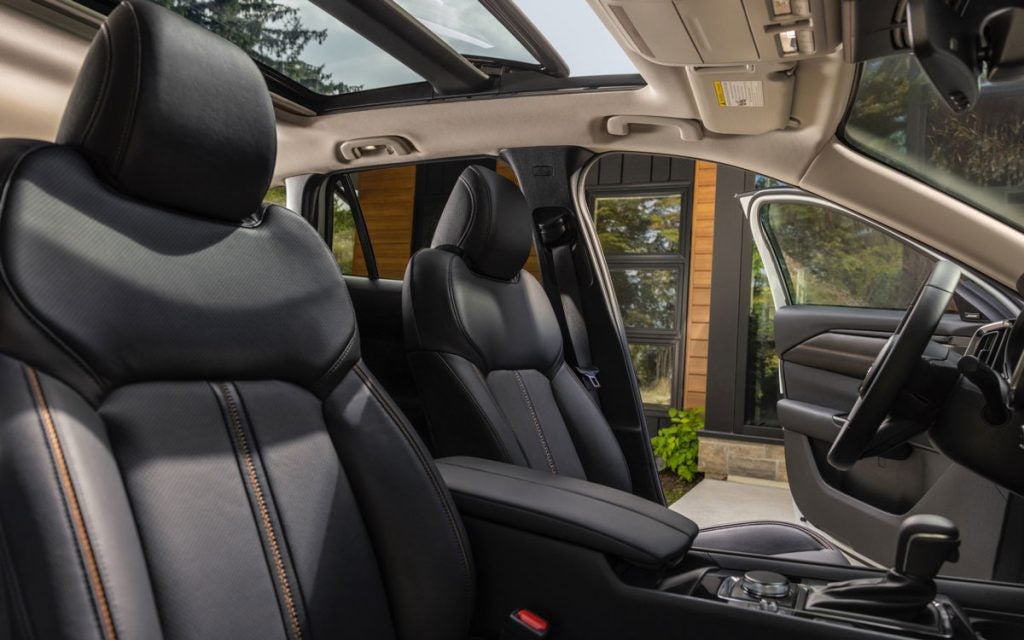
Mazda Features: Why the Interior Feels Calm and Driver-Focused

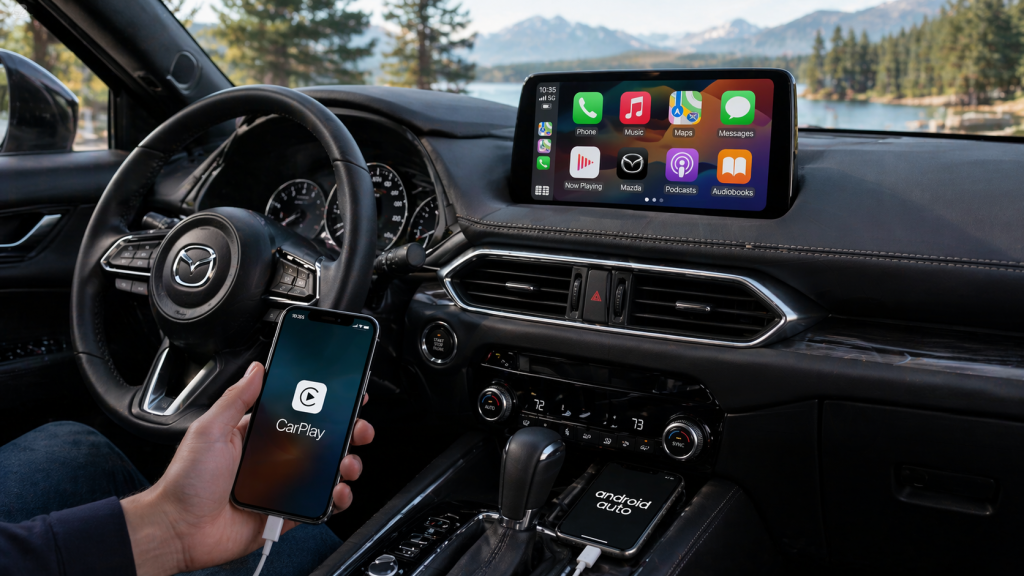
The Mazda features that define the cabin experience are not a list of specifications. They are the result of a deliberate design philosophy that starts with the driver and removes everything that does not serve them. Most shoppers notice the feeling immediately on a test drive and struggle to describe it afterward. The cabin reads as calm rather than sparse, composed rather than complicated. This piece explains the design thinking behind that sensation, how the seat and controls reinforce it, and what the rear seat and connectivity features contribute to the full picture. The Design Philosophy Behind the Calm A question that surfaces after most Mazda test drives is worth answering directly: what creates the sense of calm in this cabin? The answer begins with two Japanese concepts that guide every interior decision Mazda makes. Kodo, which translates to Soul of Motion, is the design language that governs how Mazda shapes every surface, line, and panel inside and outside its vehicles. Kodo draws from the study of living things in motion, capturing tension and energy through form. Inside the cabin, that philosophy produces surfaces that feel purposeful rather than decorative. Nothing sits on a panel unless it contributes to the driver's relationship with the space. Ma is the complementary concept. It refers to the meaningful use of empty space, a principle borrowed from Japanese art and architecture. Where most automakers fill available surfaces with screens, controls, and visual elements, Mazda treats open space as a design asset. The areas of the cabin that contain nothing are not oversights. They produce breathing room, reduce visual noise, and allow the eye to settle rather than scan. Together, Kodo and Ma explain why a Mazda cabin produces calm without producing emptiness. The restraint is intentional. Every decision about what to include carries equal weight as every decision about what to leave out. Shoppers who sit in the cabin and feel something without being able to name it are responding to a design system, not a coincidence. Why the Driver Seat Feels Different Mazda's human-centric engineering philosophy extends past aesthetics and into the physical relationship between driver and seat. The driver seat in the CX-5 positions the pelvis first. That starting point matters because the pelvis determines everything above it. When the pelvis sits at the correct angle, the spine maintains its natural S-curve without effort. The lower back does not press against the seatback. The shoulders stay level. The head rests in a neutral position that reduces the effort required to stabilize it against vehicle movement. Over a 30-minute commute, that difference in muscular effort accumulates. Over a year of daily driving, it becomes the reason some drivers arrive less tired than others. Mazda engineers study how the body responds to braking, cornering, and acceleration inputs. The seat design accounts for those forces by supporting the points where the body naturally braces during vehicle movement. The thigh support length, the lateral bolster position, and the seatback angle all reflect that research. Furthermore, the steering wheel position and instrument cluster height work together with the seat to keep the driver's gaze close to the road during instrument checks. That coordination reduces the frequency and duration of glances away from the forward view, which compounds the fatigue reduction the seat delivers on its own. How the Controls Stay Out of Your Way A concern shoppers sometimes carry into a Mazda test drive is straightforward: will the rotary dial feel outdated compared to a touchscreen? The honest answer requires understanding what the dial was designed to prevent. Mazda retained physical commander control architecture while most competitors moved toward touchscreen-primary interaction. That decision was not a technology gap. It reflected a specific conclusion about how touchscreen interaction affects driver attention during vehicle movement. Reaching toward a screen, locating a target, pressing it, and confirming the result requires the driver to shift visual attention from the road to the display for the duration of each action. Physical controls eliminate that sequence. A driver who knows where the rotary dial sits can adjust audio volume, change a navigation input, or switch climate zones without moving their eyes from the road. Here is what to evaluate when comparing the Mazda control model to touchscreen-first alternatives: During a test drive, attempt to adjust the audio volume without looking at the center console. In a Mazda, the rotary dial completes that action through muscle memory after a short familiarization period. In a touchscreen-primary cabin, the same action typically requires a visual search and a tap. Note how many steps a climate temperature change requires on each system. The Mazda physical climate controls complete that action in one turn or press. Many touchscreen systems require two to three interactions to reach the same result. Consider how often you adjust audio, navigation, or climate settings during a typical commute. Each of those adjustments represents a moment where interaction model determines how much attention the cabin pulls from the road. The commander dial in the CX-5 sits at the natural resting position of the driver's right hand near the center console. That placement requires no reaching and no postural adjustment to operate. The calm the cabin produces visually is reinforced by the ease the controls produce physically. What the Rear Seat and Cargo Space Support Shoppers evaluating the CX-5 for household use often focus on two spaces: the rear seat and the cargo floor. Both reward closer evaluation than the specification sheet provides. The rear seat in the CX-5 carries 39.6 inches of legroom, which places it among the more generous measurements in its class. Two adults sit comfortably for commute-length trips. The rear seatback reclines slightly, which improves comfort during longer drives without reducing the cargo floor behind it. Dedicated rear seat ventilation and a fold-down center armrest with a storage compartment make the space functional for regular passengers rather than occasional ones. Here is what the cargo structure supports in daily household use: The 29.1 cubic feet of cargo space behind the rear seat accommodates a week of grocery shopping for two, a set of luggage for a weekend trip, or regular large-format cargo like sporting equipment and stroller frames with the rear seat occupied. The 40/20/40 split-fold rear seat allows one section to fold while the other remains occupied, which extends cargo capacity for longer items without eliminating rear passenger seating entirely. The flat load floor that results from folding the rear seat sections removes the step-up that many competing crossovers produce, making loading and unloading heavier items more straightforward in daily use. The cargo floor height sits low relative to the bumper, which reduces the lifting distance for heavier loads. That detail reflects the same human-centered thinking that shaped the driver seat. Small ergonomic decisions accumulate into a vehicle that is less tiring to use across a full week. How Apple CarPlay Fits Without Taking Over Connectivity sits at an interesting intersection in the Mazda cabin. The CX-5 supports wireless Apple CarPlay and Android Auto, which means the driver's phone integrates without a cable. However, the interaction model that controls those systems is worth understanding before a first drive. CarPlay in the CX-5 displays on the central screen above the console. Navigation, audio, and messaging functions all appear there. The driver controls them through the commander dial rather than by reaching toward the screen and tapping. That interaction model keeps the touchscreen in its proper role as a display surface rather than a primary control interface. The screen shows information. The hand controls it from a fixed, ergonomically positioned dial. That distinction aligns directly with the Ma philosophy. A screen that sits above the console and receives input from a fixed hand position does not pull the driver's gaze or posture toward it during use. It stays within the visual field without dominating it. The result is connectivity that serves the driver rather than redirecting them. Music, directions, and calls integrate into the drive without producing the reaching, tapping, and re-orienting that touchscreen-primary systems ask for. The cabin the CX-5 delivers is not the product of a single feature or a single decision. It reflects a consistent application of the same philosophy across every element a driver touches, sees, and reaches for. Kodo shapes the surfaces. Ma shapes the space between them. Human-centric engineering shapes the seat, the controls, and the way the phone integrates into the drive. That consistency is what shoppers feel when they sit inside and notice that everything seems to belong exactly where it is.

Mazda Dealer Florida: What Fair Car Buying Should Feel Like

Visiting a Mazda dealer in Florida should feel like a clear, calm conversation. Most shoppers arrive with some level of apprehension. They have heard stories, read warnings, and built mental defenses before walking through the door. A buying process built around honesty removes the need for those defenses entirely. This piece defines what that process looks like at each stage, so shoppers know what to expect and what the right experience feels like from start to finish. What Budget Respect Looks Like A shopper who states a monthly budget or a total purchase limit shares the most important piece of information in the conversation. What the salesperson does with that number is the first and clearest signal of how the rest of the visit will go. Budget respect means the conversation stays anchored to the figure the shopper provided. The salesperson builds options around that number rather than above it. Trim levels, packages, and financing structures all get presented within the stated range first. If something above budget comes up, it arrives as a transparent choice rather than a quiet assumption. Pressure is equally important to watch for. A salesperson who respects a budget avoids returning repeatedly with higher options framed as better value. That salesperson does not suggest the shopper reconsider what they can afford. Add-ons that quietly stretch the number past the stated limit never enter the conversation without clear disclosure. Instead, the shopper's figure functions as the true boundary it was meant to be. Shoppers who experience this kind of conversation often describe a specific feeling: someone is working with them rather than around them. That sensation is not accidental. A process that treats the shopper's stated needs as the starting point for every recommendation produces it reliably. How Fees Should Be Explained Before Paperwork Fees cause more surprise in a car purchase than any other single factor. Surprise in the finance office is the most reliable source of distrust. A straightforward dealership eliminates that surprise before the shopper reaches the signing stage. The fee conversation should happen during negotiation, not after the price has been agreed. A transparent process presents the out-the-door number early. Each component that contributes to it deserves a plain explanation. That conversation does not require complexity. It requires honesty and the right timing. Here is what an honest fee breakdown covers before the finance office: The documentation fee covers the cost of processing transaction paperwork. In Florida, this fee varies by dealer and the amount should be stated clearly before any agreement is reached, not disclosed for the first time on the contract. Sales tax along with title and registration fees are state-mandated charges that apply to every vehicle purchase. A clear dealership builds these into the out-the-door figure presented during negotiation rather than adding them after the price is set. Dealer add-ons such as paint protection, fabric treatment, or extended warranty products are optional purchases. Each one should arrive as a separate, clearly labeled offer with enough time for the shopper to consider or decline without any pressure attached. A shopper who understands each fee before reaching the finance office arrives at signing with confidence. That shift in emotional state is entirely a product of when and how the dealership chooses to communicate. What a Well-Paced Visit Feels Like Time is the dimension of a car purchase that shoppers name most often when describing a frustrating experience. A visit stretching past four hours, filled with unexplained waiting, leaves a residue that no vehicle quality can fully erase. A well-managed dealership communicates at every stage. When a salesperson steps away to check with a manager, they return with a timeline. The finance office communicates how long document preparation will take. The delivery team explains what the vehicle preparation process involves. None of that communication requires extra time. It requires intention and preparation. Preparation itself signals respect. A dealership that has the vehicle ready, documents organized, and a delivery checklist prepared before the shopper arrives demonstrates that the visit was planned around the shopper's time. A well-paced purchase from arrival through delivery typically runs two to three hours for a straightforward transaction. Each step gets communicated in advance, and each transition receives a clear explanation as it happens. What Clear Paperwork Looks Like The finance office is where trust either holds or breaks. A shopper who arrives at signing already comfortable with the numbers and fees from the earlier conversation moves through the documents with confidence. Clarity at this stage confirms the process was honest from the start. Clear paperwork starts with a finance manager who treats each document as a conversation. The purchase agreement lays out the vehicle price, applicable taxes, fees, and the agreed total. Each line gets explained before a signature is requested rather than summarized in a single sweep across the page. Here is what each primary document in a standard purchase represents: The buyer's order or purchase agreement is the binding record of the agreed price, fees, and trade-in value. Every number on this document should match what was discussed during the sales conversation, with no new line items appearing for the first time at signing. The financing agreement outlines the loan amount, interest rate, term length, and monthly payment for shoppers financing through the dealership. The finance manager should walk through the annual percentage rate and explain how the term length affects the total cost before the document is signed. The optional product disclosure covers any add-on products the shopper agreed to during the sales conversation. Each product should appear as a separate, clearly labeled line with its price and coverage period stated explicitly. A finance manager who welcomes questions and slows down when a shopper pauses operates from a position of honesty. That behavior is worth noticing and worth expecting. The Relief of a Clean Transaction A specific feeling follows a car purchase done well. It is not simply excitement, though that is often present. Relief arrives alongside it. The relief of having been treated fairly, of understanding every number, of leaving without the sense that something was hidden or rushed. That feeling is the correct benchmark for a dealership visit. Shoppers who leave with it return for service, refer family and friends, and remember the experience clearly long afterward. The vehicle settles into daily routine. The quality of the transaction stays. A delivery process that closes the experience well carries the same weight as the negotiation that preceded it. A salesperson who walks a new owner through the vehicle's features, confirms every question is answered, and provides a clear summary of next steps completes the process with the same care it began with. That consistency tells the shopper that the respect shown during the sale was a standard, not a tactic. Shoppers who find that standard at a Mazda dealer in Florida will recognize it the moment it starts. It does not announce itself loudly. It simply makes the entire visit feel like what buying a car was always supposed to feel like: calm, clear, and worth every minute.

Mazda Compare: Why Drivers Choose It Over Larger SUVs

When drivers compare Mazda against larger, heavier crossovers, the conversation usually starts with size and ends with feel. Many shoppers arrive at a Mazda expecting to compromise on space and leave surprised by something harder to name. The compact proportions, the way the steering responds, the calm that settles over the cabin on a long commute. This piece explains what produces those qualities, why they matter in daily driving, and who tends to find that a Mazda fits better than a larger alternative. What Makes a Mazda Feel Different to Drive A question that follows most Mazda test drives is the same one: why does this feel so much more connected than everything else I drove? The answer is not power. It is not suspension stiffness. It sits in how Mazda engineers the relationship between steering input and vehicle response. Mazda's G-Vectoring Control Plus system adjusts engine torque in response to steering input. When a driver turns the wheel, the system briefly reduces torque to shift weight toward the front wheels. That weight shift increases front grip and sharpens the vehicle's response to the driver's direction. When the driver straightens the wheel, the system applies a small amount of braking to the outer rear wheel to stabilize the vehicle and settle the body. The whole sequence happens in fractions of a second and requires no driver awareness. The result is a vehicle that follows the driver's intent rather than requiring the driver to manage the vehicle. Most crossovers at this price point ask the driver to correct and compensate. A Mazda simply goes where it is steered. That distinction is what most shoppers feel on a test drive without being able to articulate it. Mazda calls this philosophy Jinba Ittai, a Japanese phrase describing the oneness between horse and rider. The engineering goal is not sport performance. It is a natural, intuitive connection between driver and road that makes every commute feel less like a task and more like a straightforward, composed experience. Does a Smaller SUV Actually Handle Better? The instinct that a larger SUV offers more confidence is understandable. However, compact dimensions produce a measurably different driving experience, and the physics behind that difference are worth understanding. A shorter wheelbase means less distance between the front and rear axles. That shorter distance reduces the time it takes for the front wheels to initiate a direction change and the rear wheels to follow. The vehicle responds to steering inputs more quickly, which the driver experiences as sharpness and precision. A longer wheelbase spreads that response across more distance and more time, which produces a more relaxed but less immediate feeling behind the wheel. A lower center of gravity reduces body roll through corners. The CX-30 and CX-50 both sit lower than many of their direct rivals, which means less lateral weight transfer when cornering. Less body roll produces a more settled, planted sensation through turns and reduces the sense of vehicle movement that heavier, taller crossovers create. Furthermore, less weight overall means the brakes, suspension, and steering all respond to lighter inputs with greater immediacy. Here is what to evaluate when comparing a compact Mazda to a larger crossover alternative: Sit in the driver's seat and note the dashboard height relative to your sightlines. A lower instrument cluster reduces the visual field the driver must manage and produces a stronger sense of control. On a test drive, note the gap between when you turn the wheel and when the vehicle responds. That gap narrows considerably in shorter, lower crossovers built around driver response. Notice the body movement through a gentle lane change. Less roll indicates a lower center of gravity and a more settled suspension calibration, both of which reduce fatigue on long daily commutes. Why the Interior Feels Calm Rather Than Busy Mazda cabin design starts from a different premise than most competitors. Where many automakers add screens, controls, and visual complexity to signal feature richness, Mazda removes anything that does not serve the driver directly. The result is a cabin that reads as calm rather than sparse. The instrument cluster sits low, which keeps the driver's eyes closer to the road during instrument checks. Physical controls for climate and audio functions stay within reach without requiring the driver to navigate a touchscreen menu. The center console routes naturally toward the driver rather than sitting symmetrically between both seats. Each of these choices reduces the amount of attention the cabin asks for during daily use. The CX-30 and CX-50 both carry soft-touch surfaces at primary contact points, genuine stitching on upper panels, and a restrained color palette that avoids visual noise. The cabin does not announce its materials aggressively. Instead, quality reveals itself through touch and repeated use. That is a different strategy than most competitors at this price point, and it produces a different daily experience. The Role of Physical Controls Touchscreen-first cabin design places common functions behind multiple layers of interaction. Adjusting the temperature on a cold morning requires a visual search, a tap, and often a second tap to confirm. Physical controls complete the same action without the driver looking away from the road. Mazda maintained rotary and physical control architecture in the CX-30 and CX-50 precisely because the interaction model is faster, safer, and less cognitively demanding during daily driving. That decision is a design philosophy, not a technology limitation. The Driver Who Tends to Choose Mazda Not every driver arrives at Mazda through a comparison spreadsheet. Many come through a test drive that felt unexpectedly different. However, a consistent profile emerges among drivers who choose Mazda compact SUVs over larger alternatives. Commuters who spend 30 to 60 minutes behind the wheel each day tend to feel the difference most clearly. A vehicle that asks less of the driver, responds cleanly, and settles the body on broken pavement reduces fatigue in a way that accumulates over a week and a year. The CX-30 serves solo commuters and couples particularly well. Its compact footprint fits urban parking easily, its cabin seats four adults comfortably, and its turbo-equipped trim delivers confident acceleration without demanding a sport-oriented mindset. Smaller families and couples who do not need three rows tend to find the CX-50 fits their daily structure precisely. The cargo floor is generous, the second row carries two adults with room to spare, and the exterior proportions stay manageable in tight urban environments. Beyond that, drivers who previously owned entry-level luxury vehicles and found them financially straining often discover that a well-equipped CX-50 satisfies the same quality instinct at a significantly lower cost of ownership. The common thread is a driver who prioritizes how the vehicle feels to operate over how much it can carry. Size is a secondary concern. Connection is the primary one. How Mazda Compares to Lexus on Value The Mazda versus Lexus question surfaces frequently in cross-shop research. Shoppers want an honest answer rather than a promotional one, so here is what the comparison actually looks like at the experience level. A well-equipped CX-50 Premium Plus trim brings soft-touch surfaces, genuine leather seating, a Bose audio system, and a genuinely quiet cabin to the driving experience. A Lexus UX brings a stronger brand reputation, a higher perceived status, and a more established luxury service network. The material quality gap between the two has narrowed substantially in recent years. Side by side, the CX-50's cabin holds its composure against the Lexus UX at contact points where quality is most apparent. However, the Lexus retains real advantages in noise isolation, suspension refinement on rough surfaces, and the accumulated confidence that comes with a luxury nameplate and a stronger dealer service reputation. Those advantages are real and worth acknowledging. They also carry a price premium of several thousand dollars over a comparably equipped Mazda. The honest framing is this: a Mazda compact SUV delivers the feel-first driving experience and the calm cabin quality that many luxury shoppers are actually looking for. For drivers whose priority is how the vehicle moves and how the cabin makes them feel each morning, the price difference represents cost without equivalent return. For drivers who want brand recognition, established luxury service, or the refinement advantages that Lexus specifically delivers, that premium is justified. Knowing which category you fall into makes the comparison straightforward.

Mazda CX-90 Plug-In Hybrid: Is It Worth It for Your Commute?

The Mazda CX-90 plug-in hybrid draws genuine attention for one clear reason. It can cover most daily driving on electricity while running like a conventional SUV when the battery runs low. However, fit depends on how you drive, where you charge, and how your days are structured. This guide explains how the powertrain works, what the electric range means for real commutes, and how to evaluate whether the plug-in format suits your life. How the Plug-In Hybrid Powertrain Works Shoppers often carry one question into this research: how does the system decide when to use electricity versus gas? The answer lives in how Mazda built the two energy sources to function together. The CX-90 PHEV pairs a 2.5-liter four-cylinder engine with an electric motor and a 17.8-kilowatt-hour battery. Total system output reaches 323 horsepower. Standard all-wheel drive comes on every trim. The electric motor handles low-demand situations, including city driving, light acceleration, and low-speed movement. When power demand climbs above what the motor can meet alone, the gas engine steps in to assist. The system reads throttle input, vehicle speed, battery state, and outside temperature. It selects the appropriate power source at each moment without requiring driver input. Some gas engine engagement can occur during battery-charged driving, especially during hard acceleration or cold weather. Electric mode does not mean the engine stays off entirely. It means the battery carries the primary load whenever conditions allow. The CX-70 PHEV shares the same powertrain layout. The same 2.5-liter engine and electric motor combination produces 323 horsepower in both models. The difference between the two sits in size and seating structure, not in drivetrain philosophy. Both operate through the same battery-first logic, with gas support available when the situation calls for it. Does the EV Range Match Your Commute? The EPA rates the CX-90 plug-in hybrid at 26 miles of electric-only range. For many shoppers, that number raises a direct question: is 26 miles enough for daily life? The average American drives fewer than 40 miles per day. For commuters who fall within that range, the electrified SUV can cover most daily driving on battery power alone. A 20-mile round-trip commute fits within the electric window each day. A 35-mile round trip comes close and may require only a brief gas assist on the return. Commute structure matters beyond daily averages. A driver making several short trips through the day draws on the battery more efficiently than someone making one long highway run. Highway speeds pull more energy from the battery and reduce the functional range below the EPA figure. City and suburban driving tends to preserve range better because of lower sustained speeds and more coasting opportunities. Here is what to evaluate before committing to the plug-in format: Track your actual daily mileage for one full week, including errands alongside the work commute. If your daily total stays at or under 30 miles most days, the electric range will cover a strong share of your driving. Note how much of your driving happens on surface streets versus highways. More city-style driving produces more efficient battery use across the week. Confirm whether your charging situation supports a full overnight recharge after each day. Without consistent charging, the PHEV functions as a less fuel-efficient version of a standard hybrid rather than an electrified one. What Charging Actually Looks Like A 240-volt Level 2 connection charges the CX-90 PHEV in just over two and a half hours. A driver who arrives home in the evening and plugs in will leave the next morning with a full battery. For households with a Level 2 home charger, the routine becomes nearly invisible and requires almost no active management. A standard 120-volt household outlet also works. However, a full charge from empty takes approximately 12 hours on that connection. That timeline still works for overnight charging if the driver plugs in immediately upon returning home. Someone arriving at 6 p.m. and connecting to a standard outlet can reasonably expect a full charge by morning. Public Charging and the Fast-Charge Question The CX-90 PHEV does not support DC fast-charging stations. This sets it apart from battery-electric vehicles and some competing plug-in models. Public charging for this vehicle stays limited to Level 2 AC stations, which workplaces, parking structures, and retail locations commonly provide. Drivers who charge at work in addition to at home effectively double their daily electric window. Shoppers without dedicated home charging access should think through the routine carefully. Relying entirely on workplace or public Level 2 charging introduces more variables into the daily rhythm. The plug-in hybrid format rewards consistent charging above all else. Without that routine, the fuel savings narrow considerably and the PHEV advantage shrinks toward a standard hybrid. CX-70 or CX-90: Which Format Fits Your Household? Both the CX-70 and CX-90 carry the same plug-in hybrid powertrain. The choice between them is not a powertrain question. It comes down to how many seats your household needs and how you use the interior space. The CX-90 is a three-row SUV with seating for seven or eight passengers. Families who need a third row on a regular basis will find it built for that purpose, whether for children, extended family, or regular carpooling. The third row sits lower and suits smaller passengers most comfortably. Adults can use it for shorter trips, though the space is not built for extended use. The PHEV version maintains the same cargo volume as the gas-only CX-90 behind the third row. The CX-70 offers a five-seat, two-row structure. Without the third row, it trades passenger capacity for a more generous second-row experience and a larger cargo floor. For couples, smaller families, or households that rarely seat more than four people, the two-row layout provides more usable daily space per seat. Furthermore, the CX-70 PHEV starts at a lower price point while delivering the same 323-horsepower system output. The decision framework is straightforward. If your household regularly seats five or more and a third row matters even occasionally, the three-row structure suits your needs. If daily use runs two to four occupants and cargo access matters more, the CX-70 fits that pattern more directly. When the Price Difference Makes Sense The PHEV trim carries a higher purchase price than the standard Mazda hybrid. That gap only closes if the driver charges consistently and daily mileage falls within the electric window. The CX-90 PHEV earns an EPA rating of 56 MPGe combined in electric mode and 25 mpg combined once the battery depletes. A driver who charges nightly and commutes within the 26-mile electric range will run primarily on electricity through most of the work week. At current fuel prices, that pattern can produce meaningful weekly savings over a gas-only vehicle. A driver who charges irregularly or commutes well beyond the electric range will see far less return at the fuel pump. Federal tax credit eligibility adds another layer to the purchase math. The CX-90 PHEV has qualified for federal plug-in vehicle credits in prior model years, which can reduce the effective purchase price by a notable amount. Shoppers should confirm current eligibility with a tax professional, as program thresholds and vehicle qualification rules have shifted in recent years. The plug-in hybrid format rewards a specific driver profile. Short to moderate commutes, consistent home charging access, and regular daily use are the conditions that unlock the full value of this powertrain. For drivers whose routine fits that profile, the Mazda CX-90 PHEV delivers a composed, capable, and genuinely efficient way to move through the week. For those whose driving leans toward long highway stretches or irregular charging patterns, the standard hybrid or inline-six configuration may offer a more predictable return on the investment.

Mazda Tire and Brake Questions Drivers Ask Before Service

Mazda tire and brake questions usually begin long before a service appointment because drivers notice small changes in steering feel, braking response, warning lights, or tire wear patterns during everyday driving. A slight vibration during braking, uneven tread wear, or a dashboard light appearing during startup can create uncertainty about whether the issue needs immediate attention or simple monitoring. Most drivers are not trying to diagnose the vehicle themselves. They are trying to understand whether what they are noticing fits normal wear or whether it signals something developing beneath the surface. Brake inspections, tire rotations, and electrical warning evaluations all exist to identify wear patterns early before they create larger repair concerns or more stressful ownership situations. How Tire Rotations and Brake Inspections Work Together How often should brakes be checked? Brake inspections are usually performed during routine tire service because tire removal creates direct access to braking components that would otherwise remain partially hidden behind the wheels. Technicians inspect brake pad thickness, rotor surface wear, heat spotting, uneven contact patterns, and brake hardware condition during these evaluations. Tire rotation appointments create a natural inspection interval because the vehicle is already lifted and the wheels are removed from the vehicle. Tire rotations matter because tires rarely wear evenly on their own. Front tires usually experience heavier steering and braking loads while rear tires carry different weight distribution patterns depending on the drivetrain layout and suspension design. Rotating the tires helps equalize tread wear across the vehicle. During a Mazda tire rotation inspection, technicians may also evaluate: uneven tread wear patterns shoulder wear tire cupping steering pull alignment symptoms suspension wear indicators These inspections connect directly to braking feel and steering stability. Uneven tire wear can create vibration that feels similar to brake problems while worn brake components can change steering feel during deceleration. Mazda crossover models like the Mazda CX 5 place strong emphasis on steering precision and connected road feel. Subtle changes in braking smoothness or steering response usually become noticeable earlier because the vehicle communicates road feedback clearly through the steering wheel and chassis. Early Warning Signs Drivers Should Monitor Why is the vehicle making noise while braking? Brake sounds develop for several different reasons, and the sound itself usually helps technicians narrow the inspection path. A high pitched squeal may point toward brake pad wear indicators contacting the rotor surface. Grinding noises may suggest more advanced wear where braking material has become excessively thin. Pulsation during braking can signal uneven rotor wear or heat distortion developing across the braking surface. Tire concerns also reveal themselves gradually through: steering wheel vibration irregular tread wear road noise changes pulling during driving reduced wet road traction visible tread depth differences These symptoms do not always signal immediate failure, though they should not be ignored for extended periods either. Wear patterns usually progress slowly before becoming severe enough to change stopping stability or tire traction substantially. Electrical concerns create a different type of uncertainty because warning lights appear suddenly while the underlying issue may vary from minor sensor irregularities to larger charging or communication concerns. Mazda CX 5 electrical questions frequently center around dashboard alerts, battery communication warnings, or intermittent warning light behavior during startup cycles. Drivers should pay attention to: warning lights appearing repeatedly dim interior lighting delayed infotainment startup inconsistent sensor warnings battery related startup hesitation warning lights staying illuminated after driving begins Electrical inspections focus heavily on communication pathways between sensors, modules, charging components, and onboard monitoring systems. Modern Mazda vehicles use integrated electronics extensively, which means warning indicators sometimes originate from communication interruptions instead of direct component failure. What Technicians Inspect During Brake and Tire Evaluations What do technicians evaluate during a brake inspection? Brake and tire evaluations involve much more than simply measuring pad thickness or checking tire pressure. Brake rotor surfaces are inspected for heat spotting, uneven wear texture, cracking, scoring, and contact consistency. Technicians also inspect caliper movement, brake hardware wear, and brake fluid condition because braking smoothness depends on all components operating together correctly. Rotor inspections evaluate: surface smoothness heat discoloration wear depth consistency edge lip formation vibration related wear patterns Tire evaluations focus heavily on tread wear interpretation because tread patterns reveal how the vehicle interacts with the road surface over time. Inner shoulder wear may suggest alignment concerns while uneven outer wear patterns may point toward suspension movement irregularities or inflation imbalance. Mazda tire warranty questions frequently appear when owners notice wear earlier than expected. Tire lifespan varies substantially based on alignment condition, road surfaces, driving style, rotation timing, inflation consistency, and suspension wear. Technicians inspect these surrounding factors before determining whether wear developed normally or whether additional mechanical factors contributed. The inspection process exists to identify patterns before larger repair escalation occurs. Drivers usually feel less stressed during service visits when technicians explain not only what was found, but also how the wear pattern developed and what should be monitored moving forward. Mazda CX 5 Electrical Questions and Warning Lights When does a warning light deserve immediate attention? Dashboard alerts exist to notify drivers when the vehicle detects operating values or communication patterns outside expected ranges. Some warnings require immediate inspection while others simply indicate maintenance attention should be scheduled soon. Battery alerts, charging irregularities, overheating indicators, and brake system warnings should receive prompt attention because those systems influence core vehicle operation. Other alerts may involve: sensor communication interruptions camera visibility obstruction low tire pressure maintenance interval reminders infotainment communication faults Mazda vehicles monitor large amounts of operational data continuously through onboard control modules. Modern safety features, infotainment integration, engine management, charging systems, and driver assistance functions all communicate together electronically throughout vehicle operation. Warning light evaluations usually involve: battery testing charging system evaluation onboard diagnostic scanning communication pathway checks sensor signal analysis historical fault code review Drivers sometimes fear every dashboard alert signals a major repair, though many warnings exist specifically to identify developing concerns before they become more disruptive later. Inspection timing matters because early diagnosis usually creates clearer repair pathways and prevents unrelated systems from becoming affected by ignored warning conditions. Mazda’s human centered engineering philosophy places strong emphasis on driver awareness and communication. Dashboard alerts exist to reinforce that awareness by helping drivers recognize when the vehicle wants attention before larger ownership disruption develops. Why Preventative Maintenance Reduces Ownership Stress Preventative maintenance changes how drivers experience ownership because smaller inspections create opportunities to identify wear patterns before they escalate into larger interruptions. Tire rotations, brake inspections, fluid evaluations, and warning light diagnostics all serve the same larger purpose: maintaining consistency, predictability, and vehicle stability throughout ownership. Drivers usually feel more comfortable scheduling service when they understand what inspections are evaluating and why those inspections matter. Brake inspections are not simply looking for replacement opportunities. Tire evaluations are not limited to tread measurements alone. Electrical diagnostics are not automatically signs of major repair failure. Each inspection creates a clearer picture of how the vehicle is aging, how components are interacting together, and what should be monitored moving forward. That transparency reduces uncertainty because ownership no longer feels reactive or unpredictable. Mazda vehicles are engineered around driver connection, steering precision, and balanced road feel. Maintaining those qualities requires attention to the smaller details that shape braking smoothness, tire stability, steering consistency, and system communication. When inspections happen consistently and concerns are evaluated early, ownership feels calmer, easier to understand, and far less stressful over time.

Mazda Safety Features Explained Through Everyday Driving

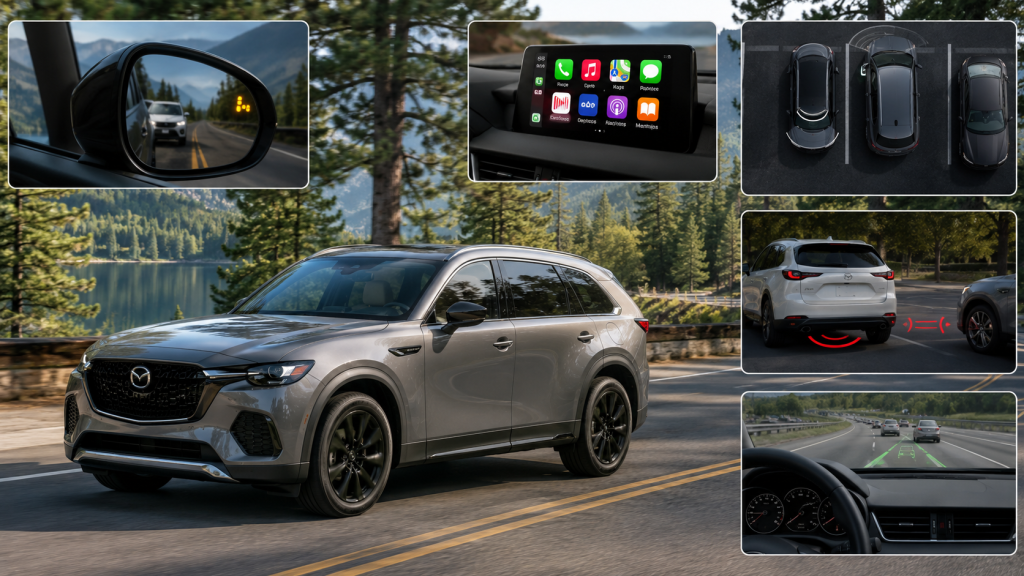
Mazda safety features are designed to support awareness during the small driving moments that happen every day, from parking lots to highway traffic and crowded intersections. Mazda approaches driver assistance differently than many brands because the focus stays centered on helping the driver remain connected to the road instead of overwhelming the cabin with constant intervention or distraction. That philosophy shapes how Mazda structures visibility, warning timing, steering feedback, rear monitoring, and infotainment interaction across vehicles like the Mazda CX 5 and Mazda CX 90. The goal is not to replace the driver. The goal is to make awareness feel more natural and easier to maintain throughout daily driving. How Mazda Safety Features Support Driver Awareness How do Mazda safety features work during everyday driving? Driver assistance features use cameras, radar sensors, steering input tracking, and vehicle positioning data to monitor surrounding traffic and reinforce driver awareness during changing road situations. Mazda structures these features to work quietly in the background until attention or visibility support becomes necessary. Instead of constant interruption, many alerts are calibrated to feel measured and intentional. Lane departure warning systems monitor road markings through forward facing cameras positioned near the windshield. When the vehicle begins moving outside detected lane boundaries without signaling, the system alerts the driver through visual or audible feedback. The feature is designed to reinforce awareness during fatigue, distraction, or long highway stretches where steering drift may happen gradually. Adaptive cruise control functions differently than traditional cruise control because radar monitoring tracks the distance between vehicles ahead. Speed adjustments happen automatically when traffic slows or speeds up. This creates smoother highway movement during heavier traffic patterns and reduces the need for repeated acceleration and braking adjustments. Mazda driver assistance interaction usually feels calmer because: alert timing is more measured steering corrections stay subtle visual warnings remain clean and simple cabin notifications avoid excessive interruption driver control remains prioritized That balance matters because overly aggressive alerts can create frustration or distraction instead of support. Mazda’s approach centers on helping the driver stay engaged with the road naturally. Blind Spot Monitoring and Rear Cross Traffic Alerts What does blind spot monitoring actually watch for? Blind spot monitoring uses radar sensors mounted near the rear corners of the vehicle to detect approaching traffic traveling alongside or slightly behind the driver. When another vehicle enters a monitored zone that may not be fully visible through mirrors alone, warning indicators illuminate near the side mirrors. If the driver signals while another vehicle occupies that space, additional alerts may activate to reinforce awareness before lane movement occurs. Rear cross traffic alert expands this same monitoring concept during reversing situations. When backing out of parking spaces or crowded lots, rear radar sensors scan for approaching vehicles crossing behind the Mazda CX 5 or Mazda CX 90. This becomes useful in situations where: larger vehicles block side visibility crowded parking lots limit sightlines pedestrians and traffic move unpredictably reversing angles restrict visibility nighttime parking reduces visual clarity Rear traffic monitoring does not only look directly behind the vehicle. Radar sensors monitor movement approaching from both sides during reversing movement. That wider monitoring zone helps identify cross traffic before it fully enters the driver’s direct line of sight. Mazda structures these alerts to support awareness without overwhelming the driver with unnecessary notifications. The system activates when movement patterns suggest attention reinforcement is needed rather than issuing constant warnings throughout normal traffic flow. Mazda CX 5 and CX 90 Visibility During Parking and Traffic Which Mazda SUVs feel easiest to monitor while driving? Visibility comes from much more than windshield size alone. Driver seating position, mirror placement, window design, hood height, and pillar structure all influence how naturally a driver understands surrounding space. The Mazda CX 5 uses a seating position that creates strong forward visibility while maintaining a connected driving posture. Drivers can judge vehicle placement more naturally because the hood shape, side mirrors, and window positioning remain visually organized from the driver’s seat. The Mazda CX 90 introduces a larger body structure, though Mazda still prioritizes visibility and driver orientation carefully throughout the cabin layout. Larger SUVs can sometimes feel disconnected from surrounding traffic because of body size alone. Mazda counters that by focusing heavily on sightlines and driver positioning. Parking visibility support works through: mirror positioning camera integration steering visibility window shape design driver seating geometry sensor monitoring around the vehicle Visibility matters because parking confidence influences how comfortable an SUV feels during ownership. Drivers navigating garages, tighter parking lots, school pickup areas, or crowded shopping centers benefit from clearer awareness around the vehicle perimeter. Mazda’s design philosophy keeps the driver visually connected to the road and surrounding space instead of isolating them behind excessive bulk or obstructed sightlines. Apple CarPlay and Reduced Driving Distraction Does Apple CarPlay reduce distraction during driving? Smartphone integration reduces distraction by simplifying how navigation, communication, and media functions are accessed while driving. Without integrated systems, drivers frequently shift attention toward handheld devices for navigation updates, text notifications, music changes, or incoming calls. Apple CarPlay moves those interactions into the vehicle’s infotainment display using larger icons, simplified menus, voice controls, and steering wheel integration. This changes how drivers interact with information during commuting and travel. Apple CarPlay supports awareness by: reducing handheld phone interaction simplifying navigation access centralizing communication controls supporting voice command interaction keeping visual information larger and easier to recognize Mazda structures infotainment interaction with a cleaner visual approach than many heavily layered screen layouts. Simpler menu organization and reduced visual clutter help drivers process information faster without extended screen attention. This relationship between technology and awareness matters because distraction frequently builds from multiple small interruptions instead of one major event. Navigation adjustments, incoming messages, playlist changes, and phone handling all divide driver focus throughout a trip. Mazda’s technology philosophy supports a more connected and calmer driving rhythm by reducing unnecessary complexity during those interactions. Why Mazda Safety Features Feel Supportive Instead of Intrusive Why do Mazda safety features feel calmer than some driver assistance systems? Mazda approaches safety through human centered design, meaning the driver remains the central focus of every interaction. The technology exists to support awareness, reinforce attention, and simplify visibility without overpowering the person behind the wheel. Some driver assistance systems from other brands rely heavily on aggressive steering intervention, constant audible warnings, or overwhelming notification patterns. That approach can make technology feel stressful instead of supportive during normal commuting. Mazda structures alerts, visibility, steering response, and cabin interaction more carefully so the vehicle still feels natural to drive. The systems step in when awareness support becomes necessary, though they avoid creating a disconnected driving relationship where technology dominates every interaction. That balance shapes why many drivers describe Mazda vehicles as feeling calmer and easier to trust during everyday driving situations. Features like blind spot monitoring, rear traffic alerts, adaptive cruise control, and Apple CarPlay work together quietly in the background to reinforce awareness during the moments drivers manage constantly throughout the week. The result is a driving environment that feels more connected, more understandable, and more supportive without becoming distracting or overwhelming.

How Clear Service Updates Help Mazda Owners Feel More Confident

Mazda service updates shape how owners understand repairs, timelines, inspections, and the overall repair process from drop off through pickup. Vehicle service rarely creates frustration from repairs alone. Uncertainty usually grows when owners do not know what the technician found, whether the timeline changed, or why the estimate no longer matches the original expectation. That communication gap becomes more noticeable during AC diagnostics, scratch repair inspections, tire replacement visits, and larger mechanical repairs where additional findings may appear after technicians begin deeper inspection work. Clear communication creates structure around the repair process so owners understand what is happening, why it is happening, and what comes next. Why Repair Timelines Change After Diagnostics Why did the repair estimate change after inspection? Diagnostic inspections are the process technicians use to identify root causes, confirm part failures, and verify whether surrounding components were damaged as well. An initial estimate is frequently based on visible symptoms or customer concerns before the technician begins deeper evaluation. Once the inspection starts, additional information may reshape the repair scope. A Mazda CX 5 arriving for AC service may initially appear to need refrigerant replacement, though pressure testing could later reveal a leaking hose, damaged condenser, or compressor concern requiring additional labor and parts. The same pattern appears during scratch repair evaluations. Surface scratches may look minor externally while deeper paint penetration, panel distortion, or hidden trim damage changes the repair approach after disassembly and inspection. Repair timelines can change because technicians may need to: complete additional diagnostic testing verify secondary damage order replacement components wait for paint matching procedures confirm calibration requirements after repairs perform final inspection testing before release Communication matters most during these transitions. Owners usually respond more positively when they understand why the timeline shifted and what the technician discovered during inspection. Mazda dealerships that provide clear diagnostic explanations create a calmer ownership process because the repair no longer feels unpredictable or disconnected from the actual work being performed. How Service Advisors and Technicians Coordinate Updates What should a service update include? Effective repair communication explains the current repair stage, technician findings, timeline expectations, and whether approvals are needed before work continues. Service advisors act as the communication bridge between technicians and owners. Technicians focus on diagnosis, repair procedures, testing, and verification while advisors translate those findings into understandable updates. During a Mazda tire rotation appointment, the visit may begin as routine maintenance but later expand if uneven tread wear, brake wear patterns, alignment concerns, or suspension irregularities appear during inspection. Without explanation, owners may feel pressured by additional recommendations. With clear communication, the inspection process feels transparent and easier to understand. Helpful service updates usually include: what inspection stage the vehicle is currently in whether diagnostics are complete whether additional approvals are required parts availability timing revised completion estimates whether final testing has started Communication pauses do not always mean repair progress has stopped. Technicians may still be diagnosing electrical concerns, pressure testing AC components, waiting for authorization approval, or confirming parts delivery timelines before another update becomes available. Mazda ownership tends to feel more stable when communication stays structured throughout the visit. Even short updates create reassurance because owners understand where the repair currently stands. Mazda AC, Tire, and Scratch Repair Communication Expectations Different repair categories create different communication expectations because inspection depth and repair sequencing vary substantially across service types. Mazda AC repair visits usually involve several inspection stages before the technician confirms the root issue. Refrigerant pressure readings, leak tracing dye, compressor operation, condenser airflow, electrical signal checks, and cabin temperature verification may all occur before repairs are finalized. A simple cooling complaint may require several testing phases before the repair path becomes fully clear. Tire rotation visits appear simpler externally, though they still involve inspection opportunities that influence future maintenance planning. Technicians may identify irregular wear patterns, tire aging, brake concerns, or alignment symptoms while rotating the tires. Those findings shape future recommendations and maintenance timing discussions. Scratch repair communication becomes important because cosmetic damage can evolve into a multi step process involving: paint preparation sanding and panel correction primer work paint matching curing procedures finish inspection under varying light conditions Owners usually feel more comfortable during these repairs when updates explain what stage has been completed and what remains before pickup. Mazda dealerships supporting communication well tend to reduce repair anxiety because the ownership process feels collaborative instead of uncertain. The focus shifts from waiting without answers to understanding how the repair is progressing. How Repairs Are Verified Before Vehicle Pickup How do technicians confirm the repair was fixed properly? Repair verification is the process used to confirm the original concern has been resolved before the vehicle returns to the owner. Final verification procedures vary depending on the repair type. AC repairs may require cabin temperature testing, pressure confirmation, compressor cycling review, and leak verification. Brake related inspections may include road testing, pedal feel confirmation, noise evaluation, and brake response checks. Modern Mazda models add another layer of verification because cameras, sensors, and driver assistance features may require recalibration after certain repairs or body work. A technician may need to confirm camera positioning, radar operation, or warning light status before the vehicle is considered ready for pickup. Repair verification can include: road testing warning light review calibration confirmation temperature and pressure testing fluid level verification technician re inspection procedures Owners rarely see these processes directly, which is why communication during the final stage matters as much as the original estimate discussion. Pickup confidence grows when owners understand the repair was tested, reviewed, and verified before release. Mazda’s driver focused engineering philosophy places strong emphasis on connected driving feel and predictable operation. Verification procedures support that same ownership consistency by ensuring repairs restore the vehicle properly before it returns to the road. Why Clear Communication Changes the Ownership Relationship Clear communication changes how owners view the entire repair process. Without updates, repairs can feel disconnected, confusing, and difficult to trust. With structured explanations, owners understand how inspections progress, why timelines shift, and how technicians confirm repairs before pickup. Mazda owners frequently choose the brand because of its thoughtful design philosophy, calm driving feel, and human centered engineering approach. That same ownership mindset extends into service expectations as well. Drivers want transparency, steady communication, and repair discussions that feel respectful and understandable instead of rushed or overly technical. Strong service communication builds trust gradually through clarity, consistency, and realistic expectations. Owners feel more prepared when they understand what technicians are inspecting, what the repair process involves, and what verification steps happen before the keys are handed back. That communication structure creates a more confident ownership relationship long after the appointment itself has ended.

Mazda CX-70 vs CX-90: Which SUV Fits You Better

Mazda CX-70 vs CX-90 comparisons usually start with size, though passenger layout, cargo flow, and how each SUV fits daily life shape the larger decision. Both SUVs share Mazda’s calm interior design philosophy, responsive driving feel, and upscale cabin presentation, though they approach space and family movement differently. One focuses on open two row flexibility while the other prioritizes larger passenger capacity and expanded seating adaptability. For shoppers comparing these SUVs, the question is usually less about which one is “better” and more about which one naturally fits how the vehicle will be used each week. Passenger count, cargo habits, parking routines, travel patterns, and household structure all shape the decision differently. CX-70 vs CX-90 Seating and Passenger Layout Do you really need a third row? A third row changes how passengers move through the SUV, how cargo space is distributed, and how flexible the interior feels during family travel. The Mazda CX-90 uses a three row layout built around larger households and expanded passenger flexibility. Families carrying children, relatives, teammates, or additional passengers throughout the week may appreciate the extra seating capacity even if the third row is not occupied every day. The Mazda CX-70 removes the third row entirely and uses the cabin space differently. Without the rear seating section, the interior creates a more open cargo and passenger environment behind the second row. Rear passengers gain additional breathing room while the cargo area feels more continuous and accessible. Passenger layout influences: how easily passengers move through the cabin whether luggage and passengers compete for space how child seats influence seating flexibility whether adults fit comfortably during longer trips how much rear cargo remains available with passengers onboard The CX-90 supports larger family movement more naturally when additional seating is required. The CX-70 creates a cleaner interior flow for households prioritizing cargo openness and second row comfort instead of maximum passenger count. Cargo Space and Storage Flexibility Cargo volume numbers alone rarely explain how usable an SUV feels once travel gear, groceries, backpacks, or sports equipment begin filling the interior. The Mazda CX-70 benefits from its two row layout by creating a longer uninterrupted rear cargo area. Large items fit more naturally because there is no folded third row structure shaping the floor behind the second row. Loading luggage, coolers, pet carriers, or larger travel equipment feels simpler because the cargo zone remains fully dedicated to storage. The CX-90 divides its rear space differently because the third row occupies part of the cargo footprint. When additional seating is folded down, the larger SUV still creates substantial storage flexibility, though cargo organization changes depending on whether the rear seats are occupied. Families should evaluate: how frequently all passenger seats are used whether travel involves larger luggage loads stroller or sports equipment storage needs cargo floor accessibility loading height and rear opening width whether rear passengers or cargo take priority more frequently This comparison matters because some households value passenger flexibility above all else, while others spend far more time hauling equipment, pets, or travel gear than additional passengers. The CX-70 tends to feel more open and cargo-focused. The CX-90 leans more heavily toward balancing passenger count alongside storage adaptability. Maneuverability and Everyday Driving Feel Which SUV feels easier to drive every day? SUV size is not only about dimensions. Visibility, turning feel, seating position, and driver awareness all influence whether an SUV feels natural during commuting, parking, and city driving. The Mazda CX-70 generally creates a slightly less intimidating driving impression because the body structure feels shorter and more cargo-focused from the driver’s seat. Parking transitions, tighter parking lots, and urban maneuvering may feel more approachable for drivers moving from smaller crossovers or midsize sedans. The CX-90 still maintains Mazda’s strong visibility philosophy and controlled steering feel, though the longer three row structure changes how the SUV rotates through tighter spaces. Drivers managing school pickup lines, parking garages, or narrow city streets may notice the added footprint during lower speed maneuvering. Driving feel is shaped by: seating position visibility front corner awareness turning radius rear visibility parking camera integration body length perception from the driver’s seat Mazda’s interior design philosophy keeps controls and visibility organized cleanly across both SUVs. That consistency helps reduce the adjustment period even when transitioning into a larger family-oriented vehicle. For households balancing commuting with family hauling, the CX-70 may feel easier to integrate into tighter urban routines. The CX-90 provides additional passenger flexibility while still maintaining a composed and controlled driving character. Road Trip Comfort and Family Travel Evaluation Family travel changes how SUV space is evaluated. A cabin that feels spacious during a short test drive can feel very different after several hours on the road with passengers, luggage, charging cables, drinks, snacks, and travel equipment spread throughout the interior. The Mazda CX-90 supports larger group travel more comfortably when additional passengers regularly join longer trips. Multiple seating rows create better passenger separation, helping reduce crowding during vacations or extended drives. The CX-70 approaches travel differently. Without the third row, rear cargo stays more accessible while second row passengers benefit from a more open cabin environment. Couples, smaller families, or households traveling with pets may appreciate the uninterrupted cargo flexibility and simpler passenger arrangement. Travel comfort should be evaluated through: rear passenger spacing charging access across seating rows luggage organization visibility during long drives third row accessibility passenger movement during stops The CX-90 generally fits larger households carrying multiple passengers throughout the week. The CX-70 fits drivers prioritizing cargo simplicity, easier storage access, and a less crowded cabin structure during travel. Which Mazda SUV Fits Your Life Better? The Mazda CX-70 and CX-90 share many core strengths including cabin craftsmanship, thoughtful design flow, responsive driving manners, and strong visibility from the driver’s seat. The larger difference comes from how each SUV organizes space around different household priorities. The CX-70 aligns naturally with: smaller families couples needing larger cargo space pet owners commuters transitioning from smaller SUVs drivers prioritizing open storage flexibility The CX-90 aligns more naturally with: larger households growing families frequent passenger transport carpools and team travel families needing third row adaptability Neither SUV feels oversized in the disconnected way some larger crossovers can. Mazda’s cabin design philosophy keeps both vehicles calm, organized, and easy to understand from behind the wheel. The decision comes down to whether passenger capacity or open cargo flexibility plays a larger role in everyday life. For households regularly balancing passengers, luggage, and family movement together, the Mazda CX-90 stands out as the more accommodating option across a wider range of travel situations. For drivers wanting a cleaner two row layout with generous cargo space and a slightly easier urban driving footprint, the Mazda CX-70 creates a simpler and more open ownership flow while still maintaining the elevated comfort and thoughtful design that define Mazda’s SUV lineup.

How Routine Maintenance Supports Mazda Performance Over Time

Many drivers wonder how often a Mazda actually needs to be serviced, especially in the first few years of ownership when everything still feels new. Routine maintenance is designed to support how the vehicle performs over time by preserving the condition of its core systems rather than correcting failure after it happens. In a vehicle like the Mazda CX 5, every major system is built to operate within a specific range of temperature, friction, and pressure. These conditions are carefully engineered to create the smooth, responsive feel Mazda is known for. Maintenance keeps those conditions stable, allowing the vehicle to continue delivering that same sense of balance long after the initial drive. Without regular service, systems do not suddenly fail. They begin to shift gradually. Fluids lose their ability to regulate heat and friction. Materials wear unevenly. Small inefficiencies build on each other until the vehicle begins to feel different, even if nothing has technically broken. Engine systems rely on clean lubrication to reduce internal friction and heat buildup Tire systems depend on even contact with the road surface to maintain stability Brake systems require consistent material thickness for predictable stopping response Climate systems rely on sealed pressure and balanced airflow to maintain comfort Routine maintenance keeps each of these systems operating within their designed limits. For a driver, that means the vehicle continues to feel smooth, predictable, and connected rather than slowly drifting away from its original character. How Oil Changes Protect Engine Systems And Why Timing Matters A common question for new owners is how often a Mazda needs an oil change, but the more important question is what that oil is actually doing inside the engine. Engine oil protects internal components by creating a thin lubricating layer that reduces friction, carries heat away, and prevents metal to metal contact. In models like the Mazda CX 50, the engine is constantly in motion. Pistons move rapidly within cylinders, valves open and close with precision timing, and bearings support rotating components under pressure. Oil flows continuously through these parts, acting as both a lubricant and a cooling medium. Over time, oil begins to break down. Heat alters its viscosity, making it less effective at maintaining a protective layer. At the same time, contaminants such as microscopic metal particles and combustion byproducts accumulate within the oil. This is why timing matters. Oil degradation happens gradually, not instantly. Fresh oil maintains proper viscosity, allowing it to coat and protect moving components Degraded oil loses its ability to separate surfaces, increasing internal friction Contaminated oil circulates particles that can accelerate wear inside the engine Replacing oil at the correct interval ensures the engine continues to operate within its intended design. For drivers, this is one of the most important maintenance steps because it directly affects long term durability and the way the vehicle feels during acceleration and everyday driving. Why Tire Rotation Impacts Safety And Long Term Wear Drivers often ask how frequently tires should be rotated on a Mazda, especially as mileage begins to build and wear becomes more noticeable. Tire rotation redistributes wear across all four tires to ensure even contact with the road and consistent performance. In vehicles like the Mazda CX 30, tires do not wear evenly on their own. The front tires typically handle steering input and a greater portion of braking force, which causes them to wear faster than the rear tires. Over time, this imbalance can affect how the vehicle grips the road. Rotation works by systematically repositioning each tire so that wear is distributed more evenly across all four positions. This helps maintain a balanced contact patch between the tires and the road surface. Even wear maintains consistent traction across all four tires Balanced tread depth supports stable braking and cornering Proper rotation reduces irregular wear patterns that can create noise or vibration This process does more than extend tire life. It preserves the way the vehicle responds to steering and braking inputs. For a driver, that means the Mazda continues to feel stable and predictable, even as miles accumulate. How Brake Inspections Prevent Performance Loss It is also common to question how often brakes should be checked, particularly as a vehicle moves beyond its first year of use. Brake inspections evaluate the condition of brake pads, rotors, and related components to ensure consistent stopping performance. In a vehicle like the Mazda CX 90, braking relies on controlled friction. When the brake pedal is applied, pads press against rotating rotors to slow the vehicle. Each application removes a small amount of material from the brake pads. Over time, this gradual wear reduces pad thickness and can begin to affect how evenly the braking system operates. If left unchecked, this wear can extend to the rotors themselves, increasing the complexity and cost of repairs. Worn brake pads reduce stopping efficiency and increase stopping distance Uneven wear can introduce vibration or pulsing during braking Delayed inspection can lead to rotor damage, requiring more extensive service Regular brake inspections identify these changes early. For drivers, this ensures that stopping remains smooth, controlled, and consistent in everyday conditions, from city traffic to highway speeds. What To Expect From AC Service And Climate System Maintenance Climate control is often overlooked until it stops performing as expected, but it plays an important role in overall driving comfort. Many drivers wonder when AC service should be done, especially if the system still appears to be working. AC service maintains the vehicle’s climate system by ensuring proper refrigerant levels, airflow, and internal pressure balance. In Mazda interiors, the climate system is designed to maintain a consistent cabin environment without placing unnecessary strain on the engine. It relies on a closed loop system where refrigerant circulates through components such as the compressor, condenser, and evaporator. Over time, small changes begin to affect performance. Refrigerant levels can decrease, filters may become restricted, and airflow can weaken. These changes do not always happen suddenly, which is why they can go unnoticed at first. Reduced refrigerant lowers the system’s ability to absorb and transfer heat Restricted airflow limits how effectively cooled air reaches the cabin System imbalance can increase strain on internal components Regular inspection helps maintain consistent cooling performance and prevents more significant issues from developing. For drivers, this means the cabin continues to feel comfortable and controlled, whether during daily commutes or longer drives in changing weather conditions.

Which Mazda SUV Makes The Most Sense For A Growing Family

Choosing an SUV for a growing family is not just about finding the biggest option available. It is about understanding how space, seating, and daily routines come together over time. Mazda’s SUV lineup is designed with different types of families in mind, from compact flexibility to full three row capability. The real decision comes from how each vehicle supports your everyday movement, from school drop offs to weekend travel, and how those needs evolve as your family grows. How Mazda SUV Size Actually Translates To Daily Family Use The Mazda CX 90 is the largest SUV in the Mazda lineup, offering three rows of seating and the most overall interior volume. Size in an SUV is not just about exterior dimensions. It is determined by how the vehicle’s wheelbase, cabin layout, and seating structure are designed to support passengers and cargo together. In smaller models like the Mazda CX 5, the focus is on efficiency and balance. The vehicle is easier to maneuver in tight spaces while still offering enough room for a small family. The Mazda CX 50 expands on this slightly with a wider stance and more flexible cargo area, making it better suited for active lifestyles that require more gear. The CX 90 introduces a different structure entirely. Its longer wheelbase allows for a third row, but that added space changes how the interior is used. Larger SUVs create more passenger capacity but also require more planning for parking and maneuverability Smaller SUVs provide easier daily driving but limit how many people and items can be carried at once Interior layout matters more than overall size when it comes to comfort and usability For a family, this means size should be evaluated through daily routines rather than just maximum capacity. Mazda CX 5 And CX 50 How Two Row SUVs Handle Family Life For many families, a two row SUV like the Mazda CX 5 or Mazda CX 50 provides the most practical balance of space and usability. These vehicles are designed around five passenger seating, which allows the entire cabin to focus on comfort and cargo flexibility rather than dividing space across a third row. In the Mazda CX 5, the interior prioritizes passenger comfort with a layout that keeps seating supportive and accessible. The cargo area behind the second row is consistently available, which means groceries, strollers, or sports equipment can be stored without needing to reconfigure seating. The Mazda CX 50 shifts slightly toward versatility. Its design supports outdoor gear and larger cargo items while still maintaining passenger space. Two row SUVs maintain full cargo capacity at all times Rear seats can fold down to expand storage when needed Cabin space feels more open because it is not divided into multiple rows This structure works well for families who do not regularly need more than five seats but still require flexibility for daily life. Mazda CX 90 And What A Third Row Really Changes A third row SUV adds additional seating capacity, but it also changes how interior space is shared between passengers and cargo. In the Mazda CX 90, the third row allows for more passengers, which is useful for larger families or situations where extra seating is needed. However, when all seats are in use, the cargo area behind the third row becomes more limited. This is where many shoppers experience confusion. The presence of a third row does not automatically mean more usable space at all times. It introduces a tradeoff between carrying people and carrying cargo. With the third row in use, cargo space is reduced Folding the third row restores a larger cargo area Access to the third row requires additional cabin movement and space planning The benefit of the CX 90 is flexibility. It allows the vehicle to adapt based on what is needed for that specific trip. For families who regularly transport more than five passengers, this added capability becomes essential. For others, it may be used occasionally rather than daily. How Cargo Space Works When Seating Configurations Change Cargo space is not a fixed number. It changes depending on how the seating system is configured at any given time. In vehicles like the Mazda CX 5, cargo space remains consistent because there is no third row. The rear area is always available unless the second row is folded for additional storage. In the Mazda CX 90, cargo space operates as a variable system. The amount of usable storage depends on how many seats are in use. All seats up provides maximum passenger capacity with minimal cargo space Third row folded increases cargo area significantly Second and third rows folded creates a flat load floor for larger items This system is designed to adapt, but it requires planning. Families need to think about how often they will prioritize passengers versus cargo. Understanding this dynamic helps prevent choosing a vehicle based on maximum numbers rather than actual daily use. How To Choose The Right Mazda SUV Based On Your Routine The right Mazda SUV is the one that aligns with how your family actually moves through daily life. For smaller families or those who prioritize ease of driving, the Mazda CX 5 offers a balanced approach with consistent cargo space and manageable size. The Mazda CX 50 builds on that with added versatility for outdoor activities and larger gear. For larger families or those who frequently need additional seating, the Mazda CX 90 provides the flexibility of a third row while still maintaining Mazda’s focus on comfort and connection. The decision comes down to patterns. How many passengers you regularly carry How often you need flexible cargo space Whether your daily routine involves tight parking or open driving environments When those patterns are clear, the right choice becomes less about comparing specifications and more about choosing the vehicle that fits naturally into your life.

How Mazda Connect Apple CarPlay And Android Auto Make Daily Driving Feel Easier

Every Mazda is designed around the idea that driving should feel natural, not interrupted. That philosophy extends beyond steering and performance into how drivers interact with technology. Systems like Mazda Connect, Apple CarPlay, and Android Auto are not just added features. They are structured to simplify how information, communication, and navigation come together while you are driving. For many shoppers, the real question is not whether these features exist, but whether they actually make daily driving easier or more complicated. How Mazda Connect Organizes Your Driving Experience What is Mazda Connect system Mazda Connect is the central interface that organizes vehicle information, media, navigation, and communication into a single, controlled system designed to reduce distraction. In a vehicle like the Mazda CX 5, Mazda Connect acts as the foundation that everything else builds on. Instead of treating each feature as a separate system, it groups them into a unified interface that can be accessed consistently while driving. This system works by simplifying how information is displayed and controlled. Rather than requiring multiple inputs or shifting between different screens, Mazda Connect keeps interactions structured and predictable. Navigation, music, and communication are all accessed through the same interface logic The system prioritizes clarity by limiting visual clutter on the screen Controls are designed to be consistent regardless of which feature is being used This matters in real driving conditions because the brain processes familiar patterns faster than new ones. When the system behaves consistently, drivers spend less time thinking about how to use it and more time focused on the road. For a driver, Mazda Connect turns multiple digital tools into one continuous experience rather than a collection of separate features. How Apple CarPlay And Android Auto Actually Work Inside A Mazda How do you connect Apple CarPlay in a Mazda Apple CarPlay connects your smartphone to the vehicle by mirroring key apps such as navigation, messaging, and music onto the Mazda Connect display. Does Mazda support Android Auto Mazda supports Android Auto in the same way, allowing Android devices to project their core apps into the vehicle interface. In models like the Mazda CX 50 and Mazda CX 30, this integration works by creating a controlled link between your phone and the vehicle. Instead of duplicating your entire phone screen, the system selects specific functions that are optimized for driving. This process is called interface mirroring, but it is more selective than a full screen projection. Only apps that are designed for driving use are displayed, and they are reformatted to fit the Mazda Connect layout. Navigation apps provide simplified directions with larger visual cues Messaging systems convert texts into voice readable formats Music apps are reorganized for quick selection and minimal scrolling The benefit is not just convenience. It is consistency. Your phone’s most important functions become part of the vehicle without requiring you to pick up your device. For drivers, this means familiar tools are available in a way that feels integrated rather than distracting. Why Mazda Uses A Command Knob Instead Of A Touchscreen Mazda uses a command knob control system because it reduces the need to reach forward and visually focus on the screen while driving. In vehicles like the Mazda3, this control method changes how drivers interact with the infotainment system. Instead of tapping a screen, inputs are made through a rotary controller positioned near the gear selector. This design is based on how human attention works in motion. Reaching toward a touchscreen requires both visual confirmation and physical adjustment. Using a command knob allows the driver to keep their hand in a stable position and rely more on muscle memory. The knob allows scrolling and selection without extended reach Physical feedback provides confirmation without needing to look directly The system reduces the time eyes are off the road This approach is different from many competitors, but it is intentional. It prioritizes control and awareness over visual interaction. For a driver, this means less interruption and a more stable connection to the driving experience. How Voice And App Integration Reduce Driver Distraction Is Mazda infotainment easy to use while driving Mazda infotainment is designed to be easy to use while driving by reducing the number of manual inputs required and shifting interaction toward voice and simplified controls. In vehicles like the Mazda CX 90, voice integration works alongside Apple CarPlay and Android Auto to allow drivers to perform actions without physically interacting with the system. This includes sending messages, selecting music, or setting navigation destinations using spoken commands. The system reduces distraction by limiting how often the driver needs to divide attention. Voice commands replace manual typing or scrolling App layouts are simplified to reduce decision time System responses are designed to be quick and predictable This matters because distraction is not just about taking your eyes off the road. It is also about how much mental effort is required to complete a task. By simplifying both physical and cognitive interaction, Mazda reduces the overall load placed on the driver. What To Expect When Setting Up And Using The System Daily Connecting your phone to Mazda Connect is designed to be straightforward, but more importantly, it is designed to stay consistent once set up. In most Mazda models, including the Mazda CX 5 and Mazda CX 50, setup involves connecting your device through a wired or wireless connection depending on the vehicle configuration. Once connected, the system recognizes your device and automatically loads your preferred interface. What matters is not just the setup, but how the system behaves after that. The system reconnects automatically when you enter the vehicle Your apps appear in the same layout each time Controls remain consistent regardless of which app you use This consistency is what makes the experience feel easy over time. There is no need to relearn the system each time you drive. For shoppers, this is where the value becomes clear. The technology does not ask you to adapt to it. It adapts to your habits and becomes part of your routine.

Contact Us

Fill out this form below and we'll contact you shortly
*Required Fields