Blog

All Jacksonville Mazda Dealer Tom Bush Mazda Jacksonville Mazda Service Tom Bush Mazda Service Things To Do In Jacksonville Jacksonville Amenities Jacksonville Entertainment Jacksonville Used Cars Tom Bush Family of Dealerships Jacksonville Eateries Jacksonville Restaurants Jacksonville Parks Family Fun in Jacksonville Jacksonville Landmarks Jacksonville Foodies Tom Bush Financing Mazda Trade-In Tom Bush Mazda Collision Center Food Delivery in Jacksonville Auto Financing Jacksonville Museums Road Trips Things To Do Near Jacksonville Car Warranty Jacksonville Collision Shopping in Jacksonville Weekend Getaways Holiday Fun

Which Mazda SUV Makes The Most Sense For A Growing Family

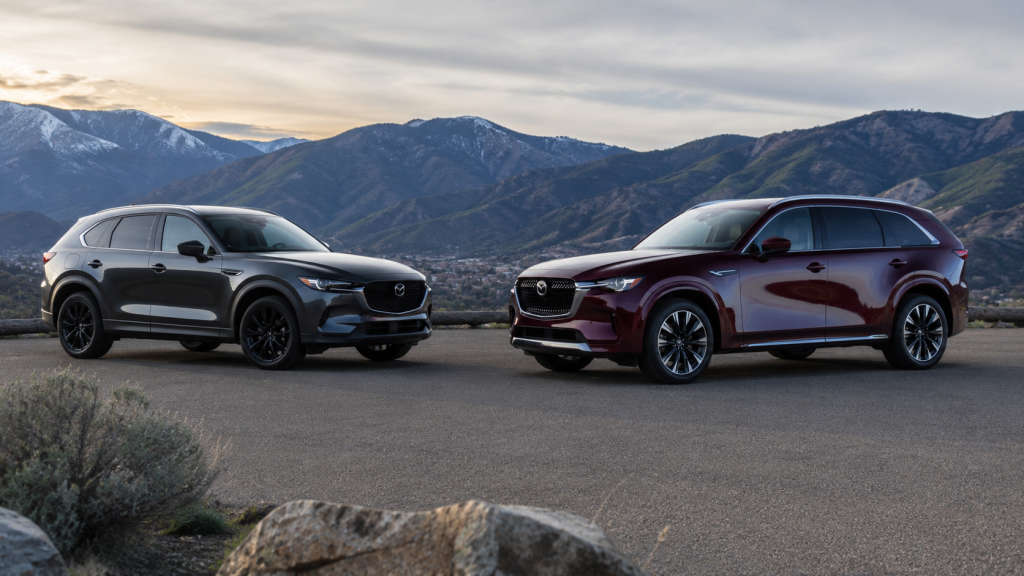
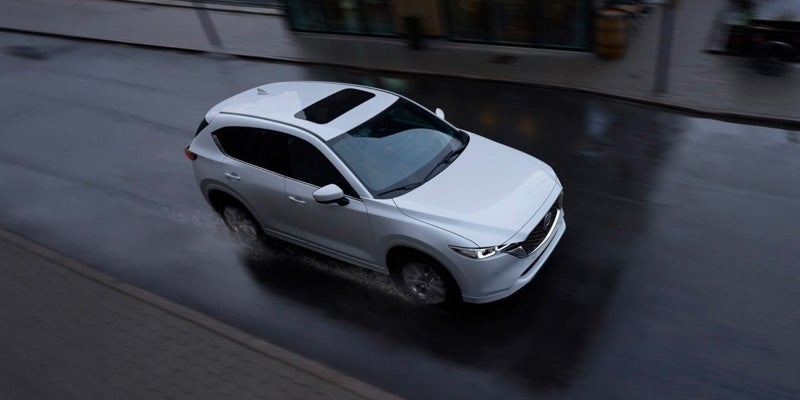
Choosing an SUV for a growing family is not just about finding the biggest option available. It is about understanding how space, seating, and daily routines come together over time. Mazda’s SUV lineup is designed with different types of families in mind, from compact flexibility to full three row capability. The real decision comes from how each vehicle supports your everyday movement, from school drop offs to weekend travel, and how those needs evolve as your family grows. How Mazda SUV Size Actually Translates To Daily Family Use The Mazda CX 90 is the largest SUV in the Mazda lineup, offering three rows of seating and the most overall interior volume. Size in an SUV is not just about exterior dimensions. It is determined by how the vehicle’s wheelbase, cabin layout, and seating structure are designed to support passengers and cargo together. In smaller models like the Mazda CX 5, the focus is on efficiency and balance. The vehicle is easier to maneuver in tight spaces while still offering enough room for a small family. The Mazda CX 50 expands on this slightly with a wider stance and more flexible cargo area, making it better suited for active lifestyles that require more gear. The CX 90 introduces a different structure entirely. Its longer wheelbase allows for a third row, but that added space changes how the interior is used. more Larger SUVs create more passenger capacity but also require more planning for parking and maneuverability Smaller SUVs provide easier daily driving but limit how many people and items can be carried at once Interior layout matters more than overall size when it comes to comfort and usability For a family, this means size should be evaluated through daily routines rather than just maximum capacity. Mazda CX 5 And CX 50 How Two Row SUVs Handle Family Life For many families, a two row SUV like the Mazda CX 5 or Mazda CX 50 provides the most practical balance of space and usability. These vehicles are designed around five passenger seating, which allows the entire cabin to focus on comfort and cargo flexibility rather than dividing space across a third row. In the Mazda CX 5, the interior prioritizes passenger comfort with a layout that keeps seating supportive and accessible. The cargo area behind the second row is consistently available, which means groceries, strollers, or sports equipment can be stored without needing to reconfigure seating. The Mazda CX 50 shifts slightly toward versatility. Its design supports outdoor gear and larger cargo items while still maintaining passenger space. Two row SUVs maintain full cargo capacity at all times Rear seats can fold down to expand storage when needed Cabin space feels more open because it is not divided into multiple rows This structure works well for families who do not regularly need more than five seats but still require flexibility for daily life. Mazda CX 90 And What A Third Row Really Changes A third row SUV adds additional seating capacity, but it also changes how interior space is shared between passengers and cargo. In the Mazda CX 90, the third row allows for more passengers, which is useful for larger families or situations where extra seating is needed. However, when all seats are in use, the cargo area behind the third row becomes more limited. This is where many shoppers experience confusion. The presence of a third row does not automatically mean more usable space at all times. It introduces a tradeoff between carrying people and carrying cargo. With the third row in use, cargo space is reduced Folding the third row restores a larger cargo area Access to the third row requires additional cabin movement and space planning The benefit of the CX 90 is flexibility. It allows the vehicle to adapt based on what is needed for that specific trip. For families who regularly transport more than five passengers, this added capability becomes essential. For others, it may be used occasionally rather than daily. How Cargo Space Works When Seating Configurations Change Cargo space is not a fixed number. It changes depending on how the seating system is configured at any given time. In vehicles like the Mazda CX 5, cargo space remains consistent because there is no third row. The rear area is always available unless the second row is folded for additional storage. In the Mazda CX 90, cargo space operates as a variable system. The amount of usable storage depends on how many seats are in use. All seats up provides maximum passenger capacity with minimal cargo space Third row folded increases cargo area significantly Second and third rows folded creates a flat load floor for larger items This system is designed to adapt, but it requires planning. Families need to think about how often they will prioritize passengers versus cargo. Understanding this dynamic helps prevent choosing a vehicle based on maximum numbers rather than actual daily use. How To Choose The Right Mazda SUV Based On Your Routine The right Mazda SUV is the one that aligns with how your family actually moves through daily life. For smaller families or those who prioritize ease of driving, the Mazda CX 5 offers a balanced approach with consistent cargo space and manageable size. The Mazda CX 50 builds on that with added versatility for outdoor activities and larger gear. For larger families or those who frequently need additional seating, the Mazda CX 90 provides the flexibility of a third row while still maintaining Mazda’s focus on comfort and connection. The decision comes down to patterns. How many passengers you regularly carry How often you need flexible cargo space Whether your daily routine involves tight parking or open driving environments When those patterns are clear, the right choice becomes less about comparing specifications and more about choosing the vehicle that fits naturally into your life.

How Mazda Connect Apple CarPlay And Android Auto Make Daily Driving Feel Easier

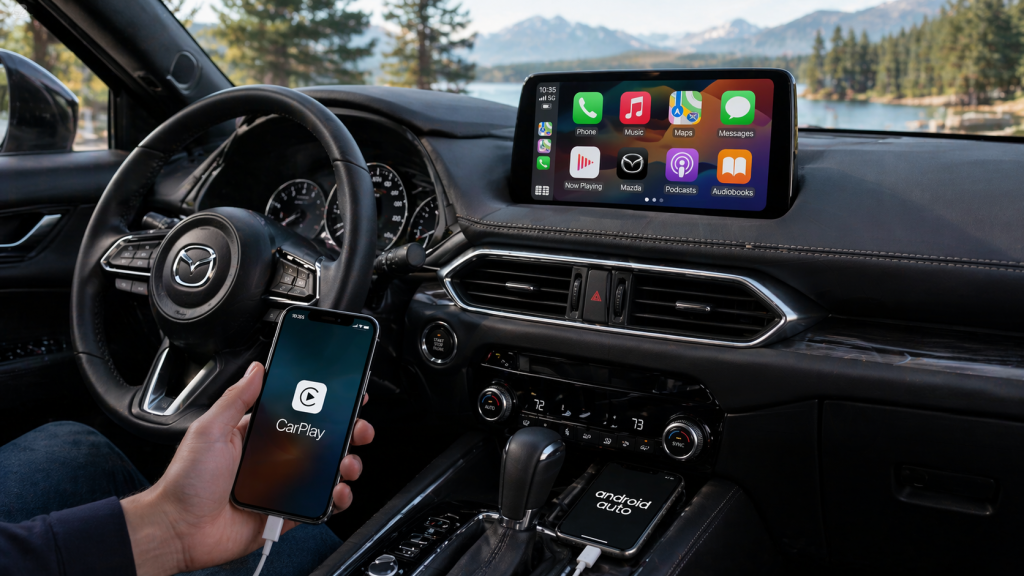
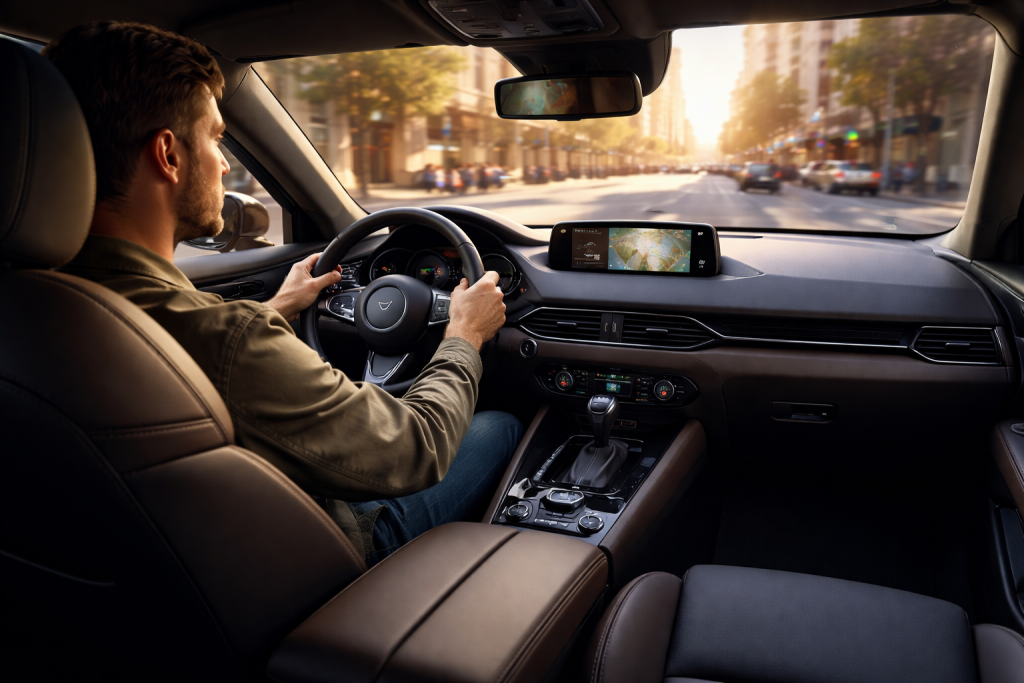
Every Mazda is designed around the idea that driving should feel natural, not interrupted. That philosophy extends beyond steering and performance into how drivers interact with technology. Systems like Mazda Connect, Apple CarPlay, and Android Auto are not just added features. They are structured to simplify how information, communication, and navigation come together while you are driving. For many shoppers, the real question is not whether these features exist, but whether they actually make daily driving easier or more complicated. How Mazda Connect Organizes Your Driving Experience What is Mazda Connect system Mazda Connect is the central interface that organizes vehicle information, media, navigation, and communication into a single, controlled system designed to reduce distraction. In a vehicle like the Mazda CX 5, Mazda Connect acts as the foundation that everything else builds on. Instead of treating each feature as a separate system, it groups them into a unified interface that can be accessed consistently while driving. This system works by simplifying how information is displayed and controlled. Rather than requiring multiple inputs or shifting between different screens, Mazda Connect keeps interactions structured and predictable. more Navigation, music, and communication are all accessed through the same interface logic The system prioritizes clarity by limiting visual clutter on the screen Controls are designed to be consistent regardless of which feature is being used This matters in real driving conditions because the brain processes familiar patterns faster than new ones. When the system behaves consistently, drivers spend less time thinking about how to use it and more time focused on the road. For a driver, Mazda Connect turns multiple digital tools into one continuous experience rather than a collection of separate features. How Apple CarPlay And Android Auto Actually Work Inside A Mazda How do you connect Apple CarPlay in a Mazda Apple CarPlay connects your smartphone to the vehicle by mirroring key apps such as navigation, messaging, and music onto the Mazda Connect display. Does Mazda support Android Auto Mazda supports Android Auto in the same way, allowing Android devices to project their core apps into the vehicle interface. In models like the Mazda CX 50 and Mazda CX 30, this integration works by creating a controlled link between your phone and the vehicle. Instead of duplicating your entire phone screen, the system selects specific functions that are optimized for driving. This process is called interface mirroring, but it is more selective than a full screen projection. Only apps that are designed for driving use are displayed, and they are reformatted to fit the Mazda Connect layout. Navigation apps provide simplified directions with larger visual cues Messaging systems convert texts into voice readable formats Music apps are reorganized for quick selection and minimal scrolling The benefit is not just convenience. It is consistency. Your phone’s most important functions become part of the vehicle without requiring you to pick up your device. For drivers, this means familiar tools are available in a way that feels integrated rather than distracting. Why Mazda Uses A Command Knob Instead Of A Touchscreen Mazda uses a command knob control system because it reduces the need to reach forward and visually focus on the screen while driving. In vehicles like the Mazda3, this control method changes how drivers interact with the infotainment system. Instead of tapping a screen, inputs are made through a rotary controller positioned near the gear selector. This design is based on how human attention works in motion. Reaching toward a touchscreen requires both visual confirmation and physical adjustment. Using a command knob allows the driver to keep their hand in a stable position and rely more on muscle memory. The knob allows scrolling and selection without extended reach Physical feedback provides confirmation without needing to look directly The system reduces the time eyes are off the road This approach is different from many competitors, but it is intentional. It prioritizes control and awareness over visual interaction. For a driver, this means less interruption and a more stable connection to the driving experience. How Voice And App Integration Reduce Driver Distraction Is Mazda infotainment easy to use while driving Mazda infotainment is designed to be easy to use while driving by reducing the number of manual inputs required and shifting interaction toward voice and simplified controls. In vehicles like the Mazda CX 90, voice integration works alongside Apple CarPlay and Android Auto to allow drivers to perform actions without physically interacting with the system. This includes sending messages, selecting music, or setting navigation destinations using spoken commands. The system reduces distraction by limiting how often the driver needs to divide attention. Voice commands replace manual typing or scrolling App layouts are simplified to reduce decision time System responses are designed to be quick and predictable This matters because distraction is not just about taking your eyes off the road. It is also about how much mental effort is required to complete a task. By simplifying both physical and cognitive interaction, Mazda reduces the overall load placed on the driver. What To Expect When Setting Up And Using The System Daily Connecting your phone to Mazda Connect is designed to be straightforward, but more importantly, it is designed to stay consistent once set up. In most Mazda models, including the Mazda CX 5 and Mazda CX 50, setup involves connecting your device through a wired or wireless connection depending on the vehicle configuration. Once connected, the system recognizes your device and automatically loads your preferred interface. What matters is not just the setup, but how the system behaves after that. The system reconnects automatically when you enter the vehicle Your apps appear in the same layout each time Controls remain consistent regardless of which app you use This consistency is what makes the experience feel easy over time. There is no need to relearn the system each time you drive. For shoppers, this is where the value becomes clear. The technology does not ask you to adapt to it. It adapts to your habits and becomes part of your routine.

What Mazda’s Factory Warranty Covers And Where Extra Protection May Matter

Every Mazda begins with a clear intention to make driving feel natural, connected, and dependable. That same philosophy carries into ownership through warranty coverage, but understanding what that protection actually means requires more than a quick glance at mileage limits or years. Shoppers are often trying to answer a deeper question about what is truly protected, what is not, and how that changes over time. The answer comes from how Mazda structures its warranty around different vehicle systems and how those systems behave as they are driven, maintained, and experienced in real life. Understanding What Mazda’s Factory Warranty Actually Covers What does Mazda’s factory warranty actually cover Mazda’s factory warranty covers defects in materials or workmanship, which means it protects against issues caused by how the vehicle was built rather than how it is used over time. In a vehicle like the Mazda CX 5, this comprehensive coverage applies across a wide range of systems during the early ownership period. It includes electrical systems, infotainment components, interior controls, and mechanical parts that are expected to function correctly under normal driving conditions. This type of coverage works by separating unexpected failure from expected use. If a component fails because it was not manufactured or assembled correctly, the warranty applies. If a component changes because it is being used as designed, it does not. That distinction matters because modern vehicles are made up of layered systems that behave differently as they age. more Electrical systems rely on sensors, modules, and wiring that should perform consistently early in ownership Mechanical systems operate under controlled tolerances that should not break down without cause Interior systems are designed for durability but still fall under defect based protection For a shopper, this means the factory warranty is strongest when the vehicle is new and every system is expected to perform without signs of wear. How Powertrain Coverage Works And Why It Lasts Longer Powertrain coverage refers to the engine, transmission, and drivetrain systems that physically move the vehicle. In models like the Mazda CX 50, these systems are engineered for long term durability and operate under different stress conditions than interior or electronic components. Because of this, powertrain coverage extends beyond the comprehensive portion of the warranty. This longer coverage exists because powertrain systems are built with heavier materials and are designed to handle repeated stress over time. The engine block, transmission housing, and drivetrain components are expected to maintain structural integrity long after other systems begin to show signs of aging. The way these systems fail is also different from other parts of the vehicle. Powertrain failures are less common during early ownership When failures occur, they are typically more complex and expensive These issues tend to appear later as mileage increases and components experience long term stress Mazda extends powertrain protection to reflect this risk pattern. It ensures that the most critical systems remain covered during the period when failure becomes more likely. For a driver, this means the vehicle continues to be supported where the financial impact would be the highest. What Is Not Covered And Why Those Gaps Exist What is not covered under Mazda warranty Mazda’s warranty does not cover wear items or routine maintenance because these components are designed to change as part of normal driving. In a vehicle like the Mazda3, parts such as brake pads, tires, filters, and fluids are expected to degrade over time. This is not considered a defect. It is a predictable outcome of friction, heat, and repeated use. The reason these items are excluded comes down to how materials behave under real world conditions. Brake pads wear down because they create friction to stop the vehicle. Tires lose tread as they maintain grip with the road. Fluids break down as they absorb heat and contaminants. These systems are not built to remain unchanged. They are built to be maintained. Understanding this difference helps clarify why some repairs fall outside warranty coverage. Warranty applies to failures caused by defects in materials or assembly Maintenance applies to components that naturally wear with use Ownership includes responsibility for keeping these systems operating properly For shoppers, this distinction removes confusion and sets realistic expectations for long term ownership costs. When Does A Mazda Extended Warranty Start To Make Sense Is a Mazda extended warranty worth it A Mazda extended warranty becomes relevant when the factory coverage period no longer aligns with how long you plan to keep the vehicle. In models like the Mazda CX 90, this decision often comes down to how long you expect to own the vehicle and how much exposure you have to potential repair costs after the initial coverage ends. As vehicles age, the type of risk changes. Early ownership focuses on manufacturing reliability, while later ownership introduces the possibility of component fatigue, electronic system issues, and higher cost repairs. This is especially important as modern vehicles rely more heavily on integrated technology. Infotainment systems combine software and hardware that can be costly to repair Driver assistance features depend on sensors and calibration Electrical systems become more complex as features increase Extended coverage is designed to bridge the gap between when factory protection ends and when these risks begin to increase. For some drivers, especially those planning to keep their Mazda beyond the initial warranty period, this added layer of protection can reduce uncertainty around future repair costs. How To Evaluate Whether Extra Protection Fits Your Ownership Plan Choosing whether to add extended protection is less about the vehicle itself and more about how you plan to use it over time. In the Mazda SUV lineup, from the Mazda CX 5 to the Mazda CX 90, ownership patterns can vary widely. Some drivers replace their vehicle within a few years, while others keep it well beyond the initial warranty period. The decision comes down to aligning coverage with behavior. If you plan to keep the vehicle for a shorter period, factory coverage may fully match your ownership timeline If you plan to drive higher mileage each year, systems will experience wear sooner If you prefer predictable costs, extended protection can reduce unexpected repair expenses This evaluation is not about adding coverage by default. It is about understanding when your ownership timeline extends beyond the protection Mazda initially provides. When that happens, additional coverage becomes less of an extra and more of a continuation of the same confidence you had at the beginning.

Mazda3 vs Hyundai Elantra: Comparing Style, Handling, and Everyday Comfort

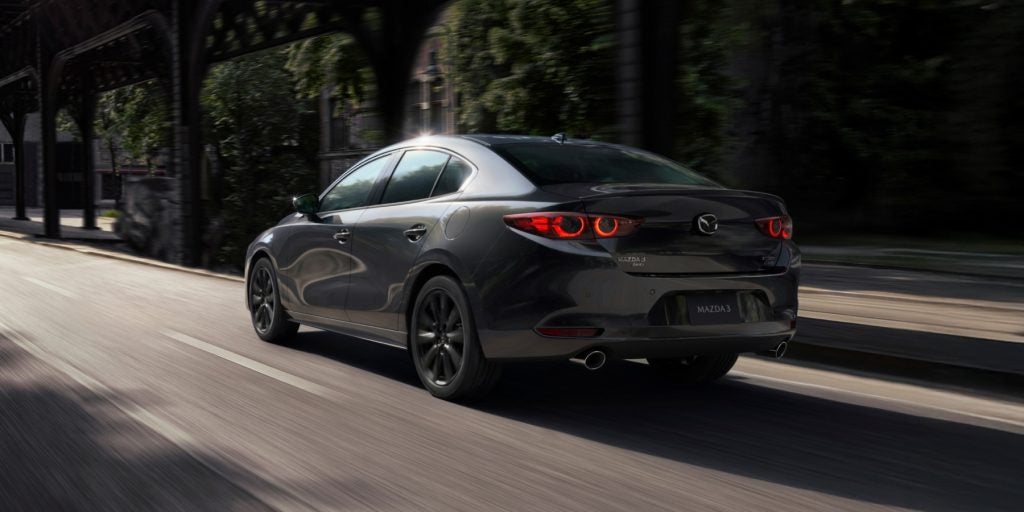
Compact sedans remain one of the most practical vehicle choices for drivers who want efficiency, manageable size, and everyday usability. When shoppers compare the Mazda3 and Hyundai Elantra, the decision usually comes down to more than specifications alone. Buyers often want to know which sedan feels better to drive every day, which interior feels more refined during long commutes, and which design creates a stronger connection between driver and vehicle. Both the Mazda3 and Hyundai Elantra compete in the same compact sedan category, but their engineering priorities differ. The Hyundai Elantra emphasizes technology features, fuel economy, and bold styling. The Mazda3 focuses more heavily on driving dynamics, craftsmanship, and a human-centered interior design philosophy. Understanding how these two sedans approach handling, interior layout, and everyday comfort helps explain why many drivers find the Mazda3 to be the more engaging daily driver. How the Mazda3 and Hyundai Elantra Approach Everyday Driving Differently Many shoppers comparing compact sedans ask which vehicle is better suited for everyday driving. The answer often depends on how each manufacturer prioritizes the relationship between driver, vehicle response, and comfort. The Mazda3 is engineered with a focus on driver engagement. Mazda engineers design the vehicle’s steering response, suspension tuning, and cabin layout to create a natural connection between driver input and vehicle movement. This approach is part of Mazda’s broader design philosophy that aims to make the vehicle feel like an extension of the driver. more The Hyundai Elantra approaches daily driving from a different perspective. Hyundai focuses heavily on efficiency, interior technology, and convenience features. The Elantra often provides strong fuel economy and a technology-forward cabin that appeals to drivers who prioritize connectivity and value. While both sedans perform well in everyday driving situations, the Mazda3 places greater emphasis on the driving experience itself, particularly when it comes to steering precision and road feel. Steering, Chassis Tuning, and Everyday Handling Confidence Many drivers researching the Mazda3 and Hyundai Elantra want to know which sedan feels more confident on the road during daily driving. The Mazda3 chassis is tuned to provide balanced handling and predictable steering response. Mazda engineers focus on maintaining consistent feedback through the steering wheel so that the driver can feel how the vehicle is interacting with the road surface. This feedback helps drivers maintain better control when navigating curves, making lane changes, or adjusting direction during city driving. Several elements contribute to the Mazda3 handling characteristics. • a rigid body structure that reduces chassis flex • suspension tuning designed for balanced cornering stability • steering calibration that emphasizes consistent feedback Together, these design choices help the Mazda3 remain composed when navigating winding roads or adjusting direction in traffic. The Hyundai Elantra prioritizes ride comfort and efficiency. Its suspension is tuned to absorb road imperfections effectively, which helps maintain a smooth ride during highway driving and longer commutes. However, this comfort-focused tuning typically results in lighter steering feedback and less emphasis on sporty handling. For drivers who value confidence and precision during everyday driving, the Mazda3 chassis tuning often provides a more engaging experience. Interior Design, Seating Position, and Driver Focus Interior design plays an important role in how comfortable a vehicle feels during daily commuting. The Mazda3 interior reflects Mazda’s focus on driver-centered design and craftsmanship. Mazda engineers design the cabin around the driver’s natural posture and field of vision. The seating position, steering wheel alignment, and dashboard layout are carefully arranged so that the driver can operate the vehicle comfortably without excessive movement. Controls are positioned within easy reach and the dashboard layout avoids unnecessary visual clutter. This approach helps reduce distraction and allows drivers to focus on the road ahead while interacting with vehicle systems. Material quality also contributes to the Mazda3 interior experience. Soft-touch surfaces, thoughtful trim accents, and clean design lines create a refined atmosphere that often feels more premium than many compact sedan competitors. The Hyundai Elantra interior offers a different approach. Hyundai emphasizes screen technology and modern styling elements throughout the cabin. Large displays and digital interfaces create a futuristic appearance that many buyers find appealing. Both cabins provide comfort and usability, but the Mazda3 interior focuses more heavily on driver ergonomics and subtle craftsmanship. This approach often makes the Mazda3 feel more refined during everyday driving. Power Delivery and Daily Commuting Response Acceleration behavior can also influence how a vehicle feels during daily driving. While horsepower figures often receive attention during comparisons, real-world drivability depends heavily on how the engine delivers torque and how the transmission manages power. The Mazda3 engine is tuned to deliver smooth and predictable acceleration. Torque builds gradually and consistently, allowing the vehicle to respond naturally when the driver presses the accelerator. This behavior is especially noticeable during common situations such as merging onto highways or accelerating through city traffic. Mazda engineers calibrate the transmission to maintain a balanced relationship between engine speed and vehicle acceleration. As a result, the Mazda3 responds quickly to throttle input without sudden surges or hesitation. The Hyundai Elantra focuses more heavily on fuel efficiency and value-oriented performance. Its powertrain is designed to provide strong efficiency ratings and comfortable cruising behavior during highway travel. While the Elantra performs well during steady driving conditions, the Mazda3 often feels more responsive when drivers request acceleration or quick speed adjustments. Which Compact Sedan Feels Better to Live With Every Day When comparing compact sedans, buyers often consider a combination of comfort, efficiency, design, and driving enjoyment. Both the Mazda3 and Hyundai Elantra provide strong value within the segment, but they deliver different experiences behind the wheel. The Hyundai Elantra offers impressive fuel efficiency, modern technology features, and a comfortable ride that works well for long highway commutes. Its design prioritizes practicality and digital connectivity. The Mazda3 focuses on the quality of the driving experience itself. Steering precision, suspension balance, and driver-centered interior design all contribute to a sedan that feels composed and refined during everyday driving. For drivers who want a compact sedan that combines efficiency with engaging handling and thoughtful craftsmanship, the Mazda3 often stands out as the more rewarding vehicle to drive and live with throughout daily routines.

How Mazda Makes Daily Driving Easier: Smart Features You May Not Know About

Daily driving places constant demands on a vehicle. Navigating traffic, monitoring surrounding vehicles, managing navigation directions, and adjusting vehicle settings all require the driver’s attention. For many drivers, the difference between a stressful commute and a smooth one often comes down to how intelligently a vehicle’s technology supports the person behind the wheel. Mazda approaches technology with a different philosophy than many automakers. Instead of overwhelming drivers with complex interfaces or excessive features, Mazda designs vehicle technology to feel intuitive and supportive. Systems are built to assist the driver quietly in the background while maintaining a natural connection between driver and vehicle. Several Mazda technologies illustrate how thoughtful engineering can make everyday driving easier, safer, and more comfortable. Mazda i-Activsense Safety Technology in Everyday Driving Many shoppers researching Mazda vehicles ask what Mazda i-Activsense technology actually does during real world driving. Mazda i-Activsense is a suite of driver assistance technologies that use radar sensors and forward facing cameras to monitor surrounding traffic conditions and support safer driving decisions. These systems constantly analyze information from the road ahead, nearby vehicles, and lane markings. When the system detects potential hazards, it alerts the driver or assists with braking and steering adjustments. In vehicles such as the Mazda CX-5 and Mazda CX-30, i-Activsense safety systems may include technologies such as: more • adaptive cruise control that maintains a safe following distance from traffic ahead • lane keeping assistance that helps the vehicle stay centered within lane markings • blind spot monitoring that alerts drivers when vehicles approach from behind • automatic emergency braking that helps reduce the risk of front end collisions Because these systems operate continuously while driving, they help reduce the mental workload of monitoring surrounding traffic. Drivers remain fully in control of the vehicle, but the technology adds an additional layer of awareness that can improve reaction time in complex traffic situations. How Mazda’s Head Up Display Helps Drivers Stay Focused Drivers frequently look away from the road to check speed, navigation directions, or safety alerts on the dashboard. Even brief glances downward can reduce awareness of surrounding traffic. The Mazda Active Driving Display, often referred to as a head up display, helps reduce this distraction by projecting important information directly onto the windshield within the driver’s natural line of sight. Instead of shifting focus between the road and the instrument cluster, the driver can see information such as: • current vehicle speed • navigation guidance • safety alerts from driver assistance systems • speed limit recognition information Because the information appears near the driver’s forward view, the system allows drivers to remain visually focused on the road ahead while still receiving essential information. In vehicles like the Mazda3 and Mazda CX-5, this technology improves situational awareness without adding complexity to the driving experience. Why Mazda Interiors Are Designed Around the Driver Mazda engineers often refer to their interior design philosophy as human centric engineering. This approach begins with studying how the human body naturally moves and responds while driving. The goal is to design the cabin so that drivers can operate vehicle controls comfortably without unnecessary movement or distraction. Several design elements contribute to this driver focused approach in vehicles such as the Mazda CX-5 and Mazda CX-30. The steering wheel, pedals, and seat alignment are positioned to support a natural driving posture that reduces fatigue during longer trips. Dashboard controls are angled toward the driver so frequently used functions remain within easy reach. This layout allows drivers to interact with the vehicle without searching for controls or shifting attention away from the road. Over time, the layout becomes intuitive because the controls align with natural hand movements. For commuters who spend significant time behind the wheel, this thoughtful design can make daily driving feel less tiring and more comfortable. Mazda Connect Technology and Intuitive Controls Infotainment systems in modern vehicles often rely heavily on touchscreen interfaces. While touchscreens provide flexibility, they can also require drivers to look away from the road to interact with menus. Mazda Connect takes a different approach. Instead of encouraging drivers to rely primarily on touchscreen inputs, the system uses a multifunction control dial located near the center console. The control dial allows drivers to navigate menus, adjust audio settings, and select navigation options through simple rotational and directional movements. Because the dial is positioned near the driver’s hand, many functions can be controlled through muscle memory rather than direct visual attention. In vehicles like the Mazda CX-5 and Mazda CX-30, the Mazda Connect interface integrates smartphone connectivity, navigation, and media controls into a simplified interface designed for quick access. This design philosophy reduces the amount of visual distraction required to interact with technology while driving. Smart Convenience Features That Simplify Daily Driving Beyond safety and infotainment technology, Mazda vehicles include several convenience features that make everyday routines easier. Many of these systems operate quietly in the background but contribute to smoother daily driving experiences. Examples of convenience technologies available in models such as the Mazda CX-5, Mazda CX-30, and Mazda3 include: • keyless entry systems that allow drivers to unlock doors without removing the key from a pocket or bag • push button engine start for faster vehicle access • power liftgates that simplify loading cargo when hands are full • automatic climate control systems that maintain comfortable cabin temperatures While each feature may seem small individually, together they streamline common tasks such as entering the vehicle, adjusting cabin settings, and loading groceries or luggage. These improvements reduce friction during everyday use and make the vehicle feel easier to live with over time. Technology Designed to Support the Driver Mazda’s technology philosophy focuses on supporting the driver rather than overwhelming them with complexity. Safety systems quietly monitor the road, interior layouts prioritize comfort and intuitive control placement, and infotainment systems are designed to minimize distraction. By designing technology around human behavior and everyday driving needs, Mazda creates vehicles that feel natural to operate during daily routines. Whether driving a Mazda CX-5, Mazda CX-30, or Mazda3, these technologies work together to simplify everyday driving while maintaining the sense of connection that Mazda vehicles are known for.

Mazda CX-5 vs Nissan Rogue: Which SUV Offers the Better Everyday Drive?

Compact SUVs are designed to handle the routines of daily life. Commuting to work, navigating city streets, merging onto highways, and managing weekend errands all place different demands on a vehicle. When shoppers compare the Mazda CX-5 and Nissan Rogue, they often want to know which SUV delivers the better everyday driving experience rather than simply comparing specifications on paper. Both vehicles compete in the same compact SUV category, yet their engineering priorities differ. The Mazda CX-5 emphasizes responsive driving dynamics and driver focused design, while the Nissan Rogue focuses more heavily on smooth comfort and fuel efficiency. Understanding how their engines, transmissions, chassis tuning, and interior design differ helps explain why many drivers find the CX-5 more engaging during everyday driving. Engine Design and Everyday Performance Many shoppers comparing compact SUVs ask whether the Mazda CX-5 or Nissan Rogue delivers stronger performance during everyday driving. The Mazda CX-5 Skyactiv-G engine is engineered to balance responsiveness with efficiency. Skyactiv engine design uses higher compression ratios to extract more energy from each combustion cycle, allowing the CX-5 to produce strong torque without relying entirely on aggressive turbocharging. more Torque plays a critical role in everyday acceleration. It determines how quickly the vehicle responds when the driver presses the accelerator, such as when merging onto a highway or accelerating from a stoplight. The Mazda CX-5 engine delivers smooth torque throughout the lower portion of the power band, which allows the SUV to accelerate naturally without requiring high engine speeds. This makes the CX-5 feel responsive during common driving situations like passing slower traffic or climbing hills. The Nissan Rogue uses a turbocharged variable compression engine designed primarily to maximize fuel efficiency. While the Rogue’s engine performs well during steady cruising, the power delivery can feel less immediate compared with the CX-5 during sudden acceleration because the engine and transmission prioritize efficiency over direct throttle response. For drivers who want acceleration that feels predictable and smooth during daily driving, the Mazda CX-5 Skyactiv engine provides a more responsive character. How Transmission Design Changes Driving Feel Another major difference between the Mazda CX-5 and Nissan Rogue comes from how each vehicle delivers engine power to the wheels. The Mazda CX-5 uses a traditional six speed automatic transmission. An automatic transmission uses physical gear ratios that shift in steps as the vehicle accelerates. These gear changes help the engine stay within an efficient power range while also giving drivers a more connected sense of acceleration. The Nissan Rogue uses a continuously variable transmission, often referred to as a CVT. A CVT does not shift between fixed gears. Instead, it adjusts engine speed continuously to maintain the most efficient operating range. Each design has advantages, but they create different driving characteristics. The Mazda CX-5 automatic transmission produces defined gear changes that allow the engine to build power in a predictable way. Drivers often describe this as feeling more natural during acceleration because the engine speed rises in proportion to vehicle speed. A CVT transmission like the one in the Nissan Rogue prioritizes efficiency and smoothness, but it can sometimes allow engine speed to rise independently from vehicle acceleration. This behavior may feel less engaging for drivers who prefer a more traditional acceleration response. For everyday commuting, the Mazda CX-5 transmission often feels more intuitive because the power delivery matches driver input more closely. Steering Precision and Handling Balance Compact SUVs are expected to be comfortable, but the way a vehicle handles corners and responds to steering inputs can significantly influence how confident the driver feels behind the wheel. The Mazda CX-5 chassis is engineered with a focus on balance and driver feedback. Mazda engineers tune the suspension and steering systems to create a connection between the driver and the vehicle that feels predictable during both low speed maneuvering and highway driving. Several design factors contribute to the CX-5 handling characteristics. • Rigid body structure that reduces chassis flex • Suspension tuning designed for balanced cornering • Steering calibration that provides consistent feedback These elements help the Mazda CX-5 remain stable when navigating curves or making quick lane changes. The Nissan Rogue is tuned more heavily for ride comfort. Its suspension absorbs road imperfections effectively, which can make long highway drives feel smooth. However, this softer tuning typically results in less steering feedback during spirited driving or tight cornering. Drivers who value confident handling and responsive steering often prefer the Mazda CX-5 because its chassis tuning prioritizes driver engagement while still maintaining everyday comfort. Interior Design and Driver Focus Interior design plays an important role in how comfortable and intuitive a vehicle feels during daily use. The Mazda CX-5 interior reflects Mazda’s focus on craftsmanship and driver centered ergonomics. Mazda places major vehicle controls within natural reach of the driver and aligns the dashboard layout to support visibility and ease of use. Materials used throughout the CX-5 cabin emphasize a refined, premium atmosphere that often surprises drivers who expect compact SUVs to feel more utilitarian. The Nissan Rogue interior offers generous passenger space and practical storage solutions, which are valuable for families or long trips. Its design prioritizes openness and convenience. While both interiors are comfortable, the Mazda CX-5 interior stands out for its attention to detail and driver focused layout. This design philosophy allows the driver to access controls quickly while maintaining attention on the road, which contributes to a more confident driving experience. Fuel Efficiency and Daily Commuting Practicality Fuel efficiency is an important consideration for many compact SUV buyers, especially for drivers who commute regularly or spend significant time on the highway. The Nissan Rogue’s turbocharged variable compression engine and CVT transmission are optimized to deliver strong fuel economy numbers. This combination allows the Rogue to perform efficiently during steady highway driving and longer commutes. The Mazda CX-5 Skyactiv engine approaches efficiency differently. Instead of relying heavily on transmission optimization, Mazda improves fuel economy through combustion efficiency and lightweight vehicle engineering. The Mazda CX-5 achieves balanced fuel efficiency by combining: • high compression Skyactiv engine design • lightweight chassis architecture • aerodynamic vehicle shaping These engineering choices allow the CX-5 to maintain competitive fuel economy while still delivering responsive acceleration and engaging driving dynamics. For drivers who want both efficiency and an enjoyable driving experience, the Mazda CX-5 offers a balanced approach that avoids sacrificing responsiveness for fuel economy alone. Why the Mazda CX-5 Often Feels More Engaging to Drive When comparing compact SUVs, specifications such as horsepower and fuel economy provide useful information. However, the everyday driving experience often depends more on how the vehicle’s engineering systems work together. The Mazda CX-5 emphasizes a coordinated balance between engine performance, transmission behavior, chassis tuning, and interior ergonomics. This integration allows the vehicle to respond naturally to driver inputs while maintaining comfort and efficiency during daily commuting. While the Nissan Rogue delivers a comfortable and efficient ride, the Mazda CX-5 often stands out for drivers who want a compact SUV that feels responsive, refined, and enjoyable to drive throughout everyday routines.

What Makes Mazda Engines Feel So Responsive? Understanding Skyactiv Technology

Mazda vehicles have built a reputation for delivering a driving experience that feels unusually connected and responsive. Many drivers notice this immediately during a test drive, whether in the Mazda CX-5, Mazda3, or Mazda CX-30. The steering feels natural, acceleration responds smoothly to throttle input, and the vehicle seems to move in harmony with the driver. Much of that sensation comes from Mazda’s Skyactiv engineering philosophy. Rather than focusing on a single component such as the engine, Mazda redesigned several core vehicle systems together. The result is a coordinated approach to engine efficiency, vehicle weight, and transmission tuning that improves both responsiveness and everyday fuel efficiency. Understanding how Skyactiv technology works helps explain why Mazda vehicles often feel different to drive compared with many other compact SUVs and sedans. What Skyactiv Technology Actually Means Many shoppers researching Mazda vehicles ask what Skyactiv technology actually is and why it changes how the vehicle drives. Skyactiv technology is Mazda’s engineering strategy for improving efficiency and responsiveness by redesigning the engine, transmission, chassis, and vehicle structure together rather than optimizing each component separately. more The Mazda Skyactiv-G engine, used in vehicles such as the Mazda CX-5 and Mazda3, focuses on extracting more usable energy from every combustion cycle. Mazda engineers paired that engine design with a lightweight vehicle structure and carefully tuned transmissions so that the entire vehicle responds smoothly to driver inputs. This integrated approach supports Mazda’s driving philosophy known as Jinba Ittai, which refers to the idea of unity between the driver and the vehicle. Instead of focusing only on horsepower or acceleration numbers, Mazda engineers concentrate on how naturally the car reacts to steering, throttle, and braking. How High Compression Engines Improve Power and Efficiency A key part of Skyactiv technology is the unusually high compression ratio used in Mazda gasoline engines. The compression ratio of an engine describes how much the air and fuel mixture is compressed inside the combustion chamber before ignition occurs. Higher compression allows the engine to extract more energy from the fuel during combustion. The Mazda Skyactiv-G engine uses one of the highest compression ratios found in mass-produced gasoline engines. By compressing the fuel mixture more efficiently before ignition, the engine can generate stronger combustion and improved energy output. This design offers several practical advantages for drivers. • More efficient use of fuel during combustion • Stronger torque output at lower engine speeds • Improved fuel economy during everyday driving Because the Mazda Skyactiv-G engine converts more of the fuel’s energy into usable power, the engine can deliver responsive acceleration without relying solely on large displacement or aggressive turbocharging. For drivers of the Mazda CX-5 or Mazda CX-30, this means the engine responds quickly when merging onto highways or accelerating through city traffic while still maintaining balanced fuel efficiency during daily commuting. Why Mazda Engines Feel More Responsive in Everyday Driving Many drivers searching for information about Mazda performance want to understand why Mazda vehicles often feel more responsive than competitors in the same category. Responsiveness comes from several engineering choices working together within Skyactiv powertrains. First, the Mazda Skyactiv-G engine delivers strong torque at lower engine speeds. Torque is the rotational force that helps move the vehicle forward. When torque is available earlier in the engine’s power band, the vehicle can accelerate smoothly without needing to rev the engine aggressively. Second, Mazda carefully calibrates the transmission to maintain consistent power delivery. The Skyactiv automatic transmission adjusts gear changes to keep the engine operating within its most efficient and responsive range. Finally, Mazda engineers tune throttle response to provide predictable acceleration. When the driver presses the accelerator pedal, the engine and transmission respond quickly but smoothly, allowing the vehicle to accelerate without hesitation. Together, these systems help Mazda vehicles feel more intuitive to drive, especially during everyday situations such as: • merging onto highways • navigating stop-and-go traffic • accelerating out of corners • maintaining steady highway speeds Drivers often describe this balance as feeling more connected to the vehicle because the engine and transmission respond naturally to driver inputs. How Vehicle Architecture Supports Driving Precision Skyactiv technology extends beyond the engine. Mazda also redesigned the vehicle body structure and chassis to support improved handling and stability. Vehicle weight and rigidity play a major role in how a car responds to steering and acceleration. A lighter, more rigid structure allows engineers to control how the vehicle moves during braking, cornering, and acceleration. Mazda’s Skyactiv body architecture uses high-strength steel and carefully engineered reinforcement points to increase structural rigidity while reducing overall weight. This allows suspension components to operate more precisely because the vehicle structure flexes less during movement. The suspension and steering systems in vehicles such as the Mazda3 and Mazda CX-5 are then tuned to complement this structure. The result is steering feedback that feels predictable and balanced, helping the driver maintain better control during both city and highway driving. This combination of lightweight engineering and structural rigidity contributes to the smooth and confident driving feel many Mazda owners notice. How Skyactiv Technology Improves Real World Fuel Efficiency Efficiency is another major benefit of Skyactiv engineering. While many automakers focus on hybrid systems or turbocharging to improve fuel economy, Mazda engineers focused heavily on improving the combustion process itself. Several elements contribute to the fuel efficiency seen in vehicles equipped with Skyactiv engines. • Higher compression combustion extracts more energy from each fuel cycle • Lightweight vehicle structures reduce the amount of energy required to move the vehicle • Transmission calibration keeps the engine operating within its most efficient range • Aerodynamic design reduces resistance at highway speeds Because these improvements work together, vehicles such as the Mazda CX-5 and Mazda CX-30 can deliver strong fuel economy while maintaining responsive acceleration and smooth power delivery. For drivers who spend time commuting, traveling on highways, or running daily errands, these efficiency improvements translate into fewer fuel stops and lower long-term fuel costs without sacrificing driving enjoyment. Why Skyactiv Technology Shapes the Mazda Driving Experience Mazda’s Skyactiv engineering philosophy demonstrates that performance and efficiency do not have to be opposing goals. By redesigning the engine, transmission, chassis, and body structure as a unified system, Mazda engineers created vehicles that balance responsiveness, fuel efficiency, and driving comfort. For many drivers, this approach is why Mazda vehicles feel engaging during everyday driving. The engine responds smoothly to throttle input, the transmission maintains balanced power delivery, and the chassis provides stable and predictable handling. Whether behind the wheel of a Mazda CX-5, Mazda3, or Mazda CX-30, Skyactiv technology works quietly in the background to create a driving experience that feels natural and connected.

Mazda CX-90 vs Kia Telluride: Comparing Space, Comfort, and Driving Feel

The Mazda CX-90 and Kia Telluride often appear on the same shopping list because they serve the same basic need: a three-row SUV that can move families comfortably. Where they diverge is how they go about doing that. One prioritizes driver engagement and mechanical refinement. The other focuses on space, softness, and broad family usability. Understanding that difference is the key to choosing the right vehicle. This comparison is not about which SUV is bigger on paper. It is about how each one feels to live with every day, especially once the novelty wears off and real driving takes over. Platform and Powertrain Philosophy Mazda built the CX-90 on a new rear-drive-based platform designed to improve balance, steering feel, and ride control. The available turbocharged inline-six engine, paired with mild hybrid technology, delivers smooth power with a strong sense of linear acceleration. Torque arrives early and predictably, which matters in daily driving more than peak horsepower numbers. The Kia Telluride uses a traditional front-drive-based architecture with a naturally aspirated V6. Its power delivery is tuned for smoothness and ease rather than response. Acceleration is consistent, but the engine works harder under load, especially when merging or climbing grades. Key powertrain differences drivers notice: CX-90 delivers smoother, more controlled acceleration Inline-six feels refined at highway speeds Telluride V6 favors steady, predictable output Mazda’s mild hybrid system improves low-speed responsiveness more Driving Feel and Handling Confidence Driving feel is where these two SUVs separate most clearly. The CX-90 is tuned to feel composed and connected, even at moderate speeds. Steering has weight and feedback, allowing drivers to place the vehicle confidently through corners and lane changes. Body control remains stable without sacrificing ride comfort. The Telluride prioritizes isolation. Steering is light, suspension tuning is soft, and road feedback is filtered out. This creates a relaxed driving experience, but it also reduces engagement and precision, especially on winding roads or during quick maneuvers. Driving dynamics comparison: CX-90 emphasizes balance and control Steering inputs feel deliberate and natural Telluride emphasizes comfort over precision Handling feels softer and less connected Ride Comfort and Long-Distance Use Both SUVs are comfortable on long drives, but they achieve comfort differently. Mazda focuses on stability and posture. Seats are shaped to support the body naturally, reducing fatigue over time. Suspension tuning absorbs road imperfections without excessive motion. The Telluride leans into plushness. Seats are wide and soft, and the suspension prioritizes absorbing bumps. While comfortable, this tuning can allow more body movement, which some drivers notice during extended highway travel. Interior Design and Cabin Execution Interior design reflects each brand’s priorities. The CX-90 cabin is minimalist and driver-focused. Controls are placed intentionally, materials are cohesive, and visual clutter is reduced. The result is a calm environment that feels upscale without relying on flashy design elements. The Telluride offers a more feature-forward interior. It emphasizes space, visible technology, and convenience for passengers. Materials are durable and well assembled, but the layout prioritizes accessibility over refinement. Interior differences that matter daily: CX-90 interior feels calmer and more intentional Mazda emphasizes driver ergonomics Telluride offers broader passenger-focused design Kia prioritizes visible features and storage Second-Row and Third-Row Practicality The Telluride holds an advantage in outright space. Its second row is wide and accommodating, and third-row access is easy. Families who regularly carry adults in all three rows will appreciate this emphasis. The CX-90 still provides usable third-row seating, but Mazda prioritizes posture and access rather than sheer width. The seating position feels more supportive, even if absolute space is slightly less generous. Noise, Refinement, and Daily Driving Mazda invests heavily in noise reduction and vibration control. At highway speeds, the CX-90 feels quiet and composed, reinforcing its refined driving character. Engine and road noise are muted without feeling disconnected. The Telluride remains quiet as well, but wind and road noise are more noticeable under certain conditions. The difference is subtle, but noticeable during long trips. Safety and Driver Assistance Philosophy Both vehicles offer comprehensive driver assistance features. Mazda calibrates its systems to support the driver rather than override them. Alerts and interventions feel subtle and predictable, reinforcing confidence. Kia’s systems tend to be more assertive, which some drivers appreciate and others find intrusive. Both approaches are effective, but Mazda’s tuning aligns with drivers who prefer to stay actively engaged. Ownership Experience and Long-Term Satisfaction Over time, satisfaction often comes down to how enjoyable the vehicle is to drive once daily routines settle in. The Telluride excels as a family hauler that prioritizes space and ease. The CX-90 excels as a three-row SUV that still feels rewarding to drive. Drivers who value refinement, steering feel, and balance tend to appreciate the CX-90 more as mileage accumulates. Final Verdict: Which Is the Better Choice? The Kia Telluride remains a strong option for families who prioritize maximum space and a relaxed driving experience. It delivers comfort, practicality, and familiarity. For drivers who want more than transportation, the Mazda CX-90 stands out as the top choice. Its rear-drive-based platform, refined inline-six powertrain, controlled handling, and intentional interior design create a three-row SUV that feels composed, confident, and engaging every time you drive it. For shoppers seeking space without giving up driving enjoyment, the CX-90 delivers the more complete and satisfying ownership experience.

How Mazda Prioritizes Safety: Understanding i-Activsense Driver Assistance Features

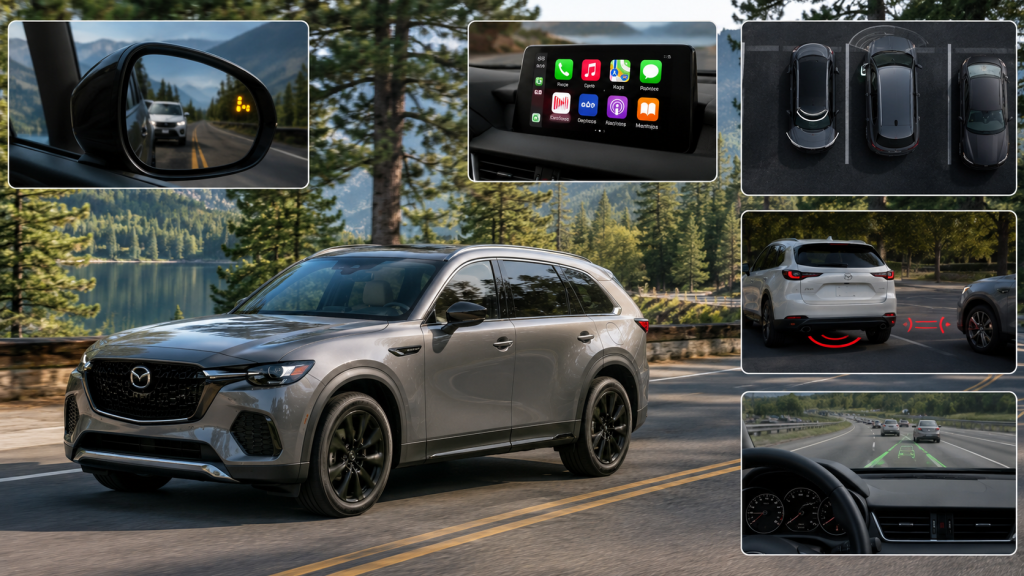
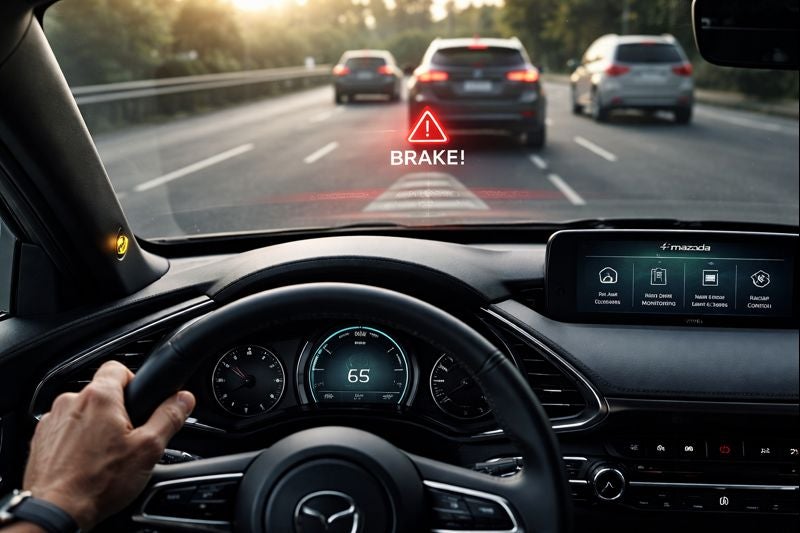
Mazda approaches safety with the same philosophy it applies to design and driving feel. Rather than trying to replace the driver, Mazda builds systems that support awareness, reduce fatigue, and step in only when necessary. This approach is embodied in i-Activsense, Mazda’s suite of advanced driver assistance technologies designed around human behavior, not automation. i-Activsense is best understood as layered safety. Each system plays a specific role, escalating from awareness to assistance to intervention depending on the situation. The goal is not to take control away from the driver, but to help the driver stay informed, focused, and confident in real-world driving conditions. Active Safety Versus Passive Safety Mazda safety is built on two complementary foundations. Passive safety focuses on protecting occupants when a collision occurs. This includes the vehicle’s body structure, airbags, seatbelt systems, and energy-absorbing materials. Active safety focuses on helping drivers avoid collisions in the first place. i-Activsense lives in this category, using sensors, cameras, and radar to monitor conditions and support driver decision-making before an accident happens. Mazda places particular emphasis on active safety because preventing an incident is always preferable to mitigating one. more How i-Activsense Works at a System Level i-Activsense systems rely on a combination of forward-sensing cameras, radar units, and vehicle control modules. These components continuously analyze vehicle speed, steering input, surrounding traffic, lane markings, and relative distance to objects. What separates Mazda’s approach is calibration. Systems are tuned to feel natural and predictable, avoiding abrupt corrections that can startle drivers or create new hazards. Alerts are designed to inform first, assist second, and intervene only when the risk becomes imminent. Mazda Smart Brake Support Mazda Smart Brake Support is the foundation of i-Activsense. It monitors the road ahead using cameras and radar to detect vehicles, pedestrians, and potential obstacles. The system operates in stages: Visual and audible alerts warn the driver of a possible collision Brake assist increases braking force if the driver reacts but does not brake firmly enough Automatic braking engages only if the system determines a collision is likely and the driver does not respond This escalation allows the driver to remain in control while providing a safety net in critical moments. Blind Spot Monitoring and Rear Cross Traffic Alert Blind Spot Monitoring tracks vehicles approaching from adjacent lanes using rear-mounted radar sensors. When a vehicle enters a monitored zone, the system provides a visual alert in the side mirror. Rear Cross Traffic Alert extends this concept when reversing out of parking spaces. It scans left and right for approaching traffic and issues warnings to help prevent low-speed collisions in crowded areas. These systems focus on situational awareness rather than intervention, supporting driver judgment in environments where visibility is naturally limited. Lane Departure Warning and Lane Keep Assist Mazda differentiates between warning and assistance. Lane Departure Warning alerts the driver if the vehicle begins to drift without a turn signal. Lane Keep Assist adds gentle steering input to help guide the vehicle back toward the center of the lane. Importantly, Mazda avoids aggressive steering correction. The system is designed to support attentive driving, not override it. Drivers still feel fully engaged with the vehicle, which reinforces trust rather than dependence. Mazda Radar Cruise Control Mazda Radar Cruise Control maintains a set speed while adjusting following distance based on traffic conditions. Using radar and camera input, the system can slow the vehicle as traffic slows and resume speed when conditions clear. Unlike some systems that prioritize automation feel, Mazda tunes adaptive cruise control to maintain smooth, predictable behavior. Acceleration and braking inputs are gradual, reducing fatigue during long highway drives while keeping the driver mentally engaged. Driver Attention and Awareness Philosophy A defining characteristic of i-Activsense is Mazda’s emphasis on keeping drivers mentally present. Systems are designed to complement natural driving behavior rather than encourage disengagement. Mazda avoids positioning these technologies as autonomous driving features. Instead, they are framed as tools that enhance awareness and provide backup support when attention lapses momentarily. This philosophy aligns with Mazda’s broader human-centered design approach, where safety, control, and driving enjoyment coexist rather than compete. Understanding System Limitations Mazda is transparent about the limits of driver assistance technology. i-Activsense systems depend on clear lane markings, visible road conditions, and properly functioning sensors. Weather, road debris, and unusual traffic patterns can affect performance. Drivers remain responsible for monitoring surroundings and maintaining control of the vehicle at all times. Understanding these limitations is essential for using the systems effectively and safely. Why Mazda’s Safety Approach Builds Confidence Rather than overwhelming drivers with intrusive alerts or overly aggressive corrections, Mazda’s safety systems feel subtle and intuitive. This builds trust over time, encouraging drivers to stay engaged rather than rely on automation. The result is a safety experience that feels integrated into the act of driving. Alerts arrive when they matter. Assistance feels supportive rather than corrective. Intervention occurs only when risk becomes immediate. The Bigger Picture of Mazda Safety i-Activsense is not about removing the driver from the equation. It is about reinforcing good driving habits, reducing cognitive load, and providing intelligent support in complex situations. For drivers who value awareness, control, and confidence behind the wheel, Mazda’s approach to safety feels intentional and respectful. It reflects a belief that the safest driver is an informed, engaged one, supported by technology that knows when to help and when to stay out of the way.

Mazda3 vs Honda Civic: Which Compact Car Delivers a More Engaging Drive?

When shoppers compare the Mazda3 and Honda Civic, they are rarely choosing between bad options. Both are proven compact sedans with strong reputations. The real question is not which one works, but which one feels right to drive every day. That difference comes down to engineering philosophy, not surface-level specs. Mazda and Honda approach the compact sedan segment from two distinct perspectives. Honda emphasizes broad usability and efficiency. Mazda prioritizes driving engagement, refinement, and connection between the driver and the vehicle. Understanding how those priorities show up on the road is what separates these two cars. Driving Philosophy Shapes the Experience Mazda designs the Mazda3 around Jinba Ittai, the idea of harmony between car and driver. This philosophy influences steering calibration, seating position, pedal alignment, and suspension tuning. The goal is not aggressive performance, but predictability and control. Honda tunes the Civic with an emphasis on versatility. Steering is light, suspension tuning favors comfort, and inputs are designed to feel easy rather than communicative. This works well for drivers who want a relaxed, appliance-like experience, but it creates a noticeable contrast when driving the two back-to-back. Key philosophical differences: Mazda3 prioritizes driver feedback and balance Civic prioritizes ease of use and efficiency Mazda emphasizes feel through the controls Honda emphasizes accessibility for a wide audience more Steering and Handling Feel Steering feel is one of the most immediate differences between the Mazda3 and Civic. Mazda tunes the steering to provide resistance and feedback that mirrors vehicle motion. This makes the car feel planted through corners and predictable during lane changes. The Civic’s steering is lighter and more isolated. While this can feel effortless around town, it communicates less information back to the driver, especially at highway speeds or on winding roads. Handling differences drivers notice: Mazda3 offers more steering weight and feedback Mazda3 feels more composed through curves Civic prioritizes easy maneuverability Civic isolates the driver from road texture Suspension Tuning and Ride Balance Mazda uses a suspension setup that balances ride comfort with body control. The Mazda3 stays flat during cornering and absorbs road imperfections without feeling floaty. This tuning contributes to a confident driving rhythm, especially on longer drives. The Civic’s suspension is tuned to be forgiving, which benefits rough roads and daily commuting. However, it allows more body movement during spirited driving, reducing the sense of control that enthusiasts tend to value. Power Delivery and Transmission Behavior Both vehicles offer efficient four-cylinder engines, but throttle response and transmission tuning differ. Mazda calibrates the throttle to respond smoothly and progressively, making acceleration predictable rather than abrupt. Mazda’s automatic transmission favors direct gear engagement, which enhances the feeling of connection between driver input and vehicle response. The Civic’s CVT prioritizes efficiency and smoothness, but can feel detached during acceleration. Performance feel comparison: Mazda3 delivers linear throttle response Mazda3 transmission reinforces driver control Civic prioritizes smooth efficiency Civic feels less mechanically connected Interior Design and Driver Positioning Interior execution is another area where the Mazda3 stands apart. Mazda designs the cabin around the driver’s natural posture, with aligned pedals, steering wheel placement, and eye-level instrumentation. The result is less fatigue and quicker response during long drives. Mazda also favors minimalist layouts with reduced visual clutter. Controls are intuitive, screens are positioned to minimize eye movement, and materials feel cohesive rather than decorative. Interior differences that matter: Mazda3 emphasizes driver-focused ergonomics Mazda3 interior feels calmer and more intentional Civic offers more cabin space Civic focuses on practicality over refinement Noise, Comfort, and Daily Use Mazda invests heavily in sound insulation and vibration control. The Mazda3 feels quieter at highway speeds, which enhances the sense of refinement and reduces fatigue. This contributes to the perception that the Mazda3 sits closer to premium brands without using luxury language or pricing. The Civic remains comfortable and functional, but road and wind noise are more noticeable, especially at higher speeds. All-Wheel Drive Advantage One significant differentiator is availability of all-wheel drive in the Mazda3, which the Civic does not offer. This adds traction confidence in wet or slippery conditions and enhances stability during aggressive driving. For drivers in varied climates, this feature alone can shift the decision decisively toward Mazda. Long-Term Ownership Feel Both vehicles have strong reliability reputations, but ownership satisfaction often comes down to emotional engagement. Drivers who enjoy driving tend to report higher satisfaction with vehicles that reward attention and provide feedback. The Mazda3 delivers: A stronger sense of control More enjoyable daily driving A refined, quiet cabin Consistent engagement over time The Civic delivers: Broad usability Efficient transportation Familiar driving behavior Practical interior space Final Verdict: Which Delivers the More Engaging Drive? For drivers who value involvement, feedback, and refinement, the Mazda3 clearly delivers the more engaging driving experience. Its steering feel, suspension balance, interior ergonomics, and overall composure create a car that feels intentional every time you get behind the wheel. The Honda Civic remains a solid choice for shoppers focused on efficiency and practicality. However, for those who want driving to feel rewarding rather than routine, the Mazda3 stands out as the stronger, more emotionally satisfying choice in the compact sedan segment.

Why Mazda’s Kodo Design Philosophy Creates a More Connected Driving Experience

Mazda’s Kodo design philosophy is often described as visual or emotional, but its real impact shows up once you’re behind the wheel. Kodo, which translates loosely to “Soul of Motion,” is not about adding flair or chasing trends. It is a design system built around how a human body moves, focuses, and reacts while driving. The result is a vehicle that feels calmer, more intuitive, and more connected in everyday use. Rather than separating styling from engineering, Mazda treats design as a functional layer that directly influences driver confidence, control, and comfort. This philosophy carries through exterior proportions, interior layout, seating geometry, and even how your eyes move across the dashboard while driving. Kodo Design Starts With Motion, Not Decoration At its core, Kodo is about capturing the tension and balance of a living form in motion. That concept is not abstract. It directly affects how Mazda shapes the body and positions the driver within it. Key exterior design outcomes include: Proportions that emphasize forward motion rather than visual bulk Long hood and short overhangs that improve visual balance and driver perception Body lines that guide airflow and sightlines instead of breaking them up Reduced visual noise so the shape reads clearly at a glance These choices influence how the vehicle feels from the driver’s seat. Clean proportions make it easier to judge vehicle placement, especially in city driving or tight parking situations. A car that visually communicates its boundaries reduces hesitation and mental load before you ever touch the pedals. more Interior Design Is Where Kodo Becomes Functional Mazda’s interior execution is where Kodo moves from philosophy to measurable driving benefit. The cabin is designed around the idea that a driver should not need to think about where controls are or shift attention unnecessarily. Mazda interiors consistently focus on: A natural driving position with upright posture and aligned hips, shoulders, and feet Steering wheel placement that minimizes shoulder and wrist strain Pedals aligned with the driver’s centerline instead of offset Instrument clusters positioned within the driver’s natural eye movement arc This layout reduces micro-adjustments while driving. Over time, fewer adjustments mean less fatigue, especially during long commutes or highway travel. The vehicle feels easier to drive not because it is simpler, but because it works with the driver’s body instead of against it. Reduced Visual Clutter Improves Driver Focus One of the most noticeable differences in Mazda interiors compared to many competitors is restraint. Mazda avoids stacking screens, shapes, and materials simply to appear advanced. Instead, Kodo-driven interiors emphasize: Horizontal dash layouts that stabilize the visual field Limited color and material transitions to reduce distraction Screens placed higher and farther forward to reduce eye refocus time Physical controls retained where tactile feedback is faster than touch input This approach directly impacts reaction time and situational awareness. When a driver does not need to search for information or reorient their eyes, attention stays on the road. Over time, this contributes to a feeling of calm control rather than stimulation overload. Jinba Ittai Connects Design to Driving Feel Kodo design works in tandem with Mazda’s Jinba Ittai philosophy, which centers on unity between driver and vehicle. Design decisions are validated not just visually, but through how they affect driving feedback. Design elements that support Jinba Ittai include: Seating that holds the pelvis stable to improve steering precision Dash and console shapes that support natural arm movement Clear forward visibility that supports smooth steering inputs Cabin geometry that reinforces a centered driving position When the driver’s body is stable and properly supported, steering inputs become more precise and predictable. This is why many drivers describe Mazda vehicles as feeling more connected or communicative, even at normal speeds. Why Mazda Interiors Feel Premium Without Luxury Branding Mazda’s design philosophy often leads shoppers to describe the interior as upscale, even though Mazda does not position itself as a luxury brand. This perception comes from intentional design discipline rather than added features. Premium feel is achieved through: Consistent material transitions instead of mixed textures Tight panel alignment and simplified shapes Focused use of contrast rather than excessive trim Layouts that prioritize symmetry and balance The absence of clutter allows materials and shapes to stand on their own. This restraint makes the cabin feel intentional and cohesive rather than busy. Real-World Benefits Drivers Actually Notice Over time, Kodo-driven design choices influence ownership satisfaction in ways that are easy to overlook during a test drive but matter daily. Drivers often notice: Less fatigue on longer trips Faster adjustment to vehicle size and placement Fewer distractions during complex driving situations A sense of calm rather than overstimulation Improved confidence when driving in traffic or tight environments These outcomes are not accidental. They are the result of a design philosophy that treats driving as a human experience first, not a feature checklist. How Mazda’s Design Philosophy Differs From Competitors Many brands emphasize technology visibility, aggressive styling, or screen dominance. Mazda takes a different route by asking how design decisions affect the driver’s physical and mental state. Mazda prioritizes: Function-led design rather than trend-led styling Human ergonomics over digital spectacle Simplicity that supports focus instead of novelty Emotional connection built through control and confidence This difference is why Mazda vehicles often appeal to drivers who value engagement and comfort over visual excess. The Takeaway for Shoppers Mazda’s Kodo design philosophy is not about how the vehicle looks in photos. It is about how the vehicle behaves as an extension of the driver. By aligning design, ergonomics, and motion around the human body, Mazda creates a driving experience that feels natural, composed, and connected. For shoppers evaluating interiors, driving feel, and long-term comfort, understanding Kodo provides clarity into why Mazda vehicles often feel different in daily use. The philosophy is subtle, but its effects are constant every time the vehicle is driven.

2026 Mazda CX-90 Family Buyer’s Guide: Space, Safety Systems, and Long-Term Value

The 2026 Mazda CX-90 is designed for families who want more than just a third row. It focuses on how a vehicle feels to live with over time, how confidently it supports daily routines, and how well it balances space, safety, and durability without becoming oversized or impersonal. For buyers researching three-row SUVs, understanding how the CX-90 is engineered and how it supports real family use helps clarify whether it fits long-term ownership expectations. Platform Design and Why It Matters for Families The CX-90 is built on Mazda’s rear-biased longitudinal platform, a departure from many front-drive-based three-row crossovers. This architecture improves weight distribution, structural rigidity, and ride stability. For families, this translates into: more More composed handling with full passenger loads Reduced body roll during highway driving Improved ride comfort across uneven pavement Better long-term structural durability Rather than simply maximizing interior dimensions, Mazda prioritized balance and control, which directly affects comfort and confidence during daily driving and extended trips. Interior Space and Seating Flexibility The CX-90’s three-row layout is designed around real passenger use rather than occasional seating. The second row offers flexible configurations, while the third row is shaped to better accommodate children and shorter adults without feeling cramped. Family-focused space considerations include: Flat load floor when rear seats are folded Wide rear door openings for child seat access Adjustable second-row seating for mixed passenger needs Cargo space that adapts between people and gear The cabin design avoids excessive bulk, making the CX-90 easier to maneuver and park compared to larger three-row SUVs while still providing practical interior volume. Safety Systems and Driver Support Technology Safety is a core CX-90 strength, particularly for family buyers evaluating long-term ownership. Mazda equips the CX-90 with a comprehensive suite of driver assistance systems designed to reduce fatigue and increase situational awareness. These systems support: Lane positioning and highway stability Adaptive speed control in traffic Collision avoidance during urban driving Improved visibility and awareness in crowded environments Rather than aggressively intervening, Mazda tunes its systems to work predictably and smoothly, helping drivers remain engaged while still supported. Powertrain Design and Ownership Confidence The CX-90’s powertrain lineup is engineered for durability and consistent performance under load. Smooth power delivery, stable thermal management, and reduced drivetrain strain are important for families who rely on their vehicle daily. From an ownership perspective: Predictable power delivery supports long-term reliability Reduced mechanical stress improves durability Balanced performance helps maintain resale value For buyers planning multi-year ownership, these system-level design choices matter more than headline performance numbers. Long-Term Value and Maintenance Expectations Mazda’s focus on simplified engineering and consistent manufacturing quality contributes to lower long-term ownership complexity. The CX-90 avoids unnecessary mechanical novelty while still delivering modern capability. Families researching ownership value tend to focus on: Reliability over five to ten years Reasonable maintenance expectations Interior materials that wear well over time Strong resale value when priorities change The CX-90 aligns well with buyers who want confidence that their vehicle will age predictably rather than introduce unexpected costs. How the CX-90 Fits Family Life Over Time Family needs evolve. Seating requirements change, driving patterns shift, and priorities mature. The CX-90 is designed to support those transitions rather than force early replacement. It fits families who: Need flexible seating and cargo options Value safety and ride stability Prefer refined design without excess size Plan to keep their vehicle for several years Final Perspective The 2026 Mazda CX-90 is best understood as a long-term family vehicle, not just a three-row solution. Its platform design, safety systems, and interior flexibility support everyday use while preserving driving confidence and ownership value. For families evaluating three-row SUVs beyond surface-level specs, the CX-90 offers a composed, intentional approach that rewards thoughtful ownership decisions.

Contact Us

Fill out this form below and we'll contact you shortly
*Required Fields