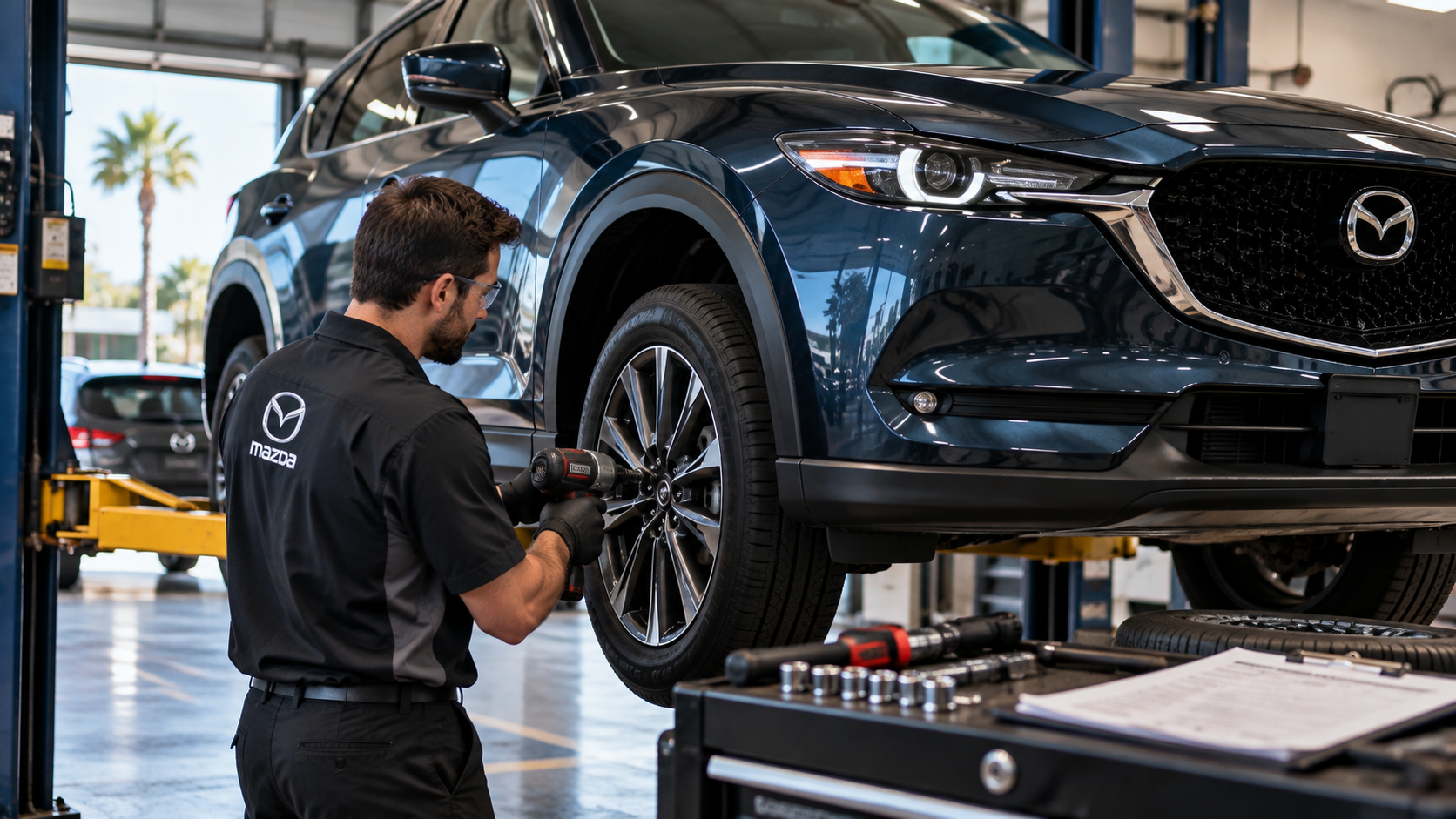
Mazda maintenance for a CX-5 can include several kinds of service across the life of the vehicle. Some visits center on oil, filters, tires, and routine inspections. Others add wear items or scheduled parts at later mileage points. For Jacksonville owners, the clearest way to plan is to separate recurring service from wear items and later mileage work. That makes future service easier to review without relying on one fixed yearly price. Mazda CX-5 Maintenance Costs Start With the Type of Service A single maintenance number cannot describe every CX-5. Service needs change with mileage, age, inspection results, and the items due at each visit. For that reason, cost planning works better when service is grouped into clear categories. Routine work forms the baseline. Oil and filter service, tire rotation, and recurring inspections appear more frequently than larger scheduled items. Wear parts need a different plan because replacement follows measured condition, while later mileage service can add items that do not appear during earlier visits. Owners can think about maintenance in three layers. First, plan for routine visits. Next, leave room for wear items. Finally, review the maintenance schedule as mileage and age rise. Tom Bush Mazda already provides a dedicated Mazda CX-5 maintenance schedule that owners can use to review mileage and service timing in more detail. Which Mazda CX-5 Maintenance Costs Should You Plan For? Routine Mazda maintenance includes recurring work and inspections that support normal CX-5 care. Mazda uses a vehicle status monitor to track service timing, while the maintenance schedule sets maximum intervals for several items. For routine planning, keep these categories in mind: Oil and filter service returns throughout the life of the CX-5, so it belongs in your regular service budget. Tire rotation and tire checks deserve recurring attention because tread wear can change from one axle position to another. Brake, fluid, suspension, and steering inspections check current condition without meaning every inspected part needs replacement. That last point matters when reading a maintenance schedule. An inspection is not the same as a replacement. A technician may check a part and find that no further work is needed at that visit. The service reminder should also be read with the maintenance schedule. The reminder tells you when service is due, while the schedule shows which items belong at that point in mileage or time. Together, those two sources give you a clearer view of the visit. When routine service is due, you can also check Tom Bush Mazda’s current service and parts specials before booking an appointment. Tires and Brakes Need Their Own Maintenance Budget Tires and brakes wear gradually, so their timing does not fit one fixed replacement date. Driving distance, load, road surface, tire pressure, and measured wear all shape when replacement becomes necessary. For this reason, inspections matter as much as mileage. Owners should watch several signs between routine visits: Tire tread depth, uneven wear, vibration, or repeated pressure loss can signal that the tires need closer review. Brake noise, pedal changes, or inspection findings can show that brake parts need attention before the next routine visit. Wiper blades, the battery, and other wear items may need replacement at different points than scheduled engine service. A maintenance budget should leave some room for wear parts even when no warning sign is present today. You do not need to guess a replacement date. Inspection results give you the information needed to decide when each item deserves attention. Tire rotation can support more even tread wear, but it does not replace tire inspection. The same idea applies to brakes. Scheduled checks give the service team a chance to measure current condition and explain what could be needed next. Jacksonville owners who want a professional inspection can use the Tom Bush Mazda service center to review current tire, brake, and maintenance needs. How Should You Plan for Higher Mileage Service? Higher mileage Mazda maintenance can include items that appear less frequently than oil service or tire rotation. As the CX-5 ages, filters, spark plugs, coolant, and other scheduled items can enter the service plan. These later items deserve their own planning category: Cabin and engine air filters may need inspection or replacement according to the maintenance schedule and current condition. Spark plugs appear at a later scheduled mileage, so that visit may include more work than a routine oil service. Coolant follows a long interval based on time and mileage, which makes it part of long range service planning. Several items can land near the same mileage range, so one visit may include more work than the previous one. That does not mean the CX-5 suddenly needs constant repair. It means the schedule has moved into another phase. Reviewing the schedule before major mileage points gives you time to check current specials and ask the service team for present pricing. That is more useful than relying on an old article with fixed dollar amounts. You can compare upcoming service needs with the CX-5 maintenance schedule and then review current Tom Bush Mazda service offers. Use the Schedule, Specials, and Service History Together The strongest Mazda maintenance plan uses three sources together: the official schedule, your service history, and current dealer information. The schedule tells you what Mazda calls for, while your records show what has already been completed. Current dealer resources show present offers and appointment options. Start by checking the CX-5 maintenance schedule before your next major mileage point. Then compare it with your repair orders or digital service records. If an item has already been completed, confirm whether it needs attention again. Next, review Tom Bush Mazda service specials for current offers. Service pricing can change, so live specials give you a better reference than a fixed figure in an evergreen article. From there, you can use the Tom Bush Mazda service scheduler when you are ready to set an appointment. Mazda maintenance planning becomes clearer when each service visit has context. Routine work, wear items, and later mileage service do not arrive on the same timetable. By separating those maintenance categories, you can prepare for the next visit with fewer surprises. Tom Bush Mazda can review the CX-5 schedule with you and help connect current service needs with available appointment options.

Mazda3 vs Hyundai Elantra: Comparing Style, Handling, and Everyday Comfort
Mazda3 vs Hyundai Elantra comparisons bring several clear differences into focus. Additionally, the 2026 Mazda3 starts with more standard horsepower. By contrast, the Elantra counters with stronger published fuel economy and slightly more sedan cargo room. Moreover, drivetrain choice also separates them. Selected Mazda3 trims offer i-ACTIV AWD, while standard Elantra models use front wheel drive. For this reason, those differences give compact sedan customers several concrete points to compare before a test drive. Mazda3 and Hyundai Elantra Differ Most in Power Efficiency and Drivetrain Choice With that in mind, the strongest comparison starts with the areas that shape daily ownership. Engine output, fuel economy, cargo room, and drivetrain choices create the clearest contrast between these compact sedans. Several details deserve attention near the beginning of the comparison: The Mazda3 2.5 S uses a 2.5 liter four cylinder engine with 186 horsepower. The Elantra standard 2.0 liter engine produces 147 horsepower and 132 pound feet of torque. Selected Mazda3 trims offer i-ACTIV AWD, while the standard Elantra lineup remains front wheel drive. By contrast, the Elantra places more emphasis on fuel economy in its standard configuration. The Mazda3 places more emphasis on engine output and available AWD. Therefore, trim selection matters before either sedan is judged from one specification. Additionally, Tom Bush Mazda customers can review the 2026 Mazda3 Sedan before comparing current trim choices. How Do the Mazda3 and Hyundai Elantra Powertrains Compare? The standard Mazda3 2.5 S makes 186 horsepower from its 2.5 liter four cylinder engine. The standard Elantra engine makes 147 horsepower from a 2.0 liter four cylinder. That creates a noticeable difference on paper before higher output trims are considered. Moreover, Mazda also offers a turbocharged 2.5 liter engine on selected Mazda3 trims. With recommended premium fuel, that engine reaches up to 250 horsepower and 320 pound feet of torque. Turbo Mazda3 Sedan models also come with i-ACTIV AWD. By contrast, Hyundai adds another engine choice through the Elantra N Line. Its 1.6 liter turbocharged engine produces 201 horsepower and 195 pound feet of torque. Therefore, comparing trim to trim gives a clearer comparison than comparing model names alone. Additionally, transmission choices add another difference. Current Mazda3 Sedan models pair their automatic configurations with a six speed automatic transmission. The standard Elantra uses an intelligent variable transmission, while the N Line uses a seven speed dual clutch transmission. For this reason, a test drive should focus on throttle response, steering input, and acceleration. Additionally, notice shift feel at normal road speeds. Those checks show how the specifications translate into the way each sedan responds. Cargo Space and Rear Seat Use Matter Differently The 2026 Elantra lists 14.2 cubic feet of cargo volume. The 2026 Mazda3 Sedan lists 13.2 cubic feet. However, the numerical difference is small enough that trunk shape and loading needs still deserve a physical check. Before deciding from cargo figures alone, compare the spaces in the way you plan to carry people and gear: Place common bags or larger items near the trunk opening to judge loading width and floor shape. Sit in the rear seats after setting the front seats for the people who will drive the car most days. Check whether folding the rear seatbacks creates enough room for longer items you carry during the year. Additionally, the Mazda3 lineup also includes a hatchback. That gives Mazda customers another body style when a sedan trunk does not fit their cargo needs. The 2026 Mazda3 Hatchback offers a different rear cargo layout. Moreover, passenger measurements also deserve context. Legroom, headroom, door opening shape, and seat position all shape how a cabin feels. Therefore, rear seat evaluation should happen with the front seats already adjusted. Fuel Economy and AWD Create Different Priorities The Elantra SE carries EPA estimates of 31 mpg city and 40 mpg highway. Current front wheel drive Mazda3 Sedan listings at Tom Bush Mazda show 27 mpg city and 36 mpg highway. Consequently, those figures point toward different priorities. The Elantra standard powertrain focuses more heavily on fuel efficiency. The Mazda3 gives customers stronger standard horsepower plus an AWD path on selected trims. AWD does not replace careful tire selection or attentive driving. However, it changes how power can be distributed across the driven wheels. That makes drivetrain layout worth checking when comparing trims. In addition, fuel economy should also be reviewed at the exact trim level. Engine choice, drivetrain, wheel size, and transmission can change published estimates. Therefore, compare the window sticker or current model specifications before making a final calculation. Furthermore, Jacksonville customers can browse new Mazda inventory to see which Mazda3 trims are currently listed. What Should You Compare During a Mazda3 Test Drive? With that in mind, a useful Mazda3 test drive should cover more than acceleration. Seat position, visibility, steering response, cabin access, controls, and cargo space all deserve attention before choosing a trim. During the visit, work through the same checks you would make on a normal trip: Adjust the seat and steering wheel first, then check sightlines and control placement from that position. Drive at neighborhood and highway speeds so steering, braking, acceleration, and transmission response can be compared. Check the rear seat and trunk after the road test so passenger and cargo needs stay part of the decision. By contrast, the Mazda3 and Elantra take different approaches to the compact sedan category. The Elantra offers stronger published fuel economy and a slightly larger trunk. The Mazda3 counters with more standard horsepower and available AWD on selected trims. For this reason, compare the exact trims you plan to drive instead of model names alone. Review the features you will rely on, then compare the cars in person. Tom Bush Mazda customers can start with the 2026 Mazda3 Sedan and current new Mazda inventory.