Blog

All Jacksonville Mazda Dealer Tom Bush Mazda Jacksonville Mazda Service Tom Bush Mazda Service Things To Do In Jacksonville Jacksonville Amenities Jacksonville Entertainment Jacksonville Used Cars Tom Bush Family of Dealerships Jacksonville Eateries Jacksonville Restaurants Jacksonville Parks Family Fun in Jacksonville Jacksonville Landmarks Jacksonville Foodies Tom Bush Financing Mazda Trade-In Tom Bush Mazda Collision Center Food Delivery in Jacksonville Auto Financing Jacksonville Museums Road Trips Things To Do Near Jacksonville Car Warranty Jacksonville Collision Shopping in Jacksonville Weekend Getaways Holiday Fun

2026 Mazda CX-30 Lease Breakdown: What Affects Your Payment and Which Features Matter Most

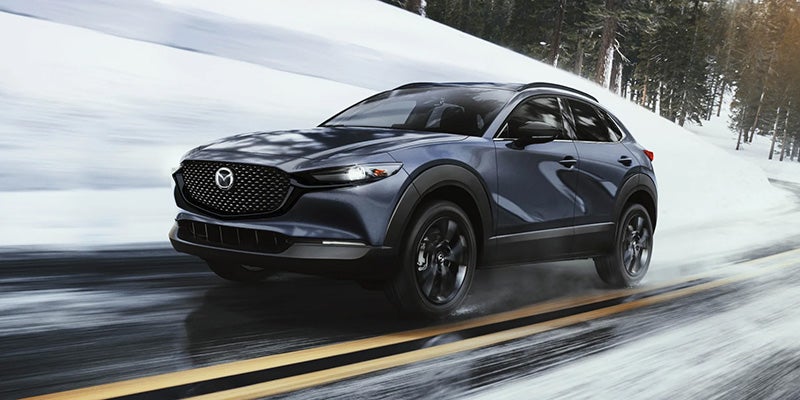
Leasing a 2026 Mazda CX-30 is less about chasing the lowest advertised payment and more about understanding how the vehicle’s design, trims, and real-world use shape what you actually pay each month. Because a lease only covers the portion of the vehicle you use, small decisions around trim level, drivetrain, and mileage expectations can meaningfully change both cost and satisfaction over the lease term. This breakdown focuses on how the Mazda CX-30 lease pricing is structured, what truly moves the payment, and which features tend to deliver value in a lease environment rather than long-term ownership. How Mazda CX-30 Lease Payments Are Built Every CX-30 lease starts with three core components working together: more Capitalized cost which is the negotiated vehicle price plus any added fees or accessories Residual value which is Mazda’s projected value of the vehicle at the end of the lease Mileage and term length which define how much depreciation you are responsible for Your monthly payment is essentially the difference between the starting price and the residual value, spread across the lease term, with interest and taxes applied. Because Mazda vehicles typically hold value well in the compact crossover segment, the CX-30 benefits from relatively stable residuals, especially in trims that balance features without excessive price escalation. Trim Selection and Its Impact on Lease Cost Trim choice is one of the most influential lease variables because it affects both sides of the equation: starting price and residual value. On the CX-30 lineup, trims generally progress from practical to performance-oriented. As you move up the range, you gain features like upgraded interior materials, larger wheels, advanced driver assistance enhancements, and in some cases turbocharged performance. From a lease perspective: Lower to mid trims tend to lease efficiently because they maintain strong resale value relative to cost Higher trims raise the monthly payment more quickly because the added cost is not always matched by proportional residual increases Turbo models deliver meaningful performance gains, but they typically increase depreciation exposure over a short lease term Leasing favors trims where the equipment aligns with how the vehicle will be used day to day, not necessarily the most feature-dense configuration. Drivetrain and AWD Considerations The CX-30’s available all-wheel drive system is a frequent point of lease discussion. AWD adds cost upfront, but it also adds functional value in climates where traction consistency matters. From a payment standpoint: AWD increases the capitalized cost slightly Residual value may improve depending on regional demand The net monthly increase is often modest compared to the usability benefit For drivers in areas with winter weather, uneven road conditions, or frequent highway travel, AWD often justifies its lease impact because it directly supports confidence and control throughout the term. Mileage Selection and Real-World Use Mileage limits are not a formality. They are one of the most misunderstood and costly lease decisions. Most CX-30 leases are structured around standard annual mileage options, with higher mileage lowering the residual value. That means: Choosing too few miles can result in costly overage charges later Choosing too many miles increases the payment unnecessarily if you underuse them A realistic assessment of commuting patterns, weekend driving, and seasonal travel is essential. Because the CX-30 is often used as a daily driver rather than a secondary vehicle, underestimating mileage is a common mistake. Features That Matter Most in a Lease Leasing shifts the value conversation. You are paying for use, not longevity. That changes which features are worth prioritizing. Features that typically justify their lease cost include: Driver assistance systems that actively reduce fatigue and improve daily comfort Infotainment upgrades that directly affect every drive Interior comfort features that enhance short-term satisfaction Features that matter less in a lease context often include cosmetic enhancements that do not materially improve driving experience or resale stability. The CX-30’s interior design philosophy emphasizes driver connection and intuitive layout, meaning even lower trims feel cohesive. This allows many lessees to avoid unnecessary upgrades while still enjoying a refined cabin environment. Prequalification and Payment Predictability Mazda prequalification plays a role not just in approval, but in payment clarity. Understanding where you fall financially before selecting trim and mileage prevents mismatched expectations. Prequalification helps determine: Likely interest rate tier Required upfront costs How aggressively trims or mileage adjustments affect payment This step allows the lease structure to be tailored to the driver rather than forcing compromises later in the process. Lease Versus Finance for the CX-30 The CX-30 sits in a space where both leasing and financing make sense depending on priorities. Leasing aligns well for drivers who: Prefer predictable ownership costs Want access to newer technology more frequently Drive within defined mileage ranges Financing may suit drivers who: Plan long-term ownership Drive significantly above average mileage Intend to retain the vehicle beyond the first ownership cycle The CX-30’s balanced design means neither path is inherently superior, but the lease option rewards clarity in how the vehicle will actually be used. Final Ownership Perspective A well-structured 2026 Mazda CX-30 lease is not about minimizing payment at all costs. It is about aligning trim, features, and mileage with real driving behavior so the vehicle feels intentionally chosen rather than compromised. When the lease structure reflects how the CX-30 is driven and enjoyed, the result is a monthly payment that feels justified by the experience behind the wheel.

Mazda CX-30 vs Toyota Corolla Cross: Two Compact SUVs With Very Different Priorities

At first glance, the Mazda CX-30 and Toyota Corolla Cross appear to occupy the same space. Both are compact SUVs designed for daily driving, urban flexibility, and efficient ownership. In practice, they are built around very different philosophies. Understanding how each vehicle behaves on the road, how its systems are engineered, and what kind of driver it serves makes the choice clearer. Platform Design and Driving Character The Mazda CX-30 is built with Mazda’s Jinba Ittai philosophy, emphasizing a natural connection between driver and vehicle. Steering weight, throttle response, and suspension tuning are calibrated to provide feedback and balance rather than isolation. The result is a vehicle that feels planted and responsive even at city speeds. The Toyota Corolla Cross prioritizes predictability and ease. Steering effort is lighter, suspension tuning favors comfort over engagement, and road feedback is intentionally muted. This makes the Corolla Cross easy to live with, especially for drivers who value smoothness and familiarity. Key differences in road behavior: more CX-30 delivers tighter steering response and controlled body movement Corolla Cross focuses on comfort and minimal driver input Mazda tuning emphasizes balance through corners Toyota tuning emphasizes stability and ease in straight-line driving Engine Performance and Power Delivery Mazda equips the CX-30 with a 2.5-liter four-cylinder engine that produces noticeably more horsepower than the Corolla Cross. Power delivery is linear, and the transmission is tuned to keep the engine in an effective range without abrupt shifts. This contributes to confident merging, passing, and highway driving. The Corolla Cross uses a smaller 2.0-liter engine designed primarily for efficiency. While adequate for daily commuting, acceleration is more gradual, particularly under load or at higher speeds. Performance considerations shoppers notice: CX-30 feels stronger when accelerating from a stop Corolla Cross prioritizes fuel efficiency over responsiveness Mazda engine tuning feels more composed at highway speeds Toyota engine tuning favors smooth, conservative operation AWD Availability and All-Weather Capability Both models offer all-wheel drive, but implementation differs slightly. Mazda’s i-Activ AWD system continuously monitors driving conditions and proactively adjusts torque distribution before traction is lost. This results in stable handling during rain, light snow, or uneven pavement. Toyota’s AWD system engages more reactively and is focused on maintaining forward momentum rather than enhancing handling balance. It performs well in slippery conditions but does not materially change the driving character of the vehicle. For drivers in mixed weather environments: CX-30 AWD enhances stability and cornering confidence Corolla Cross AWD emphasizes traction support Mazda system feels more integrated into the driving experience Interior Design and Material Quality Interior execution is one of the clearest distinctions. The Mazda CX-30 uses minimalist design with soft-touch materials, clean lines, and a driver-centric layout. Controls are intentionally placed to reduce distraction, and the cabin prioritizes visual calm. The Corolla Cross interior is functional and durable. Materials favor long-term wear and ease of use rather than design expression. Controls are straightforward and familiar but less refined in look and feel. Interior priorities compared: CX-30 focuses on tactile quality and design cohesion Corolla Cross emphasizes durability and simplicity Mazda cabin feels more composed and intentional Toyota cabin feels practical and utilitarian Technology and Driver Assistance Systems Both vehicles include modern driver-assistance features such as adaptive cruise control, lane-keeping support, and collision mitigation systems. Mazda’s systems are tuned to intervene subtly, allowing the driver to remain engaged. Toyota’s systems are more assertive, designed to prioritize safety through earlier intervention. Infotainment approach differs as well. Mazda relies on a rotary controller to reduce screen distraction, while Toyota uses a touchscreen-forward interface familiar to most drivers. Technology experience differences: Mazda emphasizes reduced distraction and driver focus Toyota emphasizes ease of use and familiarity Both offer strong safety coverage for daily driving Reliability, Ownership, and Long-Term Considerations Toyota’s reputation for long-term reliability is well established, and the Corolla Cross benefits from conservative engineering choices aimed at longevity. Mazda has steadily closed the reliability gap through simplified powertrains and high manufacturing standards. Maintenance expectations are similar, though Mazda’s focus on naturally aspirated engines avoids complexity found in some turbocharged competitors. Ownership factors to weigh: Corolla Cross appeals to buyers seeking proven predictability CX-30 appeals to buyers seeking longevity with engagement Both offer strong resale and dependable daily use Which SUV Fits Your Drive? The Mazda CX-30 is ideal for drivers who value connection, refined design, and a vehicle that feels responsive without sacrificing everyday usability. The Toyota Corolla Cross suits drivers who prioritize familiarity, efficiency, and a straightforward ownership experience. For shoppers comparing compact SUVs beyond surface specifications, the decision often comes down to how the vehicle feels during daily use rather than what appears on paper. Exploring both models in person helps clarify which philosophy aligns better with your driving habits and expectations.

2026 Mazda CX-50 Lease Guide: Payment Structure, Mileage Terms, and Smart Equity Decisions

Leasing a 2026 Mazda CX-50 is less about finding a promotional number and more about understanding how the vehicle is structured, equipped, and used over time. Lease payments are the result of several interlocking variables that work together, not independently. When those variables are understood clearly, shoppers can make confident decisions that align with how they actually drive. This guide breaks down how CX-50 lease payments are calculated, how mileage and feature selection influence long-term value, and what to consider before choosing leasing over financing. How Mazda CX-50 Lease Payments Are Structured A lease payment is built around the difference between the vehicle’s starting value and its projected value at the end of the lease term. For the Mazda CX-50, this calculation reflects Mazda’s emphasis on durable platforms, standard safety systems, and balanced powertrain design. Key components include: more MSRP and negotiated price The starting point for any lease is the vehicle’s price. Trim level, drivetrain configuration, and factory options directly affect this number. Residual value This is the estimated value of the CX-50 at lease end. Vehicles with strong long-term demand, standard safety technology, and efficient powertrains tend to retain value more consistently. Money factor This functions like an interest rate in a lease. It is influenced by credit profile and current lending conditions. Lease term length Most leases run 24 to 36 months. Shorter terms often preserve higher residuals, which can reduce depreciation cost per month. Mileage allowance Selected mileage directly affects residual value and monthly payment. The CX-50’s platform design and equipment strategy matter here. Mazda engineers this model with standard driver assistance systems, available all-wheel drive, and naturally aspirated and turbocharged powertrain options that balance efficiency and durability. These characteristics support predictable depreciation behavior, which is central to lease pricing. Mileage Terms and Why They Matter More Than Most Shoppers Expect Mileage is one of the most important decisions in a CX-50 lease because it directly impacts residual value. Choosing too little mileage can create costly overage charges, while choosing too much mileage increases the monthly payment unnecessarily. Common mileage tiers typically include: 10,000 miles per year for low-use or secondary vehicles 12,000 miles per year for balanced daily driving 15,000 miles per year for higher-use lifestyles or longer commutes Mileage overages are charged per mile at lease end. Those charges add up quickly and are not negotiable after the fact. The CX-50 is often chosen for outdoor use, light trail access, and regional travel. Shoppers who plan to use roof racks, tow small recreational equipment, or travel frequently should be realistic about annual mileage needs from the start. Feature Selection and Its Impact on Monthly Payments The CX-50 lineup is designed around purposeful trim differentiation rather than cosmetic upgrades alone. Each trim adds equipment that affects both MSRP and residual value. Key feature areas that influence lease cost include: Drivetrain configuration Available i-ACTIV all-wheel drive increases capability and initial cost, which raises monthly payments but may support stronger resale appeal in certain markets. Powertrain choice Turbocharged variants increase performance and torque output, particularly useful for elevation changes and loaded driving, but also raise MSRP. Interior technology and safety systems Mazda’s standard driver assistance features help stabilize residual value, while premium audio, panoramic roof configurations, and advanced displays increase payment due to higher capitalized cost. The most cost-efficient lease setups typically balance functional features with long-term usability rather than selecting the highest trim by default. Lease vs Financing for the Mazda CX-50 Leasing and financing serve different ownership priorities. Leasing often works best for drivers who value predictable monthly costs, updated technology cycles, and lower upfront commitment. Leasing advantages: Lower monthly payments compared to financing the same vehicle Ability to change vehicles every few years Limited exposure to long-term depreciation Financing considerations: Equity accumulation over time No mileage restrictions Better fit for long-term ownership beyond five years For drivers who prioritize flexibility and want to align vehicle ownership with lifestyle changes, leasing a CX-50 can provide structure without long-term obligation. Smart Equity and End-of-Lease Decisions At lease end, drivers typically have three paths: Return the vehicle and transition to a new lease or purchase Purchase the CX-50 at the predetermined residual value Use any positive equity toward another Mazda vehicle Equity occurs when the vehicle’s market value exceeds the residual value. Well-maintained CX-50 models with desirable configurations can sometimes retain value better than projected, especially when mileage remains within limits. Ownership Expectations and Real-World Use The CX-50 is engineered for drivers who want versatility without sacrificing efficiency. Suspension tuning, chassis rigidity, and drivetrain calibration are designed for both daily commuting and light off-pavement use. These system-level choices influence how the vehicle ages during a lease term and why maintenance consistency matters for end-of-lease condition assessments. Final Perspective A CX-50 lease works best when payment structure, mileage selection, and feature choices reflect real usage rather than assumptions. Understanding how each variable influences monthly cost allows shoppers to choose confidently, avoid surprises, and align the lease with how they actually drive.

A Simple Guide to Using Apple CarPlay and Android Auto in Your Mazda

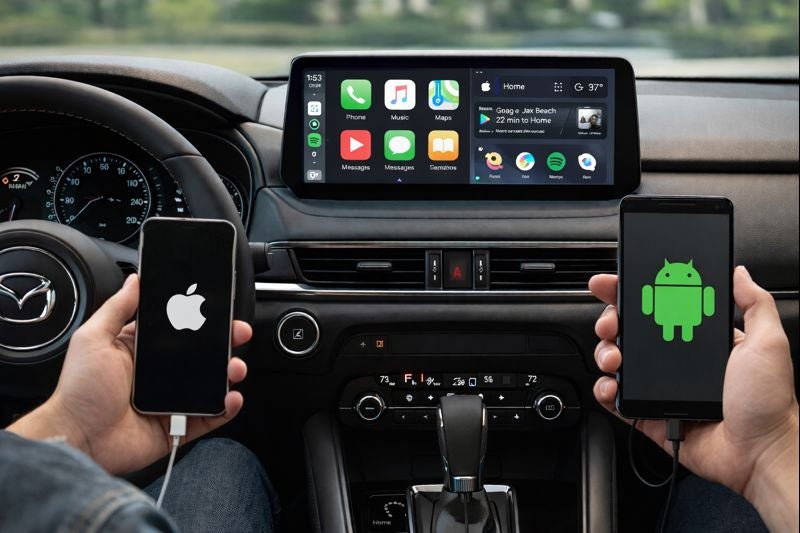
Apple CarPlay and Android Auto are no longer viewed as optional features. For many drivers, they are core usability systems that shape how navigation, communication, and media function every day. Mazda integrates these platforms with a human centered design philosophy that prioritizes driver focus, system stability, and intuitive control rather than touchscreen dependency alone. This guide explains how Apple CarPlay and Android Auto work in Mazda vehicles, how to connect them properly, what system behaviors to expect while driving, and why Mazda’s interface design differs from some competitors. How Apple CarPlay and Android Auto Work in Mazda Vehicles Apple CarPlay and Android Auto are projection systems. They do not replace Mazda’s infotainment software. Instead, they mirror supported apps from your phone onto the vehicle display while using Mazda’s input controls. Mazda routes these systems through: The center display screen The multifunction command knob Steering wheel controls Voice command integration This approach reduces the need to reach forward and touch the screen while driving, which aligns with Mazda’s emphasis on minimizing driver distraction. Connecting Apple CarPlay in Your Mazda Most recent Mazda models support Apple CarPlay through a wired USB connection, while select newer trims and model years also support wireless functionality depending on configuration. To connect Apple CarPlay: Use an Apple approved Lightning cable or enable wireless pairing if supported Plug the phone into the designated USB port or complete Bluetooth pairing Accept the CarPlay prompt on both the vehicle screen and the phone Select CarPlay from the Mazda infotainment menu if it does not launch automatically Once connected, Apple CarPlay allows access to Apple Maps, Google Maps, Apple Music, podcasts, messages, and supported third party apps. Connecting Android Auto in Your Mazda Android Auto follows a similar process but requires additional phone side permissions during initial setup. To connect Android Auto: Use a high quality USB cable or wireless pairing if available Enable Android Auto permissions on the phone Accept prompts for contacts, messages, and media access Select Android Auto from the infotainment menu Android Auto supports Google Maps, Waze, Spotify, Google Assistant, and compatible messaging apps. Why Mazda Uses the Command Knob Instead of Full Touch Control One of the most common questions drivers ask is why Mazda limits touchscreen interaction while driving. This is intentional. Mazda’s interface philosophy is based on research showing that: Reaching for a touchscreen increases eye off road time Rotational and directional controls can be used by feel Muscle memory improves control accuracy over time The command knob allows drivers to navigate menus, maps, and media with minimal visual attention. Touch input is typically enabled only when the vehicle is stopped or moving at very low speeds, depending on model year. Using Navigation Through CarPlay and Android Auto Navigation is one of the most heavily used features within both platforms. Apple CarPlay supports: Apple Maps with real time traffic Google Maps Waze Android Auto supports: Google Maps Waze Other supported navigation apps In Mazda vehicles, navigation prompts are displayed clearly while voice guidance is routed through the vehicle audio system. Map zooming, route selection, and destination input are handled through the command knob or voice commands rather than touchscreen taps. Music, Podcasts, and Media Playback Media playback through CarPlay and Android Auto integrates seamlessly with Mazda’s audio system. Supported functions include: Streaming music services Podcast apps Audiobook playback Album and playlist browsing Steering wheel audio controls Mazda’s sound tuning ensures consistent volume levels and clarity regardless of whether audio originates from the vehicle system or a projected app. Common Connection Issues and How to Avoid Them When CarPlay or Android Auto does not work as expected, the issue is often related to the phone rather than the vehicle. Common causes include: Outdated phone operating system Low quality or damaged USB cable Disabled permissions on the phone App restrictions or background limitations Incompatible device models Keeping phone software updated and using manufacturer approved cables resolves most connection issues. Updating Mazda Infotainment and System Compatibility Mazda infotainment software updates may improve stability or compatibility with newer phone operating systems. These updates are typically handled through authorized service visits rather than over the air downloads. System compatibility depends on: Vehicle model year Infotainment generation Phone operating system version Not all features are retroactive, so shoppers should verify wireless support or specific behaviors by model year. Why Mazda’s Integration Feels Different in Daily Driving Mazda designs its infotainment systems around driver focus rather than feature overload. Apple CarPlay and Android Auto are integrated as tools that support navigation and communication without dominating the driving experience. By emphasizing: Controlled input methods Clear visual hierarchy Reduced distraction Consistent system behavior Mazda ensures that technology enhances driving rather than competing with it. Final Perspective on CarPlay and Android Auto in Mazda Vehicles Apple CarPlay and Android Auto in Mazda vehicles are designed to feel stable, intuitive, and purposeful. They deliver modern connectivity while respecting how drivers actually interact with technology on the road. For shoppers who value clarity, ease of use, and reduced distraction, Mazda’s approach to smartphone integration offers confidence that technology serves the driver rather than the other way around.

2025 Mazda CX-5 Lease Insights Understanding Monthly Costs Mileage and Value

Leasing a vehicle is often misunderstood as simply choosing a lower monthly payment. In reality, a lease is a financial structure built around depreciation, time, and usage. For shoppers considering a 2025 Mazda CX-5, understanding how lease mechanics work and how Mazda’s engineering choices influence long term value is critical to deciding whether leasing makes sense compared to financing. This guide explains how CX-5 lease payments are calculated, what affects monthly costs, how mileage limits work, and why the CX-5’s design and efficiency play a meaningful role in lease value. How a Mazda CX-5 Lease Payment Is Calculated A lease payment is determined by several interacting variables rather than the vehicle price alone. These components work together to define how much value is used during the lease term. The primary factors include: Capitalized cost, which is the negotiated vehicle price Residual value, which is the estimated value at the end of the lease Money factor, which functions similarly to an interest rate Lease term length, typically 24 to 36 months Taxes and fees based on location The difference between the capitalized cost and the residual value represents depreciation. You are paying for that depreciation over the lease term rather than paying for the entire vehicle. Why Residual Value Matters for the CX-5 Residual value is one of the most important variables in a lease. A higher residual means the vehicle is expected to retain more value, which reduces the amount you pay monthly. The Mazda CX-5 benefits from: Consistent demand in the compact SUV segment A reputation for long term reliability Conservative design updates that age well Efficient powertrain options that remain competitive over time Mazda’s approach to design avoids rapid styling changes that can date a vehicle quickly. This stability supports stronger residual values, which directly improves lease affordability. Understanding Mileage Limits and Real World Use Mileage allowances are built into every lease because usage directly affects depreciation. The more miles driven, the more value is consumed. Common mileage structures include: 10,000 miles per year 12,000 miles per year 15,000 miles per year Exceeding the agreed mileage typically results in a per mile charge at lease end. Shoppers should realistically evaluate their driving habits rather than choosing the lowest allowance to reduce payments. The CX-5’s role as a daily driver means many lessees benefit from choosing a mileage allowance that reflects commuting, errands, and occasional road trips rather than strictly urban use. Lease Term Length and Monthly Cost Tradeoffs Lease terms influence both monthly payments and flexibility. Shorter terms generally offer: Higher monthly payments Newer vehicle turnover More frequent access to updated technology Longer terms typically provide: Lower monthly payments Longer commitment to the same vehicle Increased exposure to mileage accumulation Mazda’s reliability and interior durability make the CX-5 well suited for standard 36 month leases, where drivers can enjoy stability without pushing systems beyond their ideal use window. How CX-5 Engineering Supports Lease Value Mazda’s engineering philosophy directly influences leasing outcomes. The CX-5 uses naturally aspirated and turbocharged SKYACTIV engines designed for smooth power delivery and reduced mechanical stress. Transmissions prioritize predictable shifting rather than aggressive tuning, which supports longevity and consistent performance. Key engineering factors that support lease value include: Efficient combustion that balances power and fuel economy Lightweight platform construction that reduces component wear Calibrated suspension tuning that minimizes tire and brake stress Interior materials designed to resist visible wear over time Because leases typically return vehicles to the market as certified or used inventory, condition matters. Mazda’s focus on durability helps CX-5 models retain value at lease end. Lease Versus Finance for the Mazda CX-5 Deciding between leasing and financing depends on ownership goals rather than price alone. Leasing may make sense for drivers who: Prefer lower monthly payments Like driving newer vehicles more frequently Want warranty coverage throughout the lease term Drive predictable annual mileage Financing may be better for drivers who: Plan to keep the vehicle long term Drive high annual mileage Want to eliminate monthly payments eventually Value long term cost ownership over short term flexibility The CX-5 performs well in both scenarios, but leasing highlights its efficiency, reliability, and strong resale profile. What Happens at the End of a Mazda CX-5 Lease At lease end, drivers typically have several options depending on their needs and market conditions. Common lease end paths include: Returning the vehicle and leasing a new Mazda Purchasing the CX-5 at the predetermined residual value Transitioning to financing on a different vehicle Because Mazda leases establish a clear buyout price upfront, drivers can make informed decisions without market guesswork. If the CX-5’s market value exceeds the residual, purchasing can be a financially sound option. Credit Considerations and Prequalification Lease approval and terms are influenced by credit profile. Prequalification helps shoppers understand eligibility and payment expectations without committing to a specific vehicle. Leasing generally favors: Stable credit history Predictable income Lower risk profiles Mazda’s leasing programs are structured to support qualified buyers while maintaining realistic residual values that protect both driver and lender. Final Perspective on Leasing a 2025 Mazda CX-5 Leasing a 2025 Mazda CX-5 is not just about monthly affordability. It is about aligning driving habits, ownership preferences, and vehicle design with a financial structure that makes sense. The CX-5’s balanced engineering, efficient powertrains, and consistent market demand support strong lease fundamentals. For drivers who value flexibility, warranty backed ownership, and predictable costs, understanding how CX-5 leases work provides confidence that the decision is grounded in both financial logic and mechanical reality.

Mazda Warranty Guide Understanding 2025 Coverage with Confidence

When shoppers research a new vehicle, warranty coverage often becomes a proxy for trust. A warranty does more than outline repairs. It reflects how confident a manufacturer is in its engineering, materials, and long term durability. Mazda’s 2025 warranty structure is intentionally straightforward, but understanding what is covered, how systems are protected, and where owner responsibility begins helps buyers make better decisions and avoid common misconceptions. This guide breaks down Mazda warranty coverage in practical terms, focusing on how the systems are designed to work, why the coverage is structured the way it is, and what shoppers should realistically expect during ownership. What Warranty Does Mazda Offer on New Vehicles For the 2025 model year, Mazda includes three primary layers of factory coverage on new vehicles. Each layer protects different systems based on how they age and fail in real world use. New Vehicle Limited Warranty 3 years or 36,000 miles Covers most components outside of normal wear items This coverage applies to electrical components, infotainment hardware, climate control systems, safety technology, sensors, and interior electronics that are most likely to reveal manufacturing defects early in ownership. While often called bumper to bumper coverage, it is best understood as comprehensive systems coverage rather than literal coverage of every physical part. Powertrain Limited Warranty 5 years or 60,000 miles Covers engine, transmission, and drivetrain components Powertrain systems are engineered for long service life, and failures typically appear later than electronic or trim related issues. Mazda’s longer powertrain coverage reflects durability expectations for SKYACTIV engines, transmissions, and driveline architecture. Roadside Assistance 3 years or 36,000 miles Includes towing, jump starts, lockout assistance, and flat tire support This coverage is focused on mobility rather than mechanical repair, helping drivers manage unexpected situations without disruption. What Is Actually Covered Under the Mazda Warranty A common source of confusion is what qualifies as a covered failure versus normal wear. Mazda warranties protect against defects in materials or workmanship, not gradual consumption caused by usage. Covered systems include: Engine internal components such as cylinder heads, timing components, oil pumps, and internal seals Transmission housings, internal gears, and torque converters Drive shafts, differentials, and transfer cases Electronic control modules, sensors, and factory wiring Factory installed infotainment displays and control units Air conditioning compressors and climate control electronics Modern vehicles rely on integrated electronic and mechanical systems. Mazda’s warranty reflects this reality by covering systems as coordinated units rather than isolated parts. What the Warranty Does Not Cover and Why Wear items are excluded because their lifespan is determined by driving conditions rather than manufacturing quality. Common exclusions include: Brake pads and rotors Tires Wiper blades Clutch components Interior trim subject to repeated contact Routine maintenance services such as oil changes and filters This distinction matters. A braking system can be engineered correctly while brake pad wear varies significantly based on load, terrain, and driving behavior. Warranty coverage addresses design or assembly failure, not expected material consumption. Does Mazda Have a 10 Year Warranty Mazda does not include a 10 year factory warranty on new vehicles. That duration is commonly associated with manufacturers that use extended coverage as a brand differentiator rather than an engineering signal. Mazda instead emphasizes balanced design and predictable ownership costs. When comparing warranties, shoppers should consider: Reliability history of the powertrain Complexity of systems covered during early ownership Likelihood of major repairs beyond year five Warranty length alone does not define long term confidence. Understanding Mazda Extended Warranty Options Mazda extended service contracts are available for owners who want coverage beyond factory limits. These plans vary by term length, coverage scope, and deductible structure. Extended warranties may appeal to drivers who: Plan to keep their vehicle well beyond five years Drive higher than average annual mileage Prefer predictable repair costs for budgeting Key factors to evaluate include: Whether the plan is backed by Mazda or a third party Coverage exclusions and claim approval processes Transferability if the vehicle is sold Extended coverage is not universally necessary, but it can make sense depending on ownership strategy and risk tolerance. Is the Mazda Warranty Transferable Mazda factory warranties are transferable to subsequent owners within the original coverage period. This adds measurable resale value and reduces risk for used vehicle buyers. Transferability matters because: It supports stronger resale pricing It increases buyer confidence in used vehicles It reflects system durability rather than owner specific protection Both first and second owners benefit without additional cost. What Can Void a Mazda Warranty Warranty coverage remains intact as long as the vehicle is maintained according to manufacturer guidelines and not modified in ways that directly cause failures. Actions that may void coverage include: Performance modifications that alter engine or transmission behavior Skipping required maintenance intervals that lead to damage Using improper fluids or components that cause system failure Routine aftermarket accessories or cosmetic changes do not automatically void coverage. The determining factor is causation, not modification alone. How Mazda Warranty Coverage Reflects Engineering Philosophy Mazda’s warranty structure aligns closely with its engineering approach. SKYACTIV powertrains emphasize mechanical simplicity, efficient combustion, and reduced component stress. Transmissions prioritize smooth torque delivery rather than aggressive shift behavior, which supports long term durability. By combining: Conservative powertrain tuning Controlled high compression combustion Lightweight platform engineering Limited reliance on forced induction across most models Mazda reduces long term system strain and lowers the likelihood of catastrophic failures that extended warranties are designed to address. What Shoppers Should Evaluate When Comparing Warranties Rather than focusing only on coverage length, informed buyers should evaluate: Powertrain complexity Real world reliability trends Repair frequency beyond year five Resale and transferability benefits Alignment between warranty coverage and ownership plans Mazda’s approach prioritizes consistency and engineering discipline over headline driven coverage claims. Final Perspective on Mazda Warranty Coverage Mazda’s 2025 warranty coverage provides clear, predictable protection aligned with how modern vehicles are engineered and used. It prioritizes early system reliability, long term powertrain durability, and ownership transparency without overstating coverage that many drivers may never need. For shoppers who value thoughtful engineering, intuitive systems, and realistic ownership expectations, Mazda’s warranty structure reinforces confidence built through design. Confidence earned through engineering lasts longer than coverage measured only in years.

wheel aligment

Preventing Uneven Tire Wear With Proper Wheel Alignment

After driving your new Mazda off the lot, we're certain the first thing on your mind is maintenance. While many common maintenance measures do their part in ensuring the longevity of your vehicle, wheel alignment ensures your safety, and the safety of others on the road. If your wheels aren't properly aligned, you risk early and uneven wear of the tread of your tires. Positive or negative camber, or the angle of your wheels when viewed from the front, can cause more wear on the outer and inner edges of the tire when compared to the center tread. The heel and toe alignment, or the tilt when viewed from above, can cause uneven wear of the individual tread blocks, appearing like saw teeth across the tire. Aside from being an eyesore for your new Mazda, that tread is there to provide traction on the road. Without it, driving becomes even more dangerous, leading to drifting or loss of control in wet or slick conditions. To ensure the safety of yourself and other drivers, keeping up to date with alignment check-ups is of the utmost importance. more You may also experience your steering being unresponsive, or sometimes going in an unintended direction. Maybe you feel your vehicle pulling to the left or right, and generally requires more steering input to stay in the lane. This is mainly caused by toe or heel alignment. When taking a turn, one wheel has to follow a wider or tighter arc than another, causing steering to feel unwieldy and uncontrollable. Adequate steering is tantamount to your well-being when driving your new Mazda, allowing you to avoid other vehicles or obstacles in an emergency situation. In addition to uneven tire wear and issues with your steering, a misaligned vehicle can cause a domino effect and lead to more problems. For example, tire pressure can drop due to the uneven wear caused by misalignment, which will inevitably lead to a traumatic tire blowout at high speeds. This drop in pressure also worsens your fuel consumption; your car needs to do more work for the same result. A misaligned vehicle can also lead to issues with wheel balance, which is distinct from the alignment of your wheels. If your wheels are off balance, this can lead to shaking or vibrating of your vehicle and loss of control. To avoid an accident, getting your vehicle's tires aligned is the first thing any car owner should do. This is why scheduled maintenance checkups should never be ignored or delayed. Visit Tom Bush Mazda to Prevent Unexpected Issues Proper alignment can ensure the longevity of your vehicle, but more importantly, it can ensure your own safety and well-being. Understanding alignment issues and their symptoms can save you hundreds of dollars in subsequent repairs. To learn more, visit Tom Bush Mazda in Jacksonville, FL.

2026 Mazda3 Sedan

7 Highlights of the 2026 Mazda3 Sedan

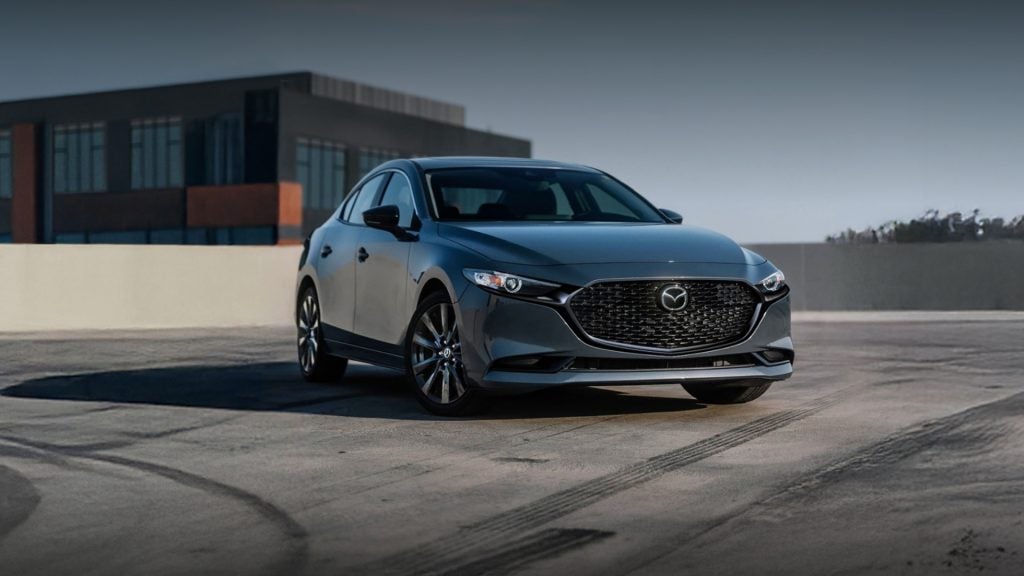
The ever-popular Mazda3 sedan is a stylish, reliable car that embodies Mazda's 'fun to drive' philosophy with responsive engine output, supple handling, and driver-focused suspension tuning. It's also tech-laden with numerous smart safety features. Here are some qualities to love about the 2026 Mazda3 sedan. Power and Efficiency Combined The Mazda3 sedan's 2.5L SKYACTIV engine with dual overhead camshafts generates a great deal of power with remarkable efficiency. It's MPG ratings for city, highway, and combined are 27, 36, and 30, respectively, while horsepower is 186 and torque is also an impressive 186 lb-ft. This blend of efficiency and power is helped by an advanced SKYACTIV-DRIVE 6-speed automatic transmission. Playful Handling Dynamics You enjoy nimble maneuverability and stable cornering in this well-balanced sedan. The Mazda3's top-notch handling is largely thanks to an independent MacPherson strut suspension, plus Electronic BrakeForce Distribution, Smart Brake Support, and Brake Assist. You also get standard all-season tires for firm traction in all weather conditions. Mazda Connected Services The Mazda3 comes with Mazda Connected Services, which allows you to interact with your car through your smartphone. You can remotely start or stop the engine, lock or unlock the doors, and check on various aspects of vehicle status, all from afar. more Easy Smartphone Integration When driving, it's also easy to connect your smartphone to your Mazda3's infotainment system via Apple CarPlay or Android Auto. You can then make hands-free calls, send messages, and access other phone apps directly through your infotainment display. In the top two Mazda3 trims, this smartphone integration is wireless. Another connectivity option is to use the Mazda3's built-in Bluetooth 11 to stream services directly from your smartphone. This feature is standard in all trims. 8-Speaker Sound System When you enter the Mazda3 using the remote keyless entry system, you're settling into a spacious, comfortable, well-designed cabin. Whatever audio you choose to enjoy is delivered with excellent quality via an 8-speaker Mazda Harmonic Acoustics audio system. Cruise Control With Stop-and-Go Driving on the highway is safer and less stressful with standard cruise control. When activated using steering-wheel mounted control switches, cruise control uses radar sensors to judge distances from vehicles ahead and automatically maintains a safe distance. The stop-and-go function means your car can automatically slow to a halt in traffic and then start up again. There are many more advanced safety and driver-assist features as standard in the Mazda3 sedan. Power Side Mirrors The Mazda3's elegant body-colored side-view mirrors with integrated turn signals are powered for easy adjustments and rear visibility. In the higher trims, these mirrors are heated. The exterior mirrors of the top three trims have a memory function and can tilt in reverse as well. If you think the Mazda3 sedan is for you, drop by to learn more. Come to Tom Bush Mazda in Jacksonville, FL, where our courteous staff can help you find the ideal vehicle at a price that works for you.

Engine Oil

How to Keep Your Mazda Running Smoothly with Regular Fluid Checks

There are six essential fluids in your car that keep everything lubricated, cool, and functioning smoothly. If you neglect to keep these fluids topped up and in excellent condition at all times, your car can undergo rapid wear and tear. Here are the six necessary fluid checks to have routinely carried out at Tom Bush Mazda, your Jacksonville Mazda dealer. Motor Oil for Your Engine Motor oil usually needs to be flushed and replaced at least twice a year. You should also check the level of your motor oil frequently. You can do so by removing the dipstick when the engine is cool. Clean the dipstick, reinsert it, then draw it out again to get an accurate reading. Coolant To Prevent Overheating Coolant only usually needs to be flushed every 30,000 miles or so, which is about every two years for most drivers. However, you should also check your coolant levels and condition periodically, topping it up if required. You can do so by inspecting the transparent coolant reservoir under your car's hood. more Brake Fluid for Road Safety If you want your brakes to remain firm and responsive, always keep your brake fluid in tip-top condition. This pressurized fluid carries the stopping signal from the brake pedal to the braking mechanisms at each wheel. But brake fluid slowly becomes contaminated with air and moisture over time and typically needs to be changed every two or three years. Power Steering Fluid for Handling Your steering is made precise and effortless by the power steering. Power steering fluid can last anywhere from 40,000 to 80,000 miles before it needs changing. You can check this fluid's levels with either a dipstick or by looking at the reservoir. Transmission Fluid for Easy Shifting Transmission fluid can last from 60,000 to 100,000 miles in automatic transmissions before it needs to be flushed. This interval is 30,000 to 60,000 miles for most manual shift vehicles. Windshield Washer Fluid for Visibility Windshield wiper fluid doesn't deteriorate but can rapidly diminish if you use your wipers a lot. It's advisable to check this fluid every couple of months and top it up whenever it's low. Arrange Regular Fluid Servicing at Your Mazda Dealership To keep your car in tip-top condition, read your owner's manual to understand the proper maintenance procedures for each of these essential vehicle fluids. You can then arrange a routine fluid servicing schedule with your local dealership; this will help you remember to check, top up, and change each fluid on time. Visit Tom Bush Mazda in Jacksonville, FL, today to have your car's fluids checked and changed.

2026 Mazda CX-50

6 Reasons to Test Drive the 2026 Mazda CX-50

Powerful and ready for adventures, the 2026 Mazda CX-50 is a great daily driver for active families. You can expect head-turning styling, premium comfort, and a range of advanced technologies you'll love. Refined Exterior Design The 2026 CX-50 is a handsome crossover with a rugged yet refined exterior design. Sporty 17-inch wheels with a Black Metallic finish and all-season tires provide outstanding traction on dry, wet, and loose surfaces. Satin Chrome aluminum roof rails and dual exhaust outlets with a bright finish catch the eye in traffic, while the standard LED headlights offer bright illumination. A spectrum of classic and bold colors allows you to express your personality. SKYACTIV-G Performance Under the hood, you can choose between a standard SKYACTIV-G 2.5L 4-cylinder engine with 187 horsepower and 185 lb-ft of torque or an available twin-scroll turbo engine that pumps out up to 256 horsepower and 320 lb-ft of torque. The base engine delivers smooth performance, fuel economy ratings of 26 MPG combined, and a towing capacity of 2,000 lbs. With the turbocharged powertrain, you can tow up to 3,500 lbs. more Empowering I-ACTIV AWD All CX-50 models come standard with an advanced i-ACTIV all-wheel drivetrain designed to keep you glued to the road in all driving situations. Mazda's Mi-Drive Sport and Off-Road drive modes and a six-speed automatic transmission with a manual shift mode allow you to adjust performance for various terrains and driving conditions, while the four-wheel independent suspension allows you to enjoy smooth rides on and off the road. Premium Interior Features The stylish cabin has a leather-wrapped steering wheel and half-leatherette seating surfaces. A six-way adjustable driver's seat provides custom comfort, while the rear seat has a convenient center armrest with a tray and covered storage bin. In-cabin storage also includes a spacious glovebox, a covered center-console compartment, and an overhead console with room for sunglasses. Impressive Utility A deep and wide cargo area with a volume of 31.4 cubic feet can fit luggage for the whole family or outdoor gear and coolers positioned lengthwise. The rear bench has a convenient 60/40 split-folding design, so you can adjust the passenger and cargo areas as needed, up to a cargo capacity of 56.3 cubic feet with both seatbacks folded. Advanced Tech Features Entertainment and connectivity come from a 10.25-inch MAZDA CONNECT infotainment system with HD Radio technology, wireless smartphone integration, and Alexa built-in. A standard wireless phone charger and USB ports in both rows allow all passengers to keep their devices charged, while steering-wheel-mounted audio, phone, and cruise controls reduce distractions while driving. The 2026 CX-50 is a spirited and practical crossover with top-tier performance and premium comfort. To try it on the road, stop by Tom Bush Mazda for a test drive.

a 2025 Mazda CX-70

5 Perks of the 2025 Mazda CX-70

The 2025 Mazda CX-70 is a sleek and powerful SUV that offers multiple perks for drivers and passengers. Here are the top features that make the CX-70 an ideal choice for your next car and how you can take one for a test drive near you. 5 Awesome Highlights of the 2025 Mazda CX-70 1. Intercooled Turbo Engine The Mazda CX-70 comes standard with an intercooled turbo gas/electric I-6 engine that gives you a maximum horsepower of 280 and up to 332 lb-ft. of torque. There's also an eight-speed SKYACTIV-Drive automatic transmission with overdrive, and altogether this setup offers a combined fuel efficiency of 25 MPG. more 2. Functional Exterior Features Drivers love the capable exterior features on the Mazda CX-70, including: Heated side mirrors with turn signal indicator Rain-detecting variable intermittent windshield wipers Fully galvanized steel panels Deep tinted glass Power liftgate rear cargo door Proximity key and push-button start 3. Effective Towing Hauling cargo is a breeze with the CX-70's maximum 3,500 lbs. of towing capacity. Plus, automatic full-time all-wheel drive and coil spring suspension let you take on rough terrains without giving up the comfort of a smooth ride. 3. Plush Interior Comfort inside the Mazda CX-70 is second-to-none with plush, top-of-the-line features like: Dual-zone front automatic air conditioning Rear HVAC vents with separate controls Seating with leather trim and leatherette backing Heated front bucket seats Leather and metal-look gear shifter Leather steering wheel Cargo area concealed storage 4. Modern Technology When you want your car to give you access to the latest technology, the CX-70 delivers with two LCD screens in the front and smart device integration for compatible phones. You also get two 12V DC power outlets and smart device remote engine start, so you can turn your car on and get it heated or cooled before you even open the driver's side door. 5. Brilliant Safety Features Safety features on the Mazda CX-70 are ample and include: Dynamic stability control/electronic stability control Roll stability control ABS and driveline traction control Blind spot monitoring Rear cross-traffic alert Lane keep assist with road departure prevention Lane departure warning There's also front collision mitigation, driver alert monitoring, and a backup camera that lets you see everything behind you when moving your vehicle in reverse. Plus, tire-specific low tire pressure warnings will let you know if any of your tires are underfilled before you start driving to help prevent tire blowouts and other roadside tire emergencies. We're excited to help you find a new car. Contact us at Tom Bush Mazda in Jacksonville, FL today to explore our vehicle specials or to schedule a time to take the Mazda CX-70 for a test drive. You can also visit our dealership at 9876 Atlantic Blvd.

white mazda mx-5 miata

Five Favorite Features of the 2025 Mazda MX-5 Miata

A sporty convertible like the 2025 Mazda MX-5 Miata is an ideal roadster for speed-loving drivers. This ultra-compact sports car is crafted with world-class style and luxury materials to enhance your time behind the wheel. See why the MX-5 Miata is perfect for your weekend getaways and joyrides. Five Favorite Features of the 2025 Mazda MX-5 Miata 1. Mazda Advanced Keyless Entry System The MX-5 Miata makes it easy to hop in your vehicle and get on the road quickly with Mazda's Advanced Keyless Entry System. This system enables keyless locking and unlocking of the liftgate, fuel lid, and vehicle doors. Proximity sensors installed on the roadster can sense when your key fob is near the vehicle and will allow vehicle entry when you touch the door handle or liftgate. more 2. Alexa Built-in Along with an immersive infotainment system that supports integration with Android Auto and Apple CarPlay, the MX-5 Miata comes with Alexa Built-in as a standard connectivity feature. Alexa Built-in is a sophisticated virtual assistant that responds to voice commands to alter in-vehicle settings, such as turning on the radio, adjusting climate settings, or controlling navigation apps. Additionally, Alexa Built-in enables hands-free communication features via your smartphone while you're on the road so you can answer calls or send texts. If you have Alexa-enabled devices at home, you can use Alexa Built-in to control these devices from your car. Alexa connectivity also enables features like weather and news updates while you drive. 3. Mazda Connected Services The MX-5 Miata comes with a one-year trial for Mazda Connected Services through the My Mazda app installed on your smartphone. Mazda Connected Services revolutionize everyday car ownership tasks like monitoring your vehicle's health, managing remote vehicle controls, and enhancing convenience with navigation and internet connectivity. Drivers will also benefit from emergency assistance after a crash. 4. Smart Brake Support A key part of the MX-5 Miata's safety technology is Smart Brake Support. This smart braking system focuses on frontal collisions with a forward-facing camera and sensors that can clock the distance between vehicles on the road and automatically apply hard brake pressure to avoid an accident. Additionally, this roadster comes with Secondary Collision Reduction, a system that holds brake power after an impact to prevent a secondary crash. 5. SKYACTIV-MT Transmission The MX-5 has a standard SKYACTIV-MT six-speed manual transmission with a short-throw shifter to refine the sporty behavior of the transmission. Shorter shift throws enhance the aggressive engagement of the transmission, improve fuel economy, and reduce shifting friction to deliver the iconic sporty performance the MX-5 Miata is known for. The MX-5 Miata is a responsive, super compact roadster with tons of personality and convenience features ideal for modern drivers looking for a fun time behind the wheel. Call Tom Bush Mazda in Jacksonville, FL to book a test drive.

Contact Us

Fill out this form below and we'll contact you shortly
*Required Fields