

Cargo space is one of the most misunderstood specifications in SUV shopping. Numbers alone rarely tell the full story. Real usability depends on where space is measured, how seats fold, how flat the load floor is, and how the vehicle is engineered to balance passengers, cargo, and driving dynamics. Mazda approaches cargo design differently across its SUV lineup because each model is built for a distinct use case rather than a one size fits all solution.
This guide compares cargo space in the Mazda CX-5, CX-50, and CX-90 by explaining how each vehicle is designed to carry gear in real world use, what the measurements actually represent, and which type of driver each layout best supports.
How Mazda Measures Cargo Space and Why It Matters
Cargo volume is typically measured in cubic feet, but those numbers can vary based on seating position and measurement standards. Mazda, like most manufacturers, reports cargo space behind the second row and maximum cargo space with seats folded.
What those figures do not always explain is how usable that space is day to day. Factors that influence real cargo usability include:
- Height of the load floor
- Width between wheel wells
- Seat folding angle and flatness
- Rear hatch opening shape
- Roofline slope and liftgate height
Mazda prioritizes balanced proportions and a low center of gravity, which often results in cargo areas that feel easier to load and more stable when carrying weight, even if the headline number is not the largest in the segment.
Mazda CX-5 Cargo Space Explained
The Mazda CX-5 is a two row compact SUV engineered primarily for on road comfort, efficiency, and everyday versatility. Cargo space is designed to support daily life rather than maximum volume.
Key cargo characteristics of the CX-5 include:
- Approximately 30 cubic feet of cargo space behind the second row
- Over 59 cubic feet with the rear seats folded
- A low lift over height that makes loading easier
- A relatively flat cargo floor when seats are folded
Behind the second row, the CX-5 comfortably handles groceries, strollers, and luggage for short trips. With seats folded, it accommodates longer items such as furniture boxes or outdoor gear without creating steep angles that cause items to slide forward.
The CX-5’s cargo design favors balance. It does not sacrifice rear passenger comfort or driving dynamics to chase maximum volume, which is why it feels composed and stable even when fully loaded.
Mazda CX-50 Cargo Space and Practical Differences
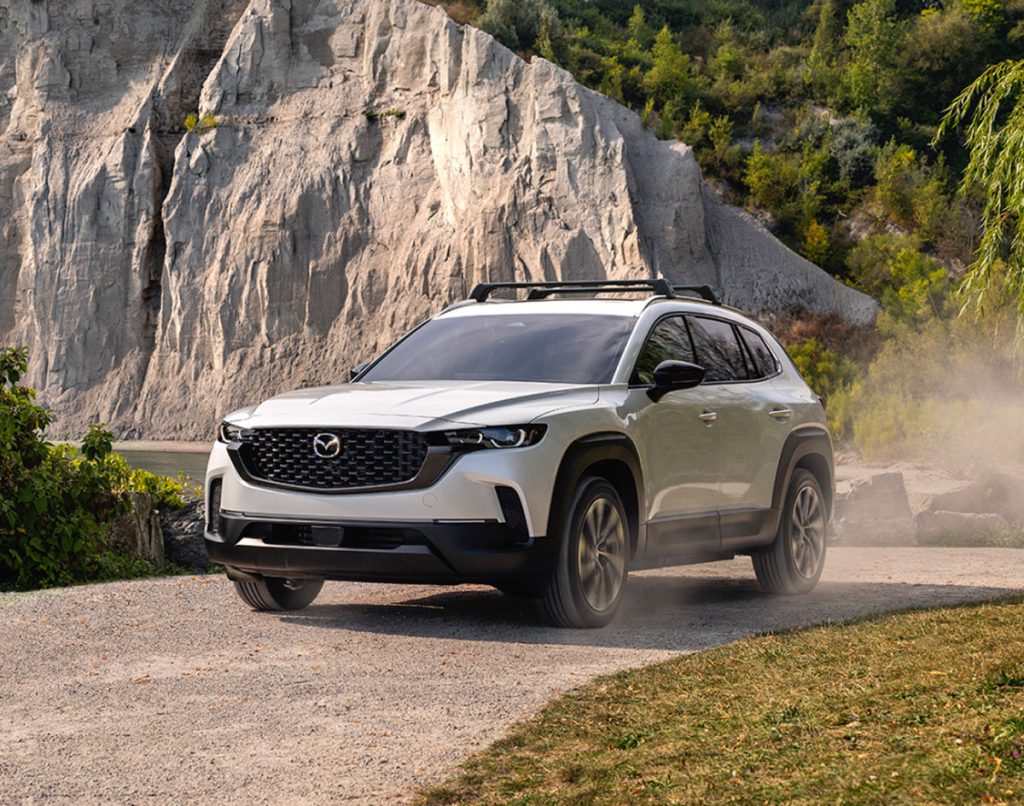
The Mazda CX-50 is often compared directly to the CX-5, but its cargo design reflects a different intent. The CX-50 is wider, slightly longer, and positioned as a more outdoor oriented SUV.
Notable CX-50 cargo traits include:
- Slightly more cargo space behind the second row than CX-5
- A wider cargo area for bulkier gear
- Roof rails designed for external cargo support
- A lower roofline paired with a wider stance
While the CX-50 does not dramatically outsize the CX-5 in raw cubic feet, it offers better usability for outdoor equipment such as bikes, camping gear, and storage bins. The wider rear opening and squarer cargo shape make it easier to load rigid items.
The tradeoff is vertical space. The CX-50’s lower roofline improves handling and aesthetics but slightly limits tall item stacking compared to boxier SUVs. For drivers who frequently carry wide or irregular gear rather than tall cargo, this layout works in their favor.
Mazda CX-90 Cargo Space and Three Row Reality
The Mazda CX-90 operates in a different category altogether. As a three row midsize SUV, its cargo space must adapt to varying passenger configurations.
Cargo usability in the CX-90 depends heavily on seat position:
- Limited cargo space behind the third row, suitable for groceries or small bags
- Substantial cargo area with the third row folded
- Expansive cargo capacity with both rear rows folded
This is typical of three row SUVs. The priority is passenger flexibility rather than constant maximum cargo volume. With the third row folded, the CX-90 becomes a capable hauler for family trips, sports equipment, or home improvement runs.
Mazda engineered the CX-90 on a rear wheel drive based platform, which influences cargo design. The longer wheelbase improves stability when loaded and allows weight to be distributed more evenly across the chassis, especially when carrying heavier cargo with passengers onboard.
Which Mazda SUV Is the Biggest and When It Matters
In pure maximum cargo volume, the CX-90 offers the most space when seats are folded. However, that does not automatically make it the best choice for every driver.
Each model serves a different need:
- CX-5 is ideal for daily driving with occasional cargo demands
- CX-50 suits active lifestyles with wider and more rugged gear
- CX-90 supports families needing flexible passenger and cargo configurations
Choosing the biggest SUV only makes sense if the additional size is regularly used. Larger vehicles carry tradeoffs in fuel efficiency, parking ease, and cost that may not benefit all drivers.
Cargo Space Compared to Other Small and Midsize SUVs
When shoppers compare Mazda SUVs to competitors like the Honda CR-V or Toyota RAV4, Mazda models may not always lead in published cargo volume. What they offer instead is usable space paired with driving refinement.
Mazda emphasizes:
- Lower cargo floors for easier loading
- Stable handling when carrying weight
- Interior layouts that avoid awkward seat folding angles
For many drivers, these factors matter more than an extra cubic foot on paper.
What to Evaluate Beyond Cargo Numbers
Before choosing an SUV based on cargo space alone, shoppers should evaluate:
- How often rear seats are folded
- Types of items carried most often
- Passenger needs versus cargo needs
- Ease of loading and unloading
- Vehicle stability when loaded
Mazda designs each SUV to serve a specific role rather than maximizing a single metric across the lineup.
Final Perspective on Mazda SUV Cargo Space
The CX-5, CX-50, and CX-90 approach cargo space from different engineering priorities. The CX-5 balances everyday usability with driving comfort. The CX-50 favors wider, more rugged cargo for active use. The CX-90 delivers flexibility for families who alternate between passengers and gear.
Understanding how cargo space is shaped and used is more important than focusing on a single number. Mazda’s SUV lineup gives drivers the ability to choose the space that fits their life, not just the biggest option available.
Connect with us


