

When shoppers compare the Mazda3 and Honda Civic, they are rarely choosing between bad options. Both are proven compact sedans with strong reputations. The real question is not which one works, but which one feels right to drive every day. That difference comes down to engineering philosophy, not surface-level specs.
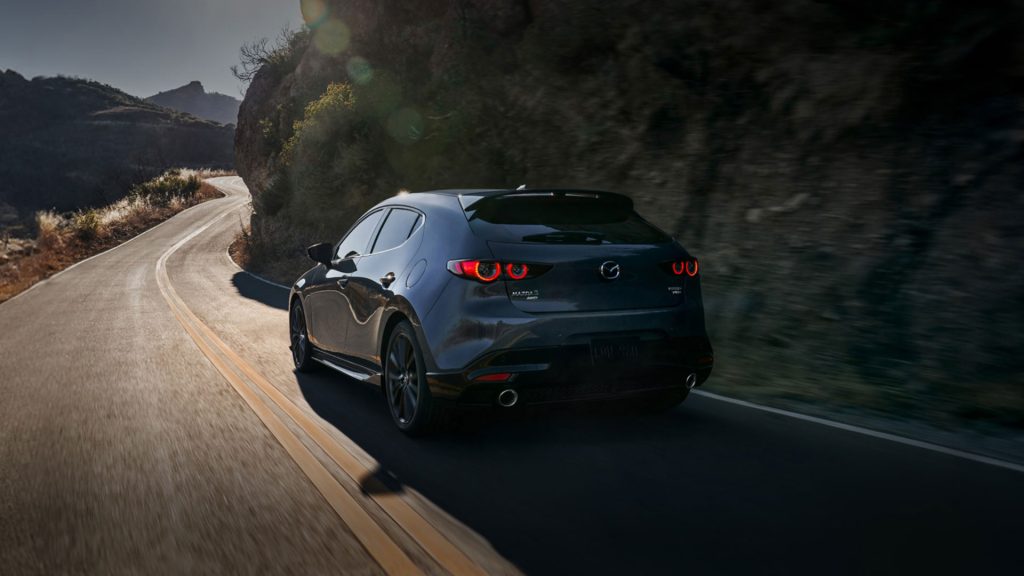
Mazda and Honda approach the compact sedan segment from two distinct perspectives. Honda emphasizes broad usability and efficiency. Mazda prioritizes driving engagement, refinement, and connection between the driver and the vehicle. Understanding how those priorities show up on the road is what separates these two cars.
Driving Philosophy Shapes the Experience
Mazda designs the Mazda3 around Jinba Ittai, the idea of harmony between car and driver. This philosophy influences steering calibration, seating position, pedal alignment, and suspension tuning. The goal is not aggressive performance, but predictability and control.
Honda tunes the Civic with an emphasis on versatility. Steering is light, suspension tuning favors comfort, and inputs are designed to feel easy rather than communicative. This works well for drivers who want a relaxed, appliance-like experience, but it creates a noticeable contrast when driving the two back-to-back.
Key philosophical differences:
- Mazda3 prioritizes driver feedback and balance
- Civic prioritizes ease of use and efficiency
- Mazda emphasizes feel through the controls
- Honda emphasizes accessibility for a wide audience
Steering and Handling Feel
Steering feel is one of the most immediate differences between the Mazda3 and Civic. Mazda tunes the steering to provide resistance and feedback that mirrors vehicle motion. This makes the car feel planted through corners and predictable during lane changes.
The Civic’s steering is lighter and more isolated. While this can feel effortless around town, it communicates less information back to the driver, especially at highway speeds or on winding roads.
Handling differences drivers notice:
- Mazda3 offers more steering weight and feedback
- Mazda3 feels more composed through curves
- Civic prioritizes easy maneuverability
- Civic isolates the driver from road texture
Suspension Tuning and Ride Balance
Mazda uses a suspension setup that balances ride comfort with body control. The Mazda3 stays flat during cornering and absorbs road imperfections without feeling floaty. This tuning contributes to a confident driving rhythm, especially on longer drives.
The Civic’s suspension is tuned to be forgiving, which benefits rough roads and daily commuting. However, it allows more body movement during spirited driving, reducing the sense of control that enthusiasts tend to value.
Power Delivery and Transmission Behavior
Both vehicles offer efficient four-cylinder engines, but throttle response and transmission tuning differ. Mazda calibrates the throttle to respond smoothly and progressively, making acceleration predictable rather than abrupt.
Mazda’s automatic transmission favors direct gear engagement, which enhances the feeling of connection between driver input and vehicle response. The Civic’s CVT prioritizes efficiency and smoothness, but can feel detached during acceleration.
Performance feel comparison:
- Mazda3 delivers linear throttle response
- Mazda3 transmission reinforces driver control
- Civic prioritizes smooth efficiency
- Civic feels less mechanically connected
Interior Design and Driver Positioning
Interior execution is another area where the Mazda3 stands apart. Mazda designs the cabin around the driver’s natural posture, with aligned pedals, steering wheel placement, and eye-level instrumentation. The result is less fatigue and quicker response during long drives.
Mazda also favors minimalist layouts with reduced visual clutter. Controls are intuitive, screens are positioned to minimize eye movement, and materials feel cohesive rather than decorative.
Interior differences that matter:
- Mazda3 emphasizes driver-focused ergonomics
- Mazda3 interior feels calmer and more intentional
- Civic offers more cabin space
- Civic focuses on practicality over refinement
Noise, Comfort, and Daily Use
Mazda invests heavily in sound insulation and vibration control. The Mazda3 feels quieter at highway speeds, which enhances the sense of refinement and reduces fatigue. This contributes to the perception that the Mazda3 sits closer to premium brands without using luxury language or pricing.
The Civic remains comfortable and functional, but road and wind noise are more noticeable, especially at higher speeds.
All-Wheel Drive Advantage
One significant differentiator is availability of all-wheel drive in the Mazda3, which the Civic does not offer. This adds traction confidence in wet or slippery conditions and enhances stability during aggressive driving. For drivers in varied climates, this feature alone can shift the decision decisively toward Mazda.
Long-Term Ownership Feel
Both vehicles have strong reliability reputations, but ownership satisfaction often comes down to emotional engagement. Drivers who enjoy driving tend to report higher satisfaction with vehicles that reward attention and provide feedback.
The Mazda3 delivers:
- A stronger sense of control
- More enjoyable daily driving
- A refined, quiet cabin
- Consistent engagement over time
The Civic delivers:
- Broad usability
- Efficient transportation
- Familiar driving behavior
- Practical interior space
Final Verdict: Which Delivers the More Engaging Drive?
For drivers who value involvement, feedback, and refinement, the Mazda3 clearly delivers the more engaging driving experience. Its steering feel, suspension balance, interior ergonomics, and overall composure create a car that feels intentional every time you get behind the wheel.
The Honda Civic remains a solid choice for shoppers focused on efficiency and practicality. However, for those who want driving to feel rewarding rather than routine, the Mazda3 stands out as the stronger, more emotionally satisfying choice in the compact sedan segment.
Connect with us


