

Cargo space is one of the most misunderstood specifications in SUV shopping. Numbers alone rarely tell the full story. Real usability depends on where space is measured, how seats fold, how flat the load floor is, and how the vehicle is engineered to balance passengers, cargo, and driving dynamics. Mazda approaches cargo design differently across its SUV lineup because each model is built for a distinct use case rather than a one size fits all solution.
This guide compares cargo space in the Mazda CX-5, CX-50, and CX-90 by explaining how each vehicle is designed to carry gear in real world use, what the measurements actually represent, and which type of driver each layout best supports.
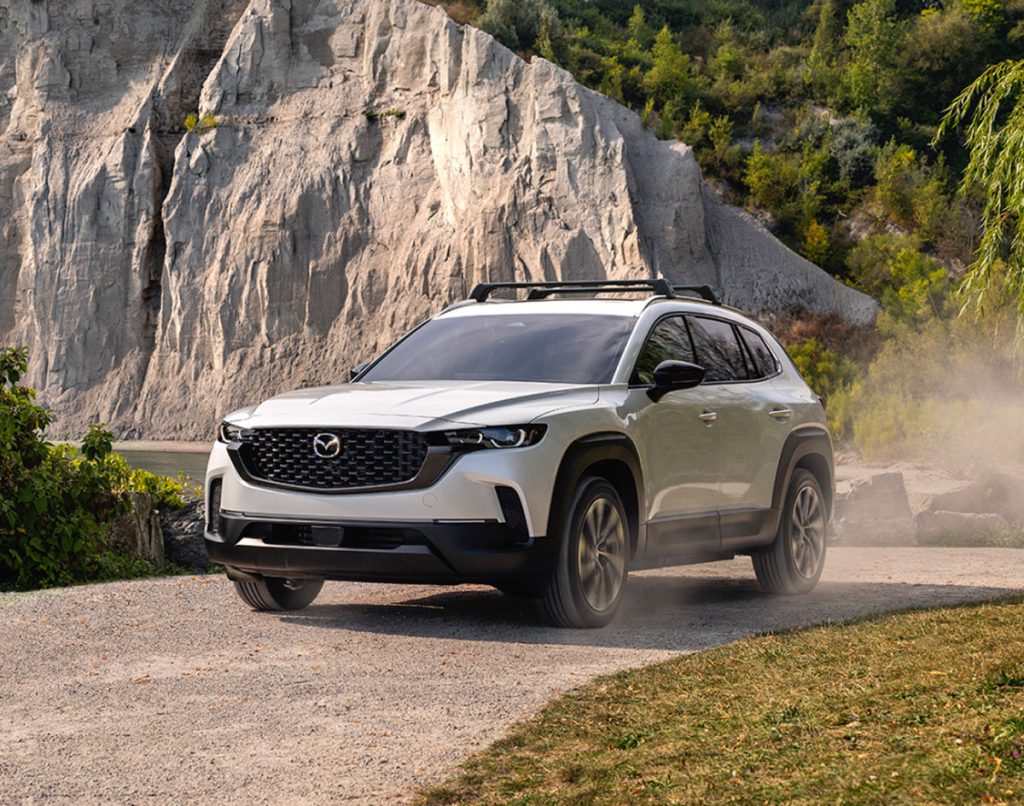
How Mazda Measures Cargo Space and Why It Matters
Cargo volume is typically measured in cubic feet, but those numbers can vary based on seating position and measurement standards. Mazda, like most manufacturers, reports cargo space behind the second row and maximum cargo space with seats folded.
What those figures do not always explain is how usable that space is day to day. Factors that influence real cargo usability include:
- Height of the load floor
- Width between wheel wells
- Seat folding angle and flatness
- Rear hatch opening shape
- Roofline slope and liftgate height
Mazda prioritizes balanced proportions and a low center of gravity, which often results in cargo areas that feel easier to load and more stable when carrying weight, even if the headline number is not the largest in the segment.
Mazda CX-5 Cargo Space Explained
The Mazda CX-5 is a two row compact SUV engineered primarily for on road comfort, efficiency, and everyday versatility. Cargo space is designed to support daily life rather than maximum volume.
Key cargo characteristics of the CX-5 include:
- Approximately 30 cubic feet of cargo space behind the second row
- Over 59 cubic feet with the rear seats folded
- A low lift over height that makes loading easier
- A relatively flat cargo floor when seats are folded
Behind the second row, the CX-5 comfortably handles groceries, strollers, and luggage for short trips. With seats folded, it accommodates longer items such as furniture boxes or outdoor gear without creating steep angles that cause items to slide forward.
The CX-5’s cargo design favors balance. It does not sacrifice rear passenger comfort or driving dynamics to chase maximum volume, which is why it feels composed and stable even when fully loaded.
Mazda CX-50 Cargo Space and Practical Differences
The Mazda CX-50 is often compared directly to the CX-5, but its cargo design reflects a different intent. The CX-50 is wider, slightly longer, and positioned as a more outdoor oriented SUV.
Notable CX-50 cargo traits include:
- Slightly more cargo space behind the second row than CX-5
- A wider cargo area for bulkier gear
- Roof rails designed for external cargo support
- A lower roofline paired with a wider stance
While the CX-50 does not dramatically outsize the CX-5 in raw cubic feet, it offers better usability for outdoor equipment such as bikes, camping gear, and storage bins. The wider rear opening and squarer cargo shape make it easier to load rigid items.
The tradeoff is vertical space. The CX-50’s lower roofline improves handling and aesthetics but slightly limits tall item stacking compared to boxier SUVs. For drivers who frequently carry wide or irregular gear rather than tall cargo, this layout works in their favor.
Mazda CX-90 Cargo Space and Three Row Reality
The Mazda CX-90 operates in a different category altogether. As a three row midsize SUV, its cargo space must adapt to varying passenger configurations.
Cargo usability in the CX-90 depends heavily on seat position:
- Limited cargo space behind the third row, suitable for groceries or small bags
- Substantial cargo area with the third row folded
- Expansive cargo capacity with both rear rows folded
This is typical of three row SUVs. The priority is passenger flexibility rather than constant maximum cargo volume. With the third row folded, the CX-90 becomes a capable hauler for family trips, sports equipment, or home improvement runs.
Mazda engineered the CX-90 on a rear wheel drive based platform, which influences cargo design. The longer wheelbase improves stability when loaded and allows weight to be distributed more evenly across the chassis, especially when carrying heavier cargo with passengers onboard.
Which Mazda SUV Is the Biggest and When It Matters
In pure maximum cargo volume, the CX-90 offers the most space when seats are folded. However, that does not automatically make it the best choice for every driver.
Each model serves a different need:
- CX-5 is ideal for daily driving with occasional cargo demands
- CX-50 suits active lifestyles with wider and more rugged gear
- CX-90 supports families needing flexible passenger and cargo configurations
Choosing the biggest SUV only makes sense if the additional size is regularly used. Larger vehicles carry tradeoffs in fuel efficiency, parking ease, and cost that may not benefit all drivers.
Cargo Space Compared to Other Small and Midsize SUVs
When shoppers compare Mazda SUVs to competitors like the Honda CR-V or Toyota RAV4, Mazda models may not always lead in published cargo volume. What they offer instead is usable space paired with driving refinement.
Mazda emphasizes:
- Lower cargo floors for easier loading
- Stable handling when carrying weight
- Interior layouts that avoid awkward seat folding angles
For many drivers, these factors matter more than an extra cubic foot on paper.
What to Evaluate Beyond Cargo Numbers
Before choosing an SUV based on cargo space alone, shoppers should evaluate:
- How often rear seats are folded
- Types of items carried most often
- Passenger needs versus cargo needs
- Ease of loading and unloading
- Vehicle stability when loaded
Mazda designs each SUV to serve a specific role rather than maximizing a single metric across the lineup.
Final Perspective on Mazda SUV Cargo Space
The CX-5, CX-50, and CX-90 approach cargo space from different engineering priorities. The CX-5 balances everyday usability with driving comfort. The CX-50 favors wider, more rugged cargo for active use. The CX-90 delivers flexibility for families who alternate between passengers and gear.
Understanding how cargo space is shaped and used is more important than focusing on a single number. Mazda’s SUV lineup gives drivers the ability to choose the space that fits their life, not just the biggest option available.
When shoppers research a new vehicle, warranty coverage often becomes a proxy for trust. A warranty does more than outline repairs. It reflects how confident a manufacturer is in its engineering, materials, and long term durability. Mazda’s 2025 warranty structure is intentionally straightforward, but understanding what is covered, how systems are protected, and where owner responsibility begins helps buyers make better decisions and avoid common misconceptions.
This guide breaks down Mazda warranty coverage in practical terms, focusing on how the systems are designed to work, why the coverage is structured the way it is, and what shoppers should realistically expect during ownership.
What Warranty Does Mazda Offer on New Vehicles
For the 2025 model year, Mazda includes three primary layers of factory coverage on new vehicles. Each layer protects different systems based on how they age and fail in real world use.
New Vehicle Limited Warranty
- 3 years or 36,000 miles
- Covers most components outside of normal wear items
This coverage applies to electrical components, infotainment hardware, climate control systems, safety technology, sensors, and interior electronics that are most likely to reveal manufacturing defects early in ownership. While often called bumper to bumper coverage, it is best understood as comprehensive systems coverage rather than literal coverage of every physical part.
Powertrain Limited Warranty
- 5 years or 60,000 miles
- Covers engine, transmission, and drivetrain components
Powertrain systems are engineered for long service life, and failures typically appear later than electronic or trim related issues. Mazda’s longer powertrain coverage reflects durability expectations for SKYACTIV engines, transmissions, and driveline architecture.
Roadside Assistance
- 3 years or 36,000 miles
- Includes towing, jump starts, lockout assistance, and flat tire support
This coverage is focused on mobility rather than mechanical repair, helping drivers manage unexpected situations without disruption.
What Is Actually Covered Under the Mazda Warranty
A common source of confusion is what qualifies as a covered failure versus normal wear. Mazda warranties protect against defects in materials or workmanship, not gradual consumption caused by usage.
Covered systems include:
- Engine internal components such as cylinder heads, timing components, oil pumps, and internal seals
- Transmission housings, internal gears, and torque converters
- Drive shafts, differentials, and transfer cases
- Electronic control modules, sensors, and factory wiring
- Factory installed infotainment displays and control units
- Air conditioning compressors and climate control electronics
Modern vehicles rely on integrated electronic and mechanical systems. Mazda’s warranty reflects this reality by covering systems as coordinated units rather than isolated parts.
What the Warranty Does Not Cover and Why
Wear items are excluded because their lifespan is determined by driving conditions rather than manufacturing quality.
Common exclusions include:
- Brake pads and rotors
- Tires
- Wiper blades
- Clutch components
- Interior trim subject to repeated contact
- Routine maintenance services such as oil changes and filters
This distinction matters. A braking system can be engineered correctly while brake pad wear varies significantly based on load, terrain, and driving behavior. Warranty coverage addresses design or assembly failure, not expected material consumption.
Does Mazda Have a 10 Year Warranty
Mazda does not include a 10 year factory warranty on new vehicles. That duration is commonly associated with manufacturers that use extended coverage as a brand differentiator rather than an engineering signal. Mazda instead emphasizes balanced design and predictable ownership costs.
When comparing warranties, shoppers should consider:
- Reliability history of the powertrain
- Complexity of systems covered during early ownership
- Likelihood of major repairs beyond year five
Warranty length alone does not define long term confidence.
Understanding Mazda Extended Warranty Options
Mazda extended service contracts are available for owners who want coverage beyond factory limits. These plans vary by term length, coverage scope, and deductible structure.
Extended warranties may appeal to drivers who:
- Plan to keep their vehicle well beyond five years
- Drive higher than average annual mileage
- Prefer predictable repair costs for budgeting
Key factors to evaluate include:
- Whether the plan is backed by Mazda or a third party
- Coverage exclusions and claim approval processes
- Transferability if the vehicle is sold
Extended coverage is not universally necessary, but it can make sense depending on ownership strategy and risk tolerance.
Is the Mazda Warranty Transferable
Mazda factory warranties are transferable to subsequent owners within the original coverage period. This adds measurable resale value and reduces risk for used vehicle buyers.
Transferability matters because:
- It supports stronger resale pricing
- It increases buyer confidence in used vehicles
- It reflects system durability rather than owner specific protection
Both first and second owners benefit without additional cost.
What Can Void a Mazda Warranty
Warranty coverage remains intact as long as the vehicle is maintained according to manufacturer guidelines and not modified in ways that directly cause failures.
Actions that may void coverage include:
- Performance modifications that alter engine or transmission behavior
- Skipping required maintenance intervals that lead to damage
- Using improper fluids or components that cause system failure
Routine aftermarket accessories or cosmetic changes do not automatically void coverage. The determining factor is causation, not modification alone.
How Mazda Warranty Coverage Reflects Engineering Philosophy
Mazda’s warranty structure aligns closely with its engineering approach. SKYACTIV powertrains emphasize mechanical simplicity, efficient combustion, and reduced component stress. Transmissions prioritize smooth torque delivery rather than aggressive shift behavior, which supports long term durability.
By combining:
- Conservative powertrain tuning
- Controlled high compression combustion
- Lightweight platform engineering
- Limited reliance on forced induction across most models
Mazda reduces long term system strain and lowers the likelihood of catastrophic failures that extended warranties are designed to address.
What Shoppers Should Evaluate When Comparing Warranties
Rather than focusing only on coverage length, informed buyers should evaluate:
- Powertrain complexity
- Real world reliability trends
- Repair frequency beyond year five
- Resale and transferability benefits
- Alignment between warranty coverage and ownership plans
Mazda’s approach prioritizes consistency and engineering discipline over headline driven coverage claims.
Final Perspective on Mazda Warranty Coverage
Mazda’s 2025 warranty coverage provides clear, predictable protection aligned with how modern vehicles are engineered and used. It prioritizes early system reliability, long term powertrain durability, and ownership transparency without overstating coverage that many drivers may never need.
For shoppers who value thoughtful engineering, intuitive systems, and realistic ownership expectations, Mazda’s warranty structure reinforces confidence built through design. Confidence earned through engineering lasts longer than coverage measured only in years.
After driving your new Mazda off the lot, we’re certain the first thing on your mind is maintenance. While many common maintenance measures do their part in ensuring the longevity of your vehicle, wheel alignment ensures your safety, and the safety of others on the road.
If your wheels aren’t properly aligned, you risk early and uneven wear of the tread of your tires. Positive or negative camber, or the angle of your wheels when viewed from the front, can cause more wear on the outer and inner edges of the tire when compared to the center tread. The heel and toe alignment, or the tilt when viewed from above, can cause uneven wear of the individual tread blocks, appearing like saw teeth across the tire.
Aside from being an eyesore for your new Mazda, that tread is there to provide traction on the road. Without it, driving becomes even more dangerous, leading to drifting or loss of control in wet or slick conditions. To ensure the safety of yourself and other drivers, keeping up to date with alignment check-ups is of the utmost importance.

7 Highlights of the 2026 Mazda3 Sedan
The ever-popular Mazda3 sedan is a stylish, reliable car that embodies Mazda’s ‘fun to drive’ philosophy with responsive engine output, supple handling, and driver-focused suspension tuning. It’s also tech-laden with numerous smart safety features. Here are some qualities to love about the 2026 Mazda3 sedan.
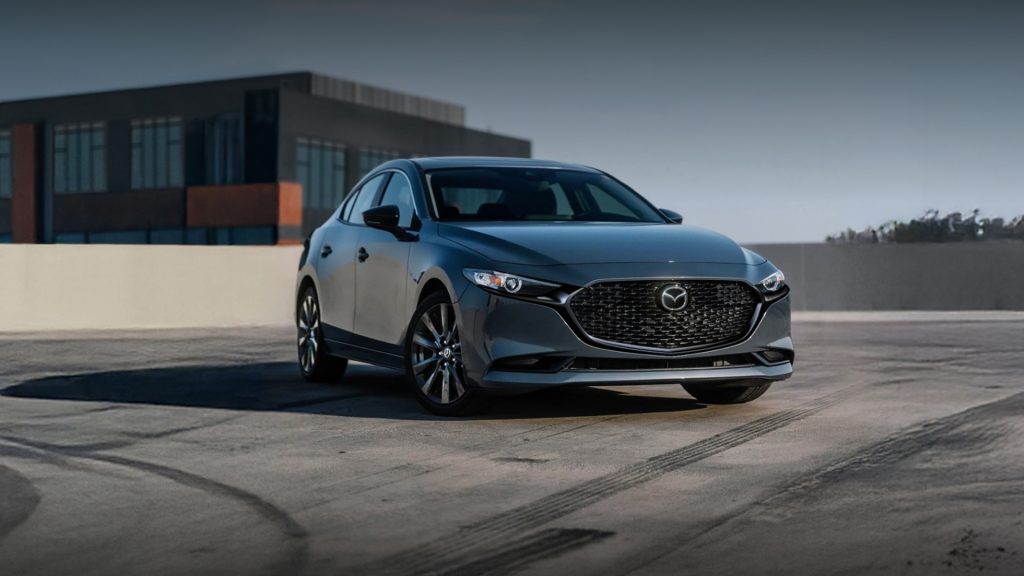
Power and Efficiency Combined
The Mazda3 sedan’s 2.5L SKYACTIV engine with dual overhead camshafts generates a great deal of power with remarkable efficiency. It’s MPG ratings for city, highway, and combined are 27, 36, and 30, respectively, while horsepower is 186 and torque is also an impressive 186 lb-ft. This blend of efficiency and power is helped by an advanced SKYACTIV-DRIVE 6-speed automatic transmission.
Playful Handling Dynamics
You enjoy nimble maneuverability and stable cornering in this well-balanced sedan. The Mazda3’s top-notch handling is largely thanks to an independent MacPherson strut suspension, plus Electronic BrakeForce Distribution, Smart Brake Support, and Brake Assist. You also get standard all-season tires for firm traction in all weather conditions.
Mazda Connected Services
The Mazda3 comes with Mazda Connected Services, which allows you to interact with your car through your smartphone. You can remotely start or stop the engine, lock or unlock the doors, and check on various aspects of vehicle status, all from afar.
Read the rest of this entry »There are six essential fluids in your car that keep everything lubricated, cool, and functioning smoothly. If you neglect to keep these fluids topped up and in excellent condition at all times, your car can undergo rapid wear and tear. Here are the six necessary fluid checks to have routinely carried out at Tom Bush Mazda, your Jacksonville Mazda dealer.

Motor Oil for Your Engine
Motor oil usually needs to be flushed and replaced at least twice a year. You should also check the level of your motor oil frequently. You can do so by removing the dipstick when the engine is cool. Clean the dipstick, reinsert it, then draw it out again to get an accurate reading.
Coolant To Prevent Overheating
Coolant only usually needs to be flushed every 30,000 miles or so, which is about every two years for most drivers. However, you should also check your coolant levels and condition periodically, topping it up if required. You can do so by inspecting the transparent coolant reservoir under your car’s hood.
Read the rest of this entry »6 Reasons to Test Drive the 2026 Mazda CX-50
Powerful and ready for adventures, the 2026 Mazda CX-50 is a great daily driver for active families. You can expect head-turning styling, premium comfort, and a range of advanced technologies you’ll love.
Refined Exterior Design
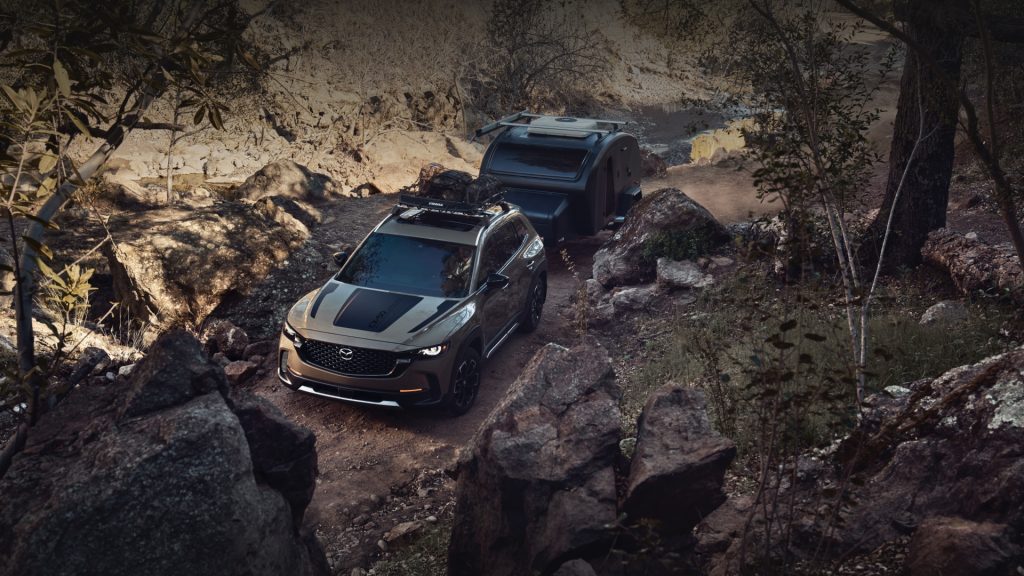
The 2026 CX-50 is a handsome crossover with a rugged yet refined exterior design. Sporty 17-inch wheels with a Black Metallic finish and all-season tires provide outstanding traction on dry, wet, and loose surfaces. Satin Chrome aluminum roof rails and dual exhaust outlets with a bright finish catch the eye in traffic, while the standard LED headlights offer bright illumination. A spectrum of classic and bold colors allows you to express your personality.
SKYACTIV-G Performance
Under the hood, you can choose between a standard SKYACTIV-G 2.5L 4-cylinder engine with 187 horsepower and 185 lb-ft of torque or an available twin-scroll turbo engine that pumps out up to 256 horsepower and 320 lb-ft of torque. The base engine delivers smooth performance, fuel economy ratings of 26 MPG combined, and a towing capacity of 2,000 lbs. With the turbocharged powertrain, you can tow up to 3,500 lbs.
Read the rest of this entry »5 Perks of the 2025 Mazda CX-70
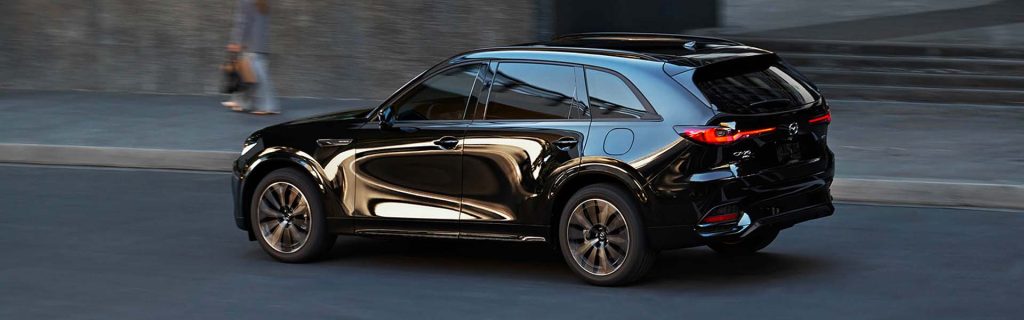
The 2025 Mazda CX-70 is a sleek and powerful SUV that offers multiple perks for drivers and passengers. Here are the top features that make the CX-70 an ideal choice for your next car and how you can take one for a test drive near you.
5 Awesome Highlights of the 2025 Mazda CX-70
1. Intercooled Turbo Engine
The Mazda CX-70 comes standard with an intercooled turbo gas/electric I-6 engine that gives you a maximum horsepower of 280 and up to 332 lb-ft. of torque. There’s also an eight-speed SKYACTIV-Drive automatic transmission with overdrive, and altogether this setup offers a combined fuel efficiency of 25 MPG.
Five Favorite Features of the 2025 Mazda MX-5 Miata
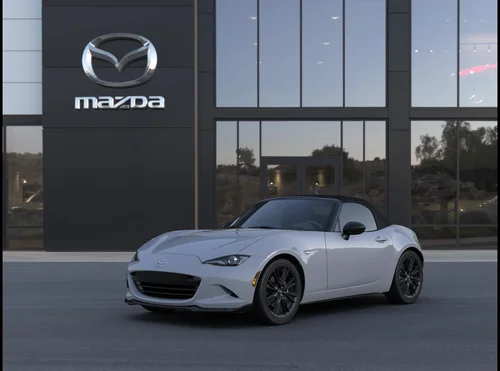
A sporty convertible like the 2025 Mazda MX-5 Miata is an ideal roadster for speed-loving drivers. This ultra-compact sports car is crafted with world-class style and luxury materials to enhance your time behind the wheel. See why the MX-5 Miata is perfect for your weekend getaways and joyrides.
Five Favorite Features of the 2025 Mazda MX-5 Miata
1. Mazda Advanced Keyless Entry System
The MX-5 Miata makes it easy to hop in your vehicle and get on the road quickly with Mazda’s Advanced Keyless Entry System. This system enables keyless locking and unlocking of the liftgate, fuel lid, and vehicle doors. Proximity sensors installed on the roadster can sense when your key fob is near the vehicle and will allow vehicle entry when you touch the door handle or liftgate.
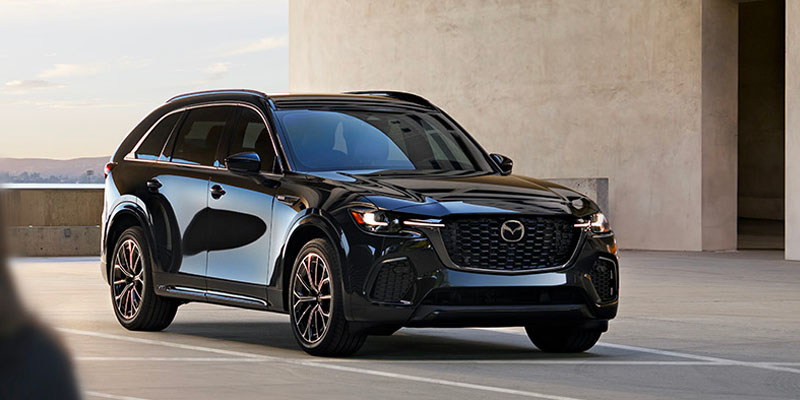
Flowing lines and elegant features give the CX-70 an unmistakably refined presence on the road or in your driveway. This sporty mid-size crossover is built to make every drive exciting with exhilarating power and satisfying responsiveness. Discover balanced design and modern capability in the 2025 Mazda CX-70.
Form and Function in Perfect Harmony: Introducing the 2025 Mazda CX-70
Impeccable Design
Mazda designers have blended traditional Japanese and modern design elements throughout the CX-70 to compose an elegant SUV that is as pleasing to behold as it is rewarding to drive. The signature bar-type mesh glossy black front grille perfectly complements matching black wheel moldings and lower body trim panels to create a boldly elegant look. Other distinguishing details include black aluminum roof rails, a rear roof spoiler, and 19″ aluminum alloy wheels.
Read the rest of this entry »3 Bold Features of the 2025 Mazda CX-50
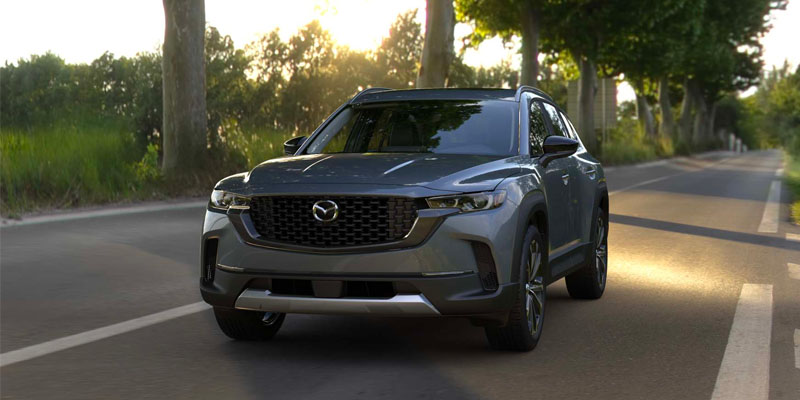
The 2025 Mazda CX-50 exists in a space where ruggedness meets refinement. Mazda has translated its renowned handling and driving dynamics into a versatile, fun, and engaging SUV.
3 Bold Features of the 2025 Mazda CX-50
1. Performance Engineering
Mazda’s i-Activ all-wheel drive comes as standard on all 2025 CX-50 models. The standard powertrain is a SKYACTIV-G 2.5-liter engine, paired with a six-speed automatic transmission. This delivers an impressive 187 hp and 185 lb-ft of torque. Mazda Intelligent Drive Select (Mi-Drive) lets you effectively translate this drivetrain power, choosing the best driving mode for your situation. Driving modes include:
- Normal Mode, for a balance of power and efficiency
- Sport Mode, for greater responsiveness
- Off-Road Mode, for maximum traction
CX-50 Turbo trims also enjoy a Towing Mode. The turbocharged engine variant in these models can generate a formidable 227 hp and 320 lb-ft of torque. CX-50 Turbo models can tow up to 3,500 lbs when properly equipped, and Towing Mode helps keep the CX-50 stable when hauling these heavier loads.
Read the rest of this entry »Connect with us


Recent Blog Entries
- Mazda CX-90 vs Kia Telluride: Comparing Space, Comfort, and Driving Feel
- How Mazda Prioritizes Safety: Understanding i-Activsense Driver Assistance Features
- Mazda3 vs Honda Civic: Which Compact Car Delivers a More Engaging Drive?
- Why Mazda’s Kodo Design Philosophy Creates a More Connected Driving Experience
- 2026 Mazda CX-90 Family Buyer’s Guide: Space, Safety Systems, and Long-Term Value