

The Mazda CX-90 and Kia Telluride often appear on the same shopping list because they serve the same basic need: a three-row SUV that can move families comfortably. Where they diverge is how they go about doing that. One prioritizes driver engagement and mechanical refinement. The other focuses on space, softness, and broad family usability. Understanding that difference is the key to choosing the right vehicle.

This comparison is not about which SUV is bigger on paper. It is about how each one feels to live with every day, especially once the novelty wears off and real driving takes over.
Platform and Powertrain Philosophy
Mazda built the CX-90 on a new rear-drive-based platform designed to improve balance, steering feel, and ride control. The available turbocharged inline-six engine, paired with mild hybrid technology, delivers smooth power with a strong sense of linear acceleration. Torque arrives early and predictably, which matters in daily driving more than peak horsepower numbers.
The Kia Telluride uses a traditional front-drive-based architecture with a naturally aspirated V6. Its power delivery is tuned for smoothness and ease rather than response. Acceleration is consistent, but the engine works harder under load, especially when merging or climbing grades.
Key powertrain differences drivers notice:
- CX-90 delivers smoother, more controlled acceleration
- Inline-six feels refined at highway speeds
- Telluride V6 favors steady, predictable output
- Mazda’s mild hybrid system improves low-speed responsiveness
Mazda approaches safety with the same philosophy it applies to design and driving feel. Rather than trying to replace the driver, Mazda builds systems that support awareness, reduce fatigue, and step in only when necessary. This approach is embodied in i-Activsense, Mazda’s suite of advanced driver assistance technologies designed around human behavior, not automation.

i-Activsense is best understood as layered safety. Each system plays a specific role, escalating from awareness to assistance to intervention depending on the situation. The goal is not to take control away from the driver, but to help the driver stay informed, focused, and confident in real-world driving conditions.
Active Safety Versus Passive Safety
Mazda safety is built on two complementary foundations.
Passive safety focuses on protecting occupants when a collision occurs. This includes the vehicle’s body structure, airbags, seatbelt systems, and energy-absorbing materials.
Active safety focuses on helping drivers avoid collisions in the first place. i-Activsense lives in this category, using sensors, cameras, and radar to monitor conditions and support driver decision-making before an accident happens.
Mazda places particular emphasis on active safety because preventing an incident is always preferable to mitigating one.
Read the rest of this entry »When shoppers compare the Mazda3 and Honda Civic, they are rarely choosing between bad options. Both are proven compact sedans with strong reputations. The real question is not which one works, but which one feels right to drive every day. That difference comes down to engineering philosophy, not surface-level specs.
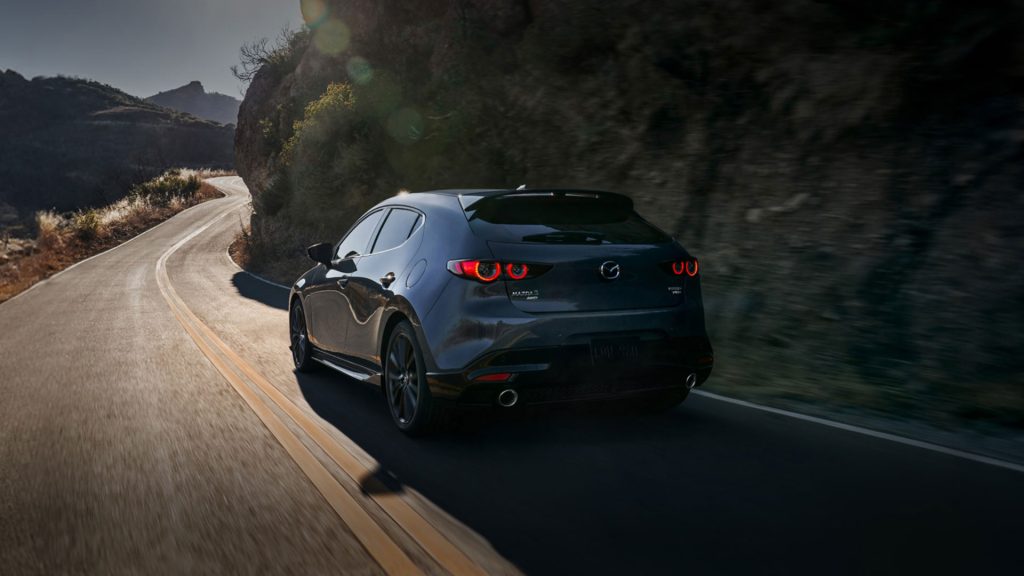
Mazda and Honda approach the compact sedan segment from two distinct perspectives. Honda emphasizes broad usability and efficiency. Mazda prioritizes driving engagement, refinement, and connection between the driver and the vehicle. Understanding how those priorities show up on the road is what separates these two cars.
Driving Philosophy Shapes the Experience
Mazda designs the Mazda3 around Jinba Ittai, the idea of harmony between car and driver. This philosophy influences steering calibration, seating position, pedal alignment, and suspension tuning. The goal is not aggressive performance, but predictability and control.
Honda tunes the Civic with an emphasis on versatility. Steering is light, suspension tuning favors comfort, and inputs are designed to feel easy rather than communicative. This works well for drivers who want a relaxed, appliance-like experience, but it creates a noticeable contrast when driving the two back-to-back.
Key philosophical differences:
- Mazda3 prioritizes driver feedback and balance
- Civic prioritizes ease of use and efficiency
- Mazda emphasizes feel through the controls
- Honda emphasizes accessibility for a wide audience
Mazda’s Kodo design philosophy is often described as visual or emotional, but its real impact shows up once you’re behind the wheel. Kodo, which translates loosely to “Soul of Motion,” is not about adding flair or chasing trends. It is a design system built around how a human body moves, focuses, and reacts while driving. The result is a vehicle that feels calmer, more intuitive, and more connected in everyday use.
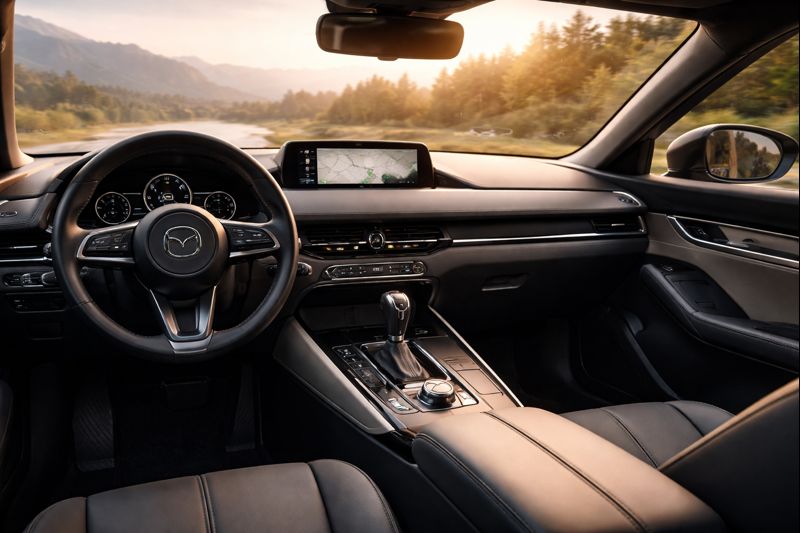
Rather than separating styling from engineering, Mazda treats design as a functional layer that directly influences driver confidence, control, and comfort. This philosophy carries through exterior proportions, interior layout, seating geometry, and even how your eyes move across the dashboard while driving.
Kodo Design Starts With Motion, Not Decoration
At its core, Kodo is about capturing the tension and balance of a living form in motion. That concept is not abstract. It directly affects how Mazda shapes the body and positions the driver within it.
Key exterior design outcomes include:
- Proportions that emphasize forward motion rather than visual bulk
- Long hood and short overhangs that improve visual balance and driver perception
- Body lines that guide airflow and sightlines instead of breaking them up
- Reduced visual noise so the shape reads clearly at a glance
These choices influence how the vehicle feels from the driver’s seat. Clean proportions make it easier to judge vehicle placement, especially in city driving or tight parking situations. A car that visually communicates its boundaries reduces hesitation and mental load before you ever touch the pedals.
Read the rest of this entry »The 2026 Mazda CX-90 is designed for families who want more than just a third row. It focuses on how a vehicle feels to live with over time, how confidently it supports daily routines, and how well it balances space, safety, and durability without becoming oversized or impersonal.

For buyers researching three-row SUVs, understanding how the CX-90 is engineered and how it supports real family use helps clarify whether it fits long-term ownership expectations.
Platform Design and Why It Matters for Families
The CX-90 is built on Mazda’s rear-biased longitudinal platform, a departure from many front-drive-based three-row crossovers. This architecture improves weight distribution, structural rigidity, and ride stability.
For families, this translates into:
Read the rest of this entry »2026 Mazda CX-30 Lease Breakdown: What Affects Your Payment and Which Features Matter Most
Leasing a 2026 Mazda CX-30 is less about chasing the lowest advertised payment and more about understanding how the vehicle’s design, trims, and real-world use shape what you actually pay each month. Because a lease only covers the portion of the vehicle you use, small decisions around trim level, drivetrain, and mileage expectations can meaningfully change both cost and satisfaction over the lease term.
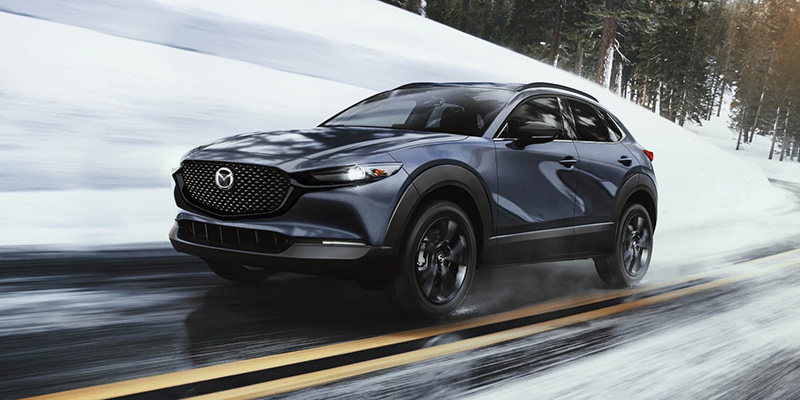
This breakdown focuses on how the Mazda CX-30 lease pricing is structured, what truly moves the payment, and which features tend to deliver value in a lease environment rather than long-term ownership.
How Mazda CX-30 Lease Payments Are Built
Every CX-30 lease starts with three core components working together:
Read the rest of this entry »At first glance, the Mazda CX-30 and Toyota Corolla Cross appear to occupy the same space. Both are compact SUVs designed for daily driving, urban flexibility, and efficient ownership. In practice, they are built around very different philosophies. Understanding how each vehicle behaves on the road, how its systems are engineered, and what kind of driver it serves makes the choice clearer.

Platform Design and Driving Character
The Mazda CX-30 is built with Mazda’s Jinba Ittai philosophy, emphasizing a natural connection between driver and vehicle. Steering weight, throttle response, and suspension tuning are calibrated to provide feedback and balance rather than isolation. The result is a vehicle that feels planted and responsive even at city speeds.
The Toyota Corolla Cross prioritizes predictability and ease. Steering effort is lighter, suspension tuning favors comfort over engagement, and road feedback is intentionally muted. This makes the Corolla Cross easy to live with, especially for drivers who value smoothness and familiarity.
Key differences in road behavior:
Read the rest of this entry »2026 Mazda CX-50 Lease Guide: Payment Structure, Mileage Terms, and Smart Equity Decisions
Leasing a 2026 Mazda CX-50 is less about finding a promotional number and more about understanding how the vehicle is structured, equipped, and used over time. Lease payments are the result of several interlocking variables that work together, not independently. When those variables are understood clearly, shoppers can make confident decisions that align with how they actually drive.

This guide breaks down how CX-50 lease payments are calculated, how mileage and feature selection influence long-term value, and what to consider before choosing leasing over financing.
How Mazda CX-50 Lease Payments Are Structured
A lease payment is built around the difference between the vehicle’s starting value and its projected value at the end of the lease term. For the Mazda CX-50, this calculation reflects Mazda’s emphasis on durable platforms, standard safety systems, and balanced powertrain design.
Key components include:
Read the rest of this entry »Apple CarPlay and Android Auto are no longer viewed as optional features. For many drivers, they are core usability systems that shape how navigation, communication, and media function every day. Mazda integrates these platforms with a human centered design philosophy that prioritizes driver focus, system stability, and intuitive control rather than touchscreen dependency alone.
This guide explains how Apple CarPlay and Android Auto work in Mazda vehicles, how to connect them properly, what system behaviors to expect while driving, and why Mazda’s interface design differs from some competitors.
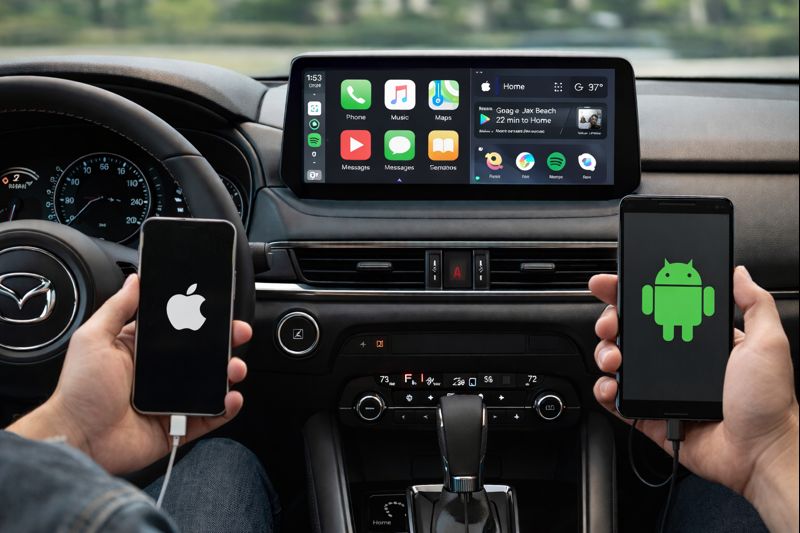
How Apple CarPlay and Android Auto Work in Mazda Vehicles
Apple CarPlay and Android Auto are projection systems. They do not replace Mazda’s infotainment software. Instead, they mirror supported apps from your phone onto the vehicle display while using Mazda’s input controls.
Mazda routes these systems through:
- The center display screen
- The multifunction command knob
- Steering wheel controls
- Voice command integration
This approach reduces the need to reach forward and touch the screen while driving, which aligns with Mazda’s emphasis on minimizing driver distraction.
Connecting Apple CarPlay in Your Mazda
Most recent Mazda models support Apple CarPlay through a wired USB connection, while select newer trims and model years also support wireless functionality depending on configuration.
To connect Apple CarPlay:
- Use an Apple approved Lightning cable or enable wireless pairing if supported
- Plug the phone into the designated USB port or complete Bluetooth pairing
- Accept the CarPlay prompt on both the vehicle screen and the phone
- Select CarPlay from the Mazda infotainment menu if it does not launch automatically
Once connected, Apple CarPlay allows access to Apple Maps, Google Maps, Apple Music, podcasts, messages, and supported third party apps.
Connecting Android Auto in Your Mazda
Android Auto follows a similar process but requires additional phone side permissions during initial setup.
To connect Android Auto:
- Use a high quality USB cable or wireless pairing if available
- Enable Android Auto permissions on the phone
- Accept prompts for contacts, messages, and media access
- Select Android Auto from the infotainment menu
Android Auto supports Google Maps, Waze, Spotify, Google Assistant, and compatible messaging apps.
Why Mazda Uses the Command Knob Instead of Full Touch Control
One of the most common questions drivers ask is why Mazda limits touchscreen interaction while driving. This is intentional.
Mazda’s interface philosophy is based on research showing that:
- Reaching for a touchscreen increases eye off road time
- Rotational and directional controls can be used by feel
- Muscle memory improves control accuracy over time
The command knob allows drivers to navigate menus, maps, and media with minimal visual attention. Touch input is typically enabled only when the vehicle is stopped or moving at very low speeds, depending on model year.
Using Navigation Through CarPlay and Android Auto
Navigation is one of the most heavily used features within both platforms.
Apple CarPlay supports:
- Apple Maps with real time traffic
- Google Maps
- Waze
Android Auto supports:
- Google Maps
- Waze
- Other supported navigation apps
In Mazda vehicles, navigation prompts are displayed clearly while voice guidance is routed through the vehicle audio system. Map zooming, route selection, and destination input are handled through the command knob or voice commands rather than touchscreen taps.
Music, Podcasts, and Media Playback
Media playback through CarPlay and Android Auto integrates seamlessly with Mazda’s audio system.
Supported functions include:
- Streaming music services
- Podcast apps
- Audiobook playback
- Album and playlist browsing
- Steering wheel audio controls
Mazda’s sound tuning ensures consistent volume levels and clarity regardless of whether audio originates from the vehicle system or a projected app.
Common Connection Issues and How to Avoid Them
When CarPlay or Android Auto does not work as expected, the issue is often related to the phone rather than the vehicle.
Common causes include:
- Outdated phone operating system
- Low quality or damaged USB cable
- Disabled permissions on the phone
- App restrictions or background limitations
- Incompatible device models
Keeping phone software updated and using manufacturer approved cables resolves most connection issues.
Updating Mazda Infotainment and System Compatibility
Mazda infotainment software updates may improve stability or compatibility with newer phone operating systems. These updates are typically handled through authorized service visits rather than over the air downloads.
System compatibility depends on:
- Vehicle model year
- Infotainment generation
- Phone operating system version
Not all features are retroactive, so shoppers should verify wireless support or specific behaviors by model year.
Why Mazda’s Integration Feels Different in Daily Driving
Mazda designs its infotainment systems around driver focus rather than feature overload. Apple CarPlay and Android Auto are integrated as tools that support navigation and communication without dominating the driving experience.
By emphasizing:
- Controlled input methods
- Clear visual hierarchy
- Reduced distraction
- Consistent system behavior
Mazda ensures that technology enhances driving rather than competing with it.
Final Perspective on CarPlay and Android Auto in Mazda Vehicles
Apple CarPlay and Android Auto in Mazda vehicles are designed to feel stable, intuitive, and purposeful. They deliver modern connectivity while respecting how drivers actually interact with technology on the road.
For shoppers who value clarity, ease of use, and reduced distraction, Mazda’s approach to smartphone integration offers confidence that technology serves the driver rather than the other way around.
Leasing a vehicle is often misunderstood as simply choosing a lower monthly payment. In reality, a lease is a financial structure built around depreciation, time, and usage. For shoppers considering a 2025 Mazda CX-5, understanding how lease mechanics work and how Mazda’s engineering choices influence long term value is critical to deciding whether leasing makes sense compared to financing.
This guide explains how CX-5 lease payments are calculated, what affects monthly costs, how mileage limits work, and why the CX-5’s design and efficiency play a meaningful role in lease value.

How a Mazda CX-5 Lease Payment Is Calculated
A lease payment is determined by several interacting variables rather than the vehicle price alone. These components work together to define how much value is used during the lease term.
The primary factors include:
- Capitalized cost, which is the negotiated vehicle price
- Residual value, which is the estimated value at the end of the lease
- Money factor, which functions similarly to an interest rate
- Lease term length, typically 24 to 36 months
- Taxes and fees based on location
The difference between the capitalized cost and the residual value represents depreciation. You are paying for that depreciation over the lease term rather than paying for the entire vehicle.
Why Residual Value Matters for the CX-5
Residual value is one of the most important variables in a lease. A higher residual means the vehicle is expected to retain more value, which reduces the amount you pay monthly.
The Mazda CX-5 benefits from:
- Consistent demand in the compact SUV segment
- A reputation for long term reliability
- Conservative design updates that age well
- Efficient powertrain options that remain competitive over time
Mazda’s approach to design avoids rapid styling changes that can date a vehicle quickly. This stability supports stronger residual values, which directly improves lease affordability.
Understanding Mileage Limits and Real World Use
Mileage allowances are built into every lease because usage directly affects depreciation. The more miles driven, the more value is consumed.
Common mileage structures include:
- 10,000 miles per year
- 12,000 miles per year
- 15,000 miles per year
Exceeding the agreed mileage typically results in a per mile charge at lease end. Shoppers should realistically evaluate their driving habits rather than choosing the lowest allowance to reduce payments.
The CX-5’s role as a daily driver means many lessees benefit from choosing a mileage allowance that reflects commuting, errands, and occasional road trips rather than strictly urban use.
Lease Term Length and Monthly Cost Tradeoffs
Lease terms influence both monthly payments and flexibility.
Shorter terms generally offer:
- Higher monthly payments
- Newer vehicle turnover
- More frequent access to updated technology
Longer terms typically provide:
- Lower monthly payments
- Longer commitment to the same vehicle
- Increased exposure to mileage accumulation
Mazda’s reliability and interior durability make the CX-5 well suited for standard 36 month leases, where drivers can enjoy stability without pushing systems beyond their ideal use window.
How CX-5 Engineering Supports Lease Value
Mazda’s engineering philosophy directly influences leasing outcomes. The CX-5 uses naturally aspirated and turbocharged SKYACTIV engines designed for smooth power delivery and reduced mechanical stress. Transmissions prioritize predictable shifting rather than aggressive tuning, which supports longevity and consistent performance.
Key engineering factors that support lease value include:
- Efficient combustion that balances power and fuel economy
- Lightweight platform construction that reduces component wear
- Calibrated suspension tuning that minimizes tire and brake stress
- Interior materials designed to resist visible wear over time
Because leases typically return vehicles to the market as certified or used inventory, condition matters. Mazda’s focus on durability helps CX-5 models retain value at lease end.
Lease Versus Finance for the Mazda CX-5
Deciding between leasing and financing depends on ownership goals rather than price alone.
Leasing may make sense for drivers who:
- Prefer lower monthly payments
- Like driving newer vehicles more frequently
- Want warranty coverage throughout the lease term
- Drive predictable annual mileage
Financing may be better for drivers who:
- Plan to keep the vehicle long term
- Drive high annual mileage
- Want to eliminate monthly payments eventually
- Value long term cost ownership over short term flexibility
The CX-5 performs well in both scenarios, but leasing highlights its efficiency, reliability, and strong resale profile.
What Happens at the End of a Mazda CX-5 Lease
At lease end, drivers typically have several options depending on their needs and market conditions.
Common lease end paths include:
- Returning the vehicle and leasing a new Mazda
- Purchasing the CX-5 at the predetermined residual value
- Transitioning to financing on a different vehicle
Because Mazda leases establish a clear buyout price upfront, drivers can make informed decisions without market guesswork. If the CX-5’s market value exceeds the residual, purchasing can be a financially sound option.
Credit Considerations and Prequalification
Lease approval and terms are influenced by credit profile. Prequalification helps shoppers understand eligibility and payment expectations without committing to a specific vehicle.
Leasing generally favors:
- Stable credit history
- Predictable income
- Lower risk profiles
Mazda’s leasing programs are structured to support qualified buyers while maintaining realistic residual values that protect both driver and lender.
Final Perspective on Leasing a 2025 Mazda CX-5
Leasing a 2025 Mazda CX-5 is not just about monthly affordability. It is about aligning driving habits, ownership preferences, and vehicle design with a financial structure that makes sense.
The CX-5’s balanced engineering, efficient powertrains, and consistent market demand support strong lease fundamentals. For drivers who value flexibility, warranty backed ownership, and predictable costs, understanding how CX-5 leases work provides confidence that the decision is grounded in both financial logic and mechanical reality.
Connect with us


Recent Blog Entries
- Mazda CX-90 vs Kia Telluride: Comparing Space, Comfort, and Driving Feel
- How Mazda Prioritizes Safety: Understanding i-Activsense Driver Assistance Features
- Mazda3 vs Honda Civic: Which Compact Car Delivers a More Engaging Drive?
- Why Mazda’s Kodo Design Philosophy Creates a More Connected Driving Experience
- 2026 Mazda CX-90 Family Buyer’s Guide: Space, Safety Systems, and Long-Term Value